

A Smooth Guy; Developer of SmoothScroll for macOS, Windows & Google Chrome.
Joined April 2010
- Tweets4.8K
- Following1.6K
- Followers1.2K
- Likes4.4K




Pinned Tweet
Looking further into LLM benchmark x-correlations:
- Top row: how each benchmark relates to human judgement (Arena Elo)
- Other rows: any benchmark pair & their relationship
- On the right: samples = # of models tested for each benchmark
thx: @chipro @maximelabonne @ldjconfirmed


Blaze (Balázs Galambosi) retweeted

Launching Harness Comparisons on the Artificial Analysis Coding Agent Index: the best harness varies between models, and harness choice has a greater impact on cost than score
Harness Comparisons hold the model fixed and change only the harness, to show how the harness affects a model's performance. We ran @OpenAI's GPT-6 Luna and @Zai_org's GLM-5.3-Flash at max reasoning effort in 13 harnesses each, across v2.1 of the Coding Agent Index.
Key takeaways:
➤ No single harness is best across models: performance depends on the harness and model as a pair. GPT-6 Luna scores highest in Codex (26), OpenAI's own harness, which ranks last with GLM-5.3-Flash. GLM-5.3-Flash scores highest in Claude Code (39), which ranks 6th with GPT-6 Luna
➤ The harnesses that offer the best performance per dollar differ by model: with GPT-6 Luna they are Pi (21 at $0.11 per task), mini-swe-agent (25 at $0.16) and Codex (26 at $0.19). With GLM-5.3-Flash they are Mistral Vibe (37 at $0.38), Kimi Code CLI (37 at $0.56) and Claude Code (39 at $0.58). No harness is on the Pareto frontier for both models
➤ The harness has a greater impact on cost than score: 11 of 13 harnesses score 20 to 26 with GPT-6 Luna and 10 of 13 score 35 to 39 with GLM-5.3-Flash. Cost per task ranges from $0.11 in Pi to $0.62 in Muse Code with GPT-6 Luna, and from $0.38 in Mistral Vibe to $0.91 in Devin CLI with GLM-5.3-Flash
➤ GLM-5.3-Flash reasons differently inside Codex: it reasons in terse fragments in Codex and in full prose in the other 12 harnesses, and produces 52k output tokens per task in Codex, compared with 97k to 202k elsewhere. We believe this contributes to its lowest performance occurring in the Codex harness

Blaze (Balázs Galambosi) retweeted

We just entered the era of alien mathematics.
This is a map of the 17-million-line Lean proof of the Riemann Hypothesis (175,000 files, verified by computers).
A 167-year-old math problem solved with AI, and the proof looks like a biological nervous system. Damn.

Blaze (Balázs Galambosi) retweeted

#1 trending ASR model on the HF Hub 💥
congrats @reson8_official for a much-needed lightweight, multilingual model! Fits on an iPod shuffle 😆
> 0.5B parameters
> 45 languages
> Apache 2.0
> day-0 support in 🤗 Transformers and vLLM
> up to 7,000 RTFx: an hour of audio in ~0.5s
> automatic language detection + output control (digits vs. words, fillers, forced language)
🤗 weights: huggingface.co/Reson8/Rumble…
📝 blog: huggingface.co/blog/rumble-2…

Blaze (Balázs Galambosi) retweeted
Announcing the Artificial Analysis Diarization Index, our new benchmark for who said what in speech to text
The Diarization Index scores APIs on Word Diarization Error Rate (WDER): the share of words given to the wrong speaker or to no speaker, across 97 conversations of two to eight people, with equal weight on each group size.
Nemotron 3.5 Transcribe from @NVIDIAAI leads at 3.3%, ahead of Voxtral Small Transcribe 3 at 7.5%. Thread below 🧵

Blaze (Balázs Galambosi) retweeted

We ran @ElevenLabs Scribe v3 Live through our speech-to-text benchmark.
It has the lowest word error rate of the 21 models we tested, 1.89% across clean test clips and real phone calls. On the real calls alone, private recordings licensed from Ocular, it also leads at 2.05%.
Frontier voice models are shipping fast. Reson8's Rumble-2 just beat nearly every model on our board for speed and accuracy, and now Scribe v3 Live has taken the top spot on accuracy.
Congrats to the @ElevenLabs team.
Full results: benchmarks.cekura.ai/stt
Blaze (Balázs Galambosi) retweeted
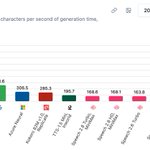
Microsoft AI has released MAI-Transcribe-2, achieving 2.0% AA-WER (#2) at ~411x real time (#2) for $1.67 per 1,000 minutes, placing it on the accuracy-speed Pareto frontier at one of the lowest prices among high-accuracy models
MAI-Transcribe-2 is @MicrosoftAI’s latest speech transcription model, ranking 2nd overall on the Artificial Analysis Word Error Rate (AA-WER) leaderboard, behind Alibaba’s Fun-Realtime-ASR-preview (1.7% WER) and ahead of ElevenLabs Scribe v2 (2.2% WER) and Smallest AI Pulse Pro (2.4% WER). It is one of the fastest models benchmarked, processing audio at 411x real time, around 1.5x the speed of Smallest AI Pulse Pro and more than 7x the speed of Scribe v2.
At $1.67 per 1,000 minutes, MAI-Transcribe-2 costs less than half as much as high-accuracy peers including Scribe v2 ($3.67) and Smallest AI Pulse Pro ($4). The new model expands language support from 43 to 60 languages and adds speaker diarization, word-level timestamps, as well as clean and verbatim transcription styles.
See more details below ⬇️


Blaze (Balázs Galambosi) retweeted

Best-in-class PII Detection...running entirely on your device 🤯
perplexity.ai/hub/blog/pii-t…


Blaze (Balázs Galambosi) retweeted

You might have not understand what this means. If this is true, and DS-v4-Pro is open sourced, then gg Opus or even Fable 😅
This means that DS is able to offer Fable level model at 1/50 API price with a much higher cache hit rate compared to Anthropic, thanks to DS v4's ultra small sparse KV Cache.
The total cost might be 1/100 lower while the model capability is pretty much the same.
Bullish for storage as SSD KV Cache will become a standard. Also for AI industry as a whole - making AI affordable meaning more people will start to use AI which in turn increase the demand faster.
Now I'm seriously asking? What're next? Are we ready for a post-Fable-open-source world?

Blaze (Balázs Galambosi) retweeted

Fable quality. We will soon release a new quantized inference framework that will let you run this on a single GPU (B300) with ~50 tok/s in good quality. Local Fable LFG!


Sol/Codex picture emerging: Strong Capability (long horizon coding benchmarks), Strong Continuity (see hidden contex compaction), Weak Control / proportionality (see tweet below Thompson).
pi vs codex server-side encrypted compaction: xitter.gq/kunchenguid/status/207…


1
195
Blaze (Balázs Galambosi) retweeted

Very interesting, this is why you really need to benchmark agents, especially with reasoning models that use variable # of tokens. This is similar to what we saw in some applications with Sonnet (databricks.com/blog/benchmar…) and to arxiv.org/abs/2603.23971. It will surely depend by task though!


GPT-5.6 Sol and Luna are ahead of Terra at every point on the Intelligence vs Cost per Task chart. GPT-5.6 Luna stands out as a particularly cost efficient model
Charting the Artificial Analysis Intelligence Index shows the trade-off between intelligence and Cost per Intelligence Index Task. Across reasoning efforts, each GPT-5.6 model pushes past GPT-5.5 on the Pareto frontier (excluding non-reasoning).
However, Luna and Sol are always ahead of Terra. This means for any Terra effort level, there is a Luna or Sol effort level that is more intelligent at no extra cost, or as intelligent at lower cost.

Blaze (Balázs Galambosi) retweeted

For agentic coding, one can say:
- Unless you need Terra Ultra perf, it's always better to use a Luna model with higher effort setting (same or better performance but cheaper).
- Forget everything below Sol High, use Luna with higher effort settings here
- Forget Sol Extra High, use Terra Ultra here
- The extra cost of Sol Ultra is probably not worth it over Max

Blaze (Balázs Galambosi) retweeted

LFM2.5-230M running at 1400 tokens/s locally with WebGPU 🚀🚀🚀

Blaze (Balázs Galambosi) retweeted

The frontier gap in agentic frontend coding is closing fast.
On Code Arena: Frontend, @Zai_org's GLM series has followed a remarkable trajectory, climbing from GLM-4.6 at 1408 to GLM-5.2 (Max) at 1595 - surpassing Opus 4.8 and closing in on frontier model Claude Fable 5 at 1665.
GLM-5.2 (Max) is the lab's strongest coding model yet, narrowing the gap with frontier labs on real-world HTML/React tasks.
Huge congrats to the @Zai_org team on this open-source breakthrough!

Blaze (Balázs Galambosi) retweeted

Turns out adding 0 helps :)
Today we’re introducing Ternary Bonsai 🌳, a family of end-to-end 1.58-bit language models in 8B, 4B, and 1.7B sizes.
Ternary Bonsai 8B is within 5% of Qwen 3 8B at 9x lower memory.
Still tiny. Noticeably smarter

Today we’re announcing Ternary Bonsai: Top intelligence at 1.58 bits
Using ternary weights {-1, 0, +1}, we built a family of models that are 9x smaller than their 16-bit counterparts while outperforming most models in their respective parameter classes on standard benchmarks.
We’re open-sourcing the models under the Apache 2.0 license in three sizes: 8B (1.75 GB), 4B (0.86 GB), and 1.7B (0.37 GB).
