

Passionate about all things macro and finance. PhD in Economics @UniTrento.
Roma, Lazio
Joined August 2013
- Tweets1.4K
- Following2.4K
- Followers1.1K
- Likes3.9K


"Se fossi stato consultato sull’opportunità di istituire un premio Nobel per l’economia, avrei decisamente consigliato di non farlo" (Hayek). Con "Il discorso del potere" spieghiamo perché l'idea è giusta, ma non necessariamente per le stesse ragioni.
lastampa.it/2019/03/13/econo…
Claudio Borio (BIS) dismisses common misconceptions on the relationship between the monetary base and the money supply and questions the long-run classical dichotomy
bis.org/publ/work763.htm

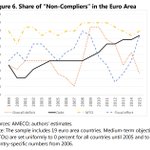
The MTO was violated in 80% of observations under consideration between 1999 and 2015. The share of countries with a debt ratio greater than 60 percent increased from 35 percent in 1999 to 75 percent in 2015.
Source: imf.org/~/media/Files/Public…


"This column discusses new evidence that rejects the debt-to-growth causality. After estimating the effects between debt and growth in both directions, there is no evidence that high indebtedness suppresses economic growth".
voxeu.org/article/growth-and…
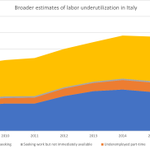
According to a broader estimate of labor underutilization in Italy (source: OECD and Eurostat), 26.1% of the active population is currently unemployed, underemployed, available but not seeking work or temporarily unavailable

Why is the Turkish lira tumbling? In a nutshell:
1) unsustainable increase in private and foreign debt fueled by QE in advanced economies
2) high intensity of imported inputs
3) unprecedented dispute with the US
4) unfit leadership scaring markets
ft.com/content/2d678dea-9c7b…


A coordinated fiscal expansion in the euro area "should boost European domestic spending, raise living standards for Europeans, and increase European demand for imports. What more could a U.S. trade negotiator ask for?"
(@M_C_Klein)
barrons.com/articles/what-th…

Italy had the highest percentage of economically inactive workers in 2015 at the EU level: it is twice as common to be economically inactive in Italy as it is in Sweden
Source: @eurofound

Chiedere maggiore integrazione cross-border agli altri paesi europei e nel frattempo proteggere tutte le proprie piccole banche (legate a doppio filo alla politica locale) dalla vigilanza di Francoforte si può: è il caso della Germania. Per l'Italia, è esattamente il contrario.

Fascinating study by @Bruegel_org on the power of local politicians over Germany’s savings banks: 83% of Germany’s Sparkassen’ (local savings banks) supervisory boards are headed by local politicians.
bruegel.org/2018/07/germanys… #in

Secondo sbloccacantieri.it (Ance), sono oltre 270 le opere pubbliche bloccate in tutta Italia. Il valore complessivo di queste si attesta a 21 miliardi di euro, con una ricaduta potenziale di 330 mila posti di lavoro e 75 miliardi generati se fossero completate
@PTridico: "il lavoro a termine incentiva investimenti e strategie da parte delle imprese cosiddette labour intensive, che non si affidano all’innovazione e al progresso tecnico, e che generano pochi guadagni di produttività" xitter.gq/_MicroMega_/status/101…

Tridico: “Più disoccupazione con il decreto Dignità? Falso” - intervista a Pasquale Tridico di Giacomo Russo Spena temi.repubblica.it/micromega… #decretodignitá #DecretoDignità #lavoro #precario #voucher #Inps #Boeri #Governo #17Luglio #17lug

5
Despite tightening labor markets, it's hard to make a case for improving wage growth in the US
(Source: frbatlanta.org/chcs/wage-gro…)

È naturale che poter emettere moneta non significa poter generare potere d'acquisto dal nulla in termini reali. È altrettanto naturale che, in presenza di disoccupazione e capacità produttiva in eccesso, sia ragionevole spendere di più per mobilitare queste risorse inutilizzate.
È difficile sostenere che senza una stretta fiscale il rapporto debito/PIL italiano sarebbe aumentato. Come ha ricordato @VMRConstancio, la recessione del 2012/13 è stata causata dalla simultanea applicazione di austerità in tutta l'EZ, da cui più deb/PIL
ecb.europa.eu/press/key/date…
Young people not in education, employment or training (NEET) in the euro area: Italy ranks first
(source: ecb.europa.eu/pub/pdf/scpops…)

Largest impact on euro area underlying inflation stemming from domestic slack.
(source: ecb.europa.eu/pub/pdf/other/…)

Unemployment rate and a broader measure of labour underutilisation in the euro area: unemployed + involuntary part-time workers + potential labour force
(source: ecb.europa.eu//press/key/dat…)

What free trade should really mean, by @wbmosler xitter.gq/wbmosler/status/101068…
