

The perception-action stack for robotics.
Joined March 2026
- Tweets85
- Following63
- Followers951
- Likes91






General Intelligence Labs retweeted

You will never have enough data or compute

General Intelligence Labs retweeted

"The most boring thing in AI: paying customers."
@TheStreet wrote about Bittensor teams who've decided that's the part worth chasing. OpenRoboto is one of them.
thestreet.com/crypto/innovat…
Yahoo Finance: finance.yahoo.com/technology…
MSN: msn.com/en-us/technology/art…
Apple News: apple.news/A8f727u27RJiSrX0x…

GI Labs is hiring Robot Data Collection Operators in San Francisco 🤖 Work hands-on with robots and teleop systems to collect the data that trains next-gen robots. Part-time, in person. No robotics experience needed. Apply: [email protected] gilabs.xyz/join/robot-data-c…
General Intelligence Labs retweeted

@svlevine is sharing his life journey at @spc event.
From building video games, to working on basic grasp task, to training foundational models for robots, his trajectory is a bit like @demishassabis. His narration of the journey of PI models is quite interesting:
Pi-0: laying the framework
Pi-0.5: showing the sign of generalization
Pi-0.7: zero shot generalization
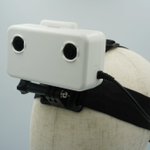
His take on the trait of a good robotics researcher is also interesting: attention to the details across all the stack. You need to quickly find out if a problem in the eval is from a disconnected connector or some training data distribution issue. Btw, that’s exactly why @gi_labs EGO1/EGO1GS headsets have built in cable design so you don’t have to worry about the connector issues.

General Intelligence Labs retweeted

When the New York Post calls your robot “the world’s most boring robot”, you know you are doing something right. 😭😂
This is actually the highest praise ever: when robots actually work, they are supposed to be boring, just calmly and reliably getting the job done.


We are super stoked to support @openroboto's mission to build a decentralized robotics data market place. GI devices + Openroboto collector network will create a massive amount of Physical AI training dataset.

With Shift now live, we’re unveiling OR-S1, our stereo egocentric capture device for robot manipulation data.
We’ve partnered with @gi_labs to bring it to market.
Pre-order OR-S1 → shift.openroboto.ai/
General Intelligence Labs retweeted

A restaurant is a great sandbox for physical AI. We’d love to work with more robotics and physical AI teams, and pressure-test ideas with real messiness 🌶️
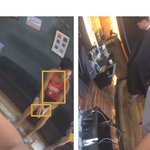
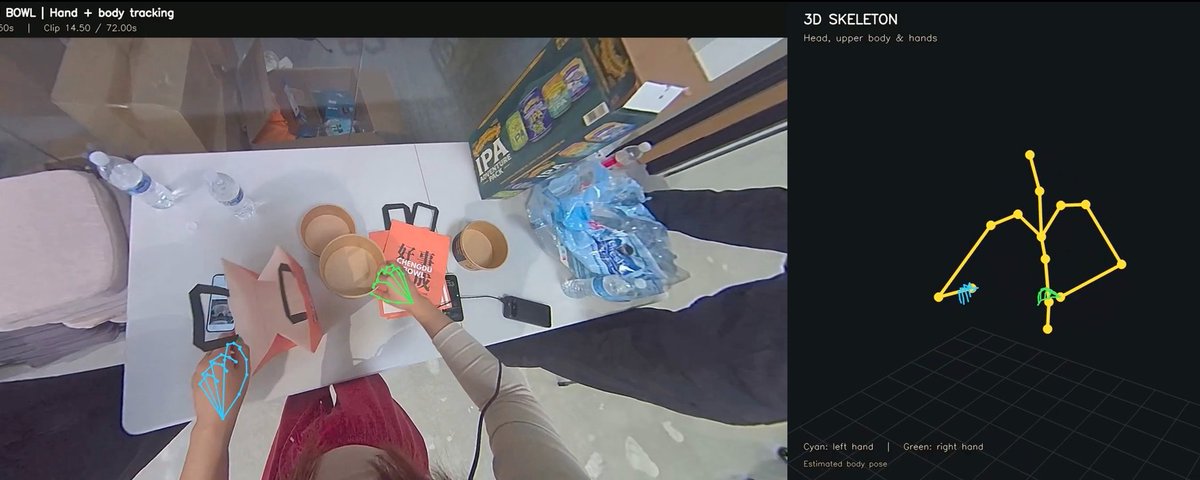
Egocentric data collection can help your favorite Chinese restaurants to become Physical AI ready. Last week, we hosted @stellawang_x, the owner of @ChengduBowl visiting our office. This is the egocentric data we collect for her daily work at our office. @huggingface
General Intelligence Labs retweeted
Our friend @DexmateAI is doing some cool work down the valley. The lower body design combines adjustable height and miniature space when folded.
General Intelligence Labs retweeted

We’ve had an AI breakthrough at Figure and will be showcasing this tomorrow
General Intelligence Labs retweeted

At Rhoda, we care deeply about the science of pre-training for robotics.
In one of the most rigorous studies of its kind, over thousands of trials and hundreds of hours of robot evaluations, we show how scaling web-video pre-training leads to better real-world robot performance.
General Intelligence Labs retweeted

🤖 Saturday Robotics & World Model Reading Club #27.2. Rethinking Robot Development: Co-Designing Morphology, Sensing, and Learning
@saturdayRobotic is happy to partner with @gi_labs to present:
🎤 @shumochu: Data Layer for the Next Billion Robots
👉🏻 xitter.gq/junfanzhu98/status/209…
Robot foundation models don’t have an internet-scale action corpus. LLMs can scrape text; robot policies need real-world pose + vision + touch + hand motion, time-aligned and recorded from actual work. A million pouring videos ≠ synchronized end-effector pose, jaw state, contact force, or finger trajectories.
@gi_labs: Scale with humans, not robots. Humans already perform the tasks—in kitchens, factories, construction sites, farms. Teleoperation adds a robot, rig, operator, and embodiment constraint: a throughput tax disguised as a data strategy. Capture the work where it happens.
🔥 Moat is bottom of stack: capture hardware→data operations→cleaning/labeling. Own layers 1–3 or rent your bottleneck. Sync is hardware or fiction; quality is a capture-time property. Hardware-clocked, factory-calibrated sensors turn pixels into metric trajectories; QA in the field prevents expensive post-hoc cleanup.
📹 EGO1-GS: stereo 2×1080p30 global-shutter cameras, 157°×84° FOV, 63-mm baseline, 400-Hz 9-DoF IMU, stereo audio, factory calibration, on-device hand detection + voice alerts; all streams share one clock and export to .mcap. Global shutter protects fast-motion contact frames; wide FOV protects data yield.
🦾 UMI0: bimanual handheld grippers, <1 mm XYZ, <0.1° orientation, <0.5 mm jaw, 5-MP 180° fisheye + jaw encoder, Quest tracking + on-device kinematics filtering. Bimanual capture in one take avoids phase error. Gen2: 535→450 g, 10→12 cm travel, dual forward/side global-shutter cameras, 157°×84°, while preserving accuracy. The second view attacks wrist-camera self-occlusion exactly at contact.
🖐️ Tactile: 77 Hall-effect sensing points/fingertip, 1-mm resolution, Fz 0–25 N, Fxy ±10 N, 10M-cycle life, synchronized with vision/pose/jaw. Touch is an action-space channel, for slip/contact geometry that RGB can't directly observe.
🧤 MoCap glove: full per-finger kinematics → multi-finger robot hands. One device cannot cover manipulation: parallel jaws, dexterous hands, head vision, wrist vision and tactile are different action spaces. Format fragmentation is a hidden scaling tax.
🚀 Proof: 506 handheld demos, 212,724 frames / 1h58m / 0 teleop→π0.5 fine-tuned on OpenArm achieved 18/20 (90%) real-robot pen insertions; tracking σ = 0.46/0.47/0.98 mm XYZ, 0.067°. The load-bearing zero is 0 teleop—but this is an existence proof, not “two hours solves general robotics.”
🔄 Capture→post-process→post-train→eval→capture. SLAM/VIO + keypoints → .mcap / LeRobot v3; failures decide what gets captured next. Progress = failure modes retired per cycle, not hours recorded.
Vertically integrated capture is robotics’ equivalent of owning the corpus. The goal is a data layer that scales with people—not robots—for the next billion robots.


🤖 Saturday Robotics & World Model Reading Club #27.2
@saturdayRobotic is happy to partner with @gi_labs to present:
🎤 @shumochu: Data Layer for the Next Billion Robots

General Intelligence Labs retweeted
🚨 What if we’re designing robots the wrong way?
@saturdayrobotic Saturday Robotics × @gi_labs General Intelligence 🤖
@shumochu will be joining us with a new announcement on EGO1GS and egocentric robotics capture. 👀
For Reading Club 27, we’re rethinking:
Morphology × Sensing × Learning
Instead of:
Hardware → Sensors → AI
What if we co-designed all three around the interactions we want robots to perform?
Our keynote Chenyang Ma (@AppliedInt, @UNC) will explore:
🦾 Handroid — 27-DoF reconfigurable morphology
✋ Current as Touch — motor current as intrinsic tactile feedback
🧠 Learning designed around the body, not on top of it
📍 SF
📅 Sep 5
🕑 2–5 PM
🎟️ luma.com/jm9jceqr
#Robotics #PhysicalAI #RobotLearning #EmbodiedAI

📚Saturday Robotics & World Models Reading Club 26: Rethinking Robot Development: Co-Designing Morphology, Sensing, and Learning. SF 9/5
👉🏻 RSVP: luma.com/jm9jceqr
🎤 Chenyang Ma (@AppliedInt, @UNC)
Robot learning is often treated as a software problem built on top of fixed hardware: a robot is first designed, sensors are then integrated, and learning algorithms are finally developed for the resulting platform. This separation, however, overlooks how strongly a robot’s morphology and sensing mechanisms shape the behaviors it can learn. Handroid explores morphology reuse through a 27-DoF reconfigurable platform, enabling the same robot to seamlessly switch between a humanoid for mobility and whole-body interaction and a dexterous hand for fine-grained manipulation. Current as Touch reconsiders the boundary between actuation and sensing by using motor current and joint states as intrinsic contact feedback for compliant dexterous manipulation without dedicated tactile sensors. This body of work examines how morphology, embodied sensing, and learning can be developed around shared interaction requirements rather than as isolated stages. Such co-design can streamline robot development and enable learning models to better exploit the capabilities and constraints of the underlying hardware.
Pre-Readings
handroid.org
cat.chenyangma.com
Hosted by @junfanzhu98 & @aurorafeng_01
📍 San Francisco (Downtown)
🗓 Saturday, September 5, 2026 | 2:00 PM – 5:00 PM
Agenda
• 2:00–2:30 PM — Door opens & social (food, beverages & UNLIMITED strawberries — our official Reading Club fruit!)
• 2:30–3:30 PM — Keynote by Chenyang Ma (@AppliedInt, @UNC)
• 3:30–5:00 PM — Q&A + open-floor roundtable (spotlight papers or technical deep-dives welcome)
Join Saturday Robotics Discord: discord.gg/WH7DrTHRXK
Follow @saturdayrobotic on X
Come ready to discuss morphology, sensing, robot learning, compliant dexterous manipulation, and where the real frontiers of embodied intelligence actually lie.
👉🏻 RSVP: luma.com/jm9jceqr
#Robotics #WorldModels #EmbodiedAI #PhysicalAI #BayAreaRobotics #Sensing #Morphology #Dexterous
General Intelligence Labs retweeted
I didn’t expect to get into robotics. I did it because I saw how robotics could change physical labor industries forever.
I have been in Computer science for more than 15 years. CS had always interested me because there is always so much left to build.
Two or three years ago, I still doubted whether AI would advance far enough to make general-purpose robotics possible. By the end of 2025, progress in AI had changed my view. Robotics is downstream of AI, and general models for robots started to look achievable. And one of the tipping point is I saw @physical_int 's coffee demo at Neurips 2025. Long horizon task, fully autonomous.
I went to a few robotics events and met people in the industry. The field was open enough that a new company could still help define how things worked. I felt I could compete. Since then, robotics has moved even faster than I expected. I think generalist foundational models will arrive fairly soon. This will eventually lead to a future where many more robots working alongside people in factories and other physical workplaces.
The best way companies built around physical labor can prepare for that future is by owning their data infrastructure. Physical AI needs more capable foundation models, and those models need far more high-quality data. Data is the bottleneck today.
There are six layers in Physical AI:
1. Data collection hardware
2. Data operations
3. Data cleaning and labeling
4. Pre-training
5. Post-training
6. Deployment
The company, @gi_labs, I cofounded with @shenhaichen and Eric Xie focuses on the first three layers so that companies can own the data infrastructure behind everything that follows.
In the short term, a company with that infrastructure can collect data and sell it to model builders. It becomes an additional revenue stream. In the long term, that company can own its data flywheel and use it to build sovereign physical AI for its own business. A company that waits will watch its competitors adopt robotics first, then have to catch up.
We aim to be the primary data partner for companies building intelligent robot models. We also want to help companies in physical industries build physical AI into their own businesses. It will probably take 5 to 10 years for this transition to fully go mainstream, but the early adopters are moving right now! cc @saharshc
Robotics will move faster than most people can perceive. Companies built around physical labor have less time to prepare than their leaders expect.
🤖 Made with AI

