



Giselle Muschett retweeted

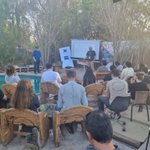
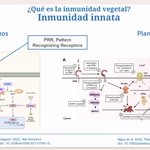
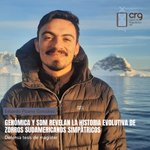
Conversaremos de cómo utilizamos la genómica para compreender el pasado y respuestas al futuro @InvestigacionUC @DesarrolloSusUC @mileniocrg @MilenioBASE @LiliNucleo

Del 15 al 20 en todas las regiones y para todo el mundo 🤩 ¡Te esperamos en el evento de divulgación de conocimiento más importante Latinoamérica! 👍
Visita 🌐 congresofuturo.cl
Giselle Muschett retweeted

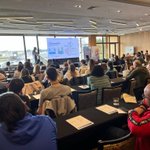
🔬Coloquio de investigación
Desde Atacama a la Antártica: ¿cómo la genómica se usa para la conservación de especies?
📌Juliana Vianna, académica de @DesarrolloSusUC e investigadora @MilenioBASE @mileniocrg, abordará el trabajo del Laboratorio de Biodiversidad Molecular UC.
1/2

Giselle Muschett retweeted

[CURSO] Anillamiento de aves passeriformes y sesión de certificación @BirdInTheBand en Chile
🗓️8-14 enero 2024, región de Los Lagos
🔗Inscríbete en forms.gle/xi3rzrTwTYKKzia4A
👉Consultas a [email protected]

Giselle Muschett retweeted

And our work leaded by Luetdke et al. got the cover of @Nature 😱 Super good for amphibians! 👏🏻👏🏻👏🏻
A beautiful galaxy frog from the Western Ghats of India 📸 Sandeep Das.

Giselle Muschett retweeted

PRENSA🗞 Conoce las 5 especies de #tortugasmarinas que surcan las costas de 🇨🇱
Te invitamos a leer esta noticia de @Emol sobre la Guía de Tortugas marinas en Chile, elaborada por @OceanosferaCL, @TNC_Chile, @ONGQarapara, y con el apoyo de SECOS. bitly.ws/WYNL

Giselle Muschett retweeted

SMBE2024 Puerto Vallarta has now opened the call for symposium proposals! Proposals are due Nov 10th. Results will be announced Dec 6th
#SMBE24
smbe2024.org
@SMBEmeetings


Giselle Muschett retweeted
Colegas de Latinoamérica! Tenemos una oportunidad única de tener la SMBE en Latinoamérica!! Manden sus propuestas de simposio!!! #SMBE2024 @OfficialSMBE

SMBE2024 Puerto Vallarta has now opened the call for symposium proposals! Proposals are due Nov 10th. Results will be announced Dec 6th
#SMBE24
smbe2024.org
@SMBEmeetings
Giselle Muschett retweeted

Hoy daremos inicio a una nueva edición del #FestivalDeLasCiencias en el parque #QuintaNormal a las 10:00 horas. Acompáñanos y disfruta de talleres, un globo aerostático, música y el lanzamiento de la cartelera de actividades.
¡Súmate y descubre la ciencia que hay en ti! 🥳

Giselle Muschett retweeted

✳️ ¡Por primera vez el Festival de las Ciencias llega a Puerto Williams! 👏 El investigador CHIC-@MilenioBASE, Máximo Frangópulos, participó hoy en la inauguración del ✨️ Festival de las Ciencias en la Región de Magallanes y la Antártica Chilena ✨️ #SomosCiencias

Giselle Muschett retweeted

Te invitamos a participar del III Encuentro de Ecología Urbana, donde presentaremos el Sistema de Certificación Jardines x la Biodiversidad y su metodología. Link del encuentro: youtube.com/@capeschile
@quintopaisaje @nemu8 @capeschile

Giselle Muschett retweeted

Is #yeast time at #mbiosys23: on ncRNAs in yeast by @ddelneri Perfect view of the lake in the background as well #puertovaras @ibiochile

Giselle Muschett retweeted
Beautiful picture of the opening cocktail of the @IPC_penguins in Viña del Mar, Chile! So happy to welcome penguin researchers from different parts of the world! 🐧

Giselle Muschett retweeted
The dream team at the reception desk of the @IPC_penguins @mileniocrg @MilenioBASE @molecularbiolab
Thanks for the hard work

Giselle Muschett retweeted

Se acaba de publicar el Ranking de Shanghai 2023! 👇UNAB ubicada en este prestigioso ranking, entre las cuatro mejores universidades de Chile junto a @uchile , @ucatolica y @udeconcepcion. Orgullosos de nuestra gran Universidad @uandresbello !! 👏#RankingShanghai2023 #UNAB"

Giselle Muschett retweeted

Big congrats to @Ju_A_Vianna and @elenagomezdiaz for being elected as councillors for SMBE! No doubt that you will do a wonderful job!!

Giselle Muschett retweeted
📢¡VIERNES DE NOTICIAS! 📢La Society for Molecular Biology and Evolution @OfficialSMBE nombró a la Dra. Juliana Vianna de @ucatolica @mileniocrg @LiliNucleo y nuestro @MilenioBASE como miembro del directorio de la sociedad (1/3) 🧵👏

Giselle Muschett retweeted

Day 30 of great biology papers. 🎆The final day.🎆
"General Nature of the Genetic Code for Proteins," by F. Crick, S. Brenner, L. Barnett & R.J. Watts-Tobin (1961).
This paper is, in my opinion, the most impressive in the history of molecular biology. Here's why...
****
When the structure of DNA was solved in 1953, molecular biology was a relatively barren landscape. By that, I mean that messenger RNA had not yet been discovered, nobody was quite sure whether there was any link between DNA and proteins, and there were zero technologies to isolate a gene, let alone sequence one.
And yet, just 8 years after that seminal paper, these four scientists used a simple experiment — and fragmentary evidence — to correctly determine that...
1. Each amino acid in a protein is encoded by a triplet code...
2. The letters in this code do not overlap (e.g. AUGACC is read by the ribosome as 'AUG' and 'ACC,' rather than 'AUG,' 'UGA,' 'GAC' etc.)...
3. There is a start codon.
Again, they discovered all of these things in the absence of tools to sequence DNA, or to compare a DNA sequence with a protein's amino acids. But before I tell you how they did it, I want to set the scene.
The year 1961 was, essentially, the annus mirabilis for molecular biology:
- In May, two separate groups reported that they had isolated and proved the existence of messenger RNA, and they postulated that it probably carried information from DNA to proteins.
- Jacob and Monod argued that there are two types of genes: Those that encode proteins, and others that regulate gene expression.
- Marshall Nirenberg showed that a chain of RNA containing the letters "UUUUUUUUUUUU" encoded a protein filled with phenylalanine amino acids, thus demonstrating a profound, initial insight into the genetic code.
(See the excellent review by Matthew Cobb: onlinelibrary.wiley.com/doi/…)
With these prior experiments in mind, Brenner, Barnett, Crick, and Watts-Tobin set out to understand how, exactly, the genetic code works.
Their experiments began with a bacteriophage that infects bacteria, called T4. When these bacteriophage are doused with mutagens, and their genetic material is altered, they sometimes lose their ability to infect bacteria.
Now, there is also a dye, called acridine, that causes single nucleotides to be added or deleted from a piece of DNA. This is quite important, because most other mutagens just randomly change sections of DNA. But acridine always adds or removes just one nucleotide.
So Crick put these two things together and had a brilliant idea. He took a T4 bacteriophage, exposed it to acridine, and found that it had lost its ability to infect E. coli. This strain was called FC0 — Francis Crick Zero. But then, he (and the others) used acridine to add or remove more letters in the bacteriophage DNA until it regained its ability to infect bacteria.
If they added one base and then removed one base, the phage infected the bacteria.
If they added two bases, the phage did not infect bacteria.
If they added three bases, the phage infected bacteria.
From these observations, they argued that the genetic code must use triplets to encode each amino acid. It was a brilliant takeaway, based on partial experimental evidence. From the paper:
"The simplest postulate to make is that the shift of the reading frame produces some triplets the reading of which is ‘unacceptable’; for example, they may be ‘nonsense’, or stand for ‘end the chain’, or be unacceptable in some other way to the complications of protein structure."
Even though the "combination of mutations strongly suggested that the code was based on units of three bases, the experiments could not prove that to be the case – a code using groups of six bases was consistent with the results," writes Cobb in his review.
"This, however, would raise all sorts of problems by massively increasing the number of either meaningless or degenerate sequences (there would be 4096 possible combinations of bases, rather than a mere 64). As Crick later put it, this was 'hardly likely to be taken seriously.'"
In his classic book on the history of molecular biology, The Eighth Day of Creation, Horace Judson called this experiment, "a classic of intellectual clarity, precision and rigour." And I agree.
Thanks for reading this series!
Paper: nature.com/articles/1921227a…
Full text: labs.bio.unc.edu/Goldstein/1…

ALT Leslie Barnett, Francis Crick and Sydney at the MRC. (© MRC LMB.)

Giselle Muschett retweeted

IPC11 - Early-bird registration extended to 23 July 2023 - mailchi.mp/912c3966e82f/11th…
Giselle Muschett retweeted

New #Earthquake. 🌎
5.7 (M) - 39 km al noreste de Santiago de Chile - Chile.
2023/07/09 17:11:34 UTC.
App: goo.gl/XWHGvS
#Chile #Chile #earthquake #sismo #temblor #terremoto
