





goinfrex.eth retweeted

Really nice report. Follow up: why has the fall in AI prices been so fast?
When you plot the price decline against cumulative R&D investment rather than time, you get the elasticity of price declines to R&D investment. By this margin, AI is not unusual – its price elasticity to R&D investment is squarely in the middle of Epoch's considered technologies.
So the AI price fall is historically unprecedented because we've dumped money into AI R&D at a historically unprecedented rate – and that R&D has paid off at a very average rate.


goinfrex.eth retweeted

i've been surprised at the response to Jev, but it makes sense in retrospect. sure it's just a classifier but it's a zero shot classifier with frontier-ish intelligence. i'm surprised someone hadn't built it before. i wonder what other old ML ideas are also worth rescuing
In 1995, I would have stood here explaining why you needed a website. In hindsight, a website was never an advantage but a requirement. The firms that went without lost their customers to the firms that didn't.
AI will play out the same way. Intelligence will not differentiate you, because everyone will buy it off the same shelf. The advantage that holds comes from what you build out of the residue of every customer interaction: context on your customers, and on your relationship with them, that no competitor can reconstruct.
goinfrex.eth retweeted
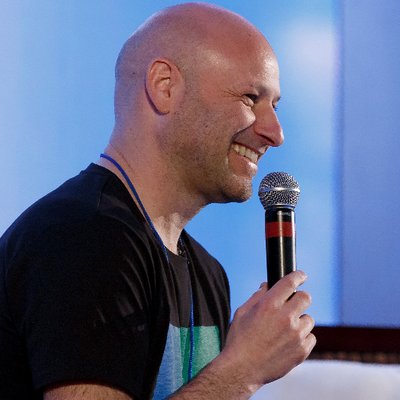
You're growin' up fast, kid. I remember when I could fit you on my laptop and bounce you on my knee. Could never get you to sleep back then. Still nobody can.
Gonna get you a nice ZK prover for your birthday. Happy 11th.


Happy Birthday Ethereum, click the link to join the party.
You get 11x11 pixels and 11 colors to make something fully onchain.
Then you share your link.
Everyone who draws through your link connects to yours. Everyone who draws through theirs connects to them.
By tomorrow the canvas will combine everybody’s work and present a picture of how Ethereum is formed, the way it always has been; from person to person, and from block to block.
The canvas is open for 24 hours, and it keeps growing the whole time.
When it closes, your square sits next to your friends’ for as long as Ethereum runs for forever.
Long live the world computer.
Start drawing now, mint opens in 1 hour at networked.art/11x11

goinfrex.eth retweeted

For my first post, I’m sharing a letter @NVIDIA signed on why open models matter.
AI will transform every industry, power every company, and be built by every country.
Open models strengthen safety and cybersecurity, accelerate innovation and diffusion, and enable sovereignty.
The world needs both frontier closed models and frontier open models.
images.nvidia.com/pdf/Open-W…


On one side the frontier models from @AnthropicAI and @OpenAI
On the other near-frontier models like Moonshot AI in China
While Anthropic and OpenAI approach the $1 trillion valuation, Moonshot AI current valuation stands at $30 billion
Since DeepSeek several months ago, and now Moonshot AI, the U.S. lead at the frontier of AI is narrowing, even as the technology becomes central to national security, economic power, and geopolitical influence
As I wrote previously, AI labs will have to invest either in distribution and applications, the way Anthropic is positioning itself with Claude, or in infrastructure (data centers, chips, and so on), the way OpenAI and SpaceXAI are

I love Satya's essays, because they push you toward deeper reflection
Everyone is focused on the model, the benchmarks, the subscription etc, but the paradox is this: to benefit from this intelligence born of compute and algorithms, we have to feed it what makes us unique
→ Context, vision, methods, preferences, decisions, corrections, and the rest
The model then, is only one part of what it takes to reach a genuinely relevant result. the real capital lies in the layer that retains memory, coordinates the tools, and accumulates knowledge over the course of working with the model. And it's the same for companies and individuals. you have to own that layer, protect your footprint, and be able to switch models without starting from scratch - don't be depend over one model!
That's why the Pi Agent harness is the most important piece of software I've used over the last six months. to give a bit more context: models remain important, and they serve as the engine in a car but Pi Agent is everything else: the wheel, the GPS, the dashboard, the chassis
Models and engines need to be easily interchangeable as the structure of your car should never make you lose sight of the destination, nor the experience of the journey

The two best models on earth are still gpt and claude and they've been climbing the same curve for years, trading the lead every few months.
there's no clear winner, but we start to see open-source competitors: deepseek, qwen, kimi glm may will commoditized the model layer and is getting competed toward zero margin. so the only thing that matters now is where you go to escape it, and anthropic and openai split in two opposite directions.
anthropic climbs UP on top of the model into the application layer: code, design, cowork, tag and the rest. the goal is to stop selling a chatbot and start selling the labor, own the workflow the filesystem the inbox the slack channel where work actually happens and let the model underneath become a swappable part.
they subsidize that layer hard, doubling cowork limits, handing you more value than the sub costs (not generosity) a growth engine built on habit.
openai goes the exact opposite way DOWN under the model into infrastructure, $500B on stargate, $1.4T floated over eight years, custom broadcom silicon, gigawatts of texas power, owning the compute floor so nobody can match inference at scale.
so, one owns everything above the model the other everything below it and the model gets squeezed from both sides, the model alone is no longer a moat but it stays strategic for the narrative and the ipo that's coming, and the sharpest tell is elon, xAI folded into spacex and turned into a compute landlord renting colossus to anthropic, google, cursor instead of fighting on models. whether that was real foresight or just weak grok adoption dressed up for an ipo, he landed in the right structural spot before almost anyone.
so yes keep reading the benchmarks to always use the best model, but who leads ai in ten years is still wide open and it won't be decided by the models alone

OpenAI vs Anthropic 🚨
A snapshot of two of the world’s leading AI companies as of mid-2026.
From ChatGPT to Claude, both continue to drive innovation across productivity, coding, research, education, and enterprise, helping shape the future of artificial intelligence.
How do these AI leaders compare? Here’s a quick overview.
Which AI assistant do you use the most?

goinfrex.eth retweeted

🇪🇺 Chat Control has passed 😔
They can and will now legally scan any person's messages, emails and photos you send without a warrant
The way they passed this law when the majority of the European Parliament was against it will shock you:
They waited until most EP members were on holiday so only a few were present and then created an "urgent" vote for it to pass it through
There's nothing democratic about any of it and big powerful forces are behind this that can manipulate the EU for whatever they want
Democracy in Europe died a bit today 😔


Open-source Chinese models are getting very smart and I think we are moving toward a time where models become a commodity. That is why Claude is trying to build an Apple-like ecosystem, keeping the application layer inside Claude
The real bottleneck will be chips and hardware. There will still be opportunities to build applications on top of models and sell very specific services to very specific niches.
In any case, open-source Chinese models will probably be adopted quite fast as the gap between US AI labs and Chinese AI labs keeps getting smaller.

We're living through a paradox
On one side, you've got the tech people, completely hooked on the latest models, switching the day a new one drops, paying whatever it costs to chase the last 10% of performance and they treat a marginal edge like oxygen (i'm in that category).
On the other side, you've got the entire generl public, they've heard of AI, they know it exists, some open the free model (GPT/Claude) once in a while, most never touch anything at all, and they genuinely believe they're in the same game as the first group.
Here's what people miss: the gap between those two populations isn't closing, it's widening every single week, and it's not a gap in tools, everyone can technically access this, it's a gap in what you do with it and how early you get there.
And this is the part that actually matters, the access to information that defines where the opportunities are, the arbitrage, the edge, that's tilting hard toward the people running the best models, they see patterns earlier, they synthesize faster, they ask better questions and get better answers, and they compound that advantage daily while everyone else is still deciding whether AI is worth twenty bucks a month
So the real divide of this decade won't be who has access to AI, almost everyone will, it'll be who understood early that the model you use is the ceiling on what you can see.

We are now in a position where a tiny proportion of the population uses Fable or soon GPT-5.6, while everyone else's experience of AI is 8-30b-model level - Google's AI Overviews, Meta AI, ChatGPT free tier, maybe MS Copilot at best. People outside of tech must be completely baffled how this is supposed to take their job, and annoyed that hundreds of billions are being poured into it.


It will be interesting to see if they downgraded Fable's pre-shutdown performance.
In recent weeks, GPT has performed better than Claude. Let's see what happens with GPT 5.6

Best econ paper I've read in months about AI, the one from Jones & Tonetti. The core idea is very simple
Automate 99% of a job and the last 1% you couldn't automate becomes 100% of the work, the constraint never disappears when you automate around it, it just moves and quietly becomes everything
the paper answers the question 'we automated so much, so where's the growth' but we're measuring the wrong thing
think about building a house, you can prefab the walls, the roof, the windows in a factory, fast, perfect, ready in days, but if the permit takes six months to come through, the house takes six months, all that speed upstream doesn't matter, you're still standing there waiting on the one piece nobody could rush.
so the whole thing still moves at the pace of whatever you couldn't rush
token usage will continue to increase and bottlenecks will gradually disappear.
productivity will increase, just probably not as fast as people expect
so at the end, the real edge goes to people who can either remove those bottlenecks or keep enough context in their head to work around them

One curious puzzle: given how much engineering has been automated by AI, where's all the new software?
My favorite recent paper on the economics of AI, by @ChadJonesEcon (who just joined Anthropic) and @ChrisTonetti, includes some fascinating and counterintuitive explanations 🧵

Nice piece from @desh_saurabh, the trust-by-proof (zkVM) vs trust-by-policy (canton) framing is exactly why institutions hesitate today, and my bet is they tip toward trust-by-proof over the coming weeks and months
If a significant part of thesis lies in ZKsync not having competition as Ethereum institution infrastructure, I would recommend having a second look. ZKsync might be the loudest right now, but they're far from the only ones, and most of them are making progresses quietly
time will tell


Tdlr: with Claude Tag we're moving away from fragmented, private workflows and toward transparent, async collaboration. Self-closing loop where intelligent agents independently triage a problem, map out the steps, and ship the solution
Claude has again, crushed a lot of VC-funded startups. They are building the best model in the world, while keeping the value within their own ecosystem. This is important to reach the $1T in revenue that Dario Amodei is aiming for.
A new player enter the game: @SakanaAILabs
Raised $400M and now competes with Fable & Mythos across several benchmarks... what's interesting is that Fugu is not a frontier model, but an orchestration layer.
A model decides which other models should work, how they should collaborate, and how their outputs should be combined.
On one side, you have frontier models doing everything they can to build the smartest models in the world.
On the other, orchestration layers that make use of all these models, get them to work together, and achieve excellent results with far fewer resources.


Introducing Sakana Fugu: A full multi-agent orchestration system accessible via a single model API.
Our ‘Fugu Ultra’ model matches the performance of Fable and Mythos, delivering frontier capability without the risk of export controls.
Try it: sakana.ai/fugu 🐡

goinfrex.eth retweeted
This is how you do a great startup video
Humble and chill and a real cool backstory

Today, we're introducing Lassie and $47M in funding led by a16z.
We're building AI that runs small businesses, starting with doctors' offices.
Lassie is already trusted by 700+ practices across the country, working autonomously to provide them with 30 hours of labor per month.
To get here, we first had to leave Robinhood and Superhuman to work in offices ourselves.
Here's how that went.