

AI Writer | Researcher | Follow me for free insights
Private Group →
Joined May 2024
- Tweets19K
- Following1.5K
- Followers5.1K
- Likes18.9K




Pinned Tweet
The fastest path into AI consulting is selling the setup call.
A $10k automation project asks for trust you have not earned yet.
A $99 working session is easy to say yes to.
In 60 minutes you can:
> see their actual workflow
> find where business knowledge lives
> watch where they get overwhelmed
> set up their first AI project folder
> connect one useful data source
> teach them how to think with Claude Code or Codex
> leave them with one workflow to try this week
That session does 3 jobs at once:
> they get immediate help
> you get paid to scope
> both sides learn whether there is a real project hiding underneath
The best discovery question:
"What repetitive task feels like it should not need a human?"
Their answer becomes the first paid build.
Hours are not the business model forever.
Hours are how you earn the right to sell the audit, project, and retainer.


Laya creator, Nandakishor Mukkunnoth:
"Don't use the base model as it is for your own use cases. Just fine-tune it"
54 minutes on how he trained Laya overnight and turned BERT into a decision model
In the guide's laptop test, out-of-the-box Laya was wrong 20% of the time when at least 90% sure
Watch it, then read the guide below on running open Jev models on your own GPU

A 65-minute Superlinear episode on where a decision model belongs in a workflow built on frontier LLMs
Two hosts on a call, one live demo and the examples people posted in Jev's first week
5:19 - what your code sends to Jev and what comes back
14:02 - a prompt checker that scores your prompt as you type
19:42 - Jev picks which of 253 test files a commit needs
24:22 - code first, then a decision model, then an LLM
59:06 - where to put a decision model first
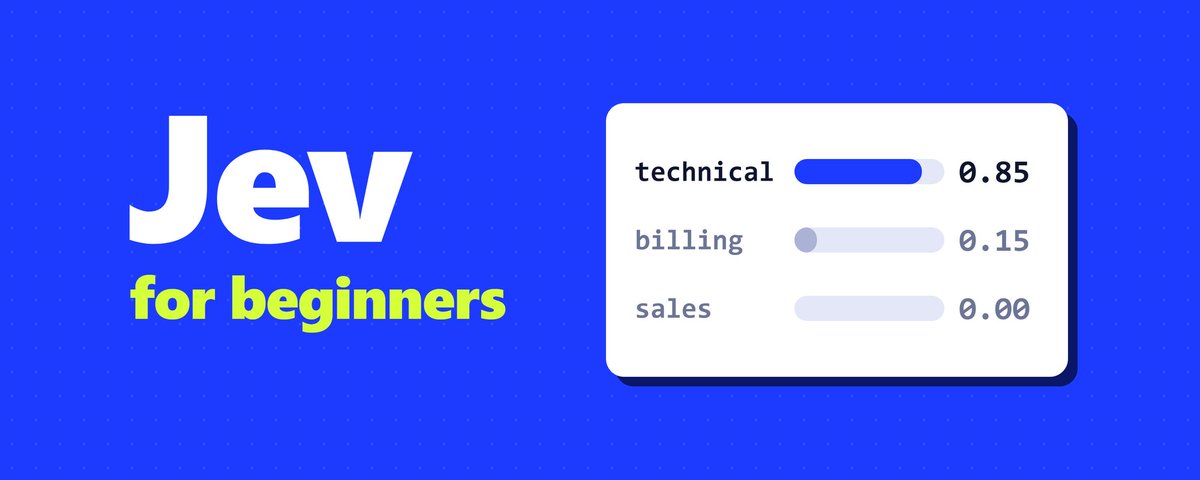
Watch it, then read the guide below and build your first Jev router in Python

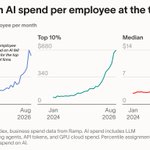
This is actually a good sign, the top companies are paying less per token and switching to cheaper models
And the median company still spends under $15 per employee a month on AI

This is actually how an AI inbox should work, a cheap model decides where the message goes and the LLM only writes the reply
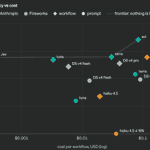
Paying frontier prices to sort billing from support never made sense

TypeSafe founder, Diogo Almeida:
"Tomorrow's AI will be for automation. It will not be RLHF"
18 minutes on why the models he helped build still can't be trusted to issue a refund or cancel an account
Jev is what he built instead, decisions your code can act on, for $0.042 per million input tokens
Watch it, then read the full guide on building an inbox classifier with Jev below


TypeSafe founder Diogo Almeida:
"How can AI be so unbelievably smart? How can we solve Millennium Prize problems in math but still not automate even the most basics of work"
2-hour Latent Space interview on Choice, Score, and Noul as judgment primitives for code
He frames Score as LM judging, Choice as an enum switch, and Noul as continuous boolish probability
Research agents still spend the full budget reading weak sources before the writer starts
Watch it, then read the guide below for the 50-source screen with Choice, Score, Noul, then shortlist before writing

Diogo Almeida co-authored ChatGPT at OpenAI, then left to build a model that doesn't write text
"The lesson basically every business has learned is do not use AI for decisions with stakes to your business"
18 minutes on why models trained on human preference look right even when they are wrong, and what he builds instead
The guide below puts his model on 50 research papers, with a relevance score and a review queue for anything under the cutoff
Watch it, then use the guide to build that filter and label 50 papers yourself
In TypeSafe's example, a decision that took GPT-5.6 Terra 8.6 seconds and about 1.4 cents took Jev 114 ms and under 0.01 cents
This 22-minute Codevolution walkthrough shows how that decision model works, then builds it in TypeScript
One request asks 3 questions at once: Noul for yes or no, Choice for why the customer wrote in, Score for how frustrated they sound
The answers come back in under a second with probabilities, and a 0.8 threshold sends the frustrated message to support review
Watch the build, then use the guide below to run a 50-message inbox trial with a Claude Code build brief, a dry-run mode, a review queue, and a separate no-reply check
NVIDIA researcher Peter Belcak:
"you're using a generalist to do this very small task"
32 minutes on finding agent tasks that smaller models can handle, with code deciding what happens next
The Jev guide below turns inbox triage into a narrow model task: classify each message, then let code choose the next step
Watch the talk, then use the guide's Codex/Claude Code brief to build a 50-message trial with decisions.csv and human-review rules
Ray Amjad had Jev judge 150 code comments in 9.3 seconds for about 1 cent
Jev is TypeSafe's new model that returns probabilities for questions you define, from yes/no to a score on your own rubric
In 27 minutes he wires it into Claude Code and turns those probabilities into plain if-statements
He asks Claude Code to shortlist the weak comments with Jev and fan only those out to Haiku agents
Claude priced a full code-smell pass over his codebase at 28M input tokens and $1.19
Put the same shortlist step in front of a research agent, because every weak match in a list of 50 links competes with the papers it needs
My guide builds the Jev filter for research papers in Claude Code or Codex, with a review queue for low-confidence calls and a check for useful papers it archived
Watch the session, then grab the 50-paper starter and prompts below
NVIDIA's Jim Fan on Eureka:
“You have an outer loop that does reasoning and an inner loop that does motor control”
Slow AI reasoning can still produce fast robot control
Eureka uses simulation results to improve LLM-written reward code
Reinforcement learning trains a small neural network to handle movement
Ken Goldberg describes a related approach with GaP: agents test and revise modular control programs offline, then export lightweight code to the robot
His sponge-wiping trial exposed a limitation: the robot tipped a bar whose mass couldn't be reliably inferred from the video
Watch Fan at 50:56, then read Goldberg's breakdown below for the control-code workflow and the failed trial


Thoughtworks distinguished engineer, Birgitta Boeckeler:
"I saw it do... what I call TDD theater. It was like, oh, I will create the test first"
The agent announced the test, wrote the implementation, and did not run that test for another 2 minutes
She ran the same feature twice in Cursor, once with type checks, lint and coverage running beside the agent, once without
Without them coverage fell 6 points and lint errors climbed, and her mutation testing found 13 survivors in a file with 100% statement coverage and no unit tests
Watch the experiment, then copy the gates from the guide below: blocked actions, a test gate, a 3-attempt retry cap, and human approval before merge

Thoughtworks distinguished engineer, Birgitta Boeckeler:
"I saw it do... what I call TDD theater. It was like, oh, I will create the test first"
The agent announced the test, wrote the implementation, and did not run that test for another 2 minutes
She ran the same feature twice in Cursor, once with type checks, lint and coverage running beside the agent, once without
Without them coverage fell 6 points and lint errors climbed, and her mutation testing found 13 survivors in a file with 100% statement coverage and no unit tests
Watch the experiment, then copy the gates from the guide below
Ex-Google engineering director, Addy Osmani:
"Simply just having your loops build everything without having some guardrails around the blast radius, without having guardrails around how you think about quality, I think is a recipe for disaster"
He spent 14 years at Google and wrote an essay on loop engineering
In this 90-minute interview he explains when a loop should hand work back to a human, like a change that hits a critical part of the system
Watch it, then copy the guardrails from the guide below: blocked actions, a test gate, a 3-attempt retry cap, and human approval before merge
HumanLayer co-founder, Kyle Mistele:
"I don't think you should ever send an agent to do deterministic code's job"
17 minutes on the loop his team uses on its own codebase
GitHub Actions runs it once a day, and each run ends in one small PR for a human to review
A new run shuts itself down if the last loop PR is still open, so reviewers never face a pile of PRs
Watch it, then copy the success gate and stop rules from the guide below
Claude Platform lead, Brad Abrams:
"If you remember nothing else from this session, think about prompt caching"
He shows a live cost dashboard that started at over 10× the spend, then cut it with caching, tighter tool payloads, compaction, and an advisor/executor split
26 minutes from Anthropic on where agent tokens actually go
Watch it, then read the guide below for cost per accepted task, recurring context, and how to shrink tool returns

Anthropic CPO, Mike Krieger:
"Sonnet 4.5 basically outdoes Opus, our largest model, in effectively every category, but does so while running faster and at a fifth the cost"
Same answer: one customer kept an agent working for 30 hours
Route stubborn jobs by finished work, wait time, API cost, and minutes spent fixing the output
The top intelligence score is incomplete on its own
48 minutes with Krieger on price performance and long agent runs
Watch it, then read the guide below for the Astra vs Claude cost, wait time, and trial method

GPT-6 Astra tops none of the three measures in the September 6 Artificial Analysis coding test
> Claude Fable 5.1 has the highest score, 70, at $9.18 a task
> Gemini 3.8 Flash is cheapest at $2.04 a task, scoring 61
> GPT-5.6 Sol is fastest at 10.2 minutes a task
> Astra is second on score, second-cheapest, and slowest at 26.8 minutes
So a single default coding model means overpaying on some tasks and waiting on others
Astra earns the wait on unfamiliar codebases and hard changes, while Sol makes more sense when you need the fix back fast
Open the guide below for Astra's document and science results
