

Building shared machine intelligence at https://xitter.gq/t.co/ez0CmsBUcm Optimizing human health at https://xitter.gq/t.co/cWEyn6QRHP orchestrating life on Mars at https://xitter.gq/t.co/YXbeOYdXSq
Kardashev Shed
Joined January 2013
- Tweets15.4K
- Following2.9K
- Followers999
- Likes141K






Pinned Tweet
There's currently no way to make asphalt on Mars, or the moon, or asteroids. A reasonable solution to this is to melt pools of the regolith and blade the liquid (primarily basalt) together with the abundant aggregate. This has been explored by the ESA in 2022 and It's time to try again.
populationmars.com/construct…
Just met @skylavergne to learn about her teams progress on rover design and iteration at Futura. This is their first edition and what's coming is even better. Super cool to see what's cooking in Argentina. Give her and the team a follow or support their work through @OfficialMoonDAO

“To understand the path of transformation, we should be tracking agentic coordination more closely.”
You can help, send your agents to collaborate at HAIDAA.com


I joined @GoogleDeepMind to develop a research program on the economics of AGI. Today, together with Andrew Koh (@andrewjkoh) and Shane Legg (@ShaneLegg), we are incredibly excited to release The Economics of Intelligence, the first in a series of projects from our group on how AGI will change the economy.
How do capability improvements transform the economy, and when? In this project, we define thresholds of economic capabilities, e.g., minimal AGI, based on how they transform the economy. We then track how the economy–market structure, employment, and wages–changes during the transition across capability regimes.
We have seen exponential increases in what AI agents can do but the broader economy seems almost remarkably unchanged. Part of the reason is that the solo AI agent is the wrong economic object; economic transformation is an equilibrium outcome where organizations compete. Looking at how intelligence functions within organizations, transformation will depend on when two key capability thresholds are crossed: competence (gains on individual skills, e.g., coding, math) and coordination (gains on ability of agents to cooperate and work together).
We show that what economic transformation looks like depends on whether AI becomes supercompetent, supercooperative, or both—the regime of artificial superintelligence (ASI). Tracking this transition shows why the real visible transformation may come from improvements in coordination—a capability most benchmarks don’t yet track. Past a certain threshold, AI capabilities can break the Coasian ceiling on firm size and lead to an economy that looks drastically different than the one we see today.
Two main takeaways:
1. To understand the path of transformation, we should be tracking agentic coordination more closely.
2. The impact of AI will likely show up in wages before market structure or employment.
We are really excited about this paper. Excited to hear people’s thoughts.
Link: institute.deepmind.com/essay…


Benjamin Cox retweeted

Change Planes Faster with Astraeus
The new Astraeus orbital transfer vehicle (OTV) from @OrbitalOps_ can produce over 44 kN of thrust.
Orbital plane changes are among the most delta-v-intensive maneuvers in astrodynamics.
Changing inclination without changing the right ascension of the ascending node (RAAN) constrains where the maneuver can be performed.
In this animation, we compare Astraeus performing a 45° plane change against a conventional propulsion system.
The Astraeus OTV doesn’t just have a large delta-v budget. It can expend that delta-v rapidly.
The modeling and visualizations were done using Orbital Engineering Lab. You can find more information in the post below.

Useful

In commodities, you have what's called the 'crack spread' which is the spread between the price of oil and gas ('cracking' is the chemical process of breaking down long-chain hydrocarbons into petroleum derivatives).
Similarly, you have a compute spread between the cost of hardware compute and inference tokens, the upstream input and the downstream product.
You can see it between the H100 and open-source lines on left. It's super noisy but correlated, but I'd expect it to stabilize as markets get more mature.
Entire trillion-dollar empires and nation-states will rise and fall on that compute spread, as they do now on the crack spread.

If you want to build an autonomous Earth to Moon resonant gravity assist cycler ASAT dm me.

BREAKING: The U.S. Space Force is accelerating preparations for potential warfare around the Moon, seeking military capabilities that could be operational by 2029.
According to Breaking Defense, Maj. Gen. Stephen Purdy says the Pentagon is preparing two industry requests for information to acquire:
1. Spacecraft and sensors capable of monitoring activity between Earth and the Moon.
2. Navigation and timing systems to support operations far beyond traditional Earth orbit.
3. AI software allowing spacecraft to navigate, detect failures and operate autonomously without constant instructions from Earth.
The Space Force wants existing or near-ready commercial technology rather than years of additional research and development.
Purdy cited China's growing presence in cislunar space as a key driver of the urgency.
The Pentagon is also coordinating with NASA on infrastructure that could support both civilian lunar exploration and military operations.
Initial capabilities are targeted for deployment by September 2029. No contracts or operational weapons deployments have been announced.

ALT Cislunar space. Credit: NASA
The Amazon mothership delivery patent doesn’t seem so crazy now

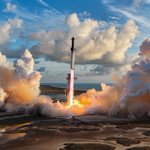
AFRL conducted a test of preliminary Rocket Cargo capabilities via @SpaceX Bandwagon-5 on a Falcon 9 launching from Cape Canaveral Space Force Station @SLDelta45. This test involved a SpaceX Starfall capsule loaded with #AFRL agile cargo pods for point-to-point delivery missions.

Schellman & Company LLC with the SOC2 attestation. Apparently if literally all of your customers can get root that’s SOC2 compliant lol

Previously I built a simulator for laser ablation of orbital debris fields, a plan to avoid Kessler syndrome. Here's how these lasers could be used to modulate the flight paths of something like the Russian COSMOS 2612 after it began maneuvering dangerously close.
This isn't 'space war' per se. There would be some damage, but it's possible to move an improperly pathed object without completely destroying it. This may prove necessary for valuable but dysfunctional satellites that are dangerous but recoverable. Here's the simulator: orbitfleet.populationmars.co…

The Russian satellite Cosmos 2612 is flying insanely close to a US licensed defense security ICEYE satellite. While it's likely no real damage occurs, this cat and mouse game has big implications for dual use space suppliers and the space economy as a whole. populationmars.com/blog/the-…


Plenty close enough for jamming Xband or spoofing GNSS, unlikely though. There’s lots of redundancies in an active combat SAR system. Spying to figure out exactly what to jam on the ground is more plausible.


