

retired married 38 yrs 2 kids 5 grandkids fool who likes philosophy, sinner but loves theology cruising in the of fast lane of life with my left blinker on, 🚍
Joined February 2025
- Tweets5.4K
- Following836
- Followers641
- Likes11.7K






Hairy Fatback retweeted
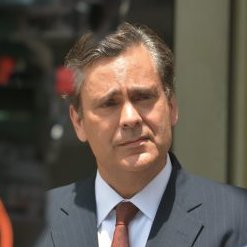
The release tonight in the Omar case includes a couple of revealing elements, including this statement from the Justice Department: "The United States believes that ILHAN has committed [REDACTED] crimes over decades— beginning long before she was ever in Congress."...
Hairy Fatback retweeted

Joint Statement on the Eighth United States-Qatar Strategic Dialogue: An Enduring Strategic Partnership
state.gov/releases/office-of…

Hairy Fatback retweeted

Victor Davis Hanson: Elon Musk Is Unforgivable to the Left
Elon Musk doesn't understand that the Left will go after him no matter what he says or does.
“He hasn't done anything wrong, but they're gonna go after him for being an apostate.”
@vdhanson
Hairy Fatback retweeted

MAiD Deaths: 76,475
COVID Deaths: 65,118
Median age at death:
MAiD: 77.9
COVID: 86
Hairy Fatback retweeted

Iranian truckers are striking across multiple cities, threatening the transport network the Islamic Republic has been forced to rely on as the U.S. naval blockade chokes maritime trade and oil exports.
Drivers in Shiraz, Chabahar, Dezful, Masjed Soleyman and other locations have reportedly halted work over soaring fuel, insurance, repair, tire and spare-parts costs while freight rates remain stagnant. The Union of Truck Drivers and Trucking Associations Across Iran has backed the action and called for wider participation, with drivers openly blaming “incompetent officials.”
The strike hits the regime’s fallback strategy precisely where it is weakest. With crude exports heavily constrained, CENTCOM estimating more than $25 billion in blocked oil revenue, and roughly 43 million barrels reportedly stranded, the Islamic Republic has redirected more trade toward land borders and the Caspian.
But redirecting cargo does not remove the cost of moving it. Reports describe thousands of trucks queued at the Turkish border, prolonged delays at Pakistani crossings and freight costs rising as much as fivefold on some routes. Officials advertise adaptation while drivers shoulder the losses—and are now refusing to keep paying for it.
That refusal threatens more than cross-border commerce, because trucks carry food, fuel, industrial inputs and consumer goods between terminals, warehouses, factories and cities. A sustained stoppage could leave supplies stranded even after they clear customs, deepening shortages and price pressures for households already facing severe inflation and collapsing purchasing power.
Reported participation in Khuzestan, including roughly 50 trucks in Masjed Soleyman, brings the action into Iran’s oil-producing heartland. Its precise effect on energy logistics is still emerging, but the location adds another potential pressure point to an already strained distribution system.
The strike also coincides with rolling blackouts, fuel shortages, petrol-station queues and electricity-worker protests, creating disruptions that can reinforce one another. President Pezeshkian’s appearance before reporters in a darkened office, urging the public to endure winter, captures the distance between official assurances and daily conditions.
The regime faces an increasingly expensive choice between concessions under severe financial pressure and coercion that could turn a livelihood dispute into a wider political confrontation.
How far the strike spreads and how long it lasts will determine its impact, but the weakness it exposes is already clear—the regime’s alternative trade routes depend on workers whose livelihoods its policies and failures have helped destroy.
Officials can demand endurance and announce new corridors, but they cannot keep goods moving indefinitely by forcing truckers to work at a loss.

Iran’s trade squeeze is spreading inland as congested border crossings expose the limits of the regime’s alternatives to blockaded ports.
Heavy truck congestion at the Yallama–B. Konysbayev crossing between Kazakhstan and Uzbekistan illustrates the bottlenecks facing cargo moving through Central Asia.
Local reports described roughly 990 trucks, queues stretching around 40 kilometers and drivers waiting several days.
Uzbek customs subsequently said the queue had fallen to approximately 100 trucks by the morning of November 20. Officials attributed the surge primarily to growing transit from China, Russia and Belarus.
The crossing is not exclusively an Iranian supply route. But China-origin cargo can pass through Kazakhstan and Uzbekistan toward Turkmenistan and Iran—meaning Iranian imports must compete for capacity with wider regional trade.
Diverting cargo inland does not create new roads, border capacity or customs staff. It moves the pressure somewhere else.
Every additional crossing introduces another potential inspection, delay, handling charge and payment complication.
For manufacturers, that can mean missing raw materials and spare parts. For importers, higher transport and financing costs. For consumers, those costs can feed into higher prices and shortages.
This is also where the United States is seeking to increase pressure through Task Force Iron Gate.
Announced by CENTCOM on November 7, the task force coordinates efforts to disrupt advanced weapons, dual-use technology, sanctioned materials and illicit revenue moving through Iran’s land borders and the Caspian Sea.
It is not an American force physically sealing Central Asian crossings. Its effectiveness depends on intelligence, interagency coordination and cooperation from regional governments.
The Yallama congestion does not establish that Iron Gate caused the delays. It demonstrates something more basic: the alternative corridors already have constraints that additional enforcement could make more costly.
Iran can adapt through neighboring countries, intermediaries and alternative routes. But those options cannot fully replace the volume and efficiency of maritime trade.
Meanwhile, restricted oil exports threaten the foreign-currency income needed to finance imports. Finding a truck route does not solve the problem of paying for the cargo.
The regime therefore faces two pressures at once—reduced access to revenue and more expensive ways to move goods.
The blockade’s consequences do not stop at the coastline. They push trade onto slower, costlier corridors where congestion and targeted enforcement can compound the damage.
The Islamic Republic can reroute cargo. It cannot make border capacity unlimited—or replace lost oil income with longer truck queues.

Hairy Fatback retweeted
Victor Davis Hanson: Rubio to the Global Bureaucrats—We're Not Listening Anymore
Secretary of State Marco Rubio's Federalist Society speech challenged international institutions that claim moral authority while selectively enforcing their standards. From the International Criminal Court to the World Health Organization, the criticism raises a larger question: Why should the United States continue deferring to unaccountable global bureaucracies?
Full episode: youtu.be/7scP1TMJbBc
@vdhanson
Hairy Fatback retweeted
One negative to universal healthcare that nobody ever mentions is that it incentivizes the government to kill you instead of paying for that healthcare.


Hairy Fatback retweeted
Trump has said economic pressure would squeeze the Islamic Republic harder than continued military strikes—and regime officials are now admitting the damage in their own words.
In just the past few days, regime officials have described economic pressure as a threat to the system’s survival.
Masoud Pezeshkian, President
“We are engaged in a silent war that is far more difficult than one in which missiles are launched and destruction is caused. It is an economic war… and it is no easy battle.”
Mohammad Bagher Ghalibaf, Parliament Speaker
“No matter how much military power we have, if people are hungry and we don’t have financial circulation, economic growth and domestic production, we will not endure.”
Seyyed Ali Madani-Zadeh, Economy Minister
“Inflation has exceeded 80%, and the pressure on people’s livelihood is high.”
Abdolnaser Hemmati, Central Bank Governor
“The economic blockade is a silent war that has raised the exchange rate and inflation, made access to financial resources difficult, and caused problems for people’s livelihood.”
Abbas Araghchi, Foreign Minister
“The blockade must be broken. We will make every possible effort to export oil and break the choking blockade.”
Kazem Gharibabadi, Deputy Foreign Minister
“We consider the economic blockade imposed by the US an act of war, and we will take whatever measures necessary to break it.”
Alaeddin Boroujerdi, National Security and Foreign Policy Commission member
“We cannot bear the economic blockade imposed on our people.”
Vahid Ahmadi, National Security and Foreign Policy Commission member
“If we cannot sell oil, others should not be able to sell it either.”
These translated remarks include both recent warnings and earlier statements, but their message converges—military power cannot replace oil revenue, restore purchasing power or keep the economy functioning under sustained financial pressure.
The regime projects strength while its own officials explain the conditions that could undermine its survival.
And rather than accept responsibility for the policies that helped create this crisis, figures within the system threaten neighboring countries if the Islamic Republic cannot sell its oil.
Ordinary Iranians bear the hardship while the regime threatens to make the wider region pay for its predicament.

The Islamic Republic is now publicly diagnosing itself as vulnerable to collapse from within.
Parliament Speaker Mohammad Bagher Ghalibaf told parliamentary commission chairs that the “neither war nor peace” situation cannot continue. He argued that the usual political arguments—branding negotiation as surrender or talk of war as warmongering—are useless.
More importantly, he stated that the enemy has concluded another “40-day war” cannot achieve its goals. As a result, its first priority has shifted to disrupting internal security, applying economic pressure, and engineering collapse from inside Iran.
This is not routine rhetoric. Senior regime figures rarely state so clearly that the decisive threat is no longer a large-scale external war but the internal conditions that could unravel the system.
Ghalibaf framed the shift as the enemy’s calculation after recent conflicts, then prescribed the remedy: “lasting deterrence” achieved through unity, cohesion, and urgent economic measures, including energy reforms that he said must begin with gas rather than gasoline.
The push to end the limbo is not his alone; both he and President Pezeshkian have cited an explicit order from the Leader to resolve it.
The admission matters because it reveals how the regime now assesses its own position. After months of declaring military achievements and deterrence, the highest levels are acknowledging that economic strain and internal instability are the primary risks to survival.
Military readiness is still asserted—they insist any new conflict’s scope would be set by Iranian forces—but the operational priority has moved inward. That pivot is the core of the statement.
For Iranians, the implication is direct. When the regime defines economic pressure and internal disruption as the enemy’s main method of bringing the system down, everyday grievances become security problems.
Protests, strikes, shortages, inflation, and public anger can be recast as foreign-orchestrated operations rather than the results of policy failure, mismanagement, and repression. Once domestic discontent is classified as enemy activity, demands for accountability are treated as threats.
The call for “unity and cohesion” then functions less as an appeal for shared purpose and more as a warning that dissent will be handled as a security matter. This is the same framing the system has long used to justify surveillance, arrests, and force against its own population.
The contradiction is sharp and self-generated. The regime presents itself as having reached a point of military deterrence that deters another major war, yet it simultaneously identifies the economy and internal security as the fronts on which its survival is now contested.
Victory speeches about the armed forces do not restore purchasing power, end shortages, or repair public trust.
Ghalibaf is not predicting collapse, but by naming internal collapse as the adversary’s priority and elevating economic and security measures as the response, he is acknowledging that the system can be undermined from within on those grounds.
The practical test is therefore internal. The regime can treat the economic and social pressures it has identified as problems to be managed through reform and relief, or it can treat the people experiencing them as the instrument of the enemy’s strategy and move against them accordingly.
The language of lasting deterrence and cohesion supplies the justification either way. What it does not supply is evidence that military claims address the conditions the regime itself has now ranked as the greater threat.


Hairy Fatback retweeted
How to Make an Entire Society Believe a Lie
liamoutloud.substack.com/p/h…
Hairy Fatback retweeted
Today, as part of Operation Economic Outcast, Treasury is targeting key “oil trustees” the Iranian regime relies on to facilitate the sale of oil abroad. With no oil on the water outside of the U.S. military blockade and no oil loaded onto vessels since the start of Operation Economic Outcast, the regime is attempting to recoup billions of dollars from its oil trustees. In many cases, these corrupt trustees have kept the oil revenue for personal gain.
home.treasury.gov/news/press…

Hairy Fatback retweeted
...The problem is that government tends to produce less competitive products at a higher overall cost. More importantly, the true costs are hidden in city budget lines. jonathanturley.org/2026/07/2…

Hairy Fatback retweeted

Today’s ratification by the Danish Parliament of the agreement on Greenland will make us all safer, stronger, and more secure.
This agreement modernizes the United States-Denmark-Greenland defense partnership and bolsters the national security of the United States and our allies in NATO. Looking forward to more cooperation in the future.
Hairy Fatback retweeted

The Iranian regime’s attempts to infringe on Lebanon’s sovereignty through terror proxies like Hizballah will not be tolerated. The U.S. government will continue to disrupt Iran’s attempts to exert influence in the region and fund its proxies.

Today, Treasury’s Office of Foreign Assets Control (OFAC) designated the Wa Ta’awanu Association, a charity that provides cover for Hizballah’s activities under the guise of delivering humanitarian services. OFAC today also designated members of a Lebanon- and Türkiye-based gold and cash smuggling network run by Hizballah and Iran’s Islamic Revolutionary Guard Corps-Qods Force.
home.treasury.gov/news/press…

Hairy Fatback retweeted
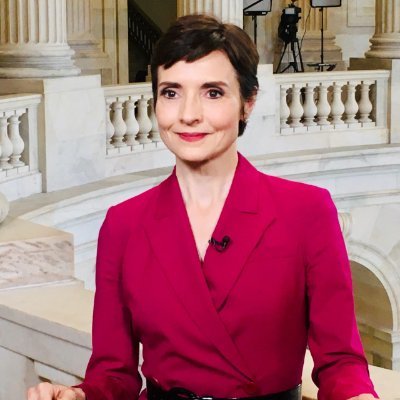
IRAN THREAT: ELEVATED, SPIKE CYBER ACTIVITY via written Congressional testimony @SecMullinDHS
"Iranian government cyber actors and pro-Iran cybercriminals have targeted U.S. critical infrastructure networks since the conflict with Iran began earlier this year. Since February, Iranian activity has increasingly targeted the transportation, healthcare, water, energy, and financial services sectors. These operations historically have produced localized and minimally disruptive effects against poorly secured industrial control devices, but vulnerable systems and weak cyber hygiene in lifeline infrastructure could create disruptive consequences."
"The threat from Islamist terrorists, whether inspired by FTOs (Foreign Terrorist Organizations) or acting on behalf of state sponsors such as Iran, remains elevated. This threat has been fueled in part by Middle East conflicts and terrorist propaganda. Although overseas counterterrorism pressure and enhanced U.S. border security complicate FTOs’ ability to send operatives to the United States, some individuals still attempt entry to conduct attacks."
FULL Testimony after the Jump👇


Hairy Fatback retweeted
Financial institutions are on the front lines of protecting our financial systems from criminal organizations and cartels that target law-abiding businesses and workers. This proposed rule cuts unnecessary burdens, gives institutions more flexibility to effectively combat risk, and strengthens our fight against financial crime.
President Trump continues to safeguard American citizens, and today @FinCENnews proposal takes the next step in implementing the President’s historic Executive Order, “Restoring Integrity to America’s Financial System.” This action will strengthen customer due diligence requirements for covered U.S. financial institutions, which are on the front lines of protecting our financial system from criminal organizations and cartels.
Hairy Fatback retweeted

The #FBI issued a FLASH advisory warning that cybercriminals and state-aligned hackers are exploiting ARTEX, a super intelligence-powered penetration testing framework, to automate attacks against businesses and organizations worldwide. ARTEX can accelerate intrusions from initial targeting to privileged access in under three hours. It was used in the October ConnectWise supply-chain compromise, which exposed Microsoft 365 customer environments and involved attempted authentication against more than 2,250 downstream tenants.
The FBI is urging businesses and organizations to strengthen access controls, monitor suspicious automated activity, and report potential compromises to ic3.gov.
Read more here: ic3.gov/CSA/2026/261113.pdf

ALT FBI Industry Alert displayed over a dark green background with the FBI seal faintly visible in the bottom right corner.
Hairy Fatback retweeted
CONFIRMED: @Comey friend, senior aide, and Columbia Law Professor advised he was a "definitely a target" in the Florida based "Grand Conspiracy" investigation
- In new court filings, lawyers for Daniel Richman claim shifting characterizations for their client from target, then offered immunity, and eventually pleaded his Fifth Amendment rights
- According to the Justice Dept. Manual, “[a] ‘target’ is a person as to whom the prosecutor or the grand jury has substantial evidence linking him or her to the commission of a crime...."
- Florida-based "Grand Conspiracy" investigation alleges a years long conspiracy by former law enforcement and intelligence officials of depriving President Trump of his civil rights
- The new court filings are part of a separate litigation
CONTEXT: According to FBI records declassified by
@FBIDirectorKash then Director @Comey had Richman hired at the FBI in 2015 as a 'Special Government Employee' and 'liaison to the media.'
Richman acted as a de facto PR media rep for Comey.
His responsibilities included protecting the FBI and Comey’s public image.
Comey's congressional testimony that he did not authorize anyone to leak to the media on Comey's behalf is undercut by the Richman FBI records.
Richman and former FBI Director Comey have been at the center of media leak investigations.
Richman has not responded to previous requests for comment.
FBI Declassified Richman Records After the jump👇


Hairy Fatback retweeted

Thomas Massie Makes Final Push For Job As MS NOW Anchor buff.ly/Oq74DaJ
