

New Haven, CT
Joined March 2009
- Tweets467
- Following1.1K
- Followers2.6K
- Likes13.4K


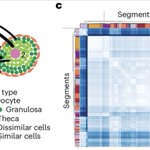


Grateful to Google AI4Science for supporting our work with Keisuke Ishihara @mweber_PU combining geometric AI + multi-species genomics + human cardiac organoids to ask why some animals regenerate their hearts and we can’t medschool.pitt.edu/news/ishi…
Hattie Chung retweeted

Our Nature Medicine paper is out: menopause isn't a slow slope. Across 300M+ lab tests from 1M+ women, many body systems jump at the final menstrual period. Men show no such jump. 1/4
nature.com/articles/s41591-0…

Hattie Chung retweeted

BREAKING NEWS
The 2026 #NobelPrize in Physiology or Medicine has been awarded to Karl Deisseroth, Peter Hegemann and Georg Nagel “for their discoveries concerning light-gated ion channels and optogenetics.”

Hattie Chung retweeted

AI folks who are new to bio should spend some time with wet lab folks not only to understand how experiments, assays, lab work is done but also to learn the basic concept of CONTROLS. 1/
Hattie Chung retweeted

A paradigm shift!💡 We decouples the effects of sulfur amino acid restriction, revealing that cysteine restriction, not methionine, is the mediator of the related anti-aging immunometabolic benefits.
@VishwaDeepDixi1 @schumacherbj @maxim_artyomov
👉biorxiv.org/content/10.64898…

Hattie Chung retweeted

Thrilled to share our latest work, out in @SciImmunology! We show that tissues match their #macrophage numbers to #mitochondrial_activity , ensuring efficient #waste_clearance and #tissue_fitness . A tour de force by Laura Pena-Couso, in collab with @andrsHidalgo16 & Pura Muñoz🧵

Hattie Chung retweeted

We seek to fill a tenure-track faculty position at the Assistant or Associate Professor Level (PhD or MD/DVM/PhD) to build an interdisciplinary research program here at @YaleAge, part of @YalePathology & @YaleMed. #pathologyjobs Learn more & apply here: apply.interfolio.com/186720

Hattie Chung retweeted

And finally—a bit of personal news:
🔬 I’m on the faculty job market this year!
I’m looking for tenure-track opportunities where I can build a lab at the intersection of developmental biology, mechanobiology, reproductive biology & aging.

🧵 What if one reason fertility declines with age isn’t just genetic-but mechanical?
Thrilled to share our new paper in @NatureCellBio:
Elevated contractility drives implantation failure in mouse embryos from aged females… here’s what we found 👇
1/11
nature.com/articles/s41556-0…

Hattie Chung retweeted

This is actually a great slide for how to get fooled by trying to target immunity/inflammation.
Classic bio textbook, one mechanism cleanly leads to another.
Which is not at all what happens, each of these trigger dozens of other genes too. So when you systemically drug a cytokine, all kinds of consequences.
Not saying Novo is naive to this. They know, but lack better ways to engage inflammation.


Hattie Chung retweeted

here's a few opportunities straight quoted from the study - "ovary as a systemic regulator of female health and aging"

Hattie Chung retweeted

Congrats to our Biological Engineering alum Hattie Chung @hattaca on beautiful work on a most fascinating topic - the aging ovary.

It gave me a lot of pleasure to read @hattaca and team's paper. So I will do my best to share my (unsolicited) commentary…
Have you ever wondered what actually happens inside the ovary as it ages? Not my field, but that biology is super intriguing. Not just fewer eggs, everyone knows that, but what breaks down at the tissue level, between cells, across time?
Lan et al. (Nature Aging) mapped the mouse ovary across age using spatial transcriptomics, what genes were active, where, in which cells, in what order. Over 600k spots across 22 ovaries, hundreds of follicles tracked across the estrous cycle.
It turns out that aging does not just deplete follicles, but also breaks the timing. In young ovaries, the right cells do the right things at the right moment. In old ovaries, still cycling, this falls apart. Even atresia, the controlled death of follicles that don't make it, becomes dysregulated, debris accumulating rather than clearing.
The immune connection is super cool too!. Aging shifts the immune landscape in ways that drive inflammation rather than tissue maintenance, and this starts before cycles even stop.
Not my field (because all of them are) but tissue aging is fundamentally about losing coordination, not just losing cells. And you need spatial tools to see it.
nature.com/articles/s43587-0…

Hattie Chung retweeted

It gave me a lot of pleasure to read @hattaca and team's paper. So I will do my best to share my (unsolicited) commentary…
Have you ever wondered what actually happens inside the ovary as it ages? Not my field, but that biology is super intriguing. Not just fewer eggs, everyone knows that, but what breaks down at the tissue level, between cells, across time?
Lan et al. (Nature Aging) mapped the mouse ovary across age using spatial transcriptomics, what genes were active, where, in which cells, in what order. Over 600k spots across 22 ovaries, hundreds of follicles tracked across the estrous cycle.
It turns out that aging does not just deplete follicles, but also breaks the timing. In young ovaries, the right cells do the right things at the right moment. In old ovaries, still cycling, this falls apart. Even atresia, the controlled death of follicles that don't make it, becomes dysregulated, debris accumulating rather than clearing.
The immune connection is super cool too!. Aging shifts the immune landscape in ways that drive inflammation rather than tissue maintenance, and this starts before cycles even stop.
Not my field (because all of them are) but tissue aging is fundamentally about losing coordination, not just losing cells. And you need spatial tools to see it.
nature.com/articles/s43587-0…
How does aging reshape a tissue that must continually rebuild itself hundreds of times?
Using spatial transcriptomics, we find that ovarian aging disrupts the coordination of cells across space and time before reproductive cycles stop.
#OvarianAging

🗞️Our June issue is live!✨Read about the healthspan and lifespan effects of time-restricted feeding in mice, insights from mathematical models of aging, how R-loops drive the SASP, & much more nature.com/nataging/volumes/…

Paper: nature.com/articles/s43587-0…
Work with the talented @Tammyinlab #AlisonKochersberger @sophiamszady @jenngarrison and many others (Cover Art: Alison Kochersberger)
@YaleMed @YaleAge @MCDB_Yale @BuckInstitute @broadinstitute
Our work provides a systems view of how aging progressively breaks down dynamically remodeling tissues, made possible by combining spatial transcriptomics, image registration, optimal transport, and systems-level analysis to study aging in its native tissue context.
As @NUDuncanLab and others have found, timely tissue clearance of corpora lutea is impaired with aging, a potential key niche that promotes inflammaging.


Chronic inflammation in aged ovaries drives the formation of multinucleated giant cells (MNGCs). Using @napari_imaging to register adjacent Slide-seq and H&Es, we found MNGC-enriched genes: Gpnmb, C3, Itgae, Mfge8, Lgals3, and others

