

Building the highest quality genetic tests for families.
Joined June 2025
- Tweets223
- Following8
- Followers4K
- Likes1K


Pinned Tweet
"Schizophrenia is too complex to screen for."
That's what our client was told, so we whole-genome sequenced 7 relatives (incl one diagnosed with schizophrenia) and modelled the family history to analyze their three embryos in a way that's never been done before. Her results:

Herasight retweeted

Embryo selection and the science of creating future people with @JonathanAnomaly from @herasight
00:00 - From Academia to Herasight
07:12 - Is Embryo Selection Controversial
11:31 - Polygenic Scores Explained
21:14 - Why Insurance Hasn’t Covered It
28:18 - Who Uses Screening and Why
32:35 - IVF Limits and Future Tech
36:52 - Selection vs Editing and Gattaca Fears
42:07 - Ethical Boundaries
43:01 - Breakthrough Imputation Proof
48:49 - Winning Clinics Over
51:18 - Ethics Backlash Explained
55:28 - Preference Cascade Theory
59:19 - Blank Slate Debate
01:03:09 - Pleiotropy Tradeoffs
01:08:29 - Autism Risk Predictor
01:13:37 - Repro Tech And Birth Rates
01:20:17 - Relationships And Family Futures
01:24:25 -Books Recs
Herasight retweeted

NeuroRisk + Full genome sequencing of embryos seems especially good for older couples with higher mutational load from age.
It would be cool if we could identify other risk factors for high de novo mutation rates aside from just age.

Herasight retweeted

An important new innovation from Herasight: NeuroRisk.
NeuroRisk identifies embryos carrying damaging mutations in evolutionarily conserved genes, which increase risk for autism, schizophrenia, and other disorders - finding cases missed by polygenic scores and known genes.

The mutations we identify in people have mostly never been observed before, yet with the help of in-silico computational metrics like Google Alphafold, we are still able to classify their functional impact.
Herasight retweeted

Today we launch NeuroRisk, the first embryo test for autism and schizophrenia that looks for mutations in evolutionarily important genes.
These mutations are individually rare but over 10% of people carry at least one mutation in this class.

Herasight retweeted
I had a good conversation with Greta about my cancer diagnosis, treatment, and the successful GoFundMe campaign for a cancer vaccine that she helped support.

Thank you to all my X followers who helped this man - I didn’t know him but saw his go fund me and I knew that together we could do this for him: youtube.com/live/pFb4er0aFnk…

Herasight retweeted

Job Alert: A stealth startup focused on non-cancer diagnostics is keen to hire a deep learning for genomics/bio engineer. I am an advisor for the startup & closely involved. Please see the attached job description below and get in touch if interested. Please forward.

Impressive what @alex1craig helped us achieve shortly after joining the team a year ago!
Access the tool on our website here:
herasight.com/ivf-calculator


Today the first paper I worked on after joining @herasight was published! We analyze over 500k IVF cycles to predict distributions of outcomes at every stage of IVF.
Along with the paper is the tool on our website which can be freely used by patients and physicians.
link.springer.com/article/10…

Herasight retweeted

Today the first paper I worked on after joining @herasight was published! We analyze over 500k IVF cycles to predict distributions of outcomes at every stage of IVF.
Along with the paper is the tool on our website which can be freely used by patients and physicians.
link.springer.com/article/10…
Herasight retweeted

This was a fun conversation about @justinalastairj's and my baby journey, the genetic basis for EQ, AI consciousness, what superintelligence looks like, and why embryo polygenic testing and whole-genome sequencing is a civilization-changing technology. Enjoy!

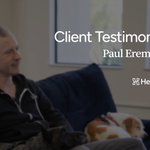
Watch @PaulEremenko, former CTO of Airbus and now CEO of P-1 AI as he joins @JonathanAnomaly to discuss his family’s IVF journey, why he chose to work with Herasight, and the future his son may inherit.
Watch @PaulEremenko, former CTO of Airbus and now CEO of P-1 AI as he joins @JonathanAnomaly to discuss his family’s IVF journey, why he chose to work with Herasight, and the future his son may inherit.
If there are diseases that run in your family that you’d like to screen your embryos for, reach out to us and we may be able to help.
herasight.com/get-access
Herasight retweeted

Aaaaaaaah!!!!


Herasight retweeted
Thanks to the amazing support I've received, I've already initiated vaccine design with JLF.
It should be ready to administer in 5 months, concurrently with the bot/bal immunotherapy I'm already receiving.

In March 2024, at the age of 35, I was diagnosed with stage IV rectal cancer with a metastasis in my liver. This was a shock: I had no family history, and none of the doctors suspected it. After two years of chemotherapy, radiation, and multiple surgeries, I'm still not cured. Now I'm asking for help to get a personalized cancer vaccine.
This is my story so far.
Following diagnosis, I was treated with total neoadjuvant therapy at UCLA. I had 6 weeks of radiation and chemotherapy (Xeloda). This was followed by 6 rounds of oxaliplatin infusions and Xeloda. I tolerated this unusually well. During this period, I managed to hike up to over 11,000ft multiple times in the Sierras, and I wrote the main text of a 72 author meta-analysis paper and submitted it to Nature where it is still in review.
I showed a good clinical response, and at the end of October I had surgery: I was under for 9 hours, and they cut out a bit of my rectum, 1/3rd of my liver, and gave me a temporary ileostomy. Waking up from this was probably the strangest experience of my life: I felt more machine than man, and I had wild hallucinations form such a large dose of anesthesia.
It took a while to feel OK after that surgery. However, I still had the ostomy. I had that reversed at the end of January in another surgery, which took a greater toll on me than I expected.
I only just started to feel OK again and I got bad news: I got a positive circulating tumor DNA test (ctDNA), the signatera test from natera. Unfortunately, the ctDNA carried on rising, and in July 2025 a new lesion appeared in a lymph node near my liver (periportal).
I was treated with irinotecan and panitumumab infusions, which showed a good response, followed by live MRI guided SBRT radiation treatment to the lesion. However, after finishing this treatment, the ctDNA remained positive and began rising again. I restarted irinotecan and panitumumab infusions, which brought ctDNA back to negative (signatera), although it remained positive on the more sensitive Personalis assay.
During this period I had begun to develop stomach pain and digestive symptoms. Then I collapsed vomiting blood while out in Santa Monica and was rushed to the ER. They found out I had a duodenal ulcer that had bled. I had some blood transfused, and I was sent home to complete an intensive course of antibiotics for H. Pylori infection.
However, after about a week, I started to get very weak. I collapsed again and went back to the ER in an ambulance. They found my hemoglobin was 5g/dL, a dangerously low level (normal is over 13.5). Multiple blood transfusions didn't bring it up and I collapsed again in the night after passing a large amount of blood. They took me to intensive care and performed an emergency endoscopy where they clipped and sprayed the ulcer. Thankfully this worked and I was discharged after another 3 nights in hospital.
Unsurprisingly, nearly bleeding to death wasn't good for me, and my ctDNA began to spike rapidly. I had a PET-CT and it revealed 3 new disease sites in abdominal lymph nodes. I restarted irinotecan and panitumumab infusions after barely recovering from the ulcer incident. This showed an excellent response, with the sites resolving on imaging, although ctDNA remained positive.
I've now started bot/bal immunotherapy, a not yet approved immunotherapy treatment that is the first of its kind to show strong results in my kind of cancer, micro-satellite stable colorectal cancer. This was possible thanks to a donation from an anonymous benefactor and supporter of free and open inquiry in science.
Hopefully this treatment will be effective, but it is unlikely to be enough on its own to prevent future disease recurrence.
I am asking for help to get a personalized neoantigen cancer vaccine, which could substantially increase my chances of surviving this deadly disease that is likely incurable under standard care.
While cancer vaccines have shown promising results, they are not yet approved, meaning one has to pay for the design, manufacture, and administration of the vaccine. The total cost of which is $104,133, beyond my means or those of my family.
Any help would be greatly appreciated! I've started a GoFundMe here: gofundme.com/f/cancer-vaccin…. Please donate and share with anyone who might be interested in helping.
I've carried on working throughout this period and I'm still running a research group in statistical genetics at UCLA. I'm hoping to continue making contributions to science for as long as I can, hopefully longer with your help.

Herasight retweeted
Overwhelmed by the support and kind words I've received over the past 12 hours.
I'm pleased to say the fundraising target has already been reached!
Thanks to everyone who donated and shared ❤️

In March 2024, at the age of 35, I was diagnosed with stage IV rectal cancer with a metastasis in my liver. This was a shock: I had no family history, and none of the doctors suspected it. After two years of chemotherapy, radiation, and multiple surgeries, I'm still not cured. Now I'm asking for help to get a personalized cancer vaccine.
This is my story so far.
Following diagnosis, I was treated with total neoadjuvant therapy at UCLA. I had 6 weeks of radiation and chemotherapy (Xeloda). This was followed by 6 rounds of oxaliplatin infusions and Xeloda. I tolerated this unusually well. During this period, I managed to hike up to over 11,000ft multiple times in the Sierras, and I wrote the main text of a 72 author meta-analysis paper and submitted it to Nature where it is still in review.
I showed a good clinical response, and at the end of October I had surgery: I was under for 9 hours, and they cut out a bit of my rectum, 1/3rd of my liver, and gave me a temporary ileostomy. Waking up from this was probably the strangest experience of my life: I felt more machine than man, and I had wild hallucinations form such a large dose of anesthesia.
It took a while to feel OK after that surgery. However, I still had the ostomy. I had that reversed at the end of January in another surgery, which took a greater toll on me than I expected.
I only just started to feel OK again and I got bad news: I got a positive circulating tumor DNA test (ctDNA), the signatera test from natera. Unfortunately, the ctDNA carried on rising, and in July 2025 a new lesion appeared in a lymph node near my liver (periportal).
I was treated with irinotecan and panitumumab infusions, which showed a good response, followed by live MRI guided SBRT radiation treatment to the lesion. However, after finishing this treatment, the ctDNA remained positive and began rising again. I restarted irinotecan and panitumumab infusions, which brought ctDNA back to negative (signatera), although it remained positive on the more sensitive Personalis assay.
During this period I had begun to develop stomach pain and digestive symptoms. Then I collapsed vomiting blood while out in Santa Monica and was rushed to the ER. They found out I had a duodenal ulcer that had bled. I had some blood transfused, and I was sent home to complete an intensive course of antibiotics for H. Pylori infection.
However, after about a week, I started to get very weak. I collapsed again and went back to the ER in an ambulance. They found my hemoglobin was 5g/dL, a dangerously low level (normal is over 13.5). Multiple blood transfusions didn't bring it up and I collapsed again in the night after passing a large amount of blood. They took me to intensive care and performed an emergency endoscopy where they clipped and sprayed the ulcer. Thankfully this worked and I was discharged after another 3 nights in hospital.
Unsurprisingly, nearly bleeding to death wasn't good for me, and my ctDNA began to spike rapidly. I had a PET-CT and it revealed 3 new disease sites in abdominal lymph nodes. I restarted irinotecan and panitumumab infusions after barely recovering from the ulcer incident. This showed an excellent response, with the sites resolving on imaging, although ctDNA remained positive.
I've now started bot/bal immunotherapy, a not yet approved immunotherapy treatment that is the first of its kind to show strong results in my kind of cancer, micro-satellite stable colorectal cancer. This was possible thanks to a donation from an anonymous benefactor and supporter of free and open inquiry in science.
Hopefully this treatment will be effective, but it is unlikely to be enough on its own to prevent future disease recurrence.
I am asking for help to get a personalized neoantigen cancer vaccine, which could substantially increase my chances of surviving this deadly disease that is likely incurable under standard care.
While cancer vaccines have shown promising results, they are not yet approved, meaning one has to pay for the design, manufacture, and administration of the vaccine. The total cost of which is $104,133, beyond my means or those of my family.
Any help would be greatly appreciated! I've started a GoFundMe here: gofundme.com/f/cancer-vaccin…. Please donate and share with anyone who might be interested in helping.
I've carried on working throughout this period and I'm still running a research group in statistical genetics at UCLA. I'm hoping to continue making contributions to science for as long as I can, hopefully longer with your help.
Herasight retweeted

Please consider donating to fund @AlexTISYoung's cancer treatment. He's a star statistician, a great man, and a good friend:
In March 2024, at the age of 35, I was diagnosed with stage IV rectal cancer with a metastasis in my liver. This was a shock: I had no family history, and none of the doctors suspected it. After two years of chemotherapy, radiation, and multiple surgeries, I'm still not cured. Now I'm asking for help to get a personalized cancer vaccine.
This is my story so far.
Following diagnosis, I was treated with total neoadjuvant therapy at UCLA. I had 6 weeks of radiation and chemotherapy (Xeloda). This was followed by 6 rounds of oxaliplatin infusions and Xeloda. I tolerated this unusually well. During this period, I managed to hike up to over 11,000ft multiple times in the Sierras, and I wrote the main text of a 72 author meta-analysis paper and submitted it to Nature where it is still in review.
I showed a good clinical response, and at the end of October I had surgery: I was under for 9 hours, and they cut out a bit of my rectum, 1/3rd of my liver, and gave me a temporary ileostomy. Waking up from this was probably the strangest experience of my life: I felt more machine than man, and I had wild hallucinations form such a large dose of anesthesia.
It took a while to feel OK after that surgery. However, I still had the ostomy. I had that reversed at the end of January in another surgery, which took a greater toll on me than I expected.
I only just started to feel OK again and I got bad news: I got a positive circulating tumor DNA test (ctDNA), the signatera test from natera. Unfortunately, the ctDNA carried on rising, and in July 2025 a new lesion appeared in a lymph node near my liver (periportal).
I was treated with irinotecan and panitumumab infusions, which showed a good response, followed by live MRI guided SBRT radiation treatment to the lesion. However, after finishing this treatment, the ctDNA remained positive and began rising again. I restarted irinotecan and panitumumab infusions, which brought ctDNA back to negative (signatera), although it remained positive on the more sensitive Personalis assay.
During this period I had begun to develop stomach pain and digestive symptoms. Then I collapsed vomiting blood while out in Santa Monica and was rushed to the ER. They found out I had a duodenal ulcer that had bled. I had some blood transfused, and I was sent home to complete an intensive course of antibiotics for H. Pylori infection.
However, after about a week, I started to get very weak. I collapsed again and went back to the ER in an ambulance. They found my hemoglobin was 5g/dL, a dangerously low level (normal is over 13.5). Multiple blood transfusions didn't bring it up and I collapsed again in the night after passing a large amount of blood. They took me to intensive care and performed an emergency endoscopy where they clipped and sprayed the ulcer. Thankfully this worked and I was discharged after another 3 nights in hospital.
Unsurprisingly, nearly bleeding to death wasn't good for me, and my ctDNA began to spike rapidly. I had a PET-CT and it revealed 3 new disease sites in abdominal lymph nodes. I restarted irinotecan and panitumumab infusions after barely recovering from the ulcer incident. This showed an excellent response, with the sites resolving on imaging, although ctDNA remained positive.
I've now started bot/bal immunotherapy, a not yet approved immunotherapy treatment that is the first of its kind to show strong results in my kind of cancer, micro-satellite stable colorectal cancer. This was possible thanks to a donation from an anonymous benefactor and supporter of free and open inquiry in science.
Hopefully this treatment will be effective, but it is unlikely to be enough on its own to prevent future disease recurrence.
I am asking for help to get a personalized neoantigen cancer vaccine, which could substantially increase my chances of surviving this deadly disease that is likely incurable under standard care.
While cancer vaccines have shown promising results, they are not yet approved, meaning one has to pay for the design, manufacture, and administration of the vaccine. The total cost of which is $104,133, beyond my means or those of my family.
Any help would be greatly appreciated! I've started a GoFundMe here: gofundme.com/f/cancer-vaccin…. Please donate and share with anyone who might be interested in helping.
I've carried on working throughout this period and I'm still running a research group in statistical genetics at UCLA. I'm hoping to continue making contributions to science for as long as I can, hopefully longer with your help.
Herasight retweeted
In March 2024, at the age of 35, I was diagnosed with stage IV rectal cancer with a metastasis in my liver. This was a shock: I had no family history, and none of the doctors suspected it. After two years of chemotherapy, radiation, and multiple surgeries, I'm still not cured. Now I'm asking for help to get a personalized cancer vaccine.
This is my story so far.
Following diagnosis, I was treated with total neoadjuvant therapy at UCLA. I had 6 weeks of radiation and chemotherapy (Xeloda). This was followed by 6 rounds of oxaliplatin infusions and Xeloda. I tolerated this unusually well. During this period, I managed to hike up to over 11,000ft multiple times in the Sierras, and I wrote the main text of a 72 author meta-analysis paper and submitted it to Nature where it is still in review.
I showed a good clinical response, and at the end of October I had surgery: I was under for 9 hours, and they cut out a bit of my rectum, 1/3rd of my liver, and gave me a temporary ileostomy. Waking up from this was probably the strangest experience of my life: I felt more machine than man, and I had wild hallucinations form such a large dose of anesthesia.
It took a while to feel OK after that surgery. However, I still had the ostomy. I had that reversed at the end of January in another surgery, which took a greater toll on me than I expected.
I only just started to feel OK again and I got bad news: I got a positive circulating tumor DNA test (ctDNA), the signatera test from natera. Unfortunately, the ctDNA carried on rising, and in July 2025 a new lesion appeared in a lymph node near my liver (periportal).
I was treated with irinotecan and panitumumab infusions, which showed a good response, followed by live MRI guided SBRT radiation treatment to the lesion. However, after finishing this treatment, the ctDNA remained positive and began rising again. I restarted irinotecan and panitumumab infusions, which brought ctDNA back to negative (signatera), although it remained positive on the more sensitive Personalis assay.
During this period I had begun to develop stomach pain and digestive symptoms. Then I collapsed vomiting blood while out in Santa Monica and was rushed to the ER. They found out I had a duodenal ulcer that had bled. I had some blood transfused, and I was sent home to complete an intensive course of antibiotics for H. Pylori infection.
However, after about a week, I started to get very weak. I collapsed again and went back to the ER in an ambulance. They found my hemoglobin was 5g/dL, a dangerously low level (normal is over 13.5). Multiple blood transfusions didn't bring it up and I collapsed again in the night after passing a large amount of blood. They took me to intensive care and performed an emergency endoscopy where they clipped and sprayed the ulcer. Thankfully this worked and I was discharged after another 3 nights in hospital.
Unsurprisingly, nearly bleeding to death wasn't good for me, and my ctDNA began to spike rapidly. I had a PET-CT and it revealed 3 new disease sites in abdominal lymph nodes. I restarted irinotecan and panitumumab infusions after barely recovering from the ulcer incident. This showed an excellent response, with the sites resolving on imaging, although ctDNA remained positive.
I've now started bot/bal immunotherapy, a not yet approved immunotherapy treatment that is the first of its kind to show strong results in my kind of cancer, micro-satellite stable colorectal cancer. This was possible thanks to a donation from an anonymous benefactor and supporter of free and open inquiry in science.
Hopefully this treatment will be effective, but it is unlikely to be enough on its own to prevent future disease recurrence.
I am asking for help to get a personalized neoantigen cancer vaccine, which could substantially increase my chances of surviving this deadly disease that is likely incurable under standard care.
While cancer vaccines have shown promising results, they are not yet approved, meaning one has to pay for the design, manufacture, and administration of the vaccine. The total cost of which is $104,133, beyond my means or those of my family.
Any help would be greatly appreciated! I've started a GoFundMe here: gofundme.com/f/cancer-vaccin…. Please donate and share with anyone who might be interested in helping.
I've carried on working throughout this period and I'm still running a research group in statistical genetics at UCLA. I'm hoping to continue making contributions to science for as long as I can, hopefully longer with your help.
Good to see articles put focus on the issue of ethnic portability @nytimes
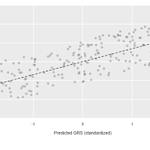
Herasight is focused on solving this issue through better science, broader biobank access and more accurate reporting of PRS performance across ancestries.
nytimes.com/2026/07/20/scien…

Our validation paper closes some of this gap: medrxiv.org/content/10.1101/…
