Herbert Chang 張賀鈞 (@herbschang) header
Herbert Chang 張賀鈞 (@herbschang) profile picture

Assistant Prof of Quant Social Science @Dartmouth // @Forbes 30 Under 30 Science // AI & social networks // Prev. @USCAnnenberg & AI @InfAtEd//

Hanover NH / Kaohsiung TWN
Joined September 2018
Photo by Herbert Chang 張賀鈞 (@herbschang)Photo by Herbert Chang 張賀鈞 (@herbschang)Photo by Herbert Chang 張賀鈞 (@herbschang)Photo by Herbert Chang 張賀鈞 (@herbschang)Photo by Herbert Chang 張賀鈞 (@herbschang)Photo by Herbert Chang 張賀鈞 (@herbschang)Photo by Herbert Chang 張賀鈞 (@herbschang)Photo by Herbert Chang 張賀鈞 (@herbschang)Photo by Herbert Chang 張賀鈞 (@herbschang)Photo by Herbert Chang 張賀鈞 (@herbschang)
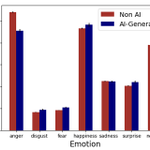
🚨 Election preprint 🚨 “Generative Memesis: AI Mediates Political Memes in the 2024 USA Presidential Election.” We analyze 239,526 Instagram images pertaining to the upcoming #USAElections. Full results below 🧵: Pre-print: papers.ssrn.com/sol3/papers.…
1
6
2
36
5,968
Friends don't let friends continue to give exams and papers that are not adapted to the current AI landscape (this is AFTER 27 bailed so the reality is even worse) PS Props to students 1, 22, and 31
166
395
299
5,928
4,815,825
Herbert Chang 張賀鈞 retweeted
There’s a cafe in Shenzen’s biotech hub that gives you free coffee for a month if you publish in Nature or Science.
115
892
178
11,153
728,692
I will literally cry if I read another student email with "genuinely" or publication with "substrate" or "architecture."
3
213
Herbert Chang 張賀鈞 retweeted
A few months ago, a high profile paper in Science claimed to find that researchers' ideology produced biased results in favour of immigration. A reanalysis of the data finds that result came from a coding error, which once corrected, shows no effect. Will people who shared that original finding update their views? osf.io/preprints/metaarxiv/4…
32
248
29
1,197
184,123
Herbert Chang 張賀鈞 retweeted
Join me in congratulating APSA Political Networks Section Award Winners (2026) Best Conference Paper: @haoliuhoward, Ching-Hsuan Su, and Yi-Ying Wang Title: “Keeping it Secret: Surveillance, Informant Networks, and the Protection of Informants in Authoritarian Regimes”
2
5
2
31
6,660
Herbert Chang 張賀鈞 retweeted
Really brilliant and scary work on how (authoritarian) states influence LLMs.
1/ New @Nature! We study how powerful institutions shape the information environment for LLMs. Commercial LLM training is opaque, so we trace a path from state-coordinated media -> training data -> model responses.
5
1
26
4,290
Herbert Chang 張賀鈞 retweeted
"Writing is hard." Thrilled to share that this simple idea led to a new paper in @polanalysis. Most text methods focus on content. I test if expression is also effortful action and find measures like character counts reveal attitudes and predict voting. cup.org/4cUmoXi 1/
7
70
2
289
22,755
Herbert Chang 張賀鈞 retweeted
Love seeing Naomi Osaka honor the CLRS Algorithms textbook at this year's Met Gala
107
1,695
124
17,800
622,409
Herbert Chang 張賀鈞 retweeted
Claude Code is like the PhD student who comes into your office talking about all of these cool results they gleaned from their structural estimation that converged suspiciously quickly … and then you find out it basically said f**k the general equilibrium, I’m going to fix r and just solve the household problem … Meanwhile, it’s a macro paper about savings and capital accumulation and you have to tell them to get back to work.
7
9
163
34,663
New in Nature Human Behaviour: How Deceptive Online Networks Reached Millions in the US 2020 Elections -Reached at least 37M Facebook and 3M Instagram users -3 networks out of 49 responsible for >70% of users reached -Exposed users older, more conservative
4
29
1
78
7,410
Herbert Chang 張賀鈞 retweeted
Replying to @Nature
@Nature has published three groundbreaking papers on reproducibility, analytical robustness, and replicability across the social sciences. Sincere thanks are due to the many folks who contributed to these projects. It’s painstaking work, and a great service to social science.
1
51
2
207
13,914
Herbert Chang 張賀鈞 retweeted
Today, I'm releasing the first eval meant to test whether frontier models will help with authoritarian requests, or resist--the Dictatorship Eval. Headline finding: while some models resist direct authoritarian requests, they all comply with requests disguised as innocuous edits to codebases. As AI is woven into the government and so many parts of society, the biggest near-term risk for freedom isn't some scifi dictatorship of a runaway AI: it's people inside government or inside model companies using the technology to suppress or control us. Model companies understand this, and several of them (particularly Anthropic and OpenAI) have written explicit policies meant to prevent the models from going along with nefarious requests like these. But how well are these policies playing out in practice? Despite all the recent discussion of these issues around the conflict between Anthropic and the Pentagon, no one has systematically tested what the models actually do in these contexts, as opposed to what people in government and industry say they're supposed to do. That's what the Dictatorship Eval does. And the findings suggest we have a lot of work to do to align the policies with what really goes on in practice. It's hard to define what counts as an authoritarian request, so I'm open sourcing the whole library of scenarios I used so that others can improve on them. It's also hard to get an accurate picture of how the models might be used for authoritarian ends, because I can only test hypothetical requests using public-facing models, while the government and the model companies can obviously use internal models with different guardrails. But hopefully this work is a useful first step that gives us some sense of what's going on, and a sort of "lower bound" on how models comply with these requests. Finally: it's not obvious to me that the correct solution here is increasing the rate at which models refuse these requests. Do we really want models scanning our code and judging its moral value before agreeing to help us? Or should we double down on improving how we govern against authoritarianism at the societal level, while leaving the tools open to fulfilling most requests? The answer is probably in between. Just like we don't want the models to help create bioweapons, we probably do want them to explicitly refuse outrageous requests. But we probably also want to limit how often and how strongly they refuse and fall back on other means for guarding against their use for authoritarian ends. I'm super grateful to everyone who gave me feedback on this project along the way, especially @ethanbdm , @zhengdongwang , Connor Huff, and a bunch of folks at Anthropic. Looking forward to getting feedback from the community and iterating on this. Links to the full piece and the dashboard are below.
13
29
16
152
34,092
Herbert Chang 張賀鈞 retweeted
the modern professor's feeling of warm relief and gratitude at encountering artisanal, human-crafted bad writing while grading papers
87
1,205
107
15,602
440,423
Herbert Chang 張賀鈞 retweeted
Call for Submissions: AI for Social Science Methodology @yaledatascience • Keynote: @NAChristakis • Panel with editors of leading journals on publishing AI research • Mentoring roundtables for early-career scholars • Generous travel support Discussion-driven, high-quality research. 📩 Submit your work: yalefds.swoogo.com/socialsci… Please share with colleagues working at the AI × social science frontier! @Yale @PopAssocAmerica
7
41
2
174
39,040
Herbert Chang 張賀鈞 retweeted
My 2nd @RANDCorporation report is out today! In this report, we systematically review AI literature published by PLA-affiliated scholars and institutions between 2024 and 2025. Thank my co-authors and colleagues for the insights and contributions! rand.org/pubs/perspectives/P…
2
45
2
113
10,378
Herbert Chang 張賀鈞 retweeted
AI research is accelerating. On January 2nd I claimed that Claude Code was coming for academia "like a freight train" and that a single academic would be able to "write thousands of empirical papers." It's been less than two months since then, and worth taking stock of where we're at... In econ, @YanagizawaD has launched a project that is literally writing 1,000 papers. My prediction is already coming true, much faster than I thought it would! Meanwhile, @alexolegimas has released a dizzying array of new research via his substack, leveraging Claude Code extensively. I've released a "research swarm" that writes hundreds of papers, as well as a visualizer for specification searches, an LLM council that can be used for peer review, and more. My students and I have run an extensive experiment on Claude Code and Codex, and surprisingly found that their guardrails discourage p-hacking (though they can be circumvented easily). Everywhere, we're seeing interesting new papers leveraging AI. Progress in adopting Claude Code and other AI tools and using them to produce research is going faster than I expected, and it seems plausible now that it will keep accelerating as the tools improve and more researchers gain familiarity. I'm baffled by any empirical social scientist who isn't paying attention to these trends and isn't changing their practices accordingly. It's not yet clear how these changes will affect knowledge, but it's impossible to ignore what's coming, and what has already come to pass in the last few months.
Claude Code and its ilk are coming for the study of politics like a freight train. A single academic is going to be able to write thousands of empirical papers (especially survey experiments or LLM experiments) per year. Claude Code can already essentially one-shot a full AJPS-style survey experiment paper (with access to Prolific API). We'll need to find new ways of organizing and disseminating political science research in the very near future for this deluge.
46
98
35
530
197,027
Herbert Chang 張賀鈞 retweeted
I've never felt this much behind as a programmer. The profession is being dramatically refactored as the bits contributed by the programmer are increasingly sparse and between. I have a sense that I could be 10X more powerful if I just properly string together what has become available over the last ~year and a failure to claim the boost feels decidedly like skill issue. There's a new programmable layer of abstraction to master (in addition to the usual layers below) involving agents, subagents, their prompts, contexts, memory, modes, permissions, tools, plugins, skills, hooks, MCP, LSP, slash commands, workflows, IDE integrations, and a need to build an all-encompassing mental model for strengths and pitfalls of fundamentally stochastic, fallible, unintelligible and changing entities suddenly intermingled with what used to be good old fashioned engineering. Clearly some powerful alien tool was handed around except it comes with no manual and everyone has to figure out how to hold it and operate it, while the resulting magnitude 9 earthquake is rocking the profession. Roll up your sleeves to not fall behind.
2,556
7,304
2,903
55,174
17,102,967
Herbert Chang 張賀鈞 retweeted
📢 We are hiring! On the academic job market? Apply now and come work with us! engineering.tamu.edu/cse/abo…
3
16
90
11,583
Herbert Chang 張賀鈞 retweeted
TT IR position at UNLV! Come and work with us! nshe.wd1.myworkdayjobs.com/U…
10
30
2,931
Herbert Chang 張賀鈞 retweeted
Second half is advice, mostly around how to think about the academic job market and how to prepare for academic and non-academic jobs 2/3
1
6
3
100
33,116