
#SingleCell #spatial #NGS @ultimagenomics but All comments my own
Texas, USA
Joined February 2011
- Tweets5.9K
- Following2.4K
- Followers1K
- Likes12.9K





steven hoffman retweeted

Which of these 15 AI challenges for cell biology is most urgent? Hilbert’s 23 problems steered math for a century. Our @CellCellPress paper, led by Andrea Califano, proposes 15 for biology, each with a real-world test of AI predictions. doi.org/10.1016/j.cell.2026.…

steven hoffman retweeted

Most students learn that DNA → RNA → protein. This sounds straightforward, but transcription (or that DNA → RNA bit) is surprisingly unpredictable, even in genetically identical cells. And, unfortunately, many tools commonly used in biology miss the way that gene expression actually works.
For several decades, most biologists assumed that transcription followed a Poisson process. In other words, imagine that you are a gene within a cell moving through time. At each small step forward in time, you roll a die, and there's a fixed probability that this gene will get transcribed into mRNA. Most of the time, nothing happens; but sometimes you get a new mRNA. In a Poisson distribution, as time goes on, the probability that the cell has not made a transcript at all trends exponentially toward zero.
Scientists believed this because they did not have methods to refute it. All the techniques we had to study gene expression were indirect. They might put a gene encoding green fluorescent protein into a cell, for example, let the cell transcribe and translate that gene, and then use a microscope to measure how brightly the cell glowed. They'd count up the fluorescent signal and try to work backward to infer how many mRNAs were responsible. But obviously these were proxies, and there's no correlation (in many genes) between protein levels and mRNA levels.
So in 2005, Ido Golding and colleagues published what I think is one of the most beautiful and important papers in modern biology. They figured out how to watch and count mRNAs in individual living bacteria, and used this method to test whether transcription really followed a Poisson process.
First, they engineered E. coli to make a green fluorescent protein fused to something called the MS2 coat protein. MS2 binds to a particular RNA sequence, called an MS2 binding site. So the bacteria were producing large amounts of this green fluorescent protein, which was floating around inside the cells.
Second, they introduced another genetic construct, this time encoding a red fluorescent protein. But at the end of this gene, they added an enormous array of 96 MS2 binding sites.
So what happens is that, when the cell transcribes the gene encoding the red fluorescent protein, the resulting mRNA also contains this long string of MS2 binding sites, which the green protein (fused to MS2) quickly gloms onto. And now, instead of having green fluorescence diffused throughout the cell, you get these very bright, green spots or "puncta" where the GFP molecules have accumulated on an mRNA. And because each mRNA recruits dozens of GFP molecules, the researchers could calibrate the brightness of these spots and estimate how many individual transcripts were present in a single cell.
Importantly, they could also activate the red fluorescent gene using a small molecule called IPTG. (The gene was placed "downstream" from a so-called inducible promoter.) This meant they could add IPTG, start a stopwatch, take pictures over time, and then watch the bright green spots appear as the bacteria produced mRNAs.
And they found that gene expression is sort of Poisson, but with a huge caveat.
In a true Poisson process, the variance equals the mean. So if a gene produces an average of 10 mRNA molecules over some period of time, the variance in the number produced should also be 10. The transcripts appear at random times, sometimes close together, sometimes farther apart, but each event is independent.
Instead, Golding and his colleagues found that the variance in mRNA abundance was about FOUR TIMES larger than a Poisson process would predict. This happens because transcription is BURSTY.
A gene remains silent for a long time, then suddenly turns on and makes a bunch of mRNAs really quickly, and shuts off again. A cell might produce four transcripts over a few minutes and then make nothing for the next half hour.
(The full model is this: When a gene is ON, transcription follows a Poisson process. But the gene can switch OFF at any moment. And because each ON period lasts a different amount of time, the number of transcripts produced in each burst follows a geometric distribution. In their experiments, genes were inactive for about 37 minutes on average, then active for about six minutes, producing an average of 2.2 transcripts per burst.)
This study changed how we study biology. It's so important, because it influences the way we study RNAs in cells today.
Depending on when you kill cells and extract their molecules, for example, some might have no transcripts from a particular gene, while others might have lots of them. That variation doesn't necessarily mean the cells are fundamentally different; some of them might have just had a recent burst of transcription, while others haven't.
Or consider two genes that have exactly the same expression level. One might produce transcripts slowly and frequently, while the other produces them in large, infrequent bursts. If you just measure how many mRNAs are present, you can't tell how those transcripts were produced, or how the genes are regulated.
I made a little interactive to show how this works and hope it is helpful.
steven hoffman retweeted

🌱 Gene expression & co-expression across 630,000 RNA-seq samples from 10,700+ plant species — free, in your browser.
Search a gene → see where it's expressed on the UMAP → explore its co-expression network.
mutwil-plant-atlas-viewer.hf…
#PlantScience #RNAseq #Bioinformatics

steven hoffman retweeted

So, can we all agree to stop just scaling up scRNA-seq now? Thanks!

No scaling laws for single-cell foundation models: when bigger atlases stop teaching the model anything
In language and vision, the recipe has been simple: more data, bigger models, better performance. Single-cell biology borrowed that playbook. Foundation models for transcriptomics jumped from 1 million cells to atlases of over 100 million, on the assumption that scale would unlock the same gains. Alan DenAdel and coauthors put that assumption to the test, and the result is sobering.
Working from a 22.2-million-cell corpus, they pretrained 400 models across five architectures (from PCA and a variational autoencoder up to the Geneformer transformer) and ran 6,400 evaluation experiments. They varied not just dataset size (1% to 75%) but also diversity, using cell-type re-weighting and geometric sketching to deliberately enrich rare cell types and transcriptional states.
The finding: performance saturates almost immediately. On cell-type classification, batch integration, and perturbation prediction, most models hit their ceiling at roughly 1% of the corpus, about 200,000 cells. Beyond that, adding millions more cells changed essentially nothing. More diversity didn't help. Even spiking in genome-scale Perturb-seq data, to give the models perturbed phenotypes rather than just healthy ones, failed to move the needle. Larger models did score better overall, but they too plateaued early on data.
Two points stood out. Simple baselines (PCA, logistic regression) often matched or beat the transformers. And the strongest model, SCimilarity, won not because of size but because its contrastive training objective is aligned with the downstream task. For single-cell data, what you train on and how you frame the objective matters far more than how much you collect.
This reframes a quiet but expensive habit. In drug discovery, biotech, and any pipeline leaning on cell atlases, the instinct to keep scaling pretraining corpora may be burning compute for no return. The real leverage sits elsewhere: curating high-quality, task-relevant data and matching the training objective to the actual question you're trying to answer.
Paper: DenAdel et al., journal license | doi.org/10.1038/s41592-026-0…

steven hoffman retweeted

Most molQTL studies are performed under static conditions, although human biology is shaped by responses to external stimuli and cell interactions.
Understanding how genetic variation influences these responses is important, but not trivial.
Nice effort here mapping response QTLs in monocytes exposed to LPS and IFNγ stimulation, using 28 cytokine readouts across 366 individuals.

steven hoffman retweeted
Type 1 diabetes is highly heritable and as such a promising area for polygenic score implementation.
New scores based on a larger GWAS achieve even better performance.
For those in polygenic embryo selection, wouldn't this be a setting to run a trial or prospective validation?

steven hoffman retweeted
Meta-analyzing Olink data from SCALLOP (1,194 proteins) and UK Biobank (1,463 proteins), we now have the largest publicly available (N=78,664) pQTL resource for the plasma proteome
👉5,040 significant cis- & 19,698 trans-pQTLs for 1,116 proteins

steven hoffman retweeted

Did you ever wish you could get help with your power calculations? Now you can!
EarlyReview.ai will give you estimates of treatment effects based on your early project documents (e.g., pre-analysis plans, registered reports, grant proposals, etc.).

steven hoffman retweeted

Polygenic risk scores for 8 cardiovascular traits in both @MassGenBrigham and @AllofUsResearch—superimposable— strongly indicate risk. Yet still not implemented in clinical practice
jacc.org/doi/10.1016/j.jacc.…

steven hoffman retweeted
Huge news. A gene therapy for deafness, targeting a mutation in the OTOF gene, is approved.
Restored hearing in 9 of 12 children, well enough that they could stop using cochlear implants. The treatment will be free in the United States.

Today the U.S. FDA approved our medicine – the first and only gene therapy for genetic #hearingloss – signaling a new era where enabling 24/7 natural hearing is now possible. We are proud to make this available for free in the U.S.
Read more: bit.ly/4e6f2Rx
steven hoffman retweeted

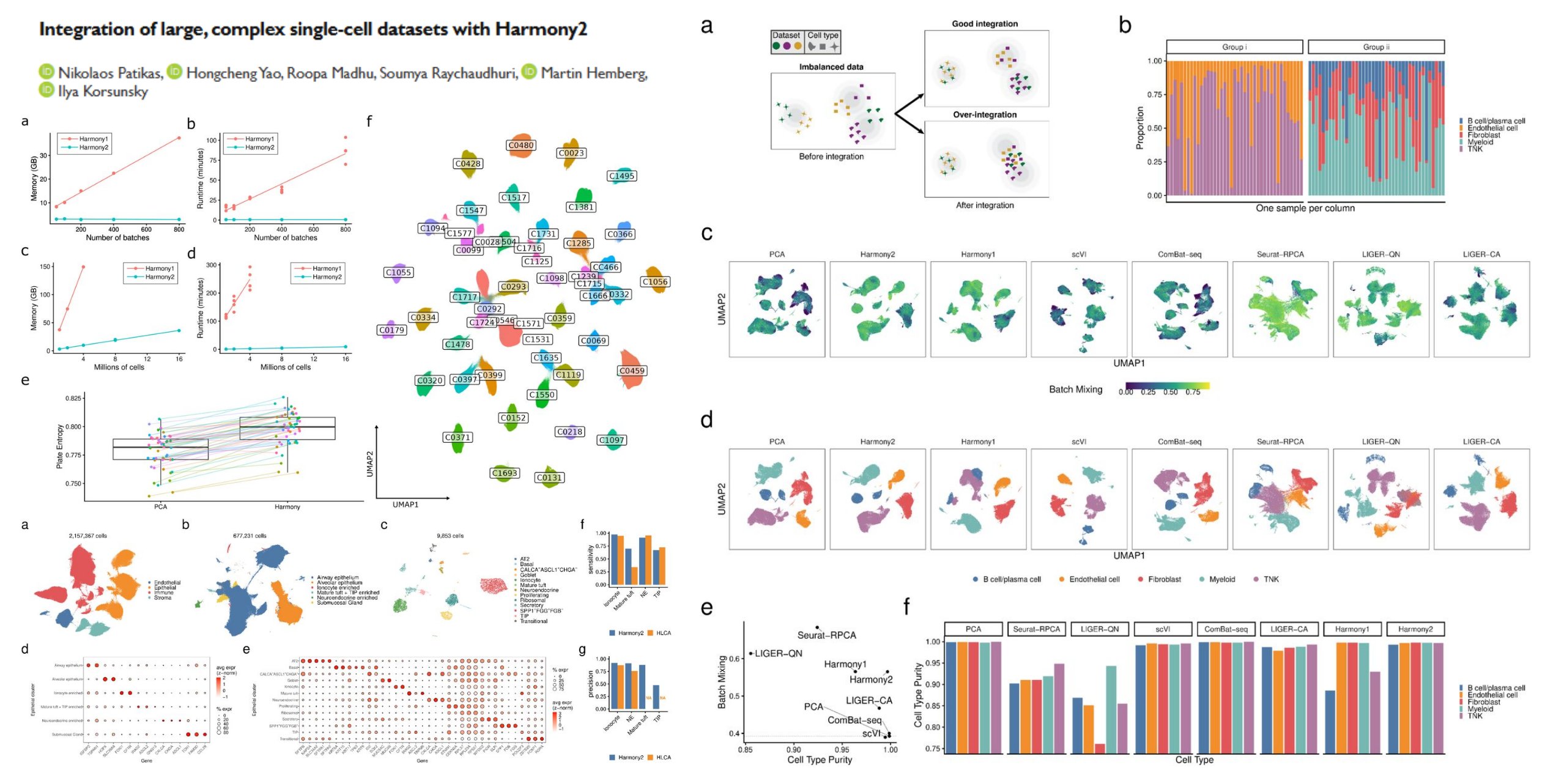
Harmony2 required only 2.1 GB and 1.3 minutes per million cells, and "scales linearly", and can integrate the full Tahoe-100M dataset & Human Lung Cell Atlas (Hierarchical integration)
vs Harmony scVI ComBat-seq Seurat-RCA LIGER-Quantile Normalization/-Centroid Alignment
@m_hemberg @ilyakorsunsky bioRxiv 2026
biorxiv.org/content/10.64898…
steven hoffman retweeted

Interested in single cell genomics but need help getting started? Come to my lab's 10th (!) Single Cell Genomics Day on 6/12
Talks include Aviv Regev @anshulkundaje @junyue_cao @xinjin + (many) more + @ATJCagan illustrations!
Free Youtube livestream at satijalab.org/scgd
steven hoffman retweeted

NovaSeq 6000's two-color chemistry introduces a recurrent T>G substitution artifact that doesn't show up on HiSeq X10's four-color chemistry.
Germline and high-VAF somatic calls are fine. Low-VAF mosaicism calls are not.

steven hoffman retweeted

A massive Nature study of 27,885 GLP-1 users just dropped some major news about Ozempic and tirzepatide.
Your DNA determines how much weight you lose and how bad the side effects hit.
1 in 3 people see minimal results, and now we know why: (1/9)

steven hoffman retweeted

The curves don’t lie.
Myeloma treatment,
1986 –>2026.
Progress is real. And it’s accelerating.
What changed?
The science did.
@DrSamuelBHume @OncoAlert

steven hoffman retweeted

Sometimes cancer treatments are subject to hype, but here’s an advance that’s been understated:
Combining a T-cell engager antibody with daratumumab allowed >80% of people with relapsed or refractory multiple myeloma to go years without progression. Might be *permanent* control


Encouraging news for patients living with multiple myeloma.
The FDA has expanded the use of a combination treatment for multiple myeloma, allowing it to be used earlier when the disease returns or starts to worsen.
“This approval is due to years of scientific progress and will be a meaningful improvement for many patients,” says Dr. Gruenbaum.
Learn more: bloodcancerunited.org/resour…
steven hoffman retweeted

In 2019, MIT professor Patrick Winston gave a legendary 1-hour lecture called “How to Speak.”
It has 18M+ views for a reason.
His frameworks:
• Your ideas are like your children
• The 5-minute rule for job talks
• Why jokes fail at the start
15 lessons on communication:

steven hoffman retweeted

To do this, we used genome-scale CRISPR activation (CRISPRa) to turn on every gene and measure precise editing.
One surprising finding: Many genes that are never or very lowly expressed (in human K562 cells) can enhance precise repair.


steven hoffman retweeted
Inspired by @JswLab, we generated a mini Genome-wide Perturb-seq, using just two 10x lanes (!).
Far too much data for one tweet (or one Figure), but it works beautifully.
The ability to assess the molecular function of every gene in an afternoon is mind-boggling
