

owner/founder of MMA schools, jiu jitsu blackbelt Renzo Gracie, former wrestler Lehigh, father
Pittsburgh, PA -Costa Rica
Joined January 2015
- Tweets1.5K
- Following632
- Followers275
- Likes11.4K




How I started jiu jitsu in Brazil over 24 years ago: youtu.be/ZgFT7aeleyk?is=YAT0…
warrenstout retweeted

A 40-year-old with a job and two kids who still trains four nights a week is solving a harder problem than most full-time athletes.
Fixed hours, short sleep, decisions all day, and still expected to be sharp at 8 PM.
At that point recovery is the skill, not intensity.

share.google/5XiGzak7vtT35kV…
Nice Halloween watch about Robert Johnson one of original, the best, most mysterious bluesmen. On Halloween as a holiday: To me it’s not about worshiping or celebrating evil in the sense of Anti-Christian or other religion. Its about seeing the shadow, the dark forces, like desire, longing, aggression, worldliness in the samsaric sense. “Making a deal with the devil”. Blues music, of a certain type are maybe the best example of this for me.

1
110
This is a problem in some some fields that I have varying degrees of expertise in. It is more of a problem in things where both luck and skill are mixed to varying degrees (ex. investing, coaching high level athletes, business). Maybe the solution is to purposely be more confident, uequivical and simple in communicating within fields of one’s expertise? Not always the natural inclination as the article says.

This paper answers why confident idiots run the world.
Cornell University published a psychological paper that explains every terrible boss, every loud influencer, and every broken corporate hierarchy.
It’s called “Unskilled and Unaware of It.”
they tested participants across logic, grammar, and humor to measure the gap between actual performance and self-perception.
And the results are wild.
participants scoring in the bottom 12th percentile consistently believed they were operating in the 62nd percentile.
they were not lying. they were literally incapable of recognizing their own incompetence.
the paper revealed a brutal paradox:
the exact skills required to master a domain are the exact same skills required to accurately evaluate your own competence in that domain.
if you lack the skill, you inherently lack the cognitive capacity to realize you are failing.
this creates a dangerous systemic loop.
the incompetent are blessed with absolute, blinding certainty. their brain protects them from their own ignorance, allowing them to speak first, demand authority, and never second-guess their decisions.
meanwhile, the actual experts suffer the exact inverse.
top performers in the study consistently underestimated their rank. because a task was easy for them, they falsely assumed it was easy for everyone else.
they hesitate. they obsess over nuance. they assume they have nothing unique to add.
we are biologically wired to confuse confidence with competence.
the loudest person in the room gets promoted, gets funded, and gets the microphone, not because they know what they are doing, but because they are physically incapable of seeing what they don't.
the only defense mechanism is building systems that stop rewarding absolute certainty and start demanding proof of work.

2
4
120
In jiu jitsu for a given position or attack there are usually multiple techniques and variations that work. Some people get caught up in trying to find the one magic key. More important is integrating a position into the overall game or attack chain that a person uses. Understand why a given technique works, its key body cues to look for in the heat of action, and how it connects with pervious positions and follow-ups. After a position is mechanically and contextually understood, then practice/test it until it is done largely unconciously. This is what creates effective jiu jitsu, not learning the perfect move or learning the most techniques.
warrenstout retweeted

What makes TRIANGLES SPECIAL?
- Strong Form of Control
- Ability to Simultaneously try another Submission
FAMILIARIZE Yourself with at least 5 Types of TRIANGLES:
- Straight/Regular
- REVERSE
- Inverted
- UGLY &
- CryAngle
warrenstout retweeted

“When it comes time to die, be not like those whose hearts are filled with the fear of death, so when their time comes, they weep and pray for a little more time to live their lives over again in a different way—Sing your death song, and die like a hero going home.”
~ Chief Aupumut -1725, Mohican. – at Pine Ridge, SD

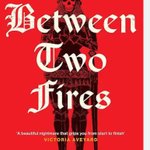
“Between Two Fires” is novel that sticks with you. It is dark and has strong Christian based religious themes. It reminds me of Latin artists’ magical realism but goes a little further with the magic and wierdness than most of them did. It has realistic historical parts mixed with fantastic elements which I thought the author made to work well together. There is evil luking everywhere and the characters ultimately can’t avoid it. Its their own failings that harm as well as external evil. Ultimately the main themes that stood out for me are universal and from everyday life. They include forgiveness, self-honesty, and solidarity with friends. Recommended!

1
6
233
New podcast episode on the neuroscience behind learning, especially in the context of combat skill aquisition. #jiujitsu #mma #wrestling #boxing #striking #podcast @RandyStout18
podcasts.apple.com/us/podcas…

Hope everyone had a good 4th and 250th celebration. I love America, not because I think it is better in every way than everywhere else. Other places have things I admire. It’s not because it has a great military or economic wealth. Its not even the vast, beautiful lands. It’s because it’s soul, whatever that hard to define thing is, shaped me to be what I am. And I feel I’m a tiny part of the historically unique, amazing, story that is the United States of America.


If you like history these short blogs are great. There is commentary that make the stories or quotes relevant to struggles we go through in modern times. The author often does his own translations of ancient text.

Marcus Valerius Confronts A Gaul In Personal Combat
qcurtius.com/2024/10/26/marc… via @QuintusCurtius


warrenstout retweeted

To explain one example of why it is usually wrong to consider "the neuron" as the sole functional-fundamental unit of brain computation/function, ... instead of working from the concept that the causal graph structure of the brain is multi-leveled with regard to complexity, and that causality of phenomena that are required for cognition has a branching looping structure that sometimes skips over different complexity levels:
EM field oscillations have direct effects on ionotropic channel opening. EM field oscillations rely on large collections of individual neurons undergoing dynamic activity changes in concert. Importantly, the same field oscillations with respect to the effect on a given individual ionotropic membrane channel in an individual neuron can be achieved by a huge number of different patterns/combinations of activity of the population of neurons involved. Therefore, the causality in this aspect of brain function does not go out from individual neurons but instead is top (EM fields)-down (proteins channels) and then back up to the level of individual neurons (ionotropic channels acting in concert, among other things like membrane morphology, determine neuron spike-firing probability).
I think it is not always, but is often the case that considering neurons as the fundamental unit of brain function is an epistemological error and is an impediment to understanding how natural intelligence works and how we can engineer improved artificial intelligence. Additionally, the frequencies and phases of field oscillations in the brain interact in a nested, potentially chaotic fashion which may represent another level of emergent (irreducible?) phenomenon required for human cognition.
I wonder if this might be a key component of creativity and creation of new conjectures?
@MillerLabMIT
The Maiden Tower in Baku, Azerbaijan, at the edge of the Caspian sea coast, seems to be one of those ancient structures steeped in mystery. Dates of construction vary from a few hundred years ago to parts being constructed B.C.E and some even speculate parts could be many thousands of years old. No one knows what it was originally buit for or what uses it has served. Theories range from an observatory of sun and celestial bodies, a fire temple, and even a primative oil refinery. It has stood through receeding and advancing shorlines, several empires, and probably at least 3 different religions. There are echoes a past that we are now rediscovering is deeper than we previously thought. So much has been forgotten. Human and humanoid habitation in the area of the tower stretches back over 1 million years. Humanoid remains at least 350,000 years have been found. Settlements 11,000 years old are being escavated in the area.


warrenstout retweeted

There are mornings when the sea, the wind, and the slow movement of light across the world seem to remind us that human life is built not only from the days we remember, but from the people through whom we first learned how to look at those days, and perhaps this is why Father's Day has always seemed to me less a celebration and more a quiet meditation on inheritance, because long before we inherit names, property, traditions, or family photographs, we inherit ways of seeing, ways of thinking, ways of standing upright in a difficult world.
Literature has always understood this.
Not the sentimental literature that mistakes emotion for depth, but the great literature that understands that fathers are among the most powerful architects of the human soul.
When I think of fathers in books, I think of Jean Valjean in Victor Hugo's "Les Misérables", who proves that fatherhood is not biology but responsibility, sacrifice, and the willingness to place another life above one's own; I think of Atticus Finch in Harper Lee's "To Kill a Mockingbird", whose greatest gift to his children is neither protection nor comfort but moral courage; I think of Prince Nikolai Bolkonsky in Tolstoy's "War and Peace", difficult, demanding, proud, brilliant, and deeply human, reminding us that love is not always expressed through tenderness and that some fathers teach strength in the only language they themselves possess.
I think of the fathers in Steinbeck, whose hands are rough from work and whose wisdom rarely arrives dressed in eloquence, yet whose presence forms the invisible foundation upon which entire families stand, and I think of countless fathers who never became literary characters at all, because they were too busy building lives, carrying burdens, solving problems, paying bills, repairing roofs, protecting families, and performing the quiet daily acts upon which civilization ultimately depends.
Perhaps this is why fatherhood remains one of the least theatrical and most profound human achievements, because a good father rarely occupies the center of the stage and rarely demands applause, while his influence continues long after conversations end and years pass, living quietly in the judgments, values, habits, and convictions of those who once watched him and learned from him.
The older I become, the more I suspect that the true measure of a father is not found in authority, success, wealth, or even affection alone, but in the extent to which he enlarges the inner world of his children, because the greatest fathers do not create dependence, they create freedom, they do not produce imitation, they cultivate character, and they do not merely prepare a child for life, they teach that child how to meet life with dignity.
And perhaps no one expressed this more beautifully than Douglas MacArthur:
"A father’s role is not to make his child rich, but to make him rich in character."
Happy Father's Day. 🦋
