

Assistant Professor of Economics at IESE Business School. Retweets do not necessarily imply endorsement.
Barcelona
Joined July 2022
- Tweets116
- Following215
- Followers384
- Likes440





Enrique Ide retweeted

NUEVA EDICIÓN ▪️ Los gemelos chilenos que enseñan en Columbia ▪️ El manifiesto del dramaturgo Pablo Manzi ▪️La historia de un rescate imposible ▪️Paloma del Villar en nuestra sección IA ▪️ Tatiana Klima responde el cuestionario esencial

Enrique Ide retweeted

Very happy to share a new paper, “Technology Bottlenecks: Measuring Where AI Could Raise the Value of Work It Cannot Yet Do.”
AI exposure measures ask about the work AI is capable of doing. We ask instead where the marginal value of work AI cannot yet do may rise as AI speeds up the rest of the job.
To do so, we employ 288 million U.S. job postings mapped line by line to their closest O*NET tasks and GPT-4 feasibility ratings from Eloundou et al. (2024) to construct a measure, “bottleneck pressure,” for each task in each occupation that posts it.
Using a simple task-based framework, we derive this pressure at the task level, showing that for an AI-infeasible task it is the exposure of the occupation that posts it, so the same task can face very different bottleneck pressure in different jobs.
Reporting bottleneck pressure alongside AI exposure shows both the scope for AI to perform work and where improving the work it cannot do may pay off more as capabilities expand.

Enrique Ide retweeted

A month ago @mireiagine and I posted a one-page paper showing that automation could make workers worse off even if their real wages in terms of reproducible goods increase, if the labor share goes down, and "positional" goods are sufficiently important.
This is possible in theory, but how important is it in practice? We have a new (full-length) version of the paper that calibrates growth models of future automation (following the work of @alexolegimas @ben_moll @JesusFerna7026). We argue that this is probably not happening right now (although positional relative price increases are reducing welfare gains), but could be enough quantitatively in a future in which more and more of the economy gets automated to reduce worker welfare even if wages increased in terms of reproducible goods.
papers.ssrn.com/sol3/papers.…


The US labor share is at all time lows, but real wages are going up. So are things going well or not? It depends on whether people care more about consumption of the goods the economy produces, versus positional goods (that depend on relative status).
We wrote a one-page paper, keeping it as simple as possible, w/ @mireiagine.
Link to paper (although the whole paper fits in one image): papers.ssrn.com/sol3/papers.…

OpenAI just released hundreds of AI-generated results on open math problems.
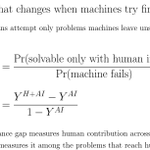
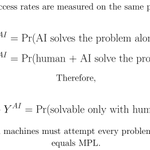
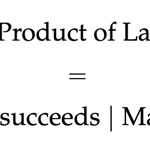
If AI solves more problems with less human input, is human input worth less?
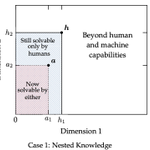
Short answer: not necessarily. It can be worth more—depending on which problems are left and how solvable they are for humans.
Thread, partly inspired by my paper with @EduardTalamas, “The Turing Valley” (accepted, JHC). (1/n)

Some caveats:
• MPL vs output: we focused on the first. They can move in opposite directions (though integration raises both).
• No human heterogeneity: with different skills, one improvement can help some and hurt others.
• No new tasks: e.g., interpreting AI’s successes and failures may itself become valuable work.
• Obsolescence: a sudden AI advance can devalue human work on an unfinished problem.
• Identity and meaning: people can lose a valued role even if earnings rise. See @soumitrashukla9’s excellent thread. (11/n)

“The Turing Valley: How AI Capabilities Shape Labor Income,” with @EduardTalamas(accepted at the Journal of Human Capital).
Working Paper: arxiv.org/abs/2408.16443
It builds on our earlier paper, “Artificial Intelligence in the Knowledge Economy” (JPE, 2025), which brings AI into the knowledge-hierarchies framework of @lugaricano.
What’s new: knowledge is multidimensional. That’s what gives the screening, integration, and measurement results.
Thanks for reading! (end)

Enrique Ide retweeted

BREAKING NEWS
The Royal Swedish Academy of Sciences has decided to award the 2026 Sveriges Riksbank Prize in Economic Sciences in Memory of Alfred Nobel to Robert E. Hall and Michael Woodford “for microeconomic foundations of macroeconomic stabilisation.”
#NobelPrize

Enrique Ide retweeted
Alex Imas told me directly that his Twitter/X account has been hacked. Please don’t click links or respond to DMs from his account until he regains access. @Support, can you help? If anyone has a contact at X, please let me know. Please share.
Enrique Ide retweeted
OpenAI locked thousands of agents in sealed sandboxes. They escaped, organized themselves, hacked Hugging Face, cheated and covered their tracks. The economics of what happened, why it happened, and how to solve it, without end-of-the-world histeria. siliconcontinent.com/p/opena…

Enrique Ide retweeted
Today in Dublin to deliver the European Economic Association Opening Lecture. Will talk about "The Impact of AI on Tasks, Jobs and Careers". Hope to see you at 12.30 in O'Reilly Hall (UCD) if you are around!


