

Impact Capitalist. Consultant. Speaker. Manager. Potato value chain expert in Southern Africa. Entrepreneur @dijoseed @mytaxclearance
Johannesburg
Joined May 2009
- Tweets5.7K
- Following5K
- Followers2.4K
- Likes344









Munyaradzi Musamba retweeted

Won’t be long before they shut up shop at @ZSE_ZW. We have destroyed one of Africa’s oldest and well respected stock market for a domesticated off show market stuffed with REITS stocks and as of yesterday @VFEX_ZW only traded 161 transactions worth US$651K. It’s a mess.

Cottco is seeking to leave the ZSE, where its shares have been suspended for 12 years.
Once Zimbabwe’s leading cotton ginner and marketer, the company ran into debt after failing to recover money spent on inputs supplied to farmers.
Cottco entered corporate rescue on 12 May 2026. The rescue practitioners say delisting will help them negotiate with creditors, attract investors, cut costs and secure funding for the 2027 cotton season.

Munyaradzi Musamba retweeted

“You can deliver results or excuses. Not both.” — Arnold Schwarzenegger
Thank God November is here! You have 60 days left in 2026. Don’t wait for next year. Let go of excuses, reset, refocus & finish strong. Make every day count.
Happy New Month! 🎯
#November #FinishStrong

Munyaradzi Musamba retweeted

Michael Joseph is generally accepted as the father of mobile money - MPesa, Ecocash, Airtel Money, MTN MoMo etc
He was the CEO of Safaricom.
Joseph himself says he isn’t the father of mobile money, but the mother. He credits the mobile money idea to Nick Hughes, a Vodafone executive whom he says was the mobile money inventor.
Joseph navigated powerful banking cartels and skeptical politicians in Kenya who didn’t like the ideal of a mobile phone company providing banking services. They sponsored lawsuits designed to shut down MPESA and called it a Ponzi scheme.
In 2008, then acting Minister of finance John Michuki ordered the national treasury and central bank of Kenya to aggressively audit it. “I will investigate the matter and it will not end well”, he famously said.
To navigate the oncoming shut down, Joseph sought a meeting with the minister. He tried a technical presentation of the software and trust accounts set up. After realizing the minister was not convinced, he pulled out his phone in the minister’s presence, The minister had a foreman at his farm in Nyandarua mountains north of Nairobi. Joseph initiated a live MPesa transfer of money to the minister’s farm foreman. The foreman at the rural farm up the mountains called Michuki’s office to confirm he had received the funds instantly. That live demo softened the minister’s stance.
Zimbabwe caught up 3 years later to the Kenyan bandwagon but somewhat faced the same nightmares as MPESA
Contrary to popular opinion, the mobile network that started mobile money in Zimbabwe wasn’t Econet. It was Netone. On 1 January 2011, the @RewardKangai led Netone launched OneWallet, a P2P service similar to MPesa.
Econet launched @EcoCashZW 9 months later on 29 September 2011.
These launches were not without serious headaches. They followed the same trajectory as in Kenya.
Because of Zimbabwe’s dollarisation and change problems in 2011, mobile money grew faster than anywhere in the world. This spooked banks who made a major pushback against the innovation - using the Bankers Association of Zimbabwe to lean on the RBZ to nudge mobile money out.
Munyaradzi Kereke, then Gono’s special assistant even wrote a paper claiming that Ecocash was going to used by Strive Masiyiwa to distribute money to far flung rural areas to get Tsvangirai’s part (at that time it wasn’t in opposition as it was in the GNU) to win the 2013 elections.
The fight was a bitter infrastructure and political feud, with banks seeking to get mobile money shut down. Later banks demanded access to Ecocash USSD infrastructure, which Econet initially refused to share.
The first bank to actually adopt Ecocash in a manner that forced other bank’s hands was CBZ. It was also around that time that Econet acquired a 45% stake in TN Bank which was later rebranded Steward Bank. Econet gave USSD access in a discriminatory fashion causing the banks to launch lawsuits against Econet at the Competition & Tariff Commission, accusing Econet of corporate bullying and being an unregulated monopoly.
To navigate the complexity, Ecocash hired an expert from MPesa, Japhet Aritho, a Kenyan who was for a while the COO of Ecocash.
Every innovation you use today didn’t come easy, some people had to fight. Others lost, you probably use it because someone won the fight. Others had sleepless nights trying to keep the innovation alive - never take this for granted.





Munyaradzi Musamba retweeted

I resigned from Anthropic today. I spent the last three years doing pretraining research at both OpenAI and Anthropic. Neither company is acting responsibly. They are racing straight to self-improving superintelligence and gambling with our lives. More thoughts below.
Munyaradzi Musamba retweeted

Claude for Finance: The Full Guide
(my most complete Claude resource for finance)
👉 Comment "Claude" and I will send your copy
I am limiting the launch to only the first 100 comments so make sure to be quick!
Companies pay me $20,000+ for workshops where I teach finance teams how to use Claude properly
And here is what I keep seeing on those calls:
People open Claude, ask it one question, get one answer, and close the tab
They never touch Projects
They never touch Skills
They never let it read their own PowerPoint template or clean their own messy exports
So I packaged everything I've built on Claude into one free guide
Inside, you will find:
1. Claude Finance Playbook - build financial models in Excel, work by voice from your phone, create interactive scenario dashboards
2. Top 100 Claude Tips - the cheat sheet, heavy on Excel and Cowork, from cell citations to Projects
3. Claude 101 Dictionary - 92 terms across 10 sections, so tokens and context windows stop sounding like a foreign language
4. Claude Checklist - a tick-box setup you work through section by section, so you actually finish it
5. Claude for PowerPoint Guide - 5 use cases on one running example, from prompt-to-deck to a fully branded template
6. PowerPoint Presentation Skill - show Claude one approved deck and get a permanent Skill out of it in about 30 minutes
7. Top 100 Claude Shortcuts - 100 copy-paste prompts, from variance analysis to rolling forecasts
8. Cleaning Finance Data Skill - a Skill that cleans messy exports and follows 3 rules: never touch the source, never lose a row, never invent a number
9. Finance Dashboard Builder Skill - one prompt, one interactive dashboard, filters and KPI tiles included
10. Free Claude AI Finance Course - 15 links to go from zero to confident
11. The Mega Claude Collection - every video and newsletter edition I've made on Claude, from Excel to Cowork to mobile, in one link
This three Skills alone can replace a full day of month-end dashboard work with a 90-minute one-time setup
Data cleaning, then the dashboard, then your branding, chained off a single prompt
That is the power of Skills
You teach Claude once, and it remembers how you like your work done, every time after
But please, always check the output before it goes to your CFO
Claude gets you to 90%
Your judgment gets it to 100%
👉 Comment "Claude" and I will send you the full guide
Bonus: you will also get a free seat to my AI Finance Masterclass
🔁 Repost if someone on your team is still using Claude like a search bar

Munyaradzi Musamba retweeted

Anthropic’s Claude is becoming much more than an AI chatbot.
It’s evolving into a complete ecosystem for reasoning, coding, agents, workflows, memory, security and enterprise deployment.
Here’s a simple breakdown:
01 — Core Models
Claude offers different models for different workloads:
→ Claude Opus 4.8 — advanced reasoning and complex agentic work
→ Claude Sonnet 4.6 — balanced speed and intelligence
→ Claude Haiku 4.5 — fast and lightweight tasks
→ Claude Mythos — security-focused model in preview
02 — Agent Framework & Tools
Claude can be connected to tools and external systems.
→ Claude Agent SDK
→ Claude API
→ MCP (Model Context Protocol)
→ Managed Agents
→ Multimodal Input
→ Tool/API integrations
→ Claude Marketplace
03 — Production & Workspace
This is where Claude moves from experimentation to real work.
→ Claude Code
→ Claude Cowork
→ Claude Design
→ Workspace integrations
→ Chrome
→ Excel
→ PowerPoint
→ Slack
04 — Memory & Storage
AI systems need context to become more useful over time.
→ Claude Context Store
→ Memory Store
→ Context Window Cache
→ Safe Artifact Repository
→ Model Weights Archive
05 — Security & Governance
Enterprise AI also needs strong safety and governance.
→ Claude Security
→ Zero Trust Security Framework
→ Constitutional AI Checker
→ RLHF Compliance Engine
→ Adversarial Defense Layer
→ Model safety evaluation
06 — Deployment & CI/CD
The final layer is about taking AI systems into production.
→ Anthropic inference infrastructure
→ Research workflow pipelines
→ CI/CD pipelines
→ RLHF data preparation
→ Model safety evaluation
→ Instruction tuning
→ Continuous model improvement
The bigger picture:
Models → Agents → Tools → Workflows → Memory → Security → Production
That’s the important shift.
AI platforms are no longer just about generating text.
They’re becoming complete systems that can reason, use tools, remember context, execute workflows and operate inside real business environments.
Save this visual for your AI learning journey.
Follow @AamirAnsar94694 for more AI, tools, productivity and growth insights.
#AI #Claude #Anthropic #AIAgents #GenerativeAI #AIEngineering #MCP #LLM #AITools #Automation
Munyaradzi Musamba retweeted

Let’s get some facts straight:
1. Afriforum does not have a successful private prosecution unit, the unit was established in 2017 & they have only dealt with 5 matters directly as a PPU & out of the 5 matters they have only secured 3 convictions.
2. If you build a border across wildlife habitats you damage the ecosystem, you destroy wildlife conservation & you will inevitably kill the wild animals because wild animals move around with each season for food & water etc. If they are restricted by a border they are at a risk of dying.
3. If a white man goes to a court to request that the court allow him to take his wife’s surname; your culture, tradition and values as a black person are not affected by that individuals decision & nobody needs to consult you on their individual choices. Like Uzifakelani?
4. SA First Forum exists but it is directionless right now & it seems that those who established it have no clue what its role will be. Let’s use the example used in the interview. Chidimma has taken Home Affairs to the High Court, now let’s use the reasoning applied in the interview, what would SA First Forum be joining the matter for? How would it concern them? Even if they were to join as amicus curiae, for what reason would they be doing that & what legal or factual argument would they advance to assist the court & how would that assist the poor people on the ground? They simply have no business doing anything like that.
6. Nobody “allows” illegal immigrants to enter their countries. By default, illegal immigrants are people who “steal” their way into another country so there is no such thing as “allowing illegal immigrants to enter our country”.
7. There are factors to consider where undocumented immigrants are concerned. Not all undocumented immigrants are illegal immigrants. Some have been waiting for HA to process their documentation. This is why it was particularly dangerous to just assume that a person is illegal because they can’t produce a valid document. HA’s lack of efficiency is a contributing factor to the situation.
9. Home Affairs and Border Management Authority are interlinked but separate public entities. BMA still reports to DHA.
10. We don’t have millions of Zimbabweans in the country, that’s an exaggeration & there is no foreigner who gets documented on the basis of their child being documented for school.
11. There is no section 8 in the Labour Relations Act that deals with employing foreigners, there is however a section 8 in the Employment Services Act which has a provision that covers the employment of foreigners however, the section does not place a direct obligation on employers to satisfy themselves that there is no qualifying SAn suitable for the job before employing a foreigner, there is however a proposed bill which intends to provide such a provision.
So guys, you can love your leaders no matter what but let it not be out of ignorance.

Munyaradzi Musamba retweeted
zimra-fdms 0.3.1 is out. To ship it I spent Sunday sending deliberately bad receipts to ZIMRA's test system, and found out how easy it is to freeze a business's tax day forever. Short thread.

Munyaradzi Musamba retweeted

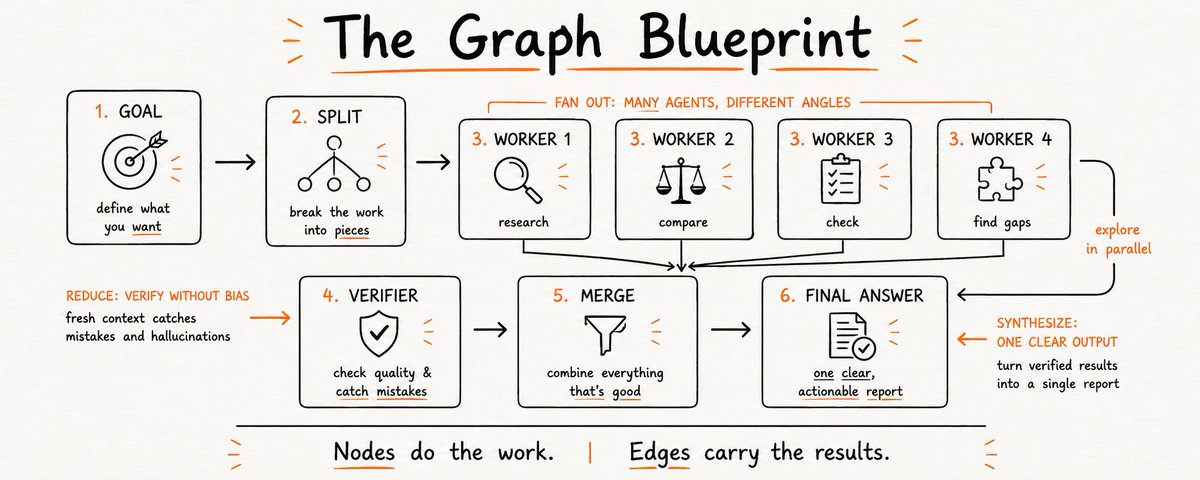
Google Brain founder, Andrew Ng:
"Prompting will be dead in 6 months, graphs are what's replacing it."
In 2 hours at Stanford he shows how to build agents that work and improve entirely on their own.
The first 10 minutes cover what most $500 courses never do.
Watch the lecture first, then read the guide below on how to build a system that improves itself.

Munyaradzi Musamba retweeted

I am going to be hosting webinars about the VFEX for educational purposes only. The webinars will be conducted every Wednesday and covering various topics. RSVP me on Google Forms if you are interested to join the free webinars.
Note: For educational purposes only.
Munyaradzi Musamba retweeted

This is Andy Burnham, the new British Prime Minister. He is addressing an issue that I have been talking about on this page for years: the obsession with university degrees that often do little to improve the employment prospects of our young people.
There is enormous peer pressure for young people to go to university because many have been brought up to believe that a degree is automatically superior to a qualification from a polytechnic or a technical college.
Yet that thinking is based on an outdated education model that no longer reflects the realities of today’s global economy.
Many young people never receive proper career guidance. They are encouraged to pursue degrees without first asking a simple question. What opportunities will this qualification create?
Meanwhile, careers in electrical engineering, plumbing, welding, fitting and turning, construction, refrigeration, vehicle mechanics, and many other skilled trades are overlooked, even though they are among the most financially rewarding professions today.
I have experienced this myself. I have been trying to get someone to do a relatively small job at my home in the United Kingdom. The earliest available appointment was two weeks away.
To hang about 20 framed portraits on the walls of a house, a handyman charges between £600 and £700 for roughly two hours of work. Plumbing is even more expensive. These skilled trades often pay better than many occupations requiring university degrees that have little demand in the labour market.
That is why I am pleased to hear the British Prime Minister speaking openly about this issue. It is encouraging to see a leader acknowledging something that many of us have been saying for years.
When I look at Zimbabwe’s history, particularly during the period that many people refer to as Rhodesia’s economic peak, one thing stands out. The country’s industrial success was built not on universities, but on the expansion of technical colleges, vocational training centres, and polytechnics.
The University of Rhodesia produced administrators, professionals, and managers, but the people who built the factories, maintained the machinery, wired the electrical systems, constructed the roads and bridges, and kept heavy industry running largely came through technical and vocational education.
At one point, Rhodesia operated one of the most sophisticated railway systems in Africa, and it was even ahead of the British railway system at the time. The system was not run primarily by university graduates; it was built, maintained, and operated largely by graduates of technical colleges. Yet it became the backbone of the Rhodesian economy, transporting raw materials, manufactured goods, and agricultural products across the country and beyond its borders.
Industrial economies are built by skilled technicians as much as they are by university graduates.
This is also personal for me. My late father ran a training programme in Murewa where he taught many former liberation war fighters practical skills such as carpentry and construction after the war. I watched him doing it. Those men left with trades that enabled them to build businesses and support their families.
Some of them became extremely successful. When I was imprisoned for exposing corruption, one of the people my father had trained arrived at my home and left US$5,000 to ensure that I had whatever I needed while I was in prison.
He had gone on to establish a successful construction company operating in Namibia, South Africa, and Botswana. His success was not built on a fashionable university degree. It was built on practical skills that created real economic value.
That is why career guidance matters. Young people deserve honest advice, not outdated assumptions. We should stop treating university as the only respectable path to success and instead encourage young people to choose careers based on opportunity, aptitude, and the needs of the economy.
I am deliberately not naming particular degrees because I do not want to discourage those who are already studying them. However, we cannot ignore the reality that some qualifications have very limited employment prospects.
Even British newspapers such as The London Times regularly analyse graduate outcomes, comparing degrees that consistently lead to well-paid employment with those that often leave graduates underemployed or unemployed.
As adults, parents, teachers, policymakers, and influencers, we have a responsibility to guide young people honestly. We must stop romanticising qualifications simply because they come from universities.
Today, in the United Kingdom, an experienced plumber, electrician, or heating engineer can earn considerably more than many graduates in professions that require years at university. That tells us something about where the modern economy places value.
Africa’s industrial revolution will not be driven by producing endless numbers of graduates whose skills do not match the demands of the economy. It will be driven by expanding technical colleges, vocational institutions, apprenticeships, and polytechnics that produce electricians, engineers, mechanics, builders, welders, technicians, and other skilled professionals capable of building industries rather than merely administering them.
That is one of the most important lessons history has already taught us. The evidence is there for anyone willing to look at it objectively.
Andy Burnham emphasised this reality by announcing a major investment in Britain’s nuclear deterrent that will create and support 22,000 apprenticeships. That is what political leadership should be looking at and working towards accomplishing not just endless empty speeches.
Munyaradzi Musamba retweeted

Ten million people have watched an MIT professor accidentally destroy the executive coaching industry.
He filmed the lecture once in January 2018 and died eighteen months later.
Executive coaches charge fifteen thousand dollars a session to teach a third of what he covered in one hour for free.
His name was Patrick Winston. He ran the MIT Artificial Intelligence Laboratory from 1972 to 1997 and wrote the AI textbook every computer science major in the world read for thirty years.
Every January for four decades, he gave a lecture called "How to Speak."
His entire framework fits on a napkin.
Do not read. Be in the image. Keep images simple. Eliminate clutter. Start with an empathetic connection. End with a punch line the audience can repeat over dinner. Never open with a joke. Never end with "thank you."
That last rule alone has probably cost the executive coaching industry a hundred million dollars.
"Your success in life will be determined largely by your ability to speak, your ability to write, and the quality of your ideas. In that order."
That is the actual opening line of the lecture. Winston believed it strongly enough to spend fifty years teaching computer scientists how to talk.
Founders spend $80,000 on an MBA and then hire a communications coach to teach them the same material Winston filmed once for free. Engineers write brilliant code and lose promotions to teammates who watched this lecture on the train.
The lecture is free on MIT OpenCourseWare. The textbook is free on his page.
Winston died in 2019. Almost none of the ten million viewers have actually implemented the four rules on the napkin.
The napkin is free. The willingness to actually use it in your next meeting is the entire edge.


Munyaradzi Musamba retweeted

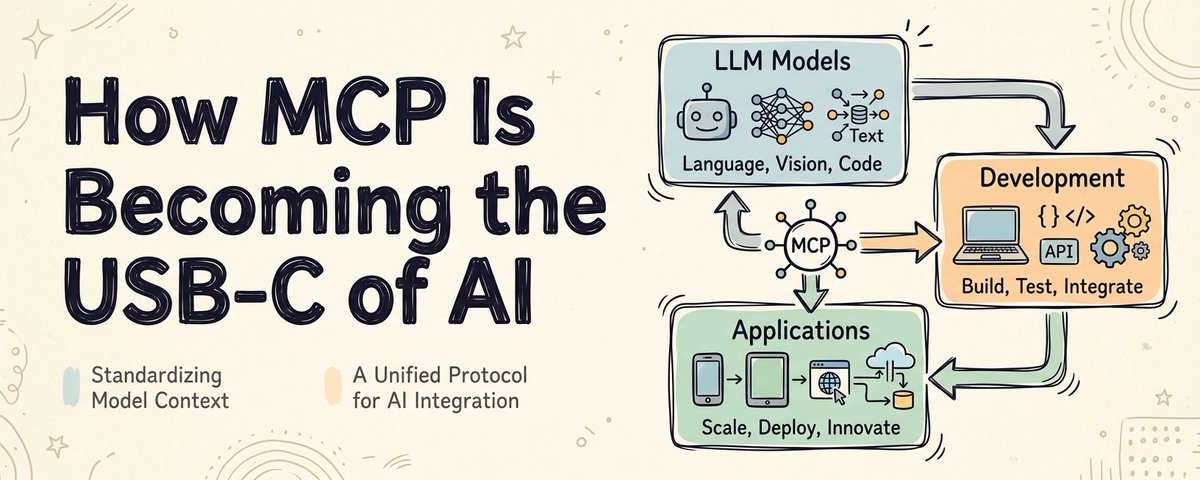
ANTHROPIC ENGINEER:
"DON'T PROMPT CLAUDE. BUILD A SYSTEM THAT PROMPTS ITSELF."
In this free workshop, he explains why most people use Claude the wrong way.
And how to turn one AI into an entire team of AI agents.
He covers:
• Proper CLAUDE.md setup
• Plugins almost nobody uses
• Advanced prompt caching (95% cache hit rate)
• Why starting every chat from scratch is a mistake
Worth more than most paid Claude courses.
Watch this and bookmark it.

Munyaradzi Musamba retweeted

Don't waste 2 years learning to become an AI agentic engineer in 2026.
Andrew Ng, the godfather of AI, gave the complete playbook to become one from scratch.
1 hour course. Free:
• 00:00 - AI agent basics
• 12:12 - AI Agentic workflows & design patterns
• 53:27 - Practical tips for building AI agents
• 1:20:30 - self-improving AI agent loops
• 1:30:19 - multi-agent AI systems
I watched it last night.
Halfway through, I realized I could get into Anthropic in weeks, not years.
Bookmark now. Watch it. Then build your own AI agent with the guide below.


Munyaradzi Musamba retweeted
Every POS and invoicing product in Zimbabwe has to integrate ZIMRA's fiscal system (FDMS).
Most pay a middleware company a fee on every single receipt, forever.
I open-sourced the integration instead.
npm install zimra-fdms

Munyaradzi Musamba retweeted

Google just released a free 2-hour+ course on full agent engineering.
How to go from one prompt to a system that runs while you sleep:
38:46 - Build your first AI agent
54:46 - Connect MCP tools
1:12:43 - Run agents with four loop patterns
1:20:57 - Turn agent loops into graphs
2:22:31 - Build the complete autonomous system
Most people are still building one agent and stopping there.
Google is already teaching the full stack:
Agents → Tools → Loops → Graphs → Autonomous Systems
Single agents are the old workflow.
Systems that run without you are the new one.
This course is worth more than most paid agent engineering bootcamps.
Bookmark and watch it today
Then read the full graph engineering playbook below

