

Dharma | Belonging | Teacher Education | Community Partnership | Lokah Samastah Sukhino Bhavantu 🪔
New York, NY
Joined October 2012
- Tweets8K
- Following329
- Followers45.8K
- Likes10.1K


Pinned Tweet
Eleven five-star reviews on launch day. I am deeply moved and grateful.
Hindu at Heart: Education, Faith, and What it Means to Belong in America is now on Amazon — available globally and on Kindle for the first time.
For everyone who has been asking from India, Canada, Australia, the UK, and across Europe — here it is.
"She never writes from a place of bitterness. Her emphasis on viewpoint diversity, empathy, and listening with sincerity makes the book deeply humane." ⭐⭐⭐⭐⭐
"Instructive for anyone whose identity is shaped by religion, country of origin, or cultural background." ⭐⭐⭐⭐⭐
Let's dig in.
induviswanathan.com/books

Indu Viswanathan retweeted
Who decides which stories get told, which voices get amplified, and which ideas become accepted truths? Behind many of the narratives that shape public opinion lies an often-invisible world of foundations, funding, and strategic philanthropy.
In our latest episode of Topics Podcast, @SnehaRao994 and I speak with Uma Viswanathan about her work in philanthropy and narrative change. This conversation feels particularly important amid the rise of anti-Indian sentiment on the right.
We explore how Hindu Americans can become more skillful at building organizations that drive positive narrative change. What kinds of funding do we need? What institutions must we build, and what career pathways would allow more people in our communities to contribute to this work?
We invite you to watch the episode and reflect with us on what it takes to build the resources, relationships, and institutions that shape our shared stories.
theturtlemagazine.substack.c…
📚 I'm really looking forward to my conversation with @MakrandParanspe ji about Hindutva and Hind Swaraj, a fascinating exploration of Gandhi and Savarkar, two thinkers whose very different visions of India continue to shape debates today. There's so much to explore about their ideas, assumptions about their ideas, and the questions they leave us with as Indian Americans.
I'm also looking forward to the rest of the IAAC Literary Festival, which has a terrific lineup of writers and thinkers. If you're in the NYC area, or can make it into the city that weekend, I highly recommend checking it out! Autumn in NYC is a dream and the festival is free to attend, but registration is required: iaac.us
Hope to see some of you there!


IAAC welcomes @MakrandParanspe with Hindutva and Hind Swaraj, examining Gandhi and Savarkar’s competing ideologies. Moderated by @indumathi37, Sat, Nov 14, NYC.
Free to attend, register at iaac.us
#IAACLitFest

Indu Viswanathan retweeted

What’s a polite way to tell someone, “I’m not discussing this with you because your entire understanding of the subject is built on so many interconnected misconceptions that correcting them would require uninstalling your current worldview and starting the tutorial from birth”?
Indu Viswanathan retweeted

Attending a party doesn't erase the fact that he has attended rallies with "Hindus are bastard" chants which he's never meaningfully repudiated. Is it cool that he's not so bigoted that he'll commit shirk? Sure, but he should answer for his other actions.
unavailable

Context. (The comments are amazing.)
instagram.com/reel/Deo92okMn…
Indu Viswanathan retweeted

The diaspora is fighting again about how second-gen influencers glam up for Diwali parties but don’t adequately comment on Indian politics
Frankly, I dunno why we ever started expecting influencers or celebrities to express opinions on politics. That’s not their job! Sure, if they want to use their platform to spread the word about an issue that they understand well, because it personally matters to them and they educated themselves on it, that’s fantastic. Celeb ambassadors who raise awareness & funds for rare diseases that they or their family members have had, for example, are incredibly valuable!
But like, why do I wanna know the political stances of some girl whose specialty is her outfits + skincare + makeup? I’m not saying all influencers are stupid, by any means, but that’s literally not their wheelhouse? They’ve got platforms bc they have expertise in smth very specific, and they have charisma, and they had the grit to grow an audience who cares about their shtick. If their shtick is [being glamorous and beautiful] then, respectfully, they should stick to that, rather than throwing half-baked opinions in my face about shit they only understand in a cursory way. I hate that they face pressure to take strong stances & comment on issues they don’t understand.
“But they should educate themselves on political issues” yeah sure, that’s a civic duty. As citizens, they should make informed decisions about voting. But that’s a private affair. IMHO it’s irresponsible to spout political stances at millions of followers if you mostly inherited those opinions from equally uninformed TikTokers.
And moreover, if they can’t even vote in India, how is it a civic duty or personal obligation to be educated enough to take a stance in the first place, much less to express that stance publicly??
You are INSISTING they behave performatively!!!! Pls look up “goodhearting” and think about how it applies here Just let people have their specialties and their platforms. Separate the art from the artist. Yea if it turns out they’re a terrible person and their moral misalignment with you is so profound that you can’t tolerate them, unfollow, and talk smack if you must! But it’s not a moral failing not to be publicly political. (I say this as somebody who’s fairly public about politics, when I’m actually informed enough about a specific issue or event to think I can contribute to a conversation, as opposed to just signaling to my in-group that we share a moral high ground.)

i mean this with full respect, because i do respect what you’re trying to say here, but i think there are some very strange expectations that are somewhat randomly placed on second gen immigrants at times.
i personally struggle to understand why second gen-ers are specifically required to opine on current political/social movements in a country they have never lived in as a pre-requisite to being able to celebrate the culture in which they were raised. i say this because i can almost GUARANTEE that these people’s parents, who were (most likely) born AND raised in india for most of their lives, are also not making any [public] commentary on the protests, yet i highly doubt anyone would tell them they are not allowed to celebrate holidays or customs from their culture unless they speak out about current events first. on top of that, i think it takes on a bit of a “white man’s burden” effect to have indian-americans who have never lived in india be the spokespeople for what is happening in india.
idk i’m not saying second gen-ers shouldn’t open their mouths at all but i do think it’s a bit of a misplaced responsibility to suggest that they *must* speak out about current political affairs, and if they don’t, then they are being exploitative of india by celebrating diwali or holi or whatever. my opinion is that it feels a bit self-serving
Indu Viswanathan retweeted

The intended mass shooting at an Illinois Hindu temple is horrifying, and downstream of the growing anti-Indian hatred that has been escalating over the last year. Indian Americans deserve to live and worship without fear of racist violence. Such anti-Indian hatred should receive prompt, unequivocal condemnation across the political spectrum.

#BREAKING: Potential Mass Shooting Plot Thwarted in Aurora, Illinois.
Authorities say a 19-year-old allegedly plotted a mass shooting targeting a Hindu place of worship. Police reportedly recovered a rifle, hundreds of rounds of ammunition, body armor and a manifesto expressing white supremacist extremism and hostility toward people of Indian descent.
This comes during Navaratri when thousands of Hindus gather for Garba and also just two weeks after a Hindu temple in Ohio was attacked.
We commend law enforcement for swift action. We also urge the community to stay vigilant and Report any potential threat. Every community deserves to worship without fear.
chicago.suntimes.com/crime/2…

IT DIDN’T HAVE TO GET TO THIS POINT.
On October 14, we learned that on October 11, 19-year-old Alexandros Paporakis attempted a mass shooting at Sri Venkateswara Swami Temple in Aurora, Illinois. According to prosecutors, he tried to fire his assault rifle at someone, but the weapon jammed. He told a coworker about his plan, who then reported it to the police.
I keep thinking about how close this came to becoming an unimaginable tragedy. Hindu Americans had gathered at their temple for Navaratri celebrations, and their lives could have been taken in an instant.
According to prosecutors, the suspect had spent approximately two months targeting this Hindu temple. His manifesto reportedly expressed hatred toward Indians, Jews, and Black people, and he identified with white supremacist ideology. He told a coworker he “couldn't wait to kill Indian people.”
It’s important to be precise about what we know. His expressed hatred was racial and religious, and the institution he chose to attack was a Hindu place of worship.
Both facts matter.
We don't need to establish that he hated Hindu theology specifically to recognize the significance of his target.
What almost happened in Illinois is particularly horrifying because of the scale of violence that was intended. I'm glad the attempted shooting is receiving serious media coverage, but I wish the broader pattern of hostility toward Hindu institutions received the same attention.
Over the past several years, Hindu temples across the United States have been repeatedly vandalized and the hostility has not come exclusively from white supremacists. These are very different acts from an attempted mass shooting, and I don't want to conflate them. But we should be able to recognize and take seriously hostility toward Hindu places of worship, regardless of where it comes from.
For years, many of us have been trying to have thoughtful conversations about Hinduphobia. We've raised concerns about the portrayal of Hinduism, the stereotypes that circulate about Hindus, and the assumptions people make about our traditions and communities.
What's been particularly troubling is that some of the most persistent and categorical dismissal of these concerns has come from academics, activists, and organizations on the political left, including those who claim to champion Hindu human rights, religious freedom, and inclusion.
I don't expect everyone to agree with every concern we raise. But intellectually rigorous disagreement requires engaging with evidence, not dismissing it.
Instead, we've been told that Hinduphobia doesn't exist, that it's a political invention, or that raising concerns about anti-Hindu prejudice is simply an attempt to silence criticism of Hindu nationalism.
Consider the 2021 Dismantling Global Hindutva conference, supported by departments and centers at more than 50 universities and defended by over 1,100 progressive scholars. One speaker described Hinduism as an enemy of democracy; another singled out Hindu surnames and associated them with violence.
When Hindu Americans raised concerns, we were accused of threatening academic freedom, even as the discourse about Hinduism and Hindus in these spaces remains overwhelmingly critical, with remarkably little viewpoint diversity.
Rather than engaging with the substance of what we're saying, our critics question our motives and use those presumed motives to justify dismissing our concerns. We are dismissed as unreliable narrators of our own experiences, and our concerns are treated as evidence of a political agenda.
Words shape how we see one another. When false assumptions are repeated often enough, they can begin to seem like ordinary descriptions rather than expressions of prejudice. When people who challenge those stereotypes are routinely dismissed, the underlying assumptions remain unexamined.
Paporakis reportedly identified as a white supremacist, and that matters. I'm not suggesting that rhetoric from the political left caused this attempted shooting. But prejudice against Hindus isn't confined to one political ideology, and neither is the willingness to dismiss it.
We shouldn't have to wait until prejudice manifests as the threat of violence before we're willing to take seriously the ways it operates in everyday language, institutions, and public discourse.
This is part of the reason I wrote *Hindu at Heart*. I wanted to examine the centuries-old narratives that continue to shape how Hinduism and Hindus are understood, and to create space for a more informed, honest, and generous conversation. These narratives didn't begin with Donald Trump or contemporary debates about Hindu nationalism. They are much older, and they transcend our current political divisions and landscapes.
Even in the responses to this attempted mass shooting, I've been struck by how quickly some folks on the political left have redirected the conversation. I've seen it described as rising hatred against “South Asians”, without acknowledging that a Hindu temple was deliberately targeted and that the shooter specifically named Indians, not South Asians. I've also seen responses suggesting that perhaps this will “finally” prompt Hindus to show solidarity with Muslims who have experienced hatred and violence (which presumes we haven’t already done so).
There is nothing wrong with recognizing shared experiences of prejudice or standing in solidarity with other communities. But Hindu Americans should not have to demonstrate their solidarity with others before the hostility directed toward them can be acknowledged on its own terms. We should not have to accept the erasure of our Hindu faith or endure reprimands for perceived political failings in order to be considered worthy of empathy.
We should be able to recognize what is happening to the Hindu American community, and allow everyone to understand and process it, without immediately turning it into a referendum on something else—and especially not a referendum on us.
It would have been far better if we had been willing to take Hinduphobia seriously before a young man attempted to murder hundreds of people at a Hindu temple. But here we are. The temple was deliberately targeted, reportedly over months. The significance of that choice is impossible to ignore.
To my fellow Americans: use your discernment. When commentators cannot bring themselves to name what is right in front of us, we should be willing to question their analysis rather than defer to their claims of moral authority.
There are millions of Americans, across faiths, races, and political affiliations, who recognize prejudice without first demanding that its targets pass a political test. Let us move together with love, compassion, and courage.
#Hinduphobia #HinduAmerican #ReligiousFreedom #Navaratri #StopHate

Indu Viswanathan retweeted

With the recent reports of a thwarted mass shooting plot targeting a Hindu place of worship in Illinois and an attack on a Hindu temple in Ohio just two weeks ago, temple safety and security are more urgent than ever.
Every Hindu should be able to worship without fear. While we are grateful to law enforcement for responding to threats, protecting our mandirs also requires awareness, preparedness, and community vigilance.
HAF’s Temple Safety and Security Guide offers practical steps to help Hindu temples strengthen security and prepare for potential threats.
Please share this resource with your local mandir leadership and community. Preparedness matters, and every temple deserves to be a safe place of worship.
🔗 Read and share HAF’s Temple Safety and Security Guide 👉f.mtr.cool/1mnkdjhudr

Indu Viswanathan retweeted
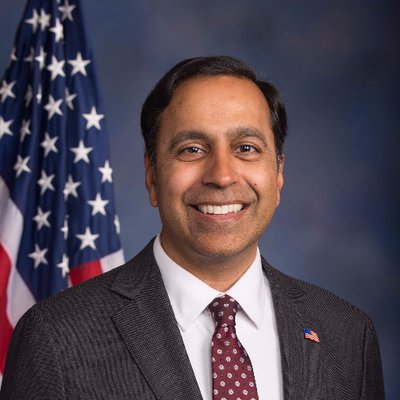
My family and I were worshipping at our Hindu temple in Aurora on Sunday when a white supremacist attempted a mass shooting targeting Indian Americans. I'm grateful to those who helped prevent a tragedy, but we must come together to confront the hatred that put so many innocent lives at risk.

Mamdani: There is a Hindu festival called Navaratri. It is this week*. There are Hindus in NYC and they will do some activities now.
*(Not nine nights, which is the literal translation of nava ratri. Apparently we only get one calendar week in Mamdani’s NY. )

This week, our Hindu neighbors celebrate the Goddess Durga during the festival of Navaratri.
Our neighbors will dance Garba, venerate the Goddess Durga with Sindur Khela, receive Tika from elders, set up Golu in their homes, and so much more.
Whether your family calls it Durga Puja, Dashain, Dussehra, or Navratri, may this festival mark a season of reflection and renewal.
Indu Viswanathan retweeted

How is Hinduism taught in U.S. schools? “Hindu at Heart” by Indu Viswanathan explores curriculum bias, Hindu American perspectives, and hope for change. Read my review on the Religion Matters blog ➡️ bit.ly/hindu-at-heart
#HinduAtHeart #curriculum #worldreligions4kids

Indu Viswanathan retweeted
We’ve just published our latest #Topics episode, Episode 9, on sexual violence. Clinical psychologist Kavita Sekhsaria joins me and @SnehaRao994 to discuss how the Hindu community can respond to sexual violence, support survivors, and prevent harm.
In this clip, we talk about the global failure to support victims of sexual violence, and how this manifests in the Hindu diaspora. This is part of a much larger, nuanced discussion. We invite you to watch the whole episode and leave us a comment here or on our Substack.
🔗 theturtlemagazine.substack.c…
#HinduDiaspora #SexualViolencePrevention #SupportSurvivors
We recorded this episode before the story of the Cornell 7 broke, not realizing how painfully timely this conversation would become. It is probably the most important public conversation I have ever had and I am so grateful to @SnehaRao994 and Kavita for taking this up with me.
In this episode of Topics, we have a difficult but necessary conversation about sexual violence, shame, agency, and what families, communities, and institutions do when someone says, “This happened to me.”
theturtlemagazine.substack.c…
Indu Viswanathan retweeted

⚠️ New details on what happened inside the Flydubai cockpit, in Captain Smit Machchar’s own account to the Israeli PM:
1️⃣ The flight was normal. The co-pilot said he wanted to pray, something Machchar says was not unusual among local pilots.
2️⃣ Machchar faced forward while the co-pilot prayed behind him.
3️⃣ Four or five minutes later, Machchar says he was suddenly struck hard on the back of his head.
4️⃣ His first thought was catastrophic aircraft damage. Then the blows kept coming. He realised it was the co-pilot attacking him.
5️⃣ The initial blows left his vision severely blurred. He tried to fight back, but says he could barely see.
6️⃣ His next sensation was the aircraft plunging sharply. His memory of these moments remains fragmented.
7️⃣ He recalls managing to open the cockpit door once, but says the co-pilot apparently shut it again.
8️⃣ Lying on the cockpit floor, he could hear the aircraft rushing through the air and passengers screaming.
9️⃣ Machchar says he realised he had “one last fight” left. His thought was brutally simple: if he didn’t act, he was going to die.
🔟 He threw everything he had into reaching and opening the cockpit door. People outside were waiting to pounce. They entered, control was regained.
Indu Viswanathan retweeted

Reading now. Can't think of a more timely book given the increasing number of vile and racists posts on this platform. Thank you @indumathi37 for writing on this topic. "My sankalpa is that we learn to hold grace for each other with love, humor, humility, and compassion beyond the pages of this book."

Eleven five-star reviews on launch day. I am deeply moved and grateful.
Hindu at Heart: Education, Faith, and What it Means to Belong in America is now on Amazon — available globally and on Kindle for the first time.
For everyone who has been asking from India, Canada, Australia, the UK, and across Europe — here it is.
"She never writes from a place of bitterness. Her emphasis on viewpoint diversity, empathy, and listening with sincerity makes the book deeply humane." ⭐⭐⭐⭐⭐
"Instructive for anyone whose identity is shaped by religion, country of origin, or cultural background." ⭐⭐⭐⭐⭐
Let's dig in.
induviswanathan.com/books