

Ironist Rorty stan: https://xitter.gq/t.co/Dqd1V4o3SZ Careers: SW Eng, Lawyer, IT Analyst, Prod Mgmt Design Thinker Mastodon: ironick17 Bluesky: ironick
- Tweets23.8K
- Following834
- Followers1.6K
- Likes23.4K


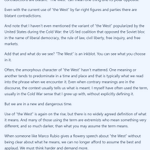





ALT I agree with Dewey that the function of philosophy is to mediate between old ways of speaking, developed to accomplish earlier tasks, with new ways of speaking, developed in response to new demands. As he put it, “When it is acknowledged that under disguise of dealing with ultimate reality, philosophy has been occupied with the precious values embedded in social traditions, that it has sprung from a clash of social ends and from a conflict of inherited institutions with incompatible contemporary tendencies, it will be seen that the task of future philosophy is to clarify men’s ideas as to the social and moral strifes of their own day.”


ALT Imagination is, as I said earlier, the ability to come up with socially useful novelties. This is an ability Newton shared with certain eager and ingenious beavers. But giving and asking for reasons is distinctively human, and is coextensive with rationality. The more an organism can get what it wants by persuasion rather than force, the more rational it is. Ulysses, for example, was more rational than Achilles. But you cannot use persuasion if you cannot talk. No imagination, no language. No linguistic change, no moral or intellectual progress. Rationality is a matter of making allowed moves within language games. Imagination creates the games that reason proceeds to play. Then, exemplified by people such as Plato and Newton, it keeps modifying those games so that playing them is more interesting and profitable. Reason cannot get outside the latest circle that imagination has drawn. It is in this sense, and only in this sense, that imagination holds the primacy.


ALT Imagination is, as I said earlier, the ability to come up with socially useful novelties. This is an ability Newton shared with certain eager and ingenious beavers. But giving and asking for reasons is distinctively human, and is coextensive with rationality. The more an organism can get what it wants by persuasion rather than force, the more rational it is. Ulysses, for example, was more rational than Achilles. But you cannot use persuasion if you cannot talk. No imagination, no language. No linguistic change, no moral or intellectual progress. Rationality is a matter of making allowed moves within language games. Imagination creates the games that reason proceeds to play. Then, exemplified by people such as Plato and Newton, it keeps modifying those games so that playing them is more interesting and profitable. Reason cannot get outside the latest circle that imagination has drawn. It is in this sense, and only in this sense, that imagination holds the primacy.

ALT Imagination, in the sense in which I am using the term, is not a distinctively human capacity. It is, as I said earlier, the ability to come up with socially useful novelties. This is an ability Newton shared with certain eager and ingenious beavers. But giving and asking for reasons is distinctively human, and is coextensive with rationality. The more an organism can get what it wants by persuasion rather than force, the more rational it is. Ulysses, for example, was more rational than Achilles. But you cannot use persuasion if you cannot talk. No imagination, no language. No linguistic change, no moral or intellectual progress. Rationality is a matter of making allowed moves within language games. Imagination creates the games that reason proceeds to play. Then, exemplified by people such as Plato and Newton, it keeps modifying those games so that playing them is more interesting and profitable. Reason cannot get outside the latest circle that imagination has drawn.

ALT Imagination, in the sense in which I am using the term, is not a distinctively human capacity. It is, as I said earlier, the ability to come up with socially useful novelties. This is an ability Newton shared with certain eager and ingenious beavers. But giving and asking for reasons is distinctively human, and is coextensive with rationality. The more an organism can get what it wants by persuasion rather than force, the more rational it is. Ulysses, for example, was more rational than Achilles. But you cannot use persuasion if you cannot talk. No imagination, no language. No linguistic change, no moral or intellectual progress. Rationality is a matter of making allowed moves within language games. Imagination creates the games that reason proceeds to play. Then, exemplified by people such as Plato and Newton, it keeps modifying those games so that playing them is more interesting and profitable. Reason cannot get outside the latest circle that imagination has drawn.

ALT Imagination, in the sense in which I am using the term, is not a distinctively human capacity. It is, as I said earlier, the ability to come up with socially useful novelties. This is an ability Newton shared with certain eager and ingenious beavers. But giving and asking for reasons is distinctively human, and is coextensive with rationality. The more an organism can get what it wants by persuasion rather than force, the more rational it is. Ulysses, for example, was more rational than Achilles. But you cannot use persuasion if you cannot talk. No imagination, no language. No linguistic change, no moral or intellectual progress. Rationality is a matter of making allowed moves within language games. Imagination creates the games that reason proceeds to play. Then, exemplified by people such as Plato and Newton, it keeps modifying those games so that playing them is more interesting and profitable. Reason cannot get outside the latest circle that imagination has drawn.

ALT Imagination, in the sense in which I am using the term, is not a distinctively human capacity. It is, as I said earlier, the ability to come up with socially useful novelties. This is an ability Newton shared with certain eager and ingenious beavers. But giving and asking for reasons is distinctively human, and is coextensive with rationality. The more an organism can get what it wants by persuasion rather than force, the more rational it is. Ulysses, for example, was more rational than Achilles. But you cannot use persuasion if you cannot talk. No imagination, no language. No linguistic change, no moral or intellectual progress. Rationality is a matter of making allowed moves within language games. Imagination creates the games that reason proceeds to play. Then, exemplified by people such as Plato and Newton, it keeps modifying those games so that playing them is more interesting and profitable. Reason cannot get outside the latest circle that imagination has drawn.

ALT Imagination, in the sense in which I am using the term, is not a distinctively human capacity. It is, as I said earlier, the ability to come up with socially useful novelties. This is an ability Newton shared with certain eager and ingenious beavers. But giving and asking for reasons is distinctively human, and is coextensive with rationality. The more an organism can get what it wants by persuasion rather than force, the more rational it is. Ulysses, for example, was more rational than Achilles. But you cannot use persuasion if you cannot talk. No imagination, no language. No linguistic change, no moral or intellectual progress. Rationality is a matter of making allowed moves within language games. Imagination creates the games that reason proceeds to play. Then, exemplified by people such as Plato and Newton, it keeps modifying those games so that playing them is more interesting and profitable. Reason cannot get outside the latest circle that imagination has drawn.

ALT Imagination, in the sense in which I am using the term, is not a distinctively human capacity. It is, as I said earlier, the ability to come up with socially useful novelties. This is an ability Newton shared with certain eager and ingenious beavers. But giving and asking for reasons is distinctively human, and is coextensive with rationality. The more an organism can get what it wants by persuasion rather than force, the more rational it is. Ulysses, for example, was more rational than Achilles. But you cannot use persuasion if you cannot talk. No imagination, no language. No linguistic change, no moral or intellectual progress. Rationality is a matter of making allowed moves within language games. Imagination creates the games that reason proceeds to play. Then, exemplified by people such as Plato and Newton, it keeps modifying those games so that playing them is more interesting and profitable. Reason cannot get outside the latest circle that imagination has drawn.

ALT It is not that we first spoke a language that simply reported what was going on around us and later enlarged this language by imaginative redescription. Rather, imaginativeness goes all the way down. The concepts of redness and roundness are as much imaginative creations as those of God, of the positron, and of constitutional democracy. Getting the word “red” into circulation was a feat on a par with Newton’s persuading people to use the term “gravity.” For nobody knew what redness was before some early hominids began talking about the differences in the colors of things, just as nobody knew what gravity was before Newton began describing an occult force responsible for both ballistic trajectories and planetary orbits. It took imaginative genius to suggest that everybody make the same noise at the sight of blood, of maple leaves in autumn, and of the western sky at sunset. It was only when such suggestions were taken seriously and put into practice that hominids began to have minds.


ALT It is not that we first spoke a language that simply reported what was going on around us and later enlarged this language by imaginative redescription. Rather, imaginativeness goes all the way down. The concepts of redness and roundness are as much imaginative creations as those of God, of the positron, and of constitutional democracy. Getting the word “red” into circulation was a feat on a par with Newton’s persuading people to use the term “gravity.” For nobody knew what redness was before some early hominids began talking about the differences in the colors of things, just as nobody knew what gravity was before Newton began describing an occult force responsible for both ballistic trajectories and planetary orbits. It took imaginative genius to suggest that everybody make the same noise at the sight of blood, of maple leaves in autumn, and of the western sky at sunset. It was only when such suggestions were taken seriously and put into practice that hominids began to have minds.

ALT It is not that we first spoke a language that simply reported what was going on around us and later enlarged this language by imaginative redescription. Rather, imaginativeness goes all the way down. The concepts of redness and roundness are as much imaginative creations as those of God, of the positron, and of constitutional democracy. Getting the word “red” into circulation was a feat on a par with Newton’s persuading people to use the term “gravity.” For nobody knew what redness was before some early hominids began talking about the differences in the colors of things, just as nobody knew what gravity was before Newton began describing an occult force responsible for both ballistic trajectories and planetary orbits. It took imaginative genius to suggest that everybody make the same noise at the sight of blood, of maple leaves in autumn, and of the western sky at sunset. It was only when such suggestions were taken seriously and put into practice that hominids began to have minds.

ALT It is not that we first spoke a language that simply reported what was going on around us and later enlarged this language by imaginative redescription. Rather, imaginativeness goes all the way down. The concepts of redness and roundness are as much imaginative creations as those of God, of the positron, and of constitutional democracy. Getting the word “red” into circulation was a feat on a par with Newton’s persuading people to use the term “gravity.” For nobody knew what redness was before some early hominids began talking about the differences in the colors of things, just as nobody knew what gravity was before Newton began describing an occult force responsible for both ballistic trajectories and planetary orbits. It took imaginative genius to suggest that everybody make the same noise at the sight of blood, of maple leaves in autumn, and of the western sky at sunset. It was only when such suggestions were taken seriously and put into practice that hominids began to have minds.

ALT On the romantic view I am commending, the imagination is the source of freedom because it is the source of language. It is, as Shelley put it, root as well as blossom. It is not that we first spoke a language that simply reported what was going on around us and later enlarged this language by imaginative redescription. Rather, imaginativeness goes all the way down. The concepts of redness and roundness are as much imaginative creations as those of God, of the positron, and of constitutional democracy. Getting the word “red” into circulation was a feat on a par with Newton’s persuading people to use the term “gravity.” For nobody knew what redness was before some early hominids began talking about the differences in the colors of things, just as nobody knew what gravity was before Newton began describing an occult force responsible for both ballistic trajectories and planetary orbits.

ALT Before there were conversational exchanges, on this view, there were neither concepts nor beliefs nor knowledge. For to say that a dog knows its master, or a baby its mother, is like saying that a lock knows when the right key has been inserted, or that a computer knows when it has been given the right password. To say that the frog’s eye tells something to the frog’s brain is like saying that the screwdriver tells something to the screw. The line between mechanism and something categorically distinct from mechanism comes when organisms develop social practices— uses of words—that permit those organisms to consider the relative advantages and disadvantages of alternative descriptions of things. Mechanism stops, and freedom begins, at the point at which we can discuss which words best describe a given situation. Knowledge and freedom are coeval.

ALT Before there were conversational exchanges, on this view, there were neither concepts nor beliefs nor knowledge. For to say that a dog knows its master, or a baby its mother, is like saying that a lock knows when the right key has been inserted, or that a computer knows when it has been given the right password. To say that the frog’s eye tells something to the frog’s brain is like saying that the screwdriver tells something to the screw. The line between mechanism and something categorically distinct from mechanism comes when organisms develop social practices— uses of words—that permit those organisms to consider the relative advantages and disadvantages of alternative descriptions of things. Mechanism stops, and freedom begins, at the point at which we can discuss which words best describe a given situation. Knowledge and freedom are coeval.


