

| • constant maker of moves • | entrepreneur
Kenya
Joined May 2009
- Tweets40.2K
- Following492
- Followers1.1K
- Likes20.6K










✮• John Ochuro •✮ retweeted

That's because William Ruto has entered the competition through a company that recently acquired Zuku and Wananchi Group.
Axian Telecom (operating as Yas Group) is owned by Hassanein Hiridjee and his family's Madagascar-based conglomerate, the Axian Group. Hassanein Hiridjee partnered with Rostam Aziz to acquire and expand major telecommunication and digital infrastructure assets in East Africa.
In Kenya, Ruto invited his friend Rostam Aziz and Pikap Kutit proxies to the table and they're currently expanding, modernizing and upgrading former Zuku infrastructure around the country, deploying ADSS cables. Just ask property developers in Nairobi about the guerilla war currently going on between internet service providers.
In Kenya, Ruto initiated Axian Telecom takeover of Zuku, through Axian AXIAN Telecom Fibre Ltd (Yas), which recently bought a 99.63% controlling equity stake in Wananchi Group Holdings Ltd, the previous owners of consumer broadband brand Zuku and enterprise link Simbanet
The Zuku acquisition enables Axian Telecom to deploy its broadband brand, "Yas," to unify its mobile, fintech, and fiber networks across Kenya, Tanzania, Uganda, and Malawi. They're planning to launch an enhanced, "competitive" offer in the Kenyan market in the coming future.
Safaricom has seen through this plan and had now fashioned this new business warfare using, ironically, Zuku' s former business model called the "the tripple play", which integrated TV, on-net Calls and fibre/ Internet package.
Does the name "Rostam Aziz" ring a bell?
He's the Tanzanian billionaire tycoon who owns MIC Tanzania PLC (which operated Tigo and Zantel through a strategic consortium with AXIAN Telecom and quickly rebranded as Yas Tanzania). Aziz serves as the Chairman of the local board.
President William Ruto personally commissioned Rostam Azizi’s multi-billion-shilling Taifa Gas plant in Mombasa’s Dongo Kundu Special Economic Zone in February 2023.
Rostam Azizi recently further expanded his influence in Kenya by acquiring a 54.08% controlling stake in the Nation Media Group through Taarifa Ltd.
And since you're still reading, presumably:
1. Ponder why there's continued harvesting of trees from Kenyan forests?
2. Why are some Internet service providers in Kenya no longer lease infrastructure from Kenya Power to run fiber optic cables on utility poles?
3. Why are some counties, like Nairobi, not interested in County Wayleave enforcement inv over wayleave fees and missing county approvals?
4. Who will eventually retire happily at the Intona Ranch in Kilgoris after vigorously promoting and budgeting public funds to launch and expand ICT Hubs and Last Mile Internet Connection under the Digital Superhighway program across the country?
And now that you're here, why did the Kenyan High Court nullify President William Ruto’s administration's sale of a 15% government stake in Safaricom Plc to Vodacom Group Ltd., ruling the transaction unconstitutional and ordering the shares returned to the state?


✮• John Ochuro •✮ retweeted

Kenya is run by mad men.
In 2018 logging had been banned in because forests were being depleted at the rate of about 5,000 hectares per annum. This led to an estimated annual reduction in water availability of 62 million cubic metres.
But now @KIPPRAKENYA reports that “because the government lifted the ban on logging in Oct 2023 in commercial forests to allow “harvest of mature trees” the @KeForestService (KFS) produced a set of rules that will “guide” the harvesting of 5,000 hectares of commercial forests per annum of the 150,000 hectares of gazetted public forest”
So how do you @KeForestService decide to harvest at the same rate that saw Kenya losing 62Million cubic metres of water annually? Have you lost your minds? If losing 5,000 hectares a year was a crisis in 2018, why is cutting 5,000 hectares a year acceptable now?
Also who got the tender? I want to see something.
✮• John Ochuro •✮ retweeted

A great career can’t fix a miserable marriage, but a great marriage can make a hard life feel worth it.


✮• John Ochuro •✮ retweeted

Underrated life advice: Keep your personal burn rate low. Cheaper car. Smaller house than the bank says you can afford. No payment you'd panic about if work got weird. Low expenses aren't about being cheap. Low expenses give you options. And options = freedom.
✮• John Ochuro •✮ retweeted

Long story alert!
What Quickmart Did Differently: retail is a science
By Jacques Dôme Managing Director & Executive Director, Quickmart Kenya
The sector’s history in Kenya is littered with the cautionary tales of legacy retail giants that prioritized rapid footprint growth over balance sheet fundamentals, supplier equity, and corporate governance.
At Quickmart, we chose a fundamentally different trajectory. Retail is not an art of intuition; retail is a science. A seamless shopping experience is simply the mathematical and operational output of disciplined systems: forecasting demand, curating optimal product mixes, optimizing store layouts, and executing stock replenishment with precision. Every operational decision must simultaneously create value for the customer and protect unit economics for the enterprise.
Our journey as Kenya's leading homegrown supermarket chain reflects the structural lessons learned from previous market cycles. To turn the intricate complexity of retail into sustainable everyday convenience, we built Quickmart on three core pillars: institutional governance, collaborative supply chain architecture, and conservative working capital discipline.
1. Institutional Governance: Separating Ownership from Execution
-A critical vulnerability in family-founded retail enterprises across emerging markets is the bottleneck of centralized, informal decision-making. Since 2013, Quickmart’s founders made the strategic decision to progressively step back from day-to-day management, establishing a structured corporate governance model anchored by independent oversight.
2. Supply Chain Architecture: Treating Suppliers as Balance Sheet Partners
A supermarket is only as solvent as its supply chain. In an industry historically plagued by protracted credit cycles and supplier defaults, we redesigned our vendor ecosystem to operate on predictability, transparency, and global retail standards.
-Quickmart sources merchandise through a network of over 700 local suppliers (including local importers) and more than 14,000 local farmers. Rather than managing these relationships through adversarial, transactional procurement, we introduced structured collaboration:
-Joint Business Plans (JBPs): More than 300 key suppliers operate under formalized, jointly developed JBPs. These plans align data-backed growth targets, promotional calendars, product assortments, production capacities, trading terms, and supplier financing.
-Global Benchmarking: We benchmark our inventory control and supplier management protocols against international best practices established by global retailers such as Walmart.
-Strict Payment Discipline: Delayed supplier payments represent hidden liabilities that ultimately destroy shelf availability. Quickmart maintains strict adherence to agreed credit terms, averaging payment settlements in under 60 days, while paying fresh produce suppliers within 14 days.
-By eliminating cash flow friction for our farmers and manufacturers, we guarantee uninterrupted replenishment and superior fresh offerings on our shelves.
3. Capital Allocation & Working Capital Discipline
-From a balance sheet perspective, reckless leverage and illiquid fixed assets have historically been the undoing of fast-growing retailers. Quickmart’s capital allocation strategy was deliberately engineered to be asset-light, self-funding, and liquid.
-The Asset-Light Footprint: All 72 Quickmart stores are leased rather than owned. By avoiding the heavy capital expenditure required for real estate acquisition, we preserve our liquidity to invest where returns are highest: inventory turnover, supply chain equipment, enterprise technology, and human capital.
-Self-Financed Expansion: Store network expansion is not driven by expensive commercial debt; it is funded entirely through operational cash flows generated by the business.
-Foreign Exchange De-Risking: Through 100% local sourcing (utilizing local producers and established domestic importers), we avoid direct foreign currency exposure and eliminate the risk of capital being trapped in stagnant foreign inventory.
-Fortress Liquidity Profile: Conservative treasury management has delivered exceptional financial stability. As of June 30, Quickmart maintained:KSh 700.2 million in cash and short-term deposits.
Negligible bank debt of only KSh 6.8 million.
KSh 2.0 billion in untouched, standby bank credit facilities.
The Verdict: Built on Trust
-Retail dominance is not built on vanity metrics, reckless store openings, or stretched credit lines. It is won through data-led merchandising, institutional governance, rigorous working capital management, and mutually profitable supplier partnerships.
-By treating retail as a science, Quickmart transformed operational complexity into lasting market leadership—Built in Kenya, Built on Trust

Retail is a science. A great shopping experience is the result.
From forecasting demand and selecting the right product mix, to planning store layouts and replenishing stock, every decision must work for both the customer and the business.
Quickmart Kenya MD Jacques Dôme, shares how data, systems and disciplined execution come together at Quickmart to turn the complexity of retail into everyday convenience.
✮• John Ochuro •✮ retweeted

The character of HE @edwinsifuna must be revealed one by one. We have to know all the testimonials he did behind the curtains.
✮• John Ochuro •✮ retweeted

Another week to remind you:
Magistrate, DOLPHINA Alego issued me with a CASH BAIL of KShs 500,000/=, and a Bond of KShs 1M for a mere Social Media Post (AI IMAGE of President William RUTO) on Facebook.
The idea was to PUNISH me.
She should not serve in the JUDICIARY. ❌


✮• John Ochuro •✮ retweeted

ORPP has approved change of name and brand of TEP to Linda Mwananchi Movement!

✮• John Ochuro •✮ retweeted

𝐇𝐢𝐠𝐡 𝐂𝐨𝐮𝐫𝐭 𝐔𝐩𝐡𝐨𝐥𝐝𝐬 𝐂𝐨𝐫𝐫𝐮𝐩𝐭𝐢𝐨𝐧 𝐂𝐨𝐧𝐯𝐢𝐜𝐭𝐢𝐨𝐧𝐬 𝐨𝐟 𝐅𝐨𝐫𝐦𝐞𝐫 𝐊𝐢𝐚𝐦𝐛𝐮 𝐆𝐨𝐯𝐞𝐫𝐧𝐨𝐫 𝐅𝐞𝐫𝐝𝐢𝐧𝐚𝐧𝐝 𝐖𝐚𝐢𝐭𝐢𝐭𝐮 𝐚𝐧𝐝 𝐂𝐨-𝐀𝐜𝐜𝐮𝐬𝐞𝐝
The High Court has upheld the conviction and sentence of former Kiambu Governor Ferdinand Waititu and his co-accused in an appeal involving multiple corruption-related offences.
The co-accused are Waititu’s wife, Susan Wangari Ndungu; former Kiambu County Chief Officer for Roads, Transport, Public Works and Utilities Luka Mwangi Wahinya and Charles Chege Mbuthia, a director of Testimony Enterprises Limited.
The appellants had challenged their convictions on charges of conflict of interest, dealing with suspect property, abuse of office, engaging in fraudulent practices in procurement and fraudulent acquisition of public property arising from matters during Waititu’s tenure as Kiambu Governor.
In a ruling delivered by Lady Justice Rose Ougo, the High Court upheld the convictions on the other charges and overturned the subordinate court's acquittal on the money laundering charges.
The court further revoked the bonds granted to the appellants, ordering that Susan Wangari Ndungu be detained at Lang’ata Women’s Prison, while Ferdinand Waititu, Luka Mwangi Wahinya and Charles Chege Mbuthia are detained at Nairobi Remand Prison pending mitigation and sentencing on the Money Laundering charges before the subordinate court.
The court granted the appellants 14 days within which to appeal the decision.
The prosecution was led by Senior Deputy Director of Public Prosecutions (SDDPP) Vincent Monda and Assistant Director of Public Prosecutions (ADPP) Faith Mwila.
The matter is scheduled for mitigation and sentencing at the Anti-Corruption Magistrate’s Court on 19th October 2026.
#HakiNaUsawa


✮• John Ochuro •✮ retweeted

Many people have not understood what KRA means when it says,
KRA is introducing stock management system in eTIMS.
This is what KRA means.
Let us say you run a hardware store, or an electronic shop, or a car spare parts shop, or a petrol station.
You buy 100 bags of cement from Simba Cement. Simba gives you an eTIMS receipt.
Through that sale, Simba has told KRA, we have sold 100 bags of cement to xyz ltd.
KRA on the other end says sawa boss. Then it automatically replenishes your cement quantity in your eTIMS account.
You now have 100 bags in your eTIMS available to sell.
Every time you make an eTIMS sale, the quantity is deducted from those 100 bags.
You sell 20 bags. You have 80 left.
You sell another 50. You have 30 left.
Now, this is where things get interesting.
- eTIMS will not allow you to generate eTIMS receipts when your cement quantity hit zero. It will not permit you to sell air.
The same thing applies to a petrol station.
Your supplier sells you 1,000 litres of petrol. That supplier's eTIMS sale tells KRA you received 1,000 litres. KRA instantly replenishes your eTIMS stock by 1,000 litres.
You sell 700 litres. eTIMS deducts the 700 litres. You should now have 300 litres remaining.
KRA can see the whole movement from the top of Times Tower.
And when the 1,000 litres are finished, you cannot continue selling & issuing eTIMS invoices.
When your supplier makes the next sale to you, your eTIMS stock is replenished and you can start selling again.
So if the business owner declared in his tax return that he had zero litres of petrol left. KRA will call him behind the tent. Wamwambie. Ndugu, ona. You bought 1,000 ltrs. You sold 700. Saa hii unasema iko zero. Where are the other 300 ltrs?
KRA says it is introducing this system to make your business fully visible to KRA. So as to reduce tax evasion.
lately I noticed chatgpt written posts on linkedin, but still read through because I end up learning a thing or two
✮• John Ochuro •✮ retweeted
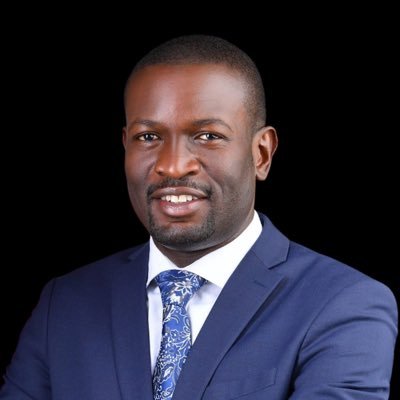
Jina✅✅✅
Nyumba✅✅✅
Sasa ni kupaka nyumba rangi mpya tu.
Ahsanteni sana for all your support, Kenyans. Hatutawaangusha.
