

The bigger the why, the easier the how
Dallas, TX
Joined March 2009
- Tweets1.2K
- Following804
- Followers923
- Likes1.4K






Pinned Tweet
If you’ve got a #iPhoneDuo and you don’t use a case - you have to try the @ohsnapgrip Grip Stand - like a kick stand for any orientation + pop socket + magsafe amplifier (seems to make it connect better to magsafe accessories) in one - best I’ve found for this.


106
Just want to say thank you to #NewZealand for once again being such a gracious host during my ~18 hour stay - would love to have a proper visit one day!
1
19


Jason retweeted

"You reduce crime by eliminating poverty."
This is one of the greatest intellectual confusions of our century. It sounds compassionate. It feels obvious. And the moment you actually test it, it falls apart.
Let's look at the data.
First, the correlation is real. Nobody serious denies that poorer areas have more crime. In Sweden, kids from the poorest 20% of families are about 7 times more likely to be convicted of a violent crime than kids from the richest 20%.
But correlation is not causation. So Swedish researchers did something brilliant: they compared siblings. Same parents, same home, same upbringing, but different family income at different points in their childhood, because parents' income moves over time.
Result, on more than 500,000 children (Sariaslan et al., British Journal of Psychiatry, 2014): once you account for what's shared inside the family, the effect of income on violent crime goes from 7x to nothing. The hazard ratio drops to 0.95. No effect.
Finland ran the same test on 650,000 people. Same result: the income-crime link disappears when you compare siblings.
What predicts crime isn't the bank balance. It's what travels inside families.
Second test: what happens when poverty spikes for everyone at once? 2008. US unemployment doubled from 5% to nearly 10%. 15% of Americans officially poor. If poverty creates crime, crime should have exploded. Instead it fell. Year after year. Robbery, the most "economic" crime of all, dropped 10% in 2010 alone. Criminologists literally said they were stumped. Same story in the Great Depression: 25% unemployment, and crime went down in many cities.
Third test: take families out of poverty and see. The US government ran a randomized lottery called Moving to Opportunity. Thousands of families in public housing got vouchers to move to low-poverty neighborhoods. For boys, violent arrests dropped at first, property crime arrests went up, and over time the effects faded. New zip code. Same behavior.
Fourth: the claim that police don't matter. This one is just false. Chalfin et al. (American Economic Review: Insights, 2022): each additional police officer prevents about 0.1 homicides. And per capita, the lives saved are twice as many among Black victims as among white victims. The people who suffer most from "police don't matter" are the poorest neighborhoods.
So what does predict crime? The Dunedin study followed 1,000 children from birth to age 32. Self-control measured between ages 3 and 11 predicted adult criminal convictions, even after controlling for social class and IQ (Moffitt et al., PNAS, 2011). Cognitive ability matters too: across 700,000 Swedish men, lower cognitive scores at 18 track with violent convictions, and the link barely moves when you control for childhood socioeconomic status (Frisell et al., 2012).
And here's the part nobody quotes: in Dunedin, kids whose self-control improved over time did better than predicted. Behavior can change. Which means responsibility is real.
Why does this matter? Because "poverty creates crime" isn't just wrong. It's toxic.
It turns criminals into victims. The man who robbed you becomes a symptom of "the system," and you, the real victim, become a footnote in someone else's narrative.
It merges two completely different things. "You're poor, we'll help you" is one policy. "You're poor and you committed a crime, so we'll excuse you" is another. Fusing them insults the millions of poor people who work, raise their kids, and never hurt anyone. The vast majority of poor people are not criminals. That alone kills the theory.
It removes responsibility. Build a political system on "your circumstances made you do it" and you destroy the one thing that actually changes behavior: the certainty that you own your choices. Every excuse the state manufactures is an incentive.
And it feeds the state forever. If every crime is a social failure, every crime justifies a new program, a new budget, a new agency. Crime becomes the business model of bureaucracy.
The alternative is simple and old.
A lighter state that protects instead of explains. The same rules for everyone, from the projects or from a gated community. Certain, swift punishment for anyone who commits a crime. And never, ever telling someone their crime was written in their social condition.
Treating someone as responsible is respecting them. Excusing someone because they're poor is the most condescending thing you can do to them.

This quoted post is unavailable.
Jason retweeted
My dear American friends, in my last post I showed you a number that should terrify you: 70% of Millennials say they're pro-socialist. Today I want to show you why. Not with emotion. With pure logic. Step by step, A plus B, until the conclusion is impossible to escape.
Adults, this one is for you. Read it, then explain it to the young people in your life.
Start with Peter Thiel. Years ago he summed up our era in one line: we wanted flying cars, instead we got 140 characters. His thesis is that since the early 1970s, the world of bits has kept racing forward while the world of atoms has stalled. Computers, phones, software, the internet: incredible progress. Housing, energy, transportation, medicine, education: stuck. We build almost nothing physical faster or cheaper than our grandparents did.
Why would progress stop in some places and not others? Same country, same people, same capitalism. The only thing that differs is how much the state is involved.
Here is the proof.
Step one: look at prices. Since 2000, in America, the price of TVs has fallen by more than 90%. Software, phones, toys, clothing: cheaper and better every year. Over the same period, college tuition, hospital services, childcare and housing have more than doubled.
Step two: look at which is which. The goods getting cheaper are the ones where companies compete freely and the state mostly stays out. The goods exploding in price are the ones where the state regulates the most, subsidizes the most, or controls who is allowed to sell.
Step three: look at what young people complain about. They don't complain about TVs. They complain about rent, student debt and healthcare. Exactly the three sectors the state controls the most.
That's not a coincidence. That's a pattern. Let's go one by one.
Housing. In many American cities, most residential land is zoned for single-family homes only. Building an apartment building can take years of permits, hearings, environmental reviews and lawsuits from neighbors. When you make it nearly illegal to build, supply can't keep up, and prices go up. The young don't have a capitalism problem. They have a permission problem.
Education. Washington hands out loans without asking whether the degree is worth it, so universities raise prices because they can. The money doesn't go to better teaching. It goes to layers of administrators that have grown faster than the faculty. And the accreditation system makes it extremely hard for a new, cheaper school to compete. The incumbents are protected. The students pay.
Healthcare. In many states, if you want to open a new hospital or even buy a new MRI machine, you need a "certificate of need," permission from a board where your future competitors often have a say. The number of residency slots that train new doctors is effectively capped by Medicare funding. Getting a new drug approved costs billions. Every rule adds a layer. Every layer adds a cost. Every cost lands on the patient.
Energy. America built dozens of nuclear reactors in the 1970s. Since then, only a handful, years late and billions over budget. Not because physics changed. Because the rulebook did.
Now step four, the most important one. Who benefits from all these layers?
Not the young. Not the poor. The incumbents. The big hospital systems, the big universities, the big developers, the big pharma companies, the big unions. Every complex regulation is a wall that only the giants can afford to climb. So they lobby for more of it. They fund the politicians who write it. They hire the regulators when they leave office. That's not capitalism. That's cronyism. Capitalism is a newcomer allowed to compete. Cronyism is an incumbent paying the state to stop him.
Step five: so what do young people see? They see prices going up, a system rigged for insiders, and no way to build anything for themselves. Their anger is legitimate. Their diagnosis is wrong. They look at the result of the state's capture and call it capitalism.
Step six: and what cure are they offered? Socialism. Which means giving the state even more power over housing, education, healthcare, energy. Giving the keys of the house to the exact institution that locked them out of it.
Follow the logic to the end. If regulation creates cronyism, then total regulation creates total cronyism. If a little state control makes things expensive, total state control makes them scarce. That's not theory. The Soviet Union had a ruling class with its own shops, cars and dachas while ordinary people stood in line for bread. Stalin's collectivization caused a famine that killed millions in Ukraine. Mao's Great Leap Forward caused a famine that killed tens of millions. Venezuela went from one of the richest countries in Latin America to a nation where millions fled. Every time the state got all the keys, the insiders ate and the people starved.
So here's the conclusion, and there's no escaping it:
Where entrepreneurs are free to compete, prices fall and life gets better. Where the state controls, prices rise and insiders get rich. Young people are suffering in the sectors the state controls. Socialism means handing the state everything. So socialism gives you more of the very thing that's hurting you.
The enemy is not capitalism. The enemy is a state captured by insiders, blocking the builders who would solve your problems.
Adults, this is your job now. Don't tell the young they're stupid. Don't tell them their anger is fake. Tell them they're right to be angry, and show them where to aim it. Ask them: what got cheaper in your lifetime, and what got more expensive? Who controls each one? Let them do the math themselves.
The real counter-revolution isn't against the young. It's with them. Free the builders. Let people build homes, open schools, open clinics, build reactors. Give the next generation a stake in the system, and they'll defend it with their lives.
I come from your future. We gave the state the keys. Don't make the same mistake.

My dear American friends, I've shown you where the disease came from and who sells it. Now I want you to look at this email.
January 5, 2020, 2:44 in the morning. Peter Thiel writes to Mark Zuckerberg, Nick Clegg, Sheryl Sandberg and Marc Andreessen. It became public years later, in a lawsuit between the state of Tennessee and Meta. The subject line is one word: Millennials.
Thiel starts from a number: 70% of Millennials say they are pro-socialist.
Read that again. Seven out of ten young adults in the richest, freest, most innovative country in human history say they want the system that ruined every country that tried it.
And Thiel, one of the sharpest minds in Silicon Valley, says something important. Don't just dismiss them as stupid or brainwashed. Understand why. His answer: when you're crushed by student debt and housing is unaffordable, you have no capital and no way to build any. And if you have no stake in capitalism, you turn against it.
He's right. But follow the thread one step further, because that's where it gets interesting.
Who made college unaffordable? Washington flooded universities with easy federal loans, and universities raised their prices year after year, because they could. The same universities that then taught those students, for four years, that capitalism is the problem.
Who made housing unaffordable? Zoning rules, permits, environmental reviews, endless regulation that makes it nearly illegal to build. Remember Piketty's famous rise of capital? It was mostly housing. Scarcity created by the state.
So here's the full picture. The state creates the scarcity. The universities teach that capitalism caused it. The politicians sell socialism as the cure. The arsonist is selling fire insurance.
That's why 70% is not a natural opinion. No generation wakes up one morning wanting central planning. It takes decades of teaching, a captured culture, and an economy rigged to give young people no stake in it. In a healthy country, that number would trigger a serious public investigation into what American universities have been teaching for fifty years. This is not a debate. It's the result of a long, patient operation, exactly the war of position Gramsci described from his prison cell.
Now let me tell you what history says happens when an ideology captures a generation and turns it against everything that came before.
China, 1966. Mao unleashes the Cultural Revolution and hands it to the youth. Students become Red Guards. Their mission: destroy the "Four Olds," old customs, old culture, old habits, old ideas. Temples, books, art, centuries of history, smashed.
In August 1966, at a girls' school in Beijing, students beat their vice principal, Bian Zhongyun, to death. She was one of the first. Teachers across the country were humiliated, tortured, killed by the children they had taught.
In 1970, a 16-year-old boy named Zhang Hongbing denounced his own mother for criticizing Mao. She was executed. He spent the rest of his life trying to apologize for it.
Children were taught that loyalty to the Party came before loyalty to their parents. Historians estimate the Cultural Revolution killed somewhere between hundreds of thousands and millions of people.
The Soviet Union did it first. It turned a boy named Pavlik Morozov into a national hero for denouncing his father. Generations of Soviet children were raised on his story.
Cambodia, 1975. The Khmer Rouge declare Year Zero. Teenagers with rifles empty the cities. Wearing glasses was enough to mark you as an intellectual. In four years, roughly a quarter of the population was dead.
Every time, the same pattern. Take the young. Teach them that the past is guilty. Teach them that their parents, their teachers, their history are the enemy. Then give them power.
So when you see statues pulled down, words banned, books rewritten, and parents treated as obstacles in their own children's schools, understand what you're looking at. It's not the end of the story. It's the opening act. It always starts with the young, and it always starts with good intentions.
If the West ever gets its Marxist youth revolution, it won't end in Scandinavia. It will end the way it has ended every single time it was tried for real. And we will have learned nothing.
Thiel saw the number. I'm telling you where it leads.
The answer is not to hate the young. It's to give them back a stake in the system. Let them build. Let them buy a home. Make college worth its price or skip it. Let them start companies instead of drowning in debt. A generation that owns something defends it. A generation that owns nothing will burn it down.
I come from your future. Don't let your children write the next chapter of this story.

Jason retweeted
If you're planning to vote Democrat, and you're doing it sincerely, because you genuinely want a fairer country, cheaper homes, better schools, and a future for your kids, this post is for you. I'm not here to insult you. I'm here to show you something nobody inside the system will ever tell you. Give me two minutes.
Why do people keep defending a system they know doesn't work?
You've seen it a hundred times. A program fails, its budget doubles, the problem gets worse, and the people in charge ask for more. Nobody inside seems surprised. That's because, for them, the system isn't failing. It's working exactly as designed. Just not for you.
To understand it, forget ideology. Follow the incentives.
A politician's horizon is the next election. Two years, four years, six at most. His reward comes from promising: free tuition, cancelled debt, guaranteed housing, a green transition paid for by someone else. The bill arrives in ten, twenty, thirty years. By then he's retired, writing his memoir, giving paid speeches. He collects the applause today. You pay the invoice tomorrow. Any system where the person who makes the promise never pays for breaking it will produce endless broken promises. That isn't a moral failure. It's a mathematical certainty.
A bureaucrat is rewarded for the size of his budget and his team, not for solving the problem. If he solves it, his department shrinks. If it gets worse, he asks for more money, and he usually gets it. Failure is literally funded.
Then add the mega-donors. Foundations like those of Bill Gates or George Soros spend billions shaping policy: global health priorities, criminal justice, education, elections. You don't need to imagine a secret meeting. That's the point. No conspiracy is required, only incentives. The foundations fund the causes, the politicians adopt them, the agencies execute them. And when it goes wrong, who pays? Not the foundation. Not the politician. The neighborhood where the policy was tested. The billionaire never lives inside his own experiment.
The Austrian economists understood this a century ago. Mises showed that a state can't allocate capital properly because it has no prices, no profit and loss, no signal telling it when it's wrong. Hayek showed that no planner can ever know what millions of people know. When an entrepreneur misallocates capital, he goes bankrupt. When a state does, it raises taxes, prints money, or borrows from your children. Error is never punished, so it never stops.
And that's where the cycle locks in. When capital is allocated by politics instead of markets, the most profitable skill is no longer building. It's lobbying. Getting close to the money. Writing the rule that crushes your competitor. Corruption stops being a bug and becomes the business model. Every round creates more people who depend on it and will defend it. That's why the system protects itself even when everyone knows it's broken. Too many livelihoods depend on the lie.
Meanwhile, Europe's fashionable economists offer the opposite diagnosis. Thomas Piketty and Gabriel Zucman tell us the problem is that the state doesn't take enough: more wealth taxes, more redistribution, more state. France has been running that experiment for fifty years. The result is one of the highest tax burdens in the developed world, record debt, and capital and talent leaving the country every year.
History shows how this movie ends. Debt piles up until it can no longer be repaid. Currencies get debased. Then comes the reset, and it is rarely peaceful. Rome debased its coins for generations before it collapsed. Weimar's hyperinflation came just before the darkest chapter of the 20th century. Empires that can't stop spending don't reform gently. They break.
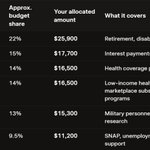
We are approaching the end of that cycle. America now spends more on interest on its debt than on its military. Read that sentence twice.
The good news is that the ending isn't written yet. You can still choose builders over promisers. You can still demand that the people who make decisions live with their consequences. You can still ask for less state, not more.
Wake up. The people selling you the dream will never be the ones paying for it.
I’m French. I want to talk to Americans who are about to vote Democrat. Not to insult you. To warn you.
I come from your future.
In France we did everything your progressive politicians promise. Free healthcare, free college, generous welfare, strong unions, heavy regulation, high taxes on the rich, a state that takes care of everything. Public spending close to 57% of GDP, one of the highest on the planet. On paper, it’s the dream.
Here’s what it looks like from the inside. France hasn’t passed a balanced budget since 1974. Our debt is above 3,300 billion euros. Interest on that debt is becoming one of the biggest items in the national budget. Our hospitals are collapsing despite record funding. Our schools rank lower every year. Young people with degrees can’t afford an apartment in the city they were born in. Our best engineers leave for London, Zurich and San Francisco. And the rich you wanted to tax? They left too, and took the jobs with them.
The promise was protection. The result is stagnation.
The worst part is that nobody in France voted for decline. Every single step sounded generous, compassionate, reasonable. One more program. One more regulation. One more tax to fund it. Each step alone makes sense. Fifty years of them, and you wake up in a country that can no longer build a nuclear plant on time or keep its streets safe.
I love America because it’s the one place on earth where people still believe they can build something from nothing. I came to Silicon Valley as a self-taught kid and it changed my life. That spirit is the most precious thing your country has.
Before you vote, ask yourself one question: is the program you’re voting for making America more like America, or more like France?
Trust me. You don’t want to be France.
I love that young people are like “wait why are we paying for boomers’ retirement - but we’ll never get to see any of that money?!”.
That’s exactly how every one of us with a job feels about funding welfare programs for people that don’t want to work and don’t pay taxes.
3
232
So you’re saying “we don’t want ICE in our city because we think they endanger criminals ” but you’re OK with letting criminals in the country that endanger Americans?
And you want to be able to enforce who comes in the boundaries of your city?!
The irony…
1
2
85

Lane’s great at using up college kids he doesn’t care about for a few nights - but usually it’s girls, not Sam Leavitt.
233
I’m a huge football fan, but I fear the day my 1-year-old asks me to play football.
I’m not sure how I’ll handle it - probably show him Sean Taylor highlights and hope he doesn’t want to be on the receiving end of that.
Pray he chooses hockey or rugby or basketball.
48
We really need to start enforcing the no-texting-while-driving laws more strictly. Make the penalties harsher too. It’s out of hand.
46