

Doctor 🩺🏋️| Small caps / Micro caps | 39x my portfolio in 6 years
Mumbai, India
Joined August 2022
- Tweets1.6K
- Following149
- Followers911
- Likes2.6K







7.8% GDP growth in this global economy?? 🚀
People keep saying -
Why isn’t India growing at 10%+ like China did at its peak?
Maybe we should remember the world China’s peak growth happened in :
China’s biggest growth phase benefited from a once-in-a-generation globalisation cycle: booming global trade, massive FDI, falling trade barriers, rapidly expanding global supply chains and a world economy that was far more integrated and predictable.
India’s recent growth story has unfolded in a very different environment.
Since 2020, we have had:
• COVID and the biggest global economic shutdown in decades
• Russia - Ukraine war
• Israel - Gaza war and the wider Middle East crisis
• Sudan war
• Myanmar’s civil war
• Red Sea shipping disruptions
• Armenia - Azerbaijan conflict
• repeated energy and commodity shocks
• aggressive global interest-rate hikes to fight inflation
• US - China strategic rivalry
• tariffs and trade wars
• supply-chain restructuring and “China+1”
• rising protectionism and industrial policy
• deglobalisation / geoeconomic fragmentation
• tighter restrictions on technology, capital and trade
• and now another major Middle East energy shock
it is a pretty remarkable number considering the world India has had to grow through
And this is not our peak, the best is yet to come 🚀


India’s exemplary GDP growth of 7.8% during Q1 of FY 2026-27 is a herculean feat.
The collective strength of our people ensured India delivered such growth despite oil price shocks and supply chain issues in the midst of global uncertainties.
Doomsayers were doomed and India bloomed…yet again!
4
786
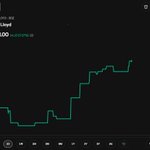
60% jump in 3 months 🚀
Sugs Lloyd
& this is just the beginning.
Next on the radar:
🔹 Sugar
🔹 Camphor
🔹 Cotton
🔹 Paper
🔹 Chemicals
2026 could be the year when people remain confused:
Has the bull run truly started, or is this just a false signal?
Buckle up.
The next 2 years could bring a massive wave of opportunities and volatility.
The ride is just getting started.


Myth: "I'll start investing once I'm a consultant."
Reality: The intern who starts a ₹5000 SIP today will beat the consultant who starts at 35 with ₹50,000/month.
Time beats income. Every time.
Myth: Doctors are bad with money.
Reality: Doctors are busy. Nobody taught them. That's not the same as bad with money
Sumit Jha retweeted
Two doctors make ₹1 crore a year.
One is wealthy.
The other is just a high-income doctor.
How?
Doctor A:
₹1 crore income → bigger house → bigger car → bigger lifestyle → needs to keep working.
Doctor B:
₹1 crore income → buys assets → invests consistently → builds cash-flow → eventually needs to work less.
Same income.
Completely different outcome
Doctor's, stop waiting to 'understand the market' before you invest.
You spent 5.5 years memorizing pharmacology.
You can spend 6 weeks learning index funds.
Perfect knowledge is a procrastination trap.
Enough knowledge + consistent action beats analysis paralysis every time.
Your first ₹10k invested teaches more than 10 books


Two doctors make ₹1 crore a year.
One is wealthy.
The other is just a high-income doctor.
How?
Doctor A:
₹1 crore income → bigger house → bigger car → bigger lifestyle → needs to keep working.
Doctor B:
₹1 crore income → buys assets → invests consistently → builds cash-flow → eventually needs to work less.
Same income.
Completely different outcome
Dr. Priya had ₹8 lakh sitting in her savings account for 14 months.
She's 31. Just finished her MD in dermatology. Finally earning decent money.
But she had no idea where to start investing.
Every uncle had different advice. Her CA asked to 'wait for the right time.'
We did a 90-minute portfolio teardown.
Moved ₹6L into a diversified equity portfolio
Kept ₹2L as emergency buffer.
Set up ₹25k/month SIPs automatically.
Six months later, her portfolio is up 11%.
The cost of waiting isn't just missed returns. It's the compounding confidence you never build.
If you're earning but not investing, what's actually stopping you?
Hindustan Copper 🚀
Copper supercycle seems to have begun.
The stock has already more than doubled over the last year, yet there still appears to be room for further upside.
Interestingly, despite posting bumper results, the stock is down 6% today.
Stocks correcting after strong earnings seems to be a new trend this results season.
Also expecting the broader commodities space to perform well going ahead.

Balaji Amines
🚀 New product launch: DME by May-end - a potential alternative to LPG.
Management Guidance:
• EBITDA margins expected to sustain at 22–24%
• Revenue guidance of ₹3,000 Cr by FY28 and ₹4,000 Cr by FY29
The chemical sector finally looks ready for its next big phase of growth.
youtu.be/CFCp0g7ZK-0?si=zL62…
Balaji Amines:
Could be a major beneficiary of the upcoming BESS and battery component boom.
The company has announced a ₹750 Cr expansion into high-value specialty chemicals, including electronic-grade products, cyanide chain chemicals, EDTA derivatives, and downstream amines.
Multiple new plants are scheduled for commissioning through FY27, which could power the next phase of growth.
The business appears to be transitioning from a commodity chemical player to a higher-margin specialty chemicals platform.


Sumit Jha retweeted
The passive wave through SIPS has democratized investing, and that’s hugely valuable. But there’s a trade-off: when too much capital chases giants blindly, we may be distorting price discovery
SIP money pours into cap-weighted index funds, isn’t there a risk that we’re inflating the valuations of the biggest companies not purely on business fundamentals, but simply because they dominate the index? Some academic research suggests exactly that. Models show that passive flows disproportionately lift prices of mega-caps, reducing their discount rates and lowering their financing costs , even if their underlying cash flows don’t justify such lofty valuations.
This isn’t just theory. Value Research’s Dhirendra Kumar has warned that we might be in a self-fulfilling prophecy: inflows push the index higher → the index looks more attractive → even more inflows keep coming. And data-backed research backs this up: when passive funds get big quarterly inflows, the largest firms in an index tend to outperform and their volatility increases as well.
I’m all in for index funds. They’re a beautiful tool for wealth creation. But it’s worth asking: if this trend continues, where do valuations go 30–50 years from now?
Sumit Jha retweeted
I’ve seen more people criticising and taking moral high grounds over those who choose to invest through index funds. The reality is simple: index fund investing is perfect for someone who doesn’t want to spend their life understanding valuations, macro cycles, business models, or position sizing. And there’s nothing wrong with that. In fact, for a common person juggling work, family, and daily responsibilities, an index fund is often the cleanest, least-friction way to participate in long-term wealth creation without losing sleep or pretending to be an expert.
What makes index investing beautiful is that it doesn’t promise alpha, it doesn’t demand your time, and it doesn’t require you to constantly judge whether you’re smart enough. You simply capture the growth of an economy by owning a slice of everything. No chasing gurus, no predicting cycles, no comparing yourself to others. For someone who wants peace, consistency, and the ability to focus on life beyond markets, index funds are not a compromise, they’re a gift.