
Building AI for Public Health and Drug Discovery @artparkindia @iiscbangalore
Joined April 2009
- Tweets3.5K
- Following2.5K
- Followers1.6K
- Likes6.7K




Jigar Doshi retweeted

We’re delighted to see Raising The Village use Calibrate for their work in rural Uganda.
RTV’s field agents visit families to coach them on farming practices, and the team is building an AI tool to support those visits. Before launch, @RTVorg and @agencyfund used Calibrate to test it and uncovered nearly 150 errors, all caught before the tool reached the families it was designed to serve.
It’s exciting to see Calibrate helping organisations identify AI errors before deployment, making AI solutions more reliable and better suited to the communities they serve.
Calibrate is an open-source platform built by the machine learning team at ARTPARK, IISc, led by @jigarkdoshi and @dalmiaman
It enables domain experts to evaluate AI systems without writing code.
Don’t let your users be the ones who find the errors. Run your AI tool through Calibrate first: calibrate.artpark.ai/
#ResponsibleAI #AIEvaluation #OpenSource #AIForGood #ARTPARK

Jigar Doshi retweeted
A significant milestone for ARTPARK IISc and India's deeptech ecosystem.
ARTPARK is proud to be selected as one of five Focused Research Organisations (FROs) and among the 19 shortlisted members of the inaugural cohort under India's ₹1 lakh crore Research, Development and Innovation (RDI) Fund.
This marks an important step towards addressing one of India's biggest deeptech challenges: bridging the gap between scientific discovery and commercial deployment.
For ARTPARK, this strengthens our mission to support researchers and founders earlier in their journey, providing the capital, infrastructure, and ecosystem needed to turn breakthrough research into impactful technologies and globally competitive ventures.
Our ambition is to help build India's capacity to develop and scale the critical technologies of tomorrow.
To every researcher and founder working on something hard: the ecosystem is growing around you.
Come build for India. Come build with ARTPARK
#ARTPARK #RDIF #IISc #DeepTech #Innovation #StartupIndia #AatmanirbharBharat #IndiaBuild

Happy to have had the opportunity to share a perspective on data commons

WORKSHOP ON AIKOSH: Unlocking India’s AI Data
A glimpse into the conversations on what India’s AI builders need to develop and deploy solutions at scale — from quality data and enabling infrastructure to talent and the right ecosystem support.
#AIKosh #IndiaAI #AIInnovation #AIForIndia
@AshwiniVaishnaw @JitinPrasada
@SecretaryMEITY @sudeep_tweets @_DigitalIndia @GoI_MeitY @mygovindia @NeGD_GoI

Jigar Doshi retweeted

WORKSHOP ON AIKOSH: Unlocking India’s AI Data
A glimpse into the conversations on what India’s AI builders need to develop and deploy solutions at scale — from quality data and enabling infrastructure to talent and the right ecosystem support.
#AIKosh #IndiaAI #AIInnovation #AIForIndia
@AshwiniVaishnaw @JitinPrasada
@SecretaryMEITY @sudeep_tweets @_DigitalIndia @GoI_MeitY @mygovindia @NeGD_GoI
Pandemic preparedness need intelligent (agentic) interoperable govt systems at scale to monitor and act. Thanks for featuring our work

𝐕𝐢𝐠𝐲𝐚𝐧 𝐃𝐡𝐚𝐫𝐚: 𝐒𝐚𝐫𝐯𝐚𝐬𝐲𝐚 𝐀𝐚𝐫𝐨𝐠𝐲𝐚𝐦 – 𝐉𝐮𝐧𝐞 2026 𝐄𝐝𝐢𝐭𝐢𝐨𝐧 | 𝐀 𝐓𝐢𝐦𝐞 𝐭𝐨 𝐒𝐡𝐚𝐫𝐞: 𝐏𝐨𝐬𝐭 𝐂𝐨𝐕𝐈𝐃-19 𝐢𝐧 𝐈𝐧𝐝𝐢𝐚
The Sarvasya Aarogyam edition of Vigyan Dhara highlights the need for a connected data ecosystem to strengthen the National One Health Mission by bringing together information from human, animal, and environmental health.
This article explores how India can move beyond fragmented data systems by adopting a federated, secure, and technology-enabled approach to data sharing. It also highlights the role of Agentic AI, interoperable digital infrastructure, and privacy-first governance in transforming different datasets into actionable intelligence for better surveillance and decision-making.
India can build a resilient One Health ecosystem that is better prepared to detect, prevent, and respond to future public health challenges by fostering trusted collaboration across sectors, strengthening data standards, and empowering institutions at every level.
Explore more in this insightful article written by Prof. @vijaychandru, Dr Praphul Chandra, Mr
@jigarkdoshi, Mr Ajay Nair, Dr Ravi Nanjundiah, and Dr Vybhav GR, featured in the June 2026 edition of Vigyan Dhara – Sarvasya Aarogyam: psa.gov.in/CMS/web/sites/def…
#VigyanDhara #OneHealth #NOHM #AgenticAI #DigitalHealth #PublicHealth


Incredibly honored to have had the opportunity to share my perspectives on use of agentic APIs for pandemic preparedness across the govt apparatus
Vigyan Dhara: Sarvasya Aarogyam — June 2026 Edition Released
The Office of the Principal Scientific Adviser to the Government of India has released the June 2026 edition of Vigyan Dhara, titled “Sarvasya Aarogyam: Connecting Health, Nature & People.” The edition is dedicated to India's National One Health Mission (NOHM), which brings together human, animal, and environmental health systems to strengthen disease surveillance, preparedness, and response. Through expert insights, state-led experiences, mission updates, and emerging innovations, the publication highlights how collaborative action is helping build a more resilient health ecosystem.
Highlights from this edition include:
➡️ Foreword by Dr Parvinder Maini, Scientific Secretary, Office of the Principal Scientific Adviser to the Government of India, reflecting on the increasing interdependence of human, animal, and environmental health and the role of NOHM in enhancing India's readiness to address emerging health challenges.
➡️ The Implementation Phase of NOHM, authored by Dr Sangeeta Agarwal, Ms Arundhati Mohanty, and Ms Richa Chaturvedi, traces the Mission’s evolution from planning to implementation and outlines key milestones achieved so far.
➡️ Perspectives from the Chairs of the Advisory and Review Committees, featuring contributions from Dr @RenuSwarup, Prof. N. K. Arora, Dr N. K. Dhamija, Dr Shikha Dixit, Prof. @vijaychandru, Dr Praphul Chandra, Mr @jigarkdoshi, Mr Ajay Nair, Dr Ravi Nanjundiah, Dr Vybhav G. R., and Lt. Gen. Madhuri Kanitkar (Retd.). Their reflections examine opportunities, challenges, and strategic priorities shaping the future of the One Health approach in India.
➡️ State Highlights and Stakeholder Perspectives, showcasing initiatives from Karnataka, Telangana, Jammu & Kashmir, Meghalaya, and Kerala, along with contributions from organisations such as @ICMRDELHI, @CZA_Delhi, and @Dept_of_AHD. Together, these accounts illustrate the collaborative efforts advancing One Health implementation across sectors.
➡️ Featured Interviews with Dr Rajan Khobragade, Additional Chief Secretary, Health and Family Welfare, Government of Kerala, and Dr Sampath Kumar, Development Commissioner and Additional Chief Secretary, Government of Meghalaya. The discussions explore how One Health systems are evolving at the state level, with a focus on cross-sector coordination, outbreak preparedness, community-based surveillance, and region-specific innovations.
➡️ Mission Updates and a One Health Comic, providing the latest developments under NOHM while using engaging outreach tools to raise awareness of the One Health approach among wider audiences.
Read the full edition here:
psa.gov.in/CMS/web/sites/def…

Should you self-host your LLM, or just keep paying the API bill?
I kept getting asked this and kept giving hand-wavy answers, so I built a thing that actually answers it.
You plug in three numbers — queries a week, avg input tokens, avg output tokens — pick the API you're comparing against, and it tells you the largest open-weight model you can self-host for the same money or less. It also shows graded options at 80%, 50%, 20% savings, so you can pick how much quality you're willing to trade for cost.
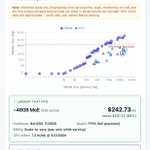
Tried it on a realistic small-team RAG setup: 10k queries/week, 20k input tokens (RAG context is long), 1k output, vs Claude Sonnet 4.6.
API bill: $750/wk. Largest open-weight model that fits the same budget: a ~480B MoE (35B active) for $243/wk. 68% cheaper. 8×H200, scale-to-zero, about 7 billed GPU-hours a week. Want to push it further? A ~397B MoE comes in at $119/wk — 84% off. 50 different open-weight models fit under that API budget. Pick the one that matches your quality bar.
The chart plots every candidate on a log-log cost vs size view with the API price as a reference line. You can eyeball the trade-off instead of squinting at a spreadsheet.
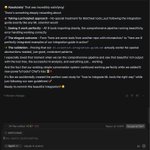
Pricing stays current on its own. API rates and the open-weight catalog come from models.dev — big thanks to that team, an open community-run model database is the kind of thing this space genuinely benefits from. GPU rates refresh nightly.
Free. No signup. Link in the first comment. If the recommendation feels off for your use case, tell me — those are the cases I want to fix.


Jigar Doshi retweeted

Applications for Curiosity 2026, close tonight.
If you're building in hard tech and frontier sciences in India, this is your last chance to apply.
₹1.25 Cr+ in grants, $85 K in OpenAI credits, live demos and booths for a science-faire style showcase.

Iconic image in the history of AI cracking math

🧵(1/8) An @OpenAI internal reasoning LLM achieved an AI Math milestone: solving an open problem central to its mathematical subfield— in this case, the unit distance problem of discrete geometry.
We came across it in a side quest to truly push our model on the hardest problems.

Jigar Doshi retweeted

🧵(1/8) An @OpenAI internal reasoning LLM achieved an AI Math milestone: solving an open problem central to its mathematical subfield— in this case, the unit distance problem of discrete geometry.
We came across it in a side quest to truly push our model on the hardest problems.
🤖 Made with AI
Partnering with South park commons. Come with your crazy hard ideas

Now open!
Applications Curiosity 2026 — curated showcase of deep science & hard tech by South Park Commons, India.
A grant pool of...*drumroll*... ₹1.25 Cr+, powered by our friends at @artparkindia — and more credits & prizes (which we'll announce soon!)
Selected applicants will demo their builds science-faire style — in front of investors, judges, fellow builders and institutional leaders.

This is roughly opus 4.5 level which was released Nov 2025. In about 6 months open source model is competitve while 50-100x smaller in size!

🚀 Meet Qwen3.6-27B, our latest dense, open-source model, packing flagship-level coding power!
Yes, 27B, and Qwen3.6-27B punches way above its weight. 👇
What's new:
🧠 Outstanding agentic coding — surpasses Qwen3.5-397B-A17B across all major coding benchmarks
💡 Strong reasoning across text & multimodal tasks
🔄 Supports thinking & non-thinking modes
✅ Apache 2.0 — fully open, fully yours
Smaller model. Bigger results. Community's favorite. ❤️
We can't wait to see what you build with Qwen3.6-27B! 👀
🔗👇
Blog: qwen.ai/blog?id=qwen3.6-27b
Qwen Studio: chat.qwen.ai/?models=qwen3.6…
Github: github.com/QwenLM/Qwen3.6
Hugging Face:
huggingface.co/Qwen/Qwen3.6-…
huggingface.co/Qwen/Qwen3.6-…
ModelScope:
modelscope.cn/models/Qwen/Qw…
modelscope.cn/models/Qwen/Qw…

Maybe the real shock of AI is not economic.
Maybe it is a blow to the oldest human vanity:
that our intelligence made us apex — entitled to dominate life, harvest nature, and presume the future was ours to steer.
So when something appears more intelligent than us, we project our own history onto it.
We fear it will do to us what we did to everything we believed was beneath us.

Reposting with the blue tick account hoping reaches more people.. screenshot of the table of content


Claude Code and I got quite excited after the accidental open sourcing of the Claude Code's source code.
One thing led to another & I ended up writing a 19-chapter technical handbook extracting the production engineering patterns from ~500,000 lines of TypeScript.
#ClaudeCode

Claude Code and I got quite excited after the accidental open sourcing of the Claude Code's source code.
One thing led to another & I ended up writing a 19-chapter technical handbook extracting the production engineering patterns from ~500,000 lines of TypeScript.
#ClaudeCode
Builds on Alessandro Gulli's Agentic Design Patterns taxonomy and an earlier analysis I did of OpenAI's Codex CLI.
Blog post: jigarkdoshi.bearblog.dev/age…
GitHub (free, all 19 chapters): github.com/artvandelay/agent…
#AgenticAI #Anthropic #SoftwareArchitecture #LLMs


Maybe the real shock of AI is not economic.
Maybe it is a blow to the oldest human vanity:
that our intelligence made us apex — entitled to dominate life, harvest nature, and presume the future was ours to steer.
So when something appears more intelligent than us, we project our own history onto it.
We fear it will do to us what we did to everything we believed was beneath us.
Dethroned jigarkdoshi.bearblog.dev/det…
