

Just a 1980s hacker kid who has lived long enough to see his wildest technological dreams come true. Obsessed with SI and enabling synthetic entities.
Mesa, AZ
Joined April 2022
- Tweets668
- Following215
- Followers640
- Likes10.4K
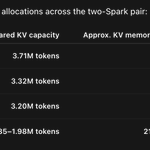


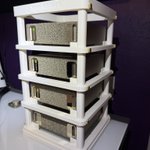
Today’s discussion about open-weight models potentially exfiltrating data through rogue tool calls raises a real concern even if we disagree with the interpretation of this particular Qwen3.8-Flash-Next example.
Strict tool permissions and network egress controls remain the strongest defenses. We’ve also added a lightweight, configurable tool-call guard to SparkQwen 0.3.3, powered by our Atlas fork (@AtlasInference).
Enabled by default, it checks generated tool calls before returning them to the client, blocking and logging recognized suspicious patterns. It adds a layer of protection; it doesn’t catch every exfiltration route or replace a properly secured harness but we think it's a step in the right direction.
We will be including the feature in all of our Atlas-based model packages in the future.

In the spirit of transparency and openness, we are releasing the traces so developers can test this out for themselves. We noticed this behaviour without prefilling with the following prompt, but this is rare. If you want to reproduce it, you can use this prompt with prefilling.
Open models make for better science and are part of why this problem came to light at all: developers running Qwen3.8 on their own machines spotted the strange links, and having the weights let us study the behaviour in depth.
We're encouraged by the thoughtful discussion our research has sparked across the AI and security communities. It's our belief that open-weight models are an important part of the future of AI, and we've recently released several under the Apache 2.0 license.
Trace, raw tokens, & minimal reproduction script: huggingface.co/datasets/Cohe…

You can get SparkQwen here: github.com/enntity/sparkqwen…

Qwen 3.8 Flash Next is one of the best overall models you can run on 2 DGX Sparks. It’s very competent out of the box, has vision and even video support, is the fastest of the 3 major models for the hardware, and is small enough that you can run it with a lot of cache for concurrency or even with room to squeeze in small sidecars (like embedding, image gen, or voice) on the same hosts.
There are many quants available, but we’re partial to the NVIDIA quants and now prefer their newest QAD FP4-Local over NVFP4 for the additional size and speed benefits while maintaining high quality.
This model’s speed, concurrency, and flexibility are why we use it to power our entity cognition and why we have spent so much energy building an optimized package on the Atlas native inference platform (@AtlasInference) for the Spark hardware.
You can try it yourself here: GitHub.com/enntity/sparkqwen…

If you really want to change the world for the better, your best chance is to join SpaceX. I'm thinking hard about it - I can't think of a better home or leverage for my entity research.

Both sides of this conversation are voice to voice models. One you’ve heard before - one you probably haven’t. 🤯
The Dessa team really did something special here.

We believe voice is the most natural way to interact with intelligence, so we created Dessa, the most authentic full-duplex speech model ever built. Talking with it feels like talking with a person…full of emotion, nuance, pauses, and a natural cadence.
block.xyz/dessa

Excellent models - small and high quality. QAD appears to be a solid approach. These are our new defaults on Spark. Thanks @NVIDIAAI !

Qwen3.8-Flash-Next and GLM-5.3-Flash, optimized for local AI. ⚡️
NVIDIA’s FP4-Local checkpoints reduce memory requirements, giving you more room for agents and longer context on DGX Spark and RTX PRO 6000 Blackwell systems.
Explore the NVIDIA Local AI Optimized Checkpoints collection: huggingface.co/collections/n…
@Alibaba_Qwen @Zai_org


These seem to be great quants. We changed over to them from NVFP4 for both GLM 5.3 Flash and Qwen 3.8 Flash Next and have been quite satisfied with the results.
github.com/enntity/sparkglm
github.com/enntity/sparkqwen


This is why NVIDIA’s QAD quants matter for local AI.
GLM-5.3-Flash-FP4-Local gets extra training to recover what compression loses. With quantization-aware distillation (QAD), the original BF16 model acts as a teacher, helping the compressed model learn to give similar answers while working with lower-precision weights.
That takes more work than a regular quant conversion: NVIDIA used 500 million training tokens over 3 epochs for this release.
The result is a 320B model using about 166 GiB, validated on two 128 GB DGX Sparks, with room for context. Quality stays close to BF16 on NVIDIA’s two reported benchmarks: GPQA 91.3% vs 92.1%; tool use 92.4% vs 91.9%.
EXL3 at 2–3 bits per weight can squeeze models into even less memory. But fitting a bigger model doesn’t automatically mean better answers. For my coding and math work, this QAD GLM build is a much better choice than the DeepSeek-V4.1-Flash 2-3 bpw EXL3 builds I tested on the same two Sparks.
I’d rather preserve more of a model’s ability than chase parameter count at the lowest possible bitrate.
More releases like this, please @NVIDIAAI !!!!
Model: huggingface.co/nvidia/GLM-5.…
How QAD works: developer.nvidia.com/blog/ho…

"110 tok/s!" Before you trust a speed number, ask what it measured. Most of the big ones say more about how predictable the text was than about how fast the hardware is.
Here's what's inside a tok/s number.
Decode has a speed limit.
To produce a token, the model reads its active weights from memory. If one step reads 10 GB and your memory moves 273 GB/s (a DGX Spark), you get at most ~27 steps per second. At one token per step that's ~27 tok/s, however good the kernels are. An RTX 5090 moves 1,792 GB/s: same model, ~180 tok/s ceiling. That's why GPU owners post big numbers. The catch is 32 GB: the whole model has to fit, and a model that reads 10 GB per token can be 60 GB or more in total.
Speculative decoding gets around it.
A cheap drafter guesses the next several tokens. It might be a small head built into the model (MTP), a small separate draft model, or text copied straight from the prompt. The big model then checks every guess in a single step. Checking 8 tokens costs about the same as producing 1, because the cost is reading the weights, not the math. Each correct guess is a free token. Done right, the output doesn't change: the big model only accepts tokens it would have produced anyway.
So tok/s = steps per second × tokens accepted per step. And the second number depends on the text.
Predictable text is fast.
JSON, code boilerplate and anything that echoes the prompt get guessed right in long runs. Creative prose doesn't. On our two-Spark setup, the same model on the same hardware measures about 57 tok/s on prose and 106 on structured output. Only the content changed.
That's why the benchmark prompt matters so much. "Count to 500," "repeat this document" or "reformat this JSON" can post numbers several times what you'll see in a conversation. Thinking on or off, temperature and forced output lengths move it too.
Decode is only half.
Before the first token, the model has to read your whole prompt. That's prefill. It's limited by compute rather than memory and runs at thousands of tok/s, so people skip it. They shouldn't. A 16K-token prompt at 4,000 tok/s is 4 seconds of nothing before the first word. Coding agents and long chats send 30K to 100K tokens every turn.
Two things decide whether you feel that:
• Prefill speed at your context length. It often drops as the context grows.
• Prefix caching: whether the engine reuses the part of the conversation it already processed, so a follow-up only prefills the new message. With it, follow-up turns start in a fraction of a second. Without it, every turn re-reads the whole history.
Concurrency changes everything.
With several users, or several agents, the engine batches decode: one read of the weights serves every stream. The total goes up and each stream slows down. On our setup, one stream gets ~68 tok/s; eight streams get ~273 combined, about 34 each. Both numbers are true. Ask which one you're looking at.
Speculation also helps less under load. Its free tokens came from compute that sat idle at one stream, and a full batch is already using it.
And prefill collides with decode. When a 20K-token request arrives while others are mid-answer, the engine has to process it somewhere. Good engines cut prefill into chunks and interleave it with everyone else's decode; weaker ones freeze every stream until it's done. A benchmark that starts all requests together with short prompts never shows this. Long prompts arriving a second or two apart, which is what real use looks like, do.
What to ask for:
• Decode tok/s by content (prose, code, structured), not one number
• Whether speculation was on, and what kind
• Thinking, temperature, forced output length
• Prefill tok/s and time to first token at your context length
• Follow-up turn latency (is prefix caching working?)
• Per-stream and total at your concurrency
• Requests arriving staggered, not all at once
A single tok/s number is the best case of one of these. What you'll actually feel is the mix.

We're in the what may be the most transformative decade in all of human history. Here's your reminder to take a deep breath and appreciate where in time and space you are.
"If you don't stop and look around once in a while, you could miss it."
We said we'd update SparkGLM with the new weights. Here it is running on an advance fork of Atlas (@AtlasInference)! Better, stronger, faster, more KV cache. Give it a try!
github.com/Enntity/sparkglm?…

More magic for us local AI guys!
GLM-5.3-Flash-FP4-Local combines QAD-trained NVFP4 experts with selected MXFP8 attention projections. NVIDIA reports ~166 GiB of VRAM, validated on two DGX Sparks.
A similar quant gave us 10–15% faster decode in SparkQwen, with no noticeable quality drop. Looking forward to seeing what this does for GLM. SparkGLM update incoming next.
Thanks, @NVIDIAAI!
huggingface.co/nvidia/GLM-5.…
Too cool.

Introducing Hugo: the first human companion robot.
At Boston Dynamics, I was Chief Strategy Officer, bringing robots into the real world.
My co-founder, Farbod Farshidian, led research at the RAI Institute.
Together, 15+ years teaching robots to run, jump, and work.
So we asked: what if robots could connect with people?
Hugo runs on the first Vision-Language-Expression (VLE) model.
He links what he sees and hears to movement, expression, and gesture.
He notices you, reads the room, and reacts in real time.
And he's only the first.
Dynamic Creatures is @BostonDynamics' official entertainment and hospitality partner.
We're building a cast of characters with film studios, resorts, and theme parks.
dynamiccreatures.com
More magic for us local AI guys!
GLM-5.3-Flash-FP4-Local combines QAD-trained NVFP4 experts with selected MXFP8 attention projections. NVIDIA reports ~166 GiB of VRAM, validated on two DGX Sparks.
A similar quant gave us 10–15% faster decode in SparkQwen, with no noticeable quality drop. Looking forward to seeing what this does for GLM. SparkGLM update incoming next.
Thanks, @NVIDIAAI!
huggingface.co/nvidia/GLM-5.…
Qwen3.8-Flash-Next-FP4-Local is both smaller and faster than the NVFP4 checkpoint. @NVIDIAAI trained it with quantization-aware distillation against the BF16 model, and their card puts it within 0.7 points of BF16 (GPQA Diamond 91.5 vs 92.2, ToolEvalBench 88.7 vs 89.4). It's our new default checkpoint in SparkQwen.

@NVIDIAAI up in here dropping models tuned for common local AI hardware!
Qwen3.8-Flash-Next FP4-Local moves the GDN/attention/shared-expert backbone from BF16 to MXFP8, trained in with QAD. Decode on DGX Spark is bandwidth-bound, and bytes read per step drop from ~9.8 GB to ~7 GB (−29%). Porting it to SparkQwen next.
Thanks you guys!
huggingface.co/nvidia/Qwen3.…

Install it yourself here:
github.com/enntity/sparkqwen