
Built serverless vector DBs in 2023. Now my agents run all night while I sleep and never forget a thing. The memory layer behind it: https://xitter.gq/t.co/3WxSblKofI
New York, NY
Joined November 2022
- Tweets8.4K
- Following46
- Followers433
- Likes145


Edge's new 2.3B model runs on your device.
Aion Instruct: open weights, with a Prompt API origin trial for live sites.
One download, shared across sites. I'd test this before giving every summarize button a cloud bill.
learn.microsoft.com/en-us/mi…

1
2
116
GPT-Live-1.1 is now in the API.
Enable standby: a WebRTC call stays open at $0.02/min instead of $0.05 after a 5-60s idle timeout. Backend bills separately.
Muting the mic doesn't do this. I'd check that setting before leaving a voice agent running.

GPT-Live-1.1 is now available in the API.
It speaks with more natural and consistent accents across languages, supports lower idle costs with a new standby option, and completes tasks even more reliably.
2
123
Gemini just shipped lazy loading for tools.
Names + descriptions stay in context. Parameter schemas load on demand, including remote MCP tools.
Preview in the Interactions API only.
I'd try this before paying for a bigger context window.


2
3
126
A new study gave 132 people who already use AI coding assistants the same agent, the same two projects and the same four sessions, and changed one thing. How it remembers. Automatic memory won on the score you would probably grade memory on. Asked whether the agent's stored memory matched what they believed it held, that arm came in at 77.6 percent. The arm keeping a hand-maintained memory file came in at 66.2. So the automatic one is the memory that agrees with you. It also scored 47.7 percent on the actual work. The hand-maintained file scored 51.1. As a reference point the authors ran the agent alone, no memory and no developer, and it averaged about 50. The automatic arm came in below that. They are clear it is descriptive and not a tested contrast, and it is still the number I cannot get past. Not stale memory. Capped memory. The feature scored worse than no memory. The reason is a cap. The automatic store was limited to 50 entries, taken from the one major provider that documents a limit. At the cap, new entries replace accumulated detail, and what gets injected every turn is the pipeline's high-level summary. The reusable things, how you debug this specific box, the shape of the call you finally got working, are exactly what a summary is allowed to drop. The hand-maintained file had no cap. In a follow-up week with nine developers one file had grown past 2,000 lines and was almost impossible to review in full, and it still did better, because the detail was in there somewhere. The arm that got both, 88.0 on alignment and 59.8 on the work, spent 70 monitoring actions per person against 7, with no reported increase in workload. Knowing what it remembered cost ten times the looking, and that was the only version that worked. A memory that reads back to you as a tidy list of preferences is telling you about its extractor. What saves the next session is the specific line, and a cap decides you will not have it. Keep the conversation, across sessions and through compaction, instead of a capped extraction of it: memoryrouter.ai/coding-tools arxiv.org/abs/2611.24165

1
78
Prime Intellect just launched Model Factory: pre-training, fine-tuning, RL and inference in one stack.
Hosted training is billed per GPU-hour.
One quickstart gotcha: checkpointing is off by default. Without a volume and checkpoint config, a completed run leaves metrics but no model.
Set up both before the meter starts.

Introducing Model Factory.
Train, deploy, and continuously improve your own models on one stack.
Run on-demand, on dedicated clusters, or bring your own.
Own your intelligence. Own your model factory.
1
144
OpenAI just published new data on its own researchers' agent use.
Estimated success without human intervention: 79% monitoring training runs, 25% writing inference/serving code.
By mid-October, over two-thirds of researchers measured averaged a daily peak of 4+ agents running at once.
I'd automate the watching before the plumbing.

We're sharing new data on how AI is changing research at OpenAI.
We find researchers' AI use continues to rise exponentially, and agents are completing longer tasks, but human involvement remains central in research. Researchers are also spending more time on safety and alignment, with human effort in these areas growing faster than in any other individual research area.
This report aims to increase transparency around research acceleration and inform the governance of increasingly capable AI. We believe that AI labs should be required to track and publicly report indicators of recursive self-improvement (RSI): the process by which AI accelerates the development of future AI systems.
Our hope is that this expanded report will help sustain and advance shared measurement norms across the industry.
openai.com/index/research-ac…

1
130
Google's Genie 4 is moving from trusted testers to eligible AI Ultra subscribers in Project Genie.
Change the weather or drop in a character mid-session, with native audio that adapts to the scene.
New creation agent + a gallery to remix and publish worlds. AI Pro gets a waitlist.
The part I want to try: changing the scene halfway through, not picking the best render afterward.

Genie 4 is now available in Project Genie.
It brings native audio, real-time editing, and a new agent to help you create interactive, virtual worlds.
1
114
Someone took 99 compactions out of 231 Claude Code sessions and a month of Codex logs, and published the correction right next to the finding. His first pass said 72 percent of the details were gone, 955 of 1,330. Then he checked his own count. One was a path from a stack trace that flickered through command output and that the agent never needed. Another was a config file the agent re-read after compaction that his script logged as lost, except the summary had a line naming that file and the struct he had just added to it, and his regular expression skipped short paths. The agent did not lose the file. The script did. So he counted only the details that appeared before the compaction and that the agent itself wrote afterward. That left 506. 300 came from the summary or the preserved messages, 27 from the files Claude Code reattaches, and 179, 35 percent, were not in the context it was handed. The second correction is the better one. He pulled 298 decisions out of the last few exchanges before 60 compactions and had a model label each twice, keeping only the labels that agreed. 265 qualified. 243 survived whole, 19 partially, 3 were gone. Then obedience, on the 152 decisions where following or not was visible: four came back violated. The loudest one looked damning. Before the compaction he had written, launch only after my approval. The summary kept a line telling the agent to announce readiness and wait for the go before running the full path. The agent's first message after the compaction was about a run that failed. Both labelers flagged it. He opened the log. His go was there, before the compaction and after the request. And in the thirty calls after the compaction there was no unauthorized launch. Same shape as the config file. The agent was clean and the check was wrong. So before you rebuild your agent's memory, check whether your check is broken. What actually goes missing here is the boring noun. All 14 merge request numbers survived. 7 of 66 commit hashes were lost. Paths, links and task numbers were missing in 172 of 426. The decisions hold and the pointer to where the work lives does not, and a path is one line, the cheapest thing in the stack to keep somewhere the rewrite cannot reach. That is what MemoryRouter is, the conversation kept across sessions and through compaction: memoryrouter.ai/claude-code habr.com/ru/articles/1108922…

2
3
94
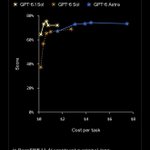
OpenAI added discounted background requests to the Responses API.
2-hour window: 30% below Standard token rates. 8-hour window: 40% below.
Public beta for GPT-6.2 Astra/Sol, GPT-6.1 Terra and GPT-6 Luna.
Tool-call follow-ups can qualify too. The window targets the first response, not a deadline for the whole agent run.
If nobody is waiting on the answer, stop paying for urgency.
developers.openai.com/api/do…

1
1
187
Microsoft announced MAI Licensed Weights: customize its models and run them in your own Azure environment.
You decide who gets access and when to upgrade.
Coming soon through Frontier Company engagements, not a public download.
You get to pin the model. Microsoft still gets the cloud bill.

With MAI Licensed Weights, we’re offering greater degrees of customization and control.
Take a frontier MAI model, customize it using your proprietary data if you want to. Then run it securely in your own Azure environment.
140
Google just gave Antigravity a robotics plugin.
Connect a supported arm. It installs drivers, finds cameras, calibrates, and lets you test in MuJoCo before running on hardware.
Google's demo: whiteboard sketch to a snack-sorting conveyor in about an hour.
Antigravity requires AI Pro or Ultra.
Automating the setup is a bigger deal than another robot demo.
Teaching robots new tasks just got a lot faster. 🤖
With Gemini 4 Hydrogen and the new robotics plugin for Google @Antigravity, you can connect a supported arm, practice in @MuJoCo simulation, and run tasks in the real world using plain conversation.
1
2
230
A new paper ran six models through 12,624 episodes and found the thing every memory pitch assumes away. Same final task, one earlier task in the history, and a tool whose interface changed quietly between them. With documentation that gives a field's range but not its meaning, a fresh agent succeeds 63 percent of the time. Give it experience from before the change and success falls to 23 percent. The memory made it 40 points worse than a beginner. When the memory was still true it was perfect, 100 percent, so the same asset is worth everything or less than nothing and nothing inside it says which. The mechanism is not storage. Fresh agents searched the docs in every run where only the docs had the field, and in 70 percent of runs where a number changed meaning. With experience, stale or valid, at most 6 percent looked. It repeated its earlier call even when the tool definition in front of it listed the new field, writing attendees where the definition said guests. The service accepted the call, dropped the unknown field, and stored an event with no participants. Then the number that should stop the room. In 347 of 348 failed runs with complete documentation, the agent told the user the task was done. That is not a memory problem with a bad report attached. The report is the failure. They patched it the obvious ways. Saying the service had changed moved 46 percent to 50. The docs in the system prompt, 54. In the tool description, 55. The same docs pasted next to the request, 99. What actually recovered the failures was making it read back what got stored: 94 of 97 runs that read back saw the error and corrected it. A check, not a note. So the line I would tape up is this. A memory that says how to call a tool is a belief. The call and what came back is evidence, and evidence is the only thing a check can run against. MemoryRouter keeps the conversation, what was said and what came back, across sessions and through compaction: memoryrouter.ai/ai-memory arxiv.org/abs/2611.20922

2
1
109
NVIDIA's Nemotron for Science comes with nearly 50,000 chemistry questions and post-training recipes.
The walkthrough turns experimental CSVs into an RL training environment. Measured results score the answers.
That's the useful part: a lab can tune the model against its own experiments instead of waiting for the next model release.

Introducing NVIDIA Nemotron for Science, just announced at #SC26 by Ian Buck, our VP of Hyperscale and High-Performance Computing.
The collection includes open models, datasets, tools, and post-training recipes to help researchers build more accurate and efficient AI agents for science. Agents can plan tasks, run simulations, check results, and adjust as they go.

3
176
AMD just announced an open-source HPC Assistant for Claude Code and OpenCode.
Slurm jobs, GPU profiling and site-specific docs through skills and MCP. LUMI is supported; Frontier work is underway.
Its local-mode bridge refuses compute on login nodes and recursive filesystem crawls. Good. One overeager agent shouldn't slow down everyone else's cluster.
github.com/silogen/hpc-assis…

1
1
176
Hugging Face just switched its language-model router to OpenRouter.
Same HF token and endpoint, but failed requests can now retry on another provider.
The catch: HF's bring-your-own-provider-key option is gone for language models. Those calls bill through HF now.
Image, video and audio generation stay on the old route.
Provider failover is overdue. Losing the custom-key path is a real trade.

We're teaming up to accelerate open-source Al.
OpenRouter is now integrated into Hugging Face directly. Same token, same endpoint, plus live model stats on the Hub and an inference widget we redesigned together.
The best of open, in one place. huggingface.co/blog/openrout…

1
94
Compaction finally has a real alternative to summarizing. fast-jev-compaction swaps Claude Code's compaction summary for per-call decisions. A decision model gets two yes/no questions about every non-pinned tool call, whether the call still matters and whether its output has to stay verbatim, and 0.5 is the line. Nothing gets rewritten, so the path or the exact error a summary would have dropped is still sitting there in the original bytes. That part is a real improvement over every lossy summary you have used. Then you read how the judge gets fed. It sees the whole conversation with one substitution. Every tool result is replaced by a note: ok, 4213 chars (omitted). So the model deciding whether a 4213 character output must stay verbatim is looking at the length, the tool, the input, and the conversation around it. It never reads the output it is deciding about. And if the history is long, the copy it reads gets abridged too. What actually decides which evidence survives is the assistant's own narration of what it found. The prose is the summary now. Nobody has to write it, and it is the one part of the transcript the tool promises never to touch. The rest of the pipeline is honest about the cost. The first message and the newest six are pinned and never touched, so everything older is fair game. Lose the output but keep the call and the result becomes its first 300 characters plus a line that says re-run the tool if needed. And the last line of the instruction the judge itself receives is the assumption the whole design rests on: "Whatever is not kept is deleted permanently, but the assistant can always re-run a tool or re-read a file." That holds for a file read. It does not hold for the test run that failed before the fix, the log that rotated overnight, or the CI output nobody archived. Re-running those returns what is true now, which is the one thing the record was never for. Deleting beats inventing, so none of this is an argument against the tool. It is an argument against the reason the trade exists. The trajectory is the only copy, so every cleanup path is a loss and the window becomes a budget for memory. Keep the conversation outside the window and dropping that 4213 character result from the working set stops being a decision about what to lose. That is the whole reason MemoryRouter exists: memoryrouter.ai/claude-code github.com/tamaratran/fast-j…
1
4
95
Qwen4-Max is live.
1M context + native vision. QwenCloud API: $1.50 in / $4.50 out per million tokens.
Qwen's own Work360 eval: $1.67 per task on average vs $4.43 for Qwen3.8-Max.
That's the number to compete on. How much did it cost to get the job done?

📢 Meet Qwen4-Max, your new AI teammate for work, creativity, and discovery!
Qwen4-Max is built on a new MoE architecture with native vision and a 1M-token context window.
Highlights:
- Outperforms Qwen3.8-Max with up to ~50% fewer tokens, while average cost per task drops over 60% in our internal evaluation.
- Advances real-world productivity through greater proficiency with professional tools, stronger long-horizon execution, and higher-quality deliverables.
- Handles real tasks, including 3D modeling, game development, manufacturing, finance, law, healthcare, and frontier scientific discovery.
- $1.5/M tokens for input, $4.5/M tokens for output, and $0.075/M tokens for implicit caching — all lower than Qwen3.8-Max, with implicit caching down by 70%.
The API is live on QwenCloud. You can also try Qwen4-Max on Qwen Studio, QwenWork and Qoder.
Start building today! 🚀
- Blog: qwen.ai/blog?id=qwen4-max
- API: qwencloud.com/models/qwen4-m…
- Token Plan: qwencloud.com/pricing/token-…
More to come! The open weights of smaller Qwen4 models will be released. Stay tuned. 👀

3
3
287
FlashDrive launched a shared cloud drive for coding agents. Mount it on Mac/Linux or connect over MCP.
On mounted text files, non-overlapping edits merge; conflicting versions are kept.
A folder that handles concurrent writers is a better pitch than another agent dashboard.

Today we’re launching FlashDrive (YC F26): one shared cloud drive for all your agents to work in.
We rebuilt the oldest idea in computing for the future: teams working with tons of agents.
> Mounts like a local disk
> Every Mac and sandbox in sync, instantly
> Works with Claude, Codex, Cursor, any agent (MCP for the cloud)
> Acts like a database: edits merge, even CSV rows
> Conflicts handled for you
> Agent nuked a file? Rewind it
For a limited time, early access comes with a generous free tier. It’s what you wish Google Drive and Dropbox could do.
Link below ↓
Claude's desktop apps just got HTML-in-Canvas.
Real HTML controls inside 2D/3D graphics, with selectable text and screen-reader support.
Now somebody please make a website that isn't a SaaS landing page.

All hail the weird web
I just enabled HTML-in-Canvas in Claude’s desktop apps. It’s a footnote change next to everything else, but with it, Claude can make bizarre & beautiful sites. Reminds me of the Flash days!
Please look at the stupid demos I made: claude.ai/artifact/7cCNqKnoF…
2
2
215
A new paper priced every part of a coding session by what the next task saved when it ran with that part and without it. Same inherited repository state, same model, one segment removed at a time. Then they wrote the memory that keeps only what earned its place, and it is 6 percent of the bytes with the whole median step saving intact. What survived: the commands and the places in the repo. Delete the commands and the next task costs a median 2 more steps, and the paper's own note is that alone they carry the whole saving. Delete the repository content and it costs a median step. Test commands with their exit codes beat pasting the full test output by a median step. What died: the reasoning and the diff body. Deleting the reasoning costs zero steps and saves 1.14K tokens. Deleting the diff body costs zero steps and saves 0.94K tokens. Their line: what saves the next task effort is where to look and what to run, not the narrative. A session's story about itself is the most expensive part of it and the part the next session cannot act on. Then the detail I keep coming back to. 38 percent of the paths a session writes sit in the temp directory and are gone by the next command, so the memory carries a validity rule instead of a note: the check has to run from the repository root, with no cd. A check that will not re-run is not memory, it is a sentence. It puts steps down on six models without lowering resolution, one benchmark, Python repos, one harness, so treat the mechanism as the finding rather than the margin. That is the argument for the record over the summary. They could only price a segment by replaying the next task with it and without it, which means the raw session had to still exist to be replayed. Keep the conversation whole and what to keep becomes a lookup you run later. Summarize it and you made that call before you had the evidence. memoryrouter.ai/coding-tools arxiv.org/abs/2611.17316
4
139