
Group Leader at Max Planck Institute for Molecular Genetics Studying genome organization with quantitative super-resolution microscopy https://xitter.gq/t.co/WPdMgmnoMx
Joined December 2017
- Tweets127
- Following361
- Followers289
- Likes288



Pinned Tweet
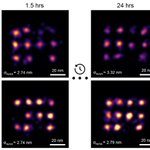
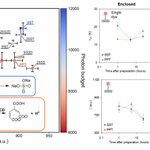
Happy to share the published version of our study on the benefits of sodium sulfite + trolox (SST) as oxygen scavenger for #DNAPAINT - now out in Small!
Thanks to the reviewers for helpful comments and again congrats, Becky, on your PhD's first paper!!
tinyurl.com/54m2pt9c


(1/n) A simple, ultrastable, and cost-effective oxygen-scavenging system for long-term DNA-PAINT imaging
Please check out our new study on the benefits of sodium sulfite as oxygen scavenging system for DNA-PAINT. 👇🧵
#SuperResolution #DNAPAINT #SMLM #Microscopy

(1/n) A simple, ultrastable, and cost-effective oxygen-scavenging system for long-term DNA-PAINT imaging
Please check out our new study on the benefits of sodium sulfite as oxygen scavenging system for DNA-PAINT. 👇🧵
#SuperResolution #DNAPAINT #SMLM #Microscopy
(9/n) Curious to try it?
📄 Read the full preprint: biorxiv.org/content/10.1101/…
We would love to hear your feedback!

2
201
(10/n) Huge thanks to Becky Perelman for carrying out this work as her rotation project in the @geochurch lab – and congratulations on your first PhD paper🥳 🎉!
1
173
Johannes Stein retweeted

Really excited to share this Perspective from John Danial covering how technology is moving the field of fluorescence microscopy toward structural biology. nature.com/articles/s41592-0…

Johannes Stein retweeted

1/5 DNA and DNA/protein conformations at Ångström/millisecond resolution—right in a fluorescence microscope! Check out our new GETvNA paper in @naturemethods :
nature.com/articles/s41592-0…
Want to learn about the science behind GETvNA?
Johannes Stein retweeted

Excited to share it now in its final form in @NatureNano: our approach to decouple sensing from signal output to build modular and tunable DNA origami sensors with high FRET contrast: rdcu.be/dZqUd 💡🧬🔬

Johannes Stein retweeted

I am excited to share the first publication from my postdoc @TjianDarzacq lab @berkeleyMCB: “Automated live-cell single-molecule tracking in enteroid monolayers reveals transcription factor dynamics probing lineage-determining function” @CellReports
cell.com/cell-reports/fullte…

Johannes Stein retweeted
Want to know what’s near your RNA of interest? Oligonucleotide-mediated proximity-interactome MAPping (O-MAP) from the Shechner lab enables precise multiomic characterization of biomolecular interaction networks (DNA, RNA, and proteins) at target RNAs. nature.com/articles/s41592-0…

Johannes Stein retweeted

1/9
Insanely PROUD to share our new collaborative project with @Dey_Gautam & @CentrioleLab. #PlanExM
We think (almost certain) #Expansion #Microscopy (#UExM) is a turning point for #Protistology and #Cell Biology.
🔗 [tinyurl.com/PlanExM1]
Johannes Stein retweeted

Excited to share a new preprint!
(1)🔬The nucleolus is the most prominent nuclear condensate, with a fascinating multilayered liquid-like structure, and is the site of ribosome biogenesis. But how does this multiphase architecture form and function?
biorxiv.org/content/10.1101/…

Johannes Stein retweeted

7 years ago, I met a junior fellow named @JD_Buenrostro who blew me away with a vision of futuristic genomic technologies
Today, we (@ajaylabade31, @carolinecomenho) are excited to share our first steps into that future: Expansion in situ genome sequencing
1/
Johannes Stein retweeted

The @naturemethods paper from Jürgen Plitzko's research group has made it onto the front page! Congratulations 🥳
❕nature.com/nmeth/volumes/21/…
Also read the latest News & Views article:
❕News & Views: nature.com/articles/s41592-0…
❕Publication: nature.com/articles/s41592-0…
#CryoEM #CryoET


To improve #CryoET sample prep, researchers from the Plitzko lab developed Serial Lift-Out, a #cryoFIB based method that makes it possible to produce several lamellae from one sample block
❕biochem.mpg.de/anatomy-of-ne…
❕@naturemethods nature.com/articles/s41592-0…
@svenklumpe @CJOKaiser