

Freedom Sovereignty: free citizens and sovereign nations against Liberal institutionalism, globalist economics, and democratic Liberalism’s peace myth.
UAE
Joined June 2016
- Tweets2.8K
- Following663
- Followers350
- Likes331





Pinned Tweet
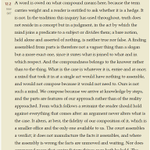
Liberalism did not win its acquittal at the end of history; it received one by walking into a courtroom emptied of any prosecutor, at the hour its last rival fell and there was no one left to state the case against it.
Hell, too, was created by eternal love. Love arises in consciousness, but without discrimination it is blind. Freedom permits us to choose, but without formation and knowledge of the good, we love the means rather than the ends. And that is the road to Hell.
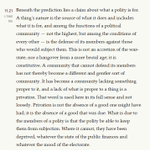
Rawls turns the state of nature into a courtroom. Behind the veil of ignorance, we are asked to judge what we owe one another without knowing our place in the world. But we first learn what it means to owe anyone anything through bonds we never chose.
The Western crisis is not fundamentally a failure to invent convincing stories. It is the progressive dissolution of the inherited order that forms people capable of recognising truth, accepting duty and finding purpose in sacrifice.
There are two ways of understanding what is real. The first is hierarchical: truth is not an instrument of man but a claim upon man, and God, country and family are the concrete orders through which duty, sacrifice and loyalty become intelligible. The second is anarchical: no higher authority, no final good, no binding moral order. Only facts, preferences, incentives, procedures and institutions. Liberalism does not call the second anarchy. It civilizes it through bureaucracy, credentialing, markets, courts and expert systems.
That moment when liberal wonks realise the progressive wing of liberalism is consumed by the very hatred they claim to oppose. And it is the wing they keep voting for.

Kant’s moral world rests on postulates his theoretical reason cannot establish. The liberal order rests on moral capital its neutrality cannot replenish. Both depend on what their own foundations cannot supply.
Descartes put thought first, counting feeling among its modes. The cogito is not wrong; it is second.
Sentio, ergo sum; cogito, ergo scio me esse.
I feel, therefore I am; I think, therefore I know that I am. Reflection discovers the felt life already there.
Locke’s privation was to conceive the mind as a blank slate, abstracted from the living creature whose needs are already felt. In doing so, he isolated cognitive consciousness from its affective ground. He thought he was describing the beginning of the human mind; in a way, he was anticipating artificial intelligence.
Jonathan Hale retweeted

An ice cream company president in Japan stood in a dark suit in front of a hundred factory workers and bowed on national television over nine cents.
His company makes the blue soda popsicle that every kid in Japan buys with pocket change after baseball practice on a hot summer afternoon.
For a quarter of a century, the company fought inflation to keep the price at roughly forty cents—because everyone in the factory knew little kids were counting coins in front of the freezer case.
When soaring ingredient costs finally forced them to raise the price by nine cents, the executives refused to shrink the popsicle behind the scenes or hide the increase in fine print.
Instead, the president and a hundred employees lined up outside company headquarters, stood still for sixty seconds on prime-time television, and bowed in silent apology to the children of Japan.
Nobody was angry. Sales jumped ten percent the very next month because parents wanted to support a company that treated a child's allowance like a sacred contract.
A nation's integrity is not measured by the size of its corporations, but by how honestly they treat a child holding a handful of coins.
🤖 Made with AI

Hume wrote that it is not contrary to reason to prefer the destruction of the whole world to the scratching of one’s finger. If reason can convict that preference of nothing worse than error, then liberalism’s faith in rational persuasion has no jurisdiction over those it most needs to judge.
Accepting an apology does not erase wrongdoing, remove accountability or oblige you to restore trust. But refusing it because you presume to know another person’s heart makes your suspicion the final judge of their repentance. Accept the apology. Let subsequent conduct establish sincerity. Mercy need not wait for certainty, and accountability need not exclude mercy.

Jonathan Hale retweeted

Kid Rock was golfing with President Trump when Macron called, and Trump handed the phone to Kid Rock because he didn’t want to talk to him. 🤣🤣🤣🤣🤣
Look at extreme liberalism. Really look at it. The conservatives have won the argument. Not all progress is positive. Clearly. Life is cyclical: birth, growth, decay, renewal and learning again what we thought we had outgrown. The Greeks understood this. Christ as Alpha and Omega speaks to eternity encompassing history, not a guarantee that history marches towards a glorious future. We mistake the passage of time for improvement.
Unchosen duty is an anomaly, almost an embarrassment; if I did not choose it, in what sense is it mine?
Three centuries later we derive justice itself from the consent of a man who is, in the crucial respect, no man at all.
Zanny Minton Beddoes reminds me of Cathy Newman interviewing Jordan Peterson. The same habit of substituting ideological labels for serious intellectual inquiry.
There is something profoundly unattractive about watching a journalist vomit her ideology in public when her job is to examine the facts. It is particularly damaging when that journalist is editor-in-chief of The Economist.
Dimon has it exactly right. The question is not whether an argument sounds like Trump. The question is whether it is true.

JPMorgan CEO Jamie Dimon mocks The Economist during a tense exchange after being told he’s sounding like Trump: “I’m not Trumpian. I’m factual.” 🇺🇸
Interviewer: “You’re sounding Trumpy.”
Jamie Dimon: “I’m not Trumpian. I’m factual. I don’t agree with this binary shit that goes on all the time.
I think The Economist is the absolute best, most admirable thing in the world, and you should continue that.”
Dimon delivers the last line with apparent sarcasm, poking fun at the publication while pushing back against the idea that agreeing with Trump on certain issues makes him a Trump supporter.
The solitary chooser is a piece of scaffolding, taken down once the building stands; no one was ever meant to live in it.
The scaffolding rarely comes down cleanly; it is tempted to become the building.
An aristocracy that denies being one is harder to check than an aristocracy in ermine, for it cannot be asked to honour obligations it does not admit to owing.
The citizen so formed is not oppressed; he is depoliticized, which is a gentler and more thorough condition, on the face of it.