

AI Research Engineer 🤖 Building Omni & TTS Models 👨🍳 at Vyvo
Remote
Joined January 2025
- Tweets1.5K
- Following1.1K
- Followers1.9K
- Likes1.2K




Should I also write an article? The sound quality of the library I developed myself is much better.
xitter.gq/kadirnardev/status/210…

Jaehyun Ahn, Dohyun Kim, Heeseung Kim, "DriftTTS: One-stage Single Step Text-to-Speech via Generative Drifting" arxiv.org/abs/2610.22960


The model I developed using the Qwen3-1.7B model gives much better results.


Jais 3: First adaption of K2 Horizon
Jais 3 is built on K2 Horizon, our six-fleet fully open model family.
Stronger in Arabic at every size, without starting from scratch. Plus Jais Speech, the most accurate open Arabic ASR.
Download weights now: huggingface.co/collections/I…


My own TTS models have a TTFA value of 6ms.

We have probably the fastest TTS ever on device. Built on Embedding Gemma from @googlegemma . Tested on @sabeshbharathi 's M5 pro. 300x realtime

Drifting methoduyla eğitilen ilk Türkçe TTS Modeli!
2026 yılında yayınlanan bu yeni method ile eğittim. Sadece 100 saat veri setiyle RTX 5090'da 1 günde eğitildi. Diffusion mimarilerinde genelde inference için minumum 10 adım gerekiyor fakat bu mimari de tek steps ile çalışıyor.
Eğer TTS modellerinizde hız problemi yaşıyorsanız yeni tekniği kesinlikle denemelisiniz. Bu hafta daha fazla yüksek kaliteli ses ile eğitim yapacağım. Bu sadece ilk eğitimin sonuçları.
Github: github.com/kadirnar/drifting…
Demo: huggingface.co/spaces/Vyvo/d…

Thank you for the detailed blog, @kyutai_labs. It was very helpful in improving the architecture.


TR: Yeni open source Türkçe TTS modelini bugün yayınlayacağım. Tükrçe için Drifting tekniği ile eğitilen ilk model.
I started training the model and it will be finished tomorrow. After running the tests, I will open-source the Turkish Drifting TTS model that I trained on 90 hours of data. I am eagerly awaiting the results.
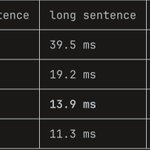
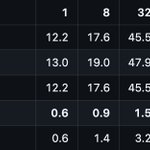
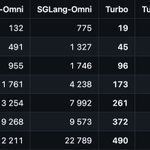
The TTFA value of a 2B TTS model for 256 concurrent requests is 5.3 🤯

If you're looking to optimize your TTS model, I'd say instead of optimizing the kernel, research inference optimization libraries and try those techniques. A 2B parameter model handles 200 concurrent requests on an A10 GPU, an older GPU, in under 50ms.
Yes, audio quality and WER rate are serious problems, but post-training techniques could be a lifesaver for this.
I designed a TTS using the drifting method back in the day and achieved a TTFA value of almost 1-2ms, but I had issues with voice quality. I will try again now.

Drifting is a fascinating new way of doing 1-step continuous generative modeling, discovered by Kaiming He and his team this year. For the first time, we apply it to auto-regressive continuous generation for super small TTS models. Great work by @Manu__Orsini.
Yesterday I told GPT6.1-max to test writing code for my TTS model on FP8 and distillation. It only made the codec model FP16 opt and left it at that. Really terrible. With Claude code, I can optimize models at the CUDA level.


