
Netlabel and home of Karoryfer Samples.
Internet
Joined April 2012
- Tweets9.9K
- Following834
- Followers317
- Likes26.2K




Karoryfer Lecolds retweeted

“the moon is made of green cheese” - i heard this as a kid and saw jokes in cartoons about it. confusing: the moon is not green. after reading an 1800s book i realized this refers to “green cheese” - green like “greenhorn”: new. unripe cheese, which actually looks like the moon:


Karoryfer Lecolds retweeted

Karoryfer Samples released Dubious Electrics, a Sforzando multi-instrument library featuring 10 unusual electric instruments, 6,135 samples, and added vibrato and feedback.
▶️ audiopluginguy.com/news-karo…
#APGNews @karoryfer


Karoryfer Lecolds retweeted

Out now, Dubious Electrics is a sound library from my personal guitar collection. I painstakingly sampled 9 of them so you can have unique sounds.
30 yrs of hunting shops for weird gear: Hagstrom, Eko, Winston, Harmony, Wurlitzer, etc. Thanks @karoryfer
shop.karoryfer.com/products/…

Karoryfer Lecolds retweeted

you say you’re “from the hood” yet we found your family’s tomb complex containing complex engraved goods, emblazoned pottery, bronze figurines depicting local deities, and luxury trade goods indicating a more far-reaching trade network than archaeologists had anticipated 💀
Karoryfer Lecolds retweeted

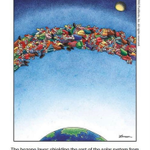
"We need airships!*" Collier's Magazine, June 1944.
(*we did not, in the end, need airships)

Karoryfer Lecolds retweeted

Every apple in your grocery store is descended from a wild tree species that still grows in the mountains of Kazakhstan.
The species is Malus sieversii. It grows in the Tian Shan mountains near Almaty, a city whose name translates roughly to "father of apples."
Russian biologist Nikolai Vavilov traced the apple's genetic origin back to these forests in 1929, after walking through groves of wild trees so densely tangled and randomly spaced that they looked unlike any orchard he'd ever seen.
Here's the part that surprises people:
The wild apple of Kazakhstan is not small or sour. It's not the bitter mouth-puckering crabapple most of us picture when we hear "wild apple."
Malus sieversii produces fruit up to 7cm across, often sweet, with red and yellow skin, and Vavilov's notes describe individual trees in those forests that were nearly indistinguishable from a Golden Delicious.
Most domesticated fruits and vegetables look nothing like their wild ancestors. Wild bananas are full of hard seeds. Wild watermelon is tiny, pale, and bitter. Wild corn is a few hard kernels on a thin spike.
Domestication is usually the story of humans dragging a barely-edible plant into something edible over thousands of years.
Apples skipped that step. They were already good. Humans found them, carried them west along the Silk Road, traded them, planted them, crossed them with European crabapples, and selectively bred for traits like storage life and uniformity.
But the wild ancestor was already most of the way there.
The Kazakh wild apple forests are now endangered. Logging, grazing, and crossbreeding with cultivated trees are eroding the original genetic stock.
Conservation programs are trying to preserve what's left. Every honeycrisp, every gala, every fuji is descended from those trees, and the gene pool that produced them is shrinking.
The apple in your kid's lunchbox is a refugee from a forest most people have never heard of.


Karoryfer Lecolds retweeted
Whatever happened to touching the Internet. Are these skills now lost to history?


Karoryfer Lecolds retweeted

A fermented drink 🥂 made partly from regular apples and partly from goblin apples 🍎


Karoryfer Lecolds retweeted

Software bros spending every moment of free time trying to transcend: i don't exist. You don't exist. Nothing is. Ten years of exhaustive practice enables me to turn on happiness
Hardware bros, fully ascended: here's my catapult that launches beer up from the basement


