

Bioinformatician. Statistician. Data squeezer. Omics-addicted with strong focus on #microbiome and #cancer. @knstnr.bsky.social
Lübeck, Germany
Joined April 2018
- Tweets2.8K
- Following598
- Followers326
- Likes9.5K




Pinned Tweet
Just released EaCoN v0.5.0 "Parallel Universe" 🧬
Modernized the foreach/doParallel → furrr/future + purrr/dplyr migration is complete.
R ≥ 4.2 ✅ | OncoScan/CytoScan/SNP6 (hopefully WES) ✅
Fork of the classic @gustaveroussy tool by Bastien Job.
github.com/kunstner/EaCoN

Axel Künstner retweeted

We will soon be hiring postdocs, engineers and researchers (on site in Heidelberg, DE) in:
- Biomedical AI (multimodal foundation models, biomarkers, agents)
- Robotics (lab automation, physical action surfaces for agents)
- AI social sciences (multi-agent systems, agent "civilizations")
- Deploying AI in a large hospital system
More info at imai-heidelberg.de and kather.ai
If you are interested in learning more, reach out to [email protected]

1/8
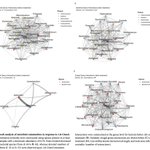
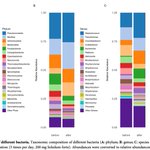
🦠🍃 New paper in npj Systems Biology and Applications! Chronic otitis media (COM) is a leading cause of preventable hearing loss. We asked: can the natural anti-inflammatory compound 1,8-Cineol reshape the ear microbiome beyond antibiotics? 🧵
nature.com/articles/s41540-0…

7/8
Bottom line: diversity indices alone can miss real ecological restructuring. Network analysis uncovers hidden shifts in host-associated microbiomes and points to new therapeutic/biomarker targets for COM.
Great teamwork with @UniLuebeck & @UKSH_official (ENT, Infectious Diseases/Microbiology & Systems Biology).
Open access, data at EGA (PRJEB104438), code included. #Microbiome #Mycobiome #OtitisMedia #NetworkAnalysis #OpenAccess
🧬 New paper! Within #InstandNGS4P we developed MRD prototypes detecting ctDNA in blood plasma to support diagnosis of pancreatic & ovarian cancer — UMI-based error correction + ultra-deep sequencing.
📄 @OpenResearch_EU: open-research-europe.ec.euro…
#LiquidBiopsy #ctDNA

🧬 New in Blood: we describe FOXF1/FENDRR — a novel molecular subtype of B-cell precursor ALL in adults, found in 20/4857 patients across 3 cohorts. Defined by a previously unknown IGH::FENDRR rearrangement + recurrent KRAS mutations (p.A146V/T/P). 🧵
doi.org/10.1182/blood.202503…

Clinically, this subtype responds poorly to standard chemo: most patients had induction failure or MRD persistence. But intensification with blinatumomab and/or allo-HSCT rescued the majority — pointing to early immunotherapy as a promising strategy.
A gene expression classifier built accurately flags FOXF1/FENDRR cases in independent cohorts (GRAALL, St. Jude), so this subtype can now be systematically identified in routine diagnostics. Grateful to the whole @UKSH_KI_HL team and collaborators! 📄
New in Blood @BloodPortfolio
lenalidomide (maintenance tx in myeloma) raises B-ALL risk. We show WHY in a subset of cases IDH2 R140Q clonal hematopoiesis + lenalidomide-driven IKAROS loss cooperate to arrest B-cell development, seeding a distinct leukemia subtype. 🧵
DNA methylation profiling revealed IDH2mt LenB-ALL has its own hypermeth. phenotype, distinct from primary B-ALL. Epigenetic evidence backing up the mutational story. IDH2 mutations were even detectable in remission, pointing to a preleukemic origin.
doi.org/10.1182/blood.202503…

See the commentary as well
ashpublications.org/blood/ar…

Preprint: In PD-L1-gain EBV+ DLBCL, T cells get close to tumour cells but rarely touch them; a spatial "decoupling" of proximity and engagement. Fibroblast barriers, metabolic suppression, and T cell exhaustion together block anti-tumour immunity. 🧵1/5
doi.org/10.64898/2026.07.02.…

Even T cells that do get close are functionally silenced (exhaustion markers up, metabolic suppression signatures enriched, effector programs down). It's a two-layer fortress: physical exclusion + functional suppression working together. 4/5