







use circles in octra to host private resources, apps, data, etc, there will be nothing to steal, and there is no such concept as exit nodes – at London, England

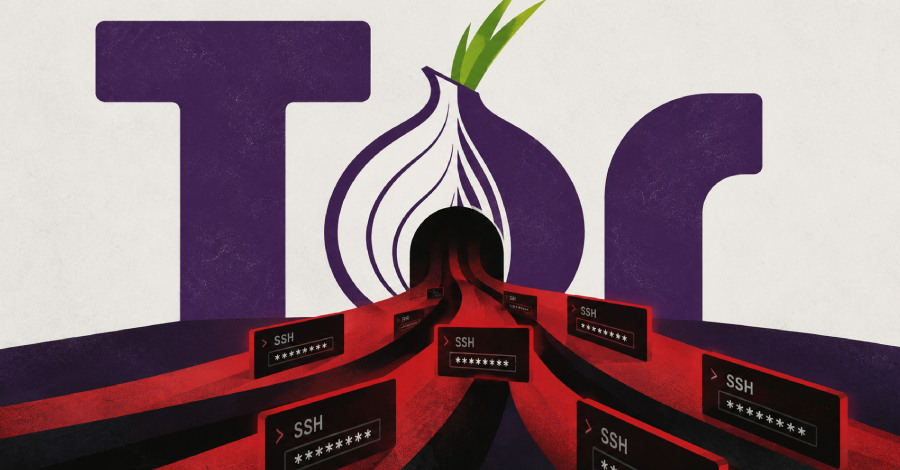
🛑 Attackers hijacked over 300 Tor exit relays to intercept SSH connections and steal login passwords.
A researcher found 333 exits redirecting SSH traffic to 12 interception servers.
The Tor Project has since blocked the affected relays.
Here's how the attack worked: thehackernews.com/2026/10/at…
hack yourself before other do (the policy we ourselves adhere to).
fyi: an automated fuzzing search engine based on slop generators (by @octralex) found critical crap in ALL projects we've ever interacted with (since there's already context), some have been fixed, others haven't been revealed yet and may not be, given the mixed reactions.
what a time to be alive – at London, England

a new unscheduled release is now available for vals. please upgrade your nodes (a lot has been done on recovery and sync + an old bug from an earlier implementation at the vm level has been fixed) *
* the node could process the same epoch twice, and the root at that moment was different, when building and checking proposals at the consensus level, it was specified as 32 raw bytes (the earliest implementation from the end of 2024),and when using the epoch from the head, it was transmitted as a 64-hex string, so the bug was found during pre-release main net testing for mem compatibility of different program envs
upgrading is easy -
sh controls/upgrade.sh
sh controls/upgrade.sh --apply
sh controls/stat.sh
github.com/octra-labs/lite_n…

a new unscheduled release is now available for vals. please upgrade your nodes (a lot has been done on recovery and sync + an old bug from an earlier implementation at the vm level has been fixed) *
* the node could process the same epoch twice, and the root at that moment was different, when building and checking proposals at the consensus level, it was specified as 32 raw bytes (the earliest implementation from the end of 2024),and when using the epoch from the head, it was transmitted as a 64-hex string, so the bug was found during pre-release main net testing for mem compatibility of different program envs
upgrading is easy -
sh controls/upgrade.sh
sh controls/upgrade.sh --apply
sh controls/stat.sh
github.com/octra-labs/lite_n… – at London, England


in the new version of the scan, formal verification, byte and src code, as well as program certs, have become more informative (this is still early alpha, it will change 1000%, but it has become more convenient to work with imo)
example: devnet.octrascan.io/program.… – at London, England


50 validators are currently online, and 192 observers are quite a good result.
the next to last important thing is in 1000 epochs, and it will be possible to consider that the activation of rules on the mainnet is safe with a similar route. – at London, England
the new upgrade is already available, it includes important updates for fault tolerance as well as an addition for resource compute protocol, which was previously unavailable in the lite node but has been moved from the bootstrap build to achieve more natural and seamless decentralization, activation will be in 1 day, there is time to update (as previously said, this is no longer a major update on top of consensus, but a module within the runtime), the upgrade as always with a single list of commands:
sh controls/upgrade.sh
sh controls/upgrade.sh --apply
sh controls/stat.sh
ps: if the message "installed ... pending" appears, leave the node running, do not restart it in a loop.
regarding the build - marker 32, source f7637a7e, and you need to update to 1688734, consider this the final update, further only applied upgrades.
we've also migrated the earliest work on formal verification from 2021, so you can do some dev-archaeology, among other things( if you have the time)
thanks everyone.
github.com/octra-labs/lite_n…
the new upgrade is already available, it includes important updates for fault tolerance as well as an addition for resource compute protocol, which was previously unavailable in the lite node but has been moved from the bootstrap build to achieve more natural and seamless decentralization, activation will be in 1 day, there is time to update (as previously said, this is no longer a major update on top of consensus, but a module within the runtime), the upgrade as always with a single list of commands:
sh controls/upgrade.sh
sh controls/upgrade.sh --apply
sh controls/stat.sh
ps: if the message "installed ... pending" appears, leave the node running, do not restart it in a loop.
regarding the build - marker 32, source f7637a7e, and you need to update to 1688734, consider this the final update, further only applied upgrades.
we've also migrated the earliest work on formal verification from 2021, so you can do some dev-archaeology, among other things( if you have the time)
thanks everyone.
github.com/octra-labs/lite_n… – at London, England
devs are deving

According to @lambda0xE's post, no more significant upgrades are expected, so we are moving forward with the current build. We are currently polishing the @topology_wallet and plan to ship in about a month.

the latest upgrade and activation can be considered successful, most participants have successfully updated, those lagging behind are catching up (observing the process with the community - t.me/octra_validators)
the release of the previously mentioned private transfer protocol (@octra <-> @ethereum) and webcli remains, and all future upgrades will affect the mainnet from now on, we plan to finish this this weekend, after saturday.
thanks everyone. – at London, England

everyone can upgrade gradually, everything is as usual:
sh controls/upgrade.sh
sh controls/upgrade.sh --apply --wait-seconds 3600
sh controls/stat.sh
fyi: we don't expect any more significant upgrades (if there are new markers, they will be minor fixes), from now all attention is on the mainnet, validators who have been with us all this time will be able to claim the coins mined on the devnet
what's potentially interesting about Mainnet expected in the near future:
- advanced circles (deployment of applications in any language that compiles in WASM),
- a multi-tier circular network of resources. Web services on top of the oct:// proto, decentralized programs, databases, llm models as a service with a managed access level with the ability to provide a public gateway, storage, etc. a marketplace of demo progs, circles, and aml, rust, C++, ocaml examples, which we've been working on for the last six months, one-click deployment of anything from a website to an api circle with a cluster of other programs, etc)
- a new client with a new thing inside, not webcli, but a Firefox browser with native support for circles and domains in the oct:// space, with public tunneling gates (the circle gateway randomly tunnels traffic from different sources through a otbP2P net, hiding all info about the requester, the history is untraceable, making it impossible to know the addr from which the request came, there's also a total mode where the gateway uses a proxy server as an intermediate encoder, and internal traffic goes through the PVAC data streaming proto*). It's a pretty interesting thing + you can also optionally add a @torproject to the intermediate membrane (an example of which has already been published earlier)
* PVAC data streaming proto - the untitled shit, which is not yet publicly available, will be released separately once we complete security testing.
ps: we also spent time researching a rather complex topic, as part of the team was ML-pilled, As you know, circles and nodes support Q algebra, meaning nodes can handle dense ML, not just matrix mul, but a full cycle, so open weights are quite heavy, initialization can take up to half an hour, etc., but we found a way to do this in 15 sec instead of half an hour for a rather cumbersome model (technical details with examples will be published in a separate article later), the module's mechanics extend beyond the @octra arch and can be used separately in other projects
ps 2: we also spent time on the interface, docs, and site-design (we'll update it soon)*
* regarding the design, it's absolutely pointless crap (my personal opinion, different from those who appreciate beautiful interfaces) that has no value for system protocols, but people like it, which means it's time to release something nice
as always, quick links are at hand:
- webcli github.com/octra-labs/webcli
- amlc (AML compliller) github.com/octra-labs/amlc
- libv_litecore, which is a lite node github.com/octra-labs/lite_n…
thank you all for your attention

everyone can upgrade gradually, everything is as usual:
sh controls/upgrade.sh
sh controls/upgrade.sh --apply --wait-seconds 3600
sh controls/stat.sh
fyi: we don't expect any more significant upgrades (if there are new markers, they will be minor fixes), from now all attention is on the mainnet, validators who have been with us all this time will be able to claim the coins mined on the devnet
what's potentially interesting about Mainnet expected in the near future:
- advanced circles (deployment of applications in any language that compiles in WASM),
- a multi-tier circular network of resources. Web services on top of the oct:// proto, decentralized programs, databases, llm models as a service with a managed access level with the ability to provide a public gateway, storage, etc. a marketplace of demo progs, circles, and aml, rust, C++, ocaml examples, which we've been working on for the last six months, one-click deployment of anything from a website to an api circle with a cluster of other programs, etc)
- a new client with a new thing inside, not webcli, but a Firefox browser with native support for circles and domains in the oct:// space, with public tunneling gates (the circle gateway randomly tunnels traffic from different sources through a otbP2P net, hiding all info about the requester, the history is untraceable, making it impossible to know the addr from which the request came, there's also a total mode where the gateway uses a proxy server as an intermediate encoder, and internal traffic goes through the PVAC data streaming proto*). It's a pretty interesting thing + you can also optionally add a @torproject to the intermediate membrane (an example of which has already been published earlier)
* PVAC data streaming proto - the untitled shit, which is not yet publicly available, will be released separately once we complete security testing.
ps: we also spent time researching a rather complex topic, as part of the team was ML-pilled, As you know, circles and nodes support Q algebra, meaning nodes can handle dense ML, not just matrix mul, but a full cycle, so open weights are quite heavy, initialization can take up to half an hour, etc., but we found a way to do this in 15 sec instead of half an hour for a rather cumbersome model (technical details with examples will be published in a separate article later), the module's mechanics extend beyond the @octra arch and can be used separately in other projects
ps 2: we also spent time on the interface, docs, and site-design (we'll update it soon)*
* regarding the design, it's absolutely pointless crap (my personal opinion, different from those who appreciate beautiful interfaces) that has no value for system protocols, but people like it, which means it's time to release something nice
as always, quick links are at hand:
- webcli github.com/octra-labs/webcli
- amlc (AML compliller) github.com/octra-labs/amlc
- libv_litecore, which is a lite node github.com/octra-labs/lite_n…
thank you all for your attention – at London, England
lite node gets a solid update (or rather, already got it, release marker is on the way, validators will need to update), this release included a lot of work on circles (atomicity, native transfers etc), nested programs (both ways with circles), improvements for the hfhe worker with a developed actor model (ported from the bootstrap node), rule activation roughly after 10k epochs, everyone should update (mainnet gets this update too)
with every step the lite node is already getting harder and harder to call "lite", with the storage module update and gpu interface for deep compute chains on top of circles it will become indistinguishable from a standard node.
among the interesting bits - the proof model is also expanded, we decided to add validated verif methods in Coq from our early 2022 work for the sake of culture
a couple more words on the PQ hysteria of llm slopers and doomerism, to clear questions we decided not to wait for the start of 2027, but to start rolling out the update on signatures, hashing and other stuff on lpn + our hash-based basis (where appropriate) already now with gradual activation so everyone can comfortably update signature format etc (detailed plan will be published a bit later, still figuring out how to do it seamlessly)
github.com/octra-labs/lite_n…
lite node gets a solid update (or rather, already got it, release marker is on the way, validators will need to update), this release included a lot of work on circles (atomicity, native transfers etc), nested programs (both ways with circles), improvements for the hfhe worker with a developed actor model (ported from the bootstrap node), rule activation roughly after 10k epochs, everyone should update (mainnet gets this update too)
with every step the lite node is already getting harder and harder to call "lite", with the storage module update and gpu interface for deep compute chains on top of circles it will become indistinguishable from a standard node.
among the interesting bits - the proof model is also expanded, we decided to add validated verif methods in Coq from our early 2022 work for the sake of culture
a couple more words on the PQ hysteria of llm slopers and doomerism, to clear questions we decided not to wait for the start of 2027, but to start rolling out the update on signatures, hashing and other stuff on lpn + our hash-based basis (where appropriate) already now with gradual activation so everyone can comfortably update signature format etc (detailed plan will be published a bit later, still figuring out how to do it seamlessly)
github.com/octra-labs/lite_n… – at London, England
all matrices are multiplied by validators in devnet in the circle, @chiefofautism computed – at London, England

the test app, which we plan to release first on sepolia evm + octra devnet, and then add other networks, will allow sending ERC20 assets and gas coins between participants without disclosing the amount, sender, and recipient, outside the octra network (while octra is used as a computing layer for encrypted data)
it will be available completely open source, the application can be run locally (using the same principle as webcli), no trust environment, sharing keys, etc. – at London, England
