




Crypto nerd retweeted

We now have:
1. Seven UK lenders, including Barclays, HSBC UK and Lloyds, completing live customer transactions on GBTD, the tokenized sterling platform Quant built.
2. The Clearing House, owned by the largest US banks, picking Quant for its tokenized deposit network.
3. The Bank of England picking Quant for its 18-firm Synchronisation Lab.
@quantnetwork


Crypto nerd retweeted

🚨The Swiss National Bank is exploring how tokenised bank deposits could settle across public blockchains.
Quant is already helping build the infrastructure for the UK's tokenised sterling deposit initiative.
$QNT is tackling the very challenges central banks are now highlighting.


Crypto nerd retweeted

@quantnetwork and the Bank of England to discuss the future of UK payments infrastructure. 🇬🇧
On December 2, Quant’s Chief Product Officer will join representatives from the Bank of England, Modulr, Ubyx, Form3 and Accenture at Innovate Finance’s Payments Forum.
The discussion will focus on AI agent payments, digital money, account to account payments and the interoperability infrastructure needed to connect these systems domestically and across international borders.
$QNT #Quant #Interoperability


Crypto nerd retweeted

Another discussion around the Future of UK's financial system involving $QNT
At Innovate Finance's Payments Forum, Quant will be on stage speaking with
• Bank of England
• Ubyx
• Accenture
The focus is around interoperability of next generation infrastructure and agentic use cases
Exactly where we've seen Quant shine in UK
Notice this is also the Head of Innovation Tech at the Bank of England too
And when we look at the work Quant & BoE have done...
• Project Rosalind CBDC
• BIS/BoE Sync Lab
• BoE RTGS in UK GBTD
All of which are clearly aligned with innovation tech.
Quant's role with UK financial leaders are only growing

Crypto nerd retweeted
🚨WOW: The European Central Bank is placing interoperability, synchronisation and programmable settlement at the heart of tomorrow’s financial markets. $QNT
This is EXACTLY what @quantnetwork was built for. And even more bullish, pair this with the fact Quant has already worked directly with the ECB as a Digital Euro pioneer partner.
Connect the dots!


Crypto nerd retweeted

🚨🚨🚨UK BANKS WILL NEED $QNT TO ACCESS QNT-POWERED NETWORK SERVICES ‼️
After listening to Gilbert Verdian explain Quant's role in The Clearing House's On-Chain Money Initiative, I'm even more interested in the economic model behind QNT.
During the October 23, 2026, Payments Nerds interview alongside Sal Karakaplan, Gilbert revealed how Quant's technology will operate on top of CHIPS and RTP, two established payment systems in the United States.
Banks get to retain their existing infrastructure, compliance controls and banking systems while introducing programmable money and blockchain-based transactions.
Quant handles interoperability, orchestration and transaction management, allowing different financial systems to communicate and coordinate settlement.
Now look at the size of the infrastructure Quant is connecting.
In 2025 alone:
• CHIPS settled $503.4 TRILLION across 158.1 million transactions, averaging $2.01 trillion per business day.
• RTP processed 447.2 million instant payments worth $1.45 trillion.
The Clearing House, owned by 25 major financial institutions, selected Quant through a competitive procurement process on September 24, 2026.
But Quant spent approximately FOUR YEARS working with UK banks before securing this opportunity.
Barclays, HSBC UK, Lloyds Banking Group, NatWest, Santander, Nationwide and Monzo have already completed live customer transactions through the Quant-built Great British Tokenised Deposits platform.
These included two mortgage refinancing completions and a consumer marketplace payment.
Imagine buying a property and having the money automatically released once the necessary conditions are fulfilled.
The next application identified by UK Finance is digital asset settlement, where tokenized bank deposits and financial assets can be exchanged under coordinated payment conditions.
This brings us to the United States.
The Clearing House's initiative has received support from JPMorgan Chase, Bank of America, Citi, BNY, HSBC, Wells Fargo, Santander, TD Bank, U.S. Bank, PNC Bank, BMO, Truist, Citizens, Fifth Third, Huntington, KeyBank and Regions.
Quant will also provide Tokenised Deposits-as-a-Service (TDaaS), giving participating banks without their own tokenized deposit infrastructure a way to introduce these services.
A regional bank can access the technology without having to develop an entire blockchain system independently.
NOW LET'S TALK ABOUT $QNT UTILITY.
Quant's documented economic model includes three important functions:
• Overledger infrastructure access, licensing and services, with customers able to pay platform fees in dollars or subscribe using QNT.
• Fusion transactions, where QNT serves as the native transaction asset.
• Planned trusted-node staking, where qualified operators commit QNT to participate in network operations and earn rewards.
On November 23, Quant opened Fusion mainnet to the public, initially connecting Ethereum, Polygon and Besu through unified assets and cross-network transaction capabilities.
As more institutional applications use QNT-linked services, recurring transactions and infrastructure participation become increasingly important economic drivers.
Imagine an applicable transaction fee equivalent to $0.02.
Under a hypothetical fee model, 10 million annual transactions represent $200,000 in fees, 100 million represent $2 million, 500 million represent $10 million, and one billion represent $20 million.
Staking introduces another interesting scenario.
25 operators committing 1,000 QNT each represent 25,000 QNT. At 100 operators staking 2,500 each, that becomes 250,000 QNT. At 200 operators staking 5,000 each, we're talking about ONE MILLION QNT committed to network participation.
These are illustrative scenarios that explain the economics of institutional network usage.
Then we have Quant's March 25 partnership with Murex.
Through Flow and Overledger, Quant is bringing tokenized deposits and digital bond settlement capabilities into MX.3, an established platform supporting institutional trading, risk management and post-trade operations.
The Clearing House addresses the movement of bank money. Murex addresses the financial assets institutions purchase with that money.
And on November 17, Federal Reserve Governor Christopher Waller discussed tokenized deposits and The Clearing House's developing interbank infrastructure during its annual conference.
The financial problem Quant is solving is being discussed at the highest levels of banking.
My focus heading into 2027 is The Clearing House's planned H1 launch, actual interbank transactions, expanding TDaaS adoption, measurable QNT-linked fees and trusted-node staking.
Beyond that, I'm following additional UK banking deployments, Murex integrations, institutional Fusion applications, programmable treasury services and connectivity across more financial networks.
I see 2027–2028 as an important period for programmable banking, with an even larger opportunity emerging as financial institutions expand their operations across multiple networks.
Imagine banks using this infrastructure every business day to settle investments, manage liquidity and move programmable money.
The financial institutions are already there.
We're talking about technology designed to connect the world's largest financial institutions.
Think about the long-term opportunity for $QNT.
HIGHER!

If you missed ethereum:0x4a220e6096b25eadb88358cb44068a3248254675 below $100, you don't want to miss the significance of today's discount.
In H1 2027, The Clearing House plans to FLIP THE SWITCH!
Watch this clip from The Clearing House, and I'll break everything down in the simplest way possible.
On September 24, 2026, The Clearing House officially selected Quant to provide the technology behind its On-Chain Money Initiative.
We're talking about an institution owned by 25 major financial institutions, whose existing payment networks clear and settle over $2 TRILLION EVERY DAY.
The initiative has backing from JPMorgan Chase, Bank of America, Citi, BNY, Wells Fargo, HSBC, Santander, BMO and other institutions.
So, what exactly is Quant helping them build?
Imagine a company transferring $1 million from one bank to another.
That money can be represented as tokenized bank deposits, transferred on-chain and coordinated with traditional money settlement through existing payment networks such as RTP and CHIPS.
Quant provides the technology that allows these different systems to communicate, exchange transaction instructions and coordinate clearing and settlement.
Even the Federal Reserve is paying attention to this financial transformation.
During The Clearing House Annual Conference on November 17, 2026, Federal Reserve Governor Christopher Waller discussed tokenized deposits, The Clearing House's interbank settlement infrastructure and the importance of connecting traditional payment systems with blockchain-based markets.
There's another part of this agreement that makes me particularly excited.
Quant will also offer Tokenised Deposits-as-a-Service (TDaaS) to U.S. financial institutions using The Clearing House.
Regional and smaller banks gain a pathway to offer tokenized deposits without developing their own blockchain infrastructure from scratch.
Quant has two commercial opportunities here: connecting the shared banking network and providing additional services directly to individual financial institutions.
And Quant has already demonstrated this technology in the United Kingdom.
On September 24, 2026, UK Finance confirmed live customer transactions through the Great British Tokenised Deposits initiative, using infrastructure developed by Quant.
Barclays, HSBC UK, Lloyds Banking Group, Monzo, Nationwide, NatWest and Santander participated in an initiative covering actual mortgage-related payments and consumer purchases.
The UK has demonstrated live transactions. The U.S. is preparing for its H1 2027 launch.
Now let's connect everything to ethereum:0x4a220e6096b25eadb88358cb44068a3248254675.
Quant's documented token utility includes Overledger access and licensing, applicable transaction fees, Fusion network fees and staking by qualified trusted-node operators.
On November 23, 2026, Quant opened Fusion mainnet to the public, initially connecting Ethereum, Polygon and Besu.
Banks operating on permissioned networks need ways to interact with financial assets across other blockchains. Fusion introduces unified assets and cross-ledger transactions to address that requirement.
The institutional opportunity expands further through Murex.
In March 2026, Quant partnered with Murex to integrate tokenized deposits and digital bond settlement into its MX.3 platform, which supports institutional trading, risk management and post-trade operations.
Imagine a bank purchasing a tokenized bond. The ownership of that bond needs to change hands, and the corresponding bank money needs to move.
The Clearing House addresses interbank money movement. Murex addresses financial asset transactions. Quant's technology connects these financial processes.
Now consider the economics of recurring network usage.
Under an illustrative $0.01 fee model:
• 10 million annual transactions = $100,000
• 100 million = $1 million
• 1 billion = $10 million
Add QNT staking requirements for qualified Fusion operators, and you begin to understand the potential economic significance of institutional network participation.
These are hypothetical fee examples. I'm looking forward to seeing the specific QNT-related commercial arrangements and measurable token flows associated with institutional adoption.
With approximately 14.6 million QNT tokens, a $5 billion market capitalization translates to roughly $342 per token. At $10 billion, that's approximately $685. At $20 billion, approximately $1,370.
These valuations illustrate the mathematical possibilities as institutional adoption develops.
My three biggest catalysts heading into 2027 are the launch of The Clearing House network, more banks adopting Quant's tokenized deposit services and measurable QNT demand through fees and staking.
I've followed Quant because connecting the world's financial systems is an enormous undertaking.
Now we have live banking transactions in the UK, a planned U.S. banking network, Murex integration and a publicly accessible Fusion mainnet.
I believe we are getting closer to seeing the real scale of what Quant has spent years building.
The future of finance requires different systems to work together.
And Quant is earning its place between them.
You seeing it?
Crypto nerd retweeted

ethereum:0x4a220e6096b25eadb88358cb44068a3248254675 Fusion launched, you've opened the Connect Portal and are confused.
Where can I swap anything with anything?
Where can I get cross-chain DeFi yield?
See the full video in the discord: discord.gg/g6gB5sKbZ
Crypto nerd retweeted

NEWS: QUANT (@quantnetwork) $QNT HAS SURPASSED 190,000 HOLDERS ON ETHEREUM, REACHING 190,285.
THAT MARKS A 20.16% INCREASE OVER THE PAST YEAR, UP FROM 158,352 HOLDERS ON NOVEMBER 16, 2025.


Crypto nerd retweeted
There it is.
Quant's QNT token has passed 190,000 holders on Ethereum, at 190,285.
That is up 20.16% in a year, from 158,352 on November 16, 2025.
@quantnetwork


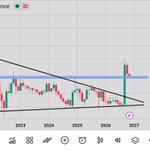
You can f**k off with your scam sale @tradingview .. Asking people for $126 to draw some basic lines.
There are better alternatives out there.
$btc $eth $xrp $link $sol $Qnt #crypto

Black Friday is still on! 🖤
Get your TradingView plan or upgrade at our lowest prices of the year.
Don’t miss out:
tradingview.com/black-friday…

Crypto nerd retweeted

🚨 NEWS: Visa, which processed $4.08 trillion in payments last quarter, has joined the x402 Foundation as a premier member focused on AI agent payments.
@quantnetwork is also part of the foundation, alongside major players including Mastercard, American Express, and Google.
The growing membership highlights increasing interest in building payment infrastructure for AI-driven transactions.


Crypto nerd retweeted
If you missed ethereum:0x4a220e6096b25eadb88358cb44068a3248254675 below $100, you don't want to miss the significance of today's discount.
In H1 2027, The Clearing House plans to FLIP THE SWITCH!
Watch this clip from The Clearing House, and I'll break everything down in the simplest way possible.
On September 24, 2026, The Clearing House officially selected Quant to provide the technology behind its On-Chain Money Initiative.
We're talking about an institution owned by 25 major financial institutions, whose existing payment networks clear and settle over $2 TRILLION EVERY DAY.
The initiative has backing from JPMorgan Chase, Bank of America, Citi, BNY, Wells Fargo, HSBC, Santander, BMO and other institutions.
So, what exactly is Quant helping them build?
Imagine a company transferring $1 million from one bank to another.
That money can be represented as tokenized bank deposits, transferred on-chain and coordinated with traditional money settlement through existing payment networks such as RTP and CHIPS.
Quant provides the technology that allows these different systems to communicate, exchange transaction instructions and coordinate clearing and settlement.
Even the Federal Reserve is paying attention to this financial transformation.
During The Clearing House Annual Conference on November 17, 2026, Federal Reserve Governor Christopher Waller discussed tokenized deposits, The Clearing House's interbank settlement infrastructure and the importance of connecting traditional payment systems with blockchain-based markets.
There's another part of this agreement that makes me particularly excited.
Quant will also offer Tokenised Deposits-as-a-Service (TDaaS) to U.S. financial institutions using The Clearing House.
Regional and smaller banks gain a pathway to offer tokenized deposits without developing their own blockchain infrastructure from scratch.
Quant has two commercial opportunities here: connecting the shared banking network and providing additional services directly to individual financial institutions.
And Quant has already demonstrated this technology in the United Kingdom.
On September 24, 2026, UK Finance confirmed live customer transactions through the Great British Tokenised Deposits initiative, using infrastructure developed by Quant.
Barclays, HSBC UK, Lloyds Banking Group, Monzo, Nationwide, NatWest and Santander participated in an initiative covering actual mortgage-related payments and consumer purchases.
The UK has demonstrated live transactions. The U.S. is preparing for its H1 2027 launch.
Now let's connect everything to ethereum:0x4a220e6096b25eadb88358cb44068a3248254675.
Quant's documented token utility includes Overledger access and licensing, applicable transaction fees, Fusion network fees and staking by qualified trusted-node operators.
On November 23, 2026, Quant opened Fusion mainnet to the public, initially connecting Ethereum, Polygon and Besu.
Banks operating on permissioned networks need ways to interact with financial assets across other blockchains. Fusion introduces unified assets and cross-ledger transactions to address that requirement.
The institutional opportunity expands further through Murex.
In March 2026, Quant partnered with Murex to integrate tokenized deposits and digital bond settlement into its MX.3 platform, which supports institutional trading, risk management and post-trade operations.
Imagine a bank purchasing a tokenized bond. The ownership of that bond needs to change hands, and the corresponding bank money needs to move.
The Clearing House addresses interbank money movement. Murex addresses financial asset transactions. Quant's technology connects these financial processes.
Now consider the economics of recurring network usage.
Under an illustrative $0.01 fee model:
• 10 million annual transactions = $100,000
• 100 million = $1 million
• 1 billion = $10 million
Add QNT staking requirements for qualified Fusion operators, and you begin to understand the potential economic significance of institutional network participation.
These are hypothetical fee examples. I'm looking forward to seeing the specific QNT-related commercial arrangements and measurable token flows associated with institutional adoption.
With approximately 14.6 million QNT tokens, a $5 billion market capitalization translates to roughly $342 per token. At $10 billion, that's approximately $685. At $20 billion, approximately $1,370.
These valuations illustrate the mathematical possibilities as institutional adoption develops.
My three biggest catalysts heading into 2027 are the launch of The Clearing House network, more banks adopting Quant's tokenized deposit services and measurable QNT demand through fees and staking.
I've followed Quant because connecting the world's financial systems is an enormous undertaking.
Now we have live banking transactions in the UK, a planned U.S. banking network, Murex integration and a publicly accessible Fusion mainnet.
I believe we are getting closer to seeing the real scale of what Quant has spent years building.
The future of finance requires different systems to work together.
And Quant is earning its place between them.
You seeing it?
We called $ZEC at $47. It reached $1,600, and we sold at $1,500.
We called $QNT at $64. It reached $356, and we took some profits at $300.
And we're still accumulating $QNT for our long-term position around our planned entry levels.
We also have our eyes on several other utility projects that we believe could outperform the broader market in the coming years.
These aren't random picks.
Our team has years of deep experience in technology.
We understand how these systems work, the problems they're designed to solve, and what separates promising technology from projects that simply attract attention.
That experience plays a major role in deciding where we put our own money.
At XFinanceBull, our research goes well beyond price charts.
We study institutional adoption, partnerships, real-world utility, tokenomics, market structure, and potential catalysts that could drive long-term value.
We spend countless hours researching these projects because we want to understand their potential before the broader market recognizes it.
But there's another important part of our research that most investors overlook.
We also study the opposition and the billions of dollars in existing revenue that could be at risk if that technology succeeds.
Look at Zebec $ZBCN, for example.
ADP, one of the world's largest payroll companies, generated approximately $1.35 BILLION in annual interest revenue from client funds in fiscal 2026, holding an average of $40.4 billion in client funds throughout the year.
Now consider what Zebec is building.
Its real-time blockchain payroll technology allows workers to access their earnings continuously, instead of waiting for traditional payroll cycles. Zebec reported $49 million in monthly payroll volume, serving 13,100 employees across 243 enterprise clients in Q1 2026.
That's why we're paying attention. We're not just looking at a better payroll solution.
We're looking at technology that could eventually challenge how traditional payroll companies operate, compete for customers, and generate revenue.
And when billions of dollars are involved, we don't expect established companies to give up market share easily.
That's why we examine who stands to lose, their financial influence, how they're responding to new technology, and the barriers they could put in the way.
We believe understanding both sides gives us a much clearer picture of a project's long-term potential and the challenges it must overcome to succeed.
Finding a good project matters. Knowing when to enter and when to take profits matters just as much.
That's why we share our research with our subscribers.
Our subscribers get access to detailed project deep dives, potential entry levels, long-term price projections, and our analysis of the utility projects we're positioning for.
Every subscriber also receives FREE VIP access to XFinanceBull Academy at no additional cost, where we teach the fundamentals of crypto, blockchain technology, and the financial system we believe is taking shape.
Our goal has always been to help people understand what they're investing in and why, rather than simply buying something because someone told them to.
$ZEC and $QNT are two examples of what years of research, patience, and timing can produce.
And personally, I believe some of the biggest opportunities in utility crypto are still ahead of us.
There are projects we're researching today that I believe could become major players in the next financial system.
Some of them are still barely getting the attention they deserve.
Our deeper analysis, entry zones, and long-term projections are available on our subscribers feed.
I'm proud of the calls we've already made. But what excites me even more is what our team is researching and positioning for right now.
I believe the next few years will be very important for utility crypto.
And we're doing everything we can to understand which projects have the technology, fundamentals, and competitive strength to become part of the next financial system.
LOCKED IN!
Crypto nerd retweeted
Visa, with $4.08 trillion in payments last quarter, is a premier member of the x402 Foundation for AI agent payments.
Quant is a member too, alongside Mastercard, American Express and Google.
@quantnetwork


Crypto nerd retweeted

JUST IN: Quant CEO says interoperability is essential for tokenized deposits to work at scale
Gilbert Verdian says money must move seamlessly across different platforms and technologies to prevent fragmented markets, maintain liquidity and preserve the singleness of money.


Why is #interoperability key to making #tokeniseddeposits work at scale?
On the Payments Nerds® podcast, our Founder and CEO @gverdian explains why it was our starting point.
A dollar should work as a dollar across the whole system, whatever form it takes. When one form of money can't work with another, the market fragments and systemic risk follows.
Interoperability keeps money liquid and flowing across every technology and platform. That's what underpins the singleness of money.
Listen to the full conversation with Sal Karakaplan, Chief Strategy Officer at @TCHtweets: youtube.com/watch?v=0dGtzWtW…
Crypto nerd retweeted

THE BEST ALT OF 2026 MIGHT BE QUANT!
$QNT started 2026 at $75.
It's trading around $157 now. That's UP OVER 100% this year.
In September it ran OVER 470% and topped $300.
Fusion mainnet just opened to the public.
Most alts bled all year. Quant doubled!

Crypto nerd retweeted
TD Bank discussing Tokenized Deposits at The Clearing House's Annual Conference
Tokenized Deposits = Clearing House OCMI
TD Bank = Member of The Clearing House
$QNT = Partner w Clearing House for OCMI
Quant CEO Gilbert Verdian took notice of this discussion too👀

Crypto nerd retweeted

Everyone seems to be looking for a TradingView alternative right now, so we spent the last 24 hours researching, exploring, and testing some of the best options out there.
Here are our top 3 picks so far:
1. @openmarket_xyz
The closest alternative to TradingView in terms of UI. They're also actively building and seem focused on creating an even better product.
2. @velacharts
Backed by Lux Trading Group, with interesting potential to give developers more flexibility and control.
3. @gocharting
One of TradingView's long standing competitors. They've been consistently improving their platform and steadily gaining ground.
These are our top picks after nearly a full day of research and hands on testing.None have paid to be listed.
Did we miss anyone? Drop your favourite TradingView alternatives below.👇

Crypto nerd retweeted
“As you might now know, the permissioned mainnet launch of Fusion back in June, did its job very well. It was one of the technology demonstrations we needed when being evaluated for major projects that are changing the world's financial systems.”
The Clearing House and GBTD $QNT

Crypto nerd retweeted

Switzerland? Ledger? Agora? 🇨🇭
Hello $QNT 👋


Crypto nerd retweeted

🧿💥 $QNT Interesting development from Quant!
Programmable cross border payments, instant customer credit and explicit per-tx fees.
With Fusion now live, could QNT be positioning itself to monetise the movement of 💰 across global banking networks?
They’re coming for it all!
Cross-border payments still move at the speed of the slowest bank in the chain. The beneficiary waits, and the balance sheet carries the cost.
Programmable cross-border payments change the order of events. Funds are locked at the sending bank, the beneficiary is credited straight away, and the banks settle in the next available window. The money stays a regulated deposit throughout.
Learn how it works, who carries the exposure, and a staged path to going live: quant.network/perspectives/p…
#TokenisedDeposits #CrossBorderPayments