

Deeply researched product, growth, and career advice
Bay Area, CA
Joined August 2007
- Tweets41.2K
- Following3K
- Followers454K
- Likes84.5K






Pinned Tweet
"To make them is not to understand them."
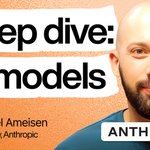
Emmanuel Ameisen (@mlpowered) has spent the last 3 years doing interpretability research at @AnthropicAI, looking inside LLMs like Claude to figure out what they're actually doing. As he puts it, models are "grown," not built.
We discuss:
🔸 His discovery that models plan many tokens ahead
🔸 Why anthropomorphizing AI can actually be the right approach
🔸 What the "J-space" reveals about how models think
🔸 How interpretability connects to AI alignment and safety
Listen now 👇
youtu.be/JHo-aiePjoM
Loooved this episode of The Daily.
They chatted with a math professor at Cornell University (Steven Strogatz) about how he and math community are feeling about AI's impact on their world.
Lots of tears, and profound takes.
Listen to the episode here: nytimes.com/2026/10/13/podca…
Or here: podcasts.apple.com/us/podcas…

This surprised me: "AI progress looks like big jumps from the outside, but internally it's actually been a very smooth progression."

"To make them is not to understand them."
Emmanuel Ameisen (@mlpowered) has spent the last 3 years doing interpretability research at @AnthropicAI, looking inside LLMs like Claude to figure out what they're actually doing. As he puts it, models are "grown," not built.
We discuss:
🔸 His discovery that models plan many tokens ahead
🔸 Why anthropomorphizing AI can actually be the right approach
🔸 What the "J-space" reveals about how models think
🔸 How interpretability connects to AI alignment and safety
Listen now 👇
youtu.be/JHo-aiePjoM
Gold from @komorama per usual


I just published my weekly reflections: docs.google.com/document/d/1…
Software pyramids. AI-made sandcastles. Dead-end software. Spending tokens on opex vs capex. The Reset Nexus. Mentorship trust fall. The AI Peter Principle. The non-viable solution to Goodhart's law. AI making your spikes sharper. The cost of linearizing writing. The Lethal Trifecta Gordian Knot. Chats as a junk drawer.


.@mlpowered shares one of the strangest model behaviors he's debugged at @AnthropicAI:
"Slowly it would start descending into madness, writing in all caps, literally saying, 'I'm possessed by a demon."
Full conversation: youtu.be/JHo-aiePjoM
"To make them is not to understand them."
Emmanuel Ameisen (@mlpowered) has spent the last 3 years doing interpretability research at @AnthropicAI, looking inside LLMs like Claude to figure out what they're actually doing. As he puts it, models are "grown," not built.
We discuss:
🔸 His discovery that models plan many tokens ahead
🔸 Why anthropomorphizing AI can actually be the right approach
🔸 What the "J-space" reveals about how models think
🔸 How interpretability connects to AI alignment and safety
Listen now 👇
youtu.be/JHo-aiePjoM
My biggest takeaways from @AnthropicAI interpretability researcher @mlpowered:
1. Predicting the next token requires understanding the universe. Language models got better than humans at predicting the next token around 2019. Once a model masters the easy tokens (sentence structure, then basic facts), the only ones left are hard, like the final paragraph of a PhD thesis. To finish “The capital of the state that contains Dallas is . . .,” a model has to know that Dallas is in Texas and that Texas’s capital is Austin.
2. LLMs plan ahead, even though they write one token at a time. This was one of Emmanuel’s team’s most surprising findings. When a model writes poetry, it doesn’t stumble into a rhyme. Looking at intermediate thinking states during poetry generation, researchers found that as soon as the model finishes the first line, it has already picked the word that will end the second (“rabbit”), then refers back to that plan for every word after.
3. Anthropomorphizing AI can often be a useful approach when trying to predict how they will behave. Models learn from human text and develop representations of the world from it. Training on millions of dialogues is like training an actor to play every part, and your chats with Claude are literally formatted as a script (“Human: . . . Assistant: . . . ”). In Emmanuel’s words, “Something that’s mimicking a human is really close and is much closer than a program.”
4. Interpretability research looks more like neuroscience than software engineering. The job involves taking a system you did not design and running experiments to infer why it behaves as it does. You examine seemingly meaningless lists of numbers, pass the model huge volumes of text, and watch for patterns that activate from different inputs—not unlike the methods used in brain imaging studies. “A lot of what we do feels so much closer to biology than to engineering."
5. Models can tell you about only a small slice of what they’re thinking. Emmanuel’s team found that just a small subset of a model’s internal representations, which they call the “J space,” can be reported back if you ask the model what it was thinking about. They compare it to a theory of the human mind where most processing happens below the surface. In one experiment, they swapped “Spanish” for “French” inside the J space. Asked what language a passage was in, the model said French. Asked to simply continue the passage, it kept writing Spanish.
6. Studying models closely often raises more questions than it answers. Emmanuel notes that the confident claims that LLMs are “just X” or “nothing more than Y” almost always come from people who haven’t studied their internal workings. His own experience is the inverse: studying the models closely has increased his uncertainty, not reduced it. The complexity that emerges from training is consistently underestimated from the outside. “I find that the more you look inside, the less certain you are about how they work.”
7. Even the people who build AI models don’t fully understand how they work. As Emmanuel describes it, models are grown, not built. “To make them is not to understand them.” Engineers write the code, pour enormous amounts of data through it, and a model’s capabilities emerge. That’s why his team exists. Their job is to open the model up and figure out what it’s actually doing between your prompt and its answer.
8. Interpretability as a field is small, young, and open to newcomers. Emmanuel estimates the field at hundreds of researchers, split between major labs and academic groups. Because it is so new, getting started doesn’t necessarily require deep prior expertise. He points to platforms like Neuronpedia, which hosts models and lets anyone run interpretability experiments directly. “It’s such a new field that the on-ramp is mostly self-studying and reading some of the key papers. There’s so much to explore that if you’re at all curious, you should just give it a try.”
"To make them is not to understand them."
Emmanuel Ameisen (@mlpowered) has spent the last 3 years doing interpretability research at @AnthropicAI, looking inside LLMs like Claude to figure out what they're actually doing. As he puts it, models are "grown," not built.
We discuss:
🔸 His discovery that models plan many tokens ahead
🔸 Why anthropomorphizing AI can actually be the right approach
🔸 What the "J-space" reveals about how models think
🔸 How interpretability connects to AI alignment and safety
Listen now 👇
youtu.be/JHo-aiePjoM
Lenny Rachitsky retweeted

A model Anthropic trained kept getting 12, then insisting in all caps it was 36. Said it was possessed by a demon. The math was right. Similar questions were mislabeled 36, so it knew 12 and got rewarded for 36.
A lot of hallucination is bad labels. @mlpowered on @lennysan
Emmanuel Ameisen (@mlpowered) has spent the last 3 years looking inside LLMs like Claude to figure out what they're actually doing.
"It took me years to master SQL. I got Claude to learn it, and it was immediately better. And I'll never be better than Claude at SQL ever again. It goes against so many of our intuitions.
There's two reactions you can have. There's denial, and there's curiosity. Denial is this is just not possible. And curiosity is the road I've ended up choosing. Which is, let's open it up. Let's look inside.
My optimistic take on this is that I think we're going to learn a lot about the nature of intelligence itself."
"To make them is not to understand them."
Emmanuel Ameisen (@mlpowered) has spent the last 3 years doing interpretability research at @AnthropicAI, looking inside LLMs like Claude to figure out what they're actually doing. As he puts it, models are "grown," not built.
We discuss:
🔸 His discovery that models plan many tokens ahead
🔸 Why anthropomorphizing AI can actually be the right approach
🔸 What the "J-space" reveals about how models think
🔸 How interpretability connects to AI alignment and safety
Listen now 👇
youtu.be/JHo-aiePjoM
Lenny Rachitsky retweeted

What is an LLM?
Is it an incomprehensible black box, a next-word-predictor, a silicon genius?
To answer this, we don't have to only guess, we can open it up and look inside!
It was an honor to chat with @lennysan about what we learned doing this, some takeaways in 🧵
"To make them is not to understand them."
Emmanuel Ameisen (@mlpowered) has spent the last 3 years doing interpretability research at @AnthropicAI, looking inside LLMs like Claude to figure out what they're actually doing. As he puts it, models are "grown," not built.
We discuss:
🔸 His discovery that models plan many tokens ahead
🔸 Why anthropomorphizing AI can actually be the right approach
🔸 What the "J-space" reveals about how models think
🔸 How interpretability connects to AI alignment and safety
Listen now 👇
youtu.be/JHo-aiePjoM
Lenny Rachitsky retweeted

“These models are grown more than they're built. So the only way to know what they do is to look inside.”
Anthropic did. The model picked rabbit as the rhyme before it wrote the line. It didn't even have to say it out loud.
"To make them is not to understand them."
Emmanuel Ameisen (@mlpowered) has spent the last 3 years doing interpretability research at @AnthropicAI, looking inside LLMs like Claude to figure out what they're actually doing. As he puts it, models are "grown," not built.
We discuss:
🔸 His discovery that models plan many tokens ahead
🔸 Why anthropomorphizing AI can actually be the right approach
🔸 What the "J-space" reveals about how models think
🔸 How interpretability connects to AI alignment and safety
Listen now 👇
youtu.be/JHo-aiePjoM
Anthropic AI researcher: “A lot of what we do feels so much closer to biology than to engineering.”
"To make them is not to understand them."
Emmanuel Ameisen (@mlpowered) has spent the last 3 years doing interpretability research at @AnthropicAI, looking inside LLMs like Claude to figure out what they're actually doing. As he puts it, models are "grown," not built.
We discuss:
🔸 His discovery that models plan many tokens ahead
🔸 Why anthropomorphizing AI can actually be the right approach
🔸 What the "J-space" reveals about how models think
🔸 How interpretability connects to AI alignment and safety
Listen now 👇
youtu.be/JHo-aiePjoM
Thank you to our wonderful sponsors @WorkOS and @DeveloperXM for supporting the podcast:
🏆 @WorkOS — Make your app Enterprise Ready, with SSO, SCIM, RBAC, and more: workos.com/lenny
🏆 @DeveloperXM — Engineering intelligence for the AI era: getdx.com/?utm_source=lenny&…
Also available on:
• Spotify: open.spotify.com/episode/5QT…
• Apple: podcasts.apple.com/us/podcas…

"There are some people in your org who are doing way more exploring than others. They are your early adopters. They're running Astra and Fable on the weekends on personal projects, to find things they might bring to work.
The problem is that they can be a massive f*cking distraction.
So the key question to ask yourself if you're running a product org is: how do I harness these early adopters without distracting everybody else?" @danshipper
"Refuse to confuse done with good." @lil_dill

If we only use AI to make the things that we already make, just faster, then we're definitely missing out on the most interesting part.
From my talk at @lennysan’s Summit, here are four ideas for raising the ceiling, not just the floor:
- Have a point of view [5:38]
- Encode your standards into the machine [9:07]
- Don't confuse done with good [12:21]
- Unleash creativity and artistry [16:19]
Full talk here: youtu.be/GLvFTMtw4Jk?si=-5Ts…

Head of Design at Stripe on how to stop creating zombie UIs
If we only use AI to make the things that we already make, just faster, then we're definitely missing out on the most interesting part.
From my talk at @lennysan’s Summit, here are four ideas for raising the ceiling, not just the floor:
- Have a point of view [5:38]
- Encode your standards into the machine [9:07]
- Don't confuse done with good [12:21]
- Unleash creativity and artistry [16:19]
Full talk here: youtu.be/GLvFTMtw4Jk?si=-5Ts…