
Using and supporting GNU/Linux and Open Source Software. Usando y brindando soporte sobre GNU/Linux y software de fuente libre.
Ramos Mejía, Argentina
Joined April 2010
- Tweets4.6K
- Following561
- Followers240
- Likes4.4K




🚀🚀🚀

Aave Labs has acquired the team and technology behind @avon_xyz, one of the leading companies working on fixed-rate lending onchain.
The Avon team brings deep protocol engineering and market-structure expertise to Aave Labs as it expands onchain lending for a mainstream audience.


Linux Roller retweeted

The bug is like a joke.
On Alpine Linux, type 257 to 1024 characters of anything and you get root. 💀

‼️ BREAKING: OpenSSH has rushed out a fix for a critical flaw that lets attackers log into some Linux servers without the right password.
The team learned of the bug a day earlier. OpenSSH's Damien Miller says long embargoes now mostly help attackers, because AI agents rediscover bugs, sometimes within hours.
It hits Linux systems on the musl C library with PAM off, such as Alpine Linux. Miller told admins to disable password logins or SSH itself "IMMEDIATELY".
Version 10.6p2 works around it. Systems on glibc or PAM are not affected, and Miller says the root cause sits outside OpenSSH.


Si andas en cripto y tienes un iPhone viejo, o te compras uno moderno, o por lo menos lo emparchas 🤮

⚠️ Trust Wallet Users Lose $1.1M To Exploit
An unknown attacker has reportedly drained $1.1M from Trust Wallet users.
The exploit targets devices running iOS 18.5, allowing the attacker to extract victims' seed phrases.
Trust Wallet support has urged users to update their iOS immediately.
“Update iOS as soon as possible.”
📰 Telegram: UnbiasedCryptoNews

Linux Roller retweeted

OpenAI ha encontrado 948 fallos graves en el núcleo de Linux en una sola pasada, con agentes de IA que trabajaron solos, y ha escrito un parche para cada uno.
Lo publicó ayer. El núcleo de Linux tiene más de 40 millones de líneas de código y está debajo de Android, de la nube y de los superordenadores. Unos agentes eligieron qué partes revisar, otros buscaron fallos, otros los reprodujeron en máquinas aisladas, demostraron que se podían explotar y propusieron la corrección. Al final, investigadores humanos revisaron todo antes de mandarlo a los responsables de Linux.
Cada uno de esos 948 fallos permitía a un usuario sin permisos hacerse con el control total del sistema. La campaña costó 1,2 millones de dólares de uso del modelo, unos 1.279 dólares por fallo. Concursos de seguridad como Pwn2Own pagaban 20.000 dólares por uno solo. En julio, con un modelo anterior, habían encontrado 166.
En los diez días que duró el trabajo, los responsables de Linux ya habían corregido 61 y tenían otros 43 en camino.
En Certuma trabajamos con datos médicos de pacientes, y la seguridad no se negocia. Que una IA revise millones de líneas de código y deje el parche escrito cambia lo que cuesta defenderse.
Cada nueva generación de modelos va a dejar el software más difícil de atacar que la anterior.
Samsung Wallet empieza a ofrecer a sus usuarios USDC sobre Solana 🚀

Samsung goes live with $USDC on @solana
@Samsung Wallet has launched USDC stablecoin accounts for eligible U.S. Galaxy users, with Solana $SOL and @SuiNetwork $SUI as key networks.
The feature went live on or around November 5, 2026 (announced October 7, 2026, with a late-October target). It is built directly into Samsung Wallet (also tied to Samsung Pay in some announcements) so users do not need a separate crypto app or to manage private keys.
What it does: Eligible users can buy, hold, send, and receive Circle’s USDC. They can also do international remittances and optionally earn rewards on balances.
Scale: Available across roughly 82 million compatible U.S. Galaxy devices (devices that support Samsung Wallet, not necessarily active users).
Networks: Solana is the primary highlighted rail for transfers (with infrastructure running “behind the scenes”). Sui has also been named as a network partner.
Custody & partners: @Bastion (licensed custodian and infrastructure provider) handles the accounts and money movement; Coinbase acts as sub-custodian via Coinbase Prime Vault.
Samsung does not hold customer funds and is not a bank, money transmitter, or custodian. Other partners (e.g., Stripe/Bridge for on-ramps, Coinflow for withdrawals) handle conversions.Samsung
Eligibility: U.S. residents 18+, with a Samsung Account, on a compatible Galaxy device running Android 13 or higher with fingerprint authentication. Identity verification (including possible ID and selfie) and biometrics are required. Currently unavailable to New York residents. Only one account per person.
Transfers:To other Samsung Wallet users (via Samsung Account email) or compatible external crypto wallets:
No Samsung transfer fee (recipient side may charge; speed depends on network conditions).
To bank accounts in 60+ countries: Recipient receives local currency (no crypto wallet needed on their end); fees apply and are shown in-app before confirmation.
Withdrawals to own bank account or debit card (converted to USD) also have fees.
Samsung has signaled future possibilities including online and in-store (tap-to-pay) stablecoin payments, plus expansion to more markets subject to local rules.
This is a notable consumer distribution push for USDC and Solana and SUI, embedding dollar stablecoins into a pre-installed wallet used for cards, passes, and IDs.
Official details are in Samsung’s announcement and the Samsung Wallet Stablecoin Account FAQs.
A casi 18 años del nacimiento de blockchain y las criptomonedas, la gente aún no está preparada para ser su propio banco. Algún día logrará llegar a ser algo común? 🤔

🚨 IF YOU ARE IN CRYPTO, IGNORE THIS POST AT YOUR OWN RISK
A friend lost $535,000 USDT yesterday, and he even sent a test transfer first. His wallet wasn't hacked and his keys never leaked. He lost it to a bot.
The test transfer arrived fine. Within seconds, a bot sent 1 USDT to his wallet from a fake address that started and ended with the same characters as the real one. Now the fake address was sitting in his transaction history, right next to the real one.
When he went to send the full amount, he copied the address from that history and picked the fake one. The money was gone in under 30 seconds, swapped out of USDT before Tether could freeze it.
This is called address poisoning, and it's running at industrial scale. The bot that got him has run over 6 million transactions, and it goes after anyone moving large amounts.
Here's how to make sure it never happens to you:
• Never copy an address from your transaction history or a block explorer
• After a test transfer, copy the address again from the original message the receiver sent you
• Check every character, because these bots match both the start and the end
• Save verified addresses in your wallet's address book with names
Now open your wallet and go through your history. If there's a tiny deposit from an address you don't recognize, a bot has already marked you. Tell me below if you find one.
Repost this post and share this to the person you know who moves the most money on-chain.


Linux Roller retweeted

Cyberattack on France’s national blood service (EFS) via its refrigeration contractor Coolworld. Hackers reset freezers keeping blood donor samples at -30°C to a target of 110°C. The thing that stopped it from destructive impact was an on-call technician who noticed the temperatures going up. Frozen plasma intended for transfusion was stored there too. Fortunately nothing was destroyed. This was a cyberattack on a sensitive layer of healthcare. From frozen peas to boiling plasma in three weeks...?

Para vos, que te creías el más listo y seguro del barrio porque usás un iPhone 🤪

Crypto is being massively stolen from users of various crypto wallets through… 18+ websites - victims have already lost $5,570,000 due to a vulnerability in iOS 18.
It’s all because of the DarkSword vulnerability: just open an infected website via Safari and malicious code is already running on your smartphone - passwords, messages, photos, and crypto wallet files (including private keys) are under attack.
Update iOS to the latest version as soon as possible. And never ever store photos of your seed phrase in the gallery or write it in Notes!
Seminario de
Investigación en Ciberlac
Los invitamos a que se inscriban al próximo Seminario de
Investigación en Ciberlac, que se realizará el próximo 16 de
noviembre a las 10:00 a.m. ET. En esta ocasión se abordará el tema
"PRIVACIDAD Y SEGURIDAD EN LA ERA DE LA IA GENERATIVA” [1], a cargo de
la Dra. Rocío A. Aldeco Pérez, Profesora de Carrera y Jefa del
Departamento de Computación de la Facultad de Ingeniería de la UNAM.
Resumen: La IA generativa ha transformado la forma en que producimos
información, arte y conocimiento, pero también ha abierto nuevos
frentes de riesgo en privacidad y seguridad de datos. Esta charla
explora cómo los modelos generativos —como ChatGPT, Claude o
Gemini— pueden exponer información sensible, ser blanco de ataques o
amplificar sesgos. Se abordarán las principales amenazas (extracción
de datos, inferencia de membresía, ataques adversariales), junto con
las líneas de investigación que buscan mitigarlas: privacidad
diferencial, aprendizaje federado, criptografía homomórfica y
auditoría responsable. El objetivo es comprender cómo equilibrar la
innovación con la protección de los datos personales en el ecosistema
de IA.
¡REGÍSTRATE AHORA! [1]
Links:
[1]
events.teams.microsoft.com/e…
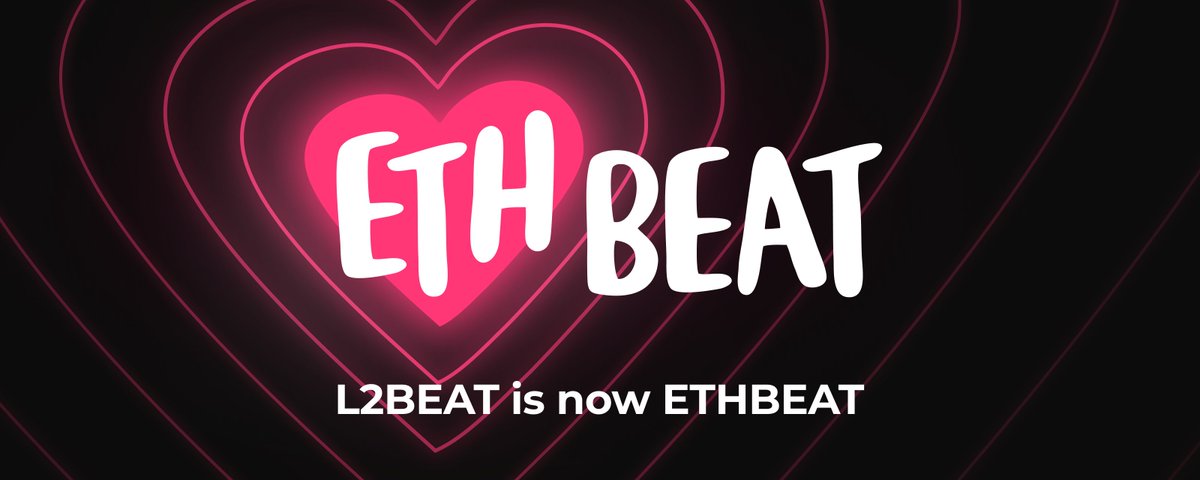
L2BEAT se renombra a ETHBEAT. Bien hecho! La escalabilidad se está abordando ahora directamente a nivel de la L1 🚀🚀🚀

Buen post de CZ 🙌

A hack of this scale means serious security failures occurred. No platform is unhackable, but that cannot be an excuse. Every incident exposes weaknesses that should have been prevented.
Some details are embarrassing. Public explanations also simplify what appears to have been a prolonged multi month/year attack targeting hundreds of employees and systems, with a few ultimately compromised.
Sharing those details, however uncomfortable, helps the wider industry learn.
As a shareholder, I expect Binance to be transparent about what went wrong, take responsibility, learn from all criticism, and make meaningful improvements. 🙏

Les publico aquí una traducción al castellano del comunicado de Binance sobre cómo ocurrió el robo días pasados. Vale la pena de ser leído, actuar y cuidarse

Una de las cosas que me ha enseñado este podrido y prostiuido ecosistema de los Airdrops durante 7 años es que uno siempre tiene que tener expectativas realistas y entender que los founders hacen lo que les da la real gana con sus proyectos o si va a entregar o no equity a sus usuarios, cuando intentes farmear algo si lo vas a hacer de forma organica ten siempre presente que tienes que asumir un costo beneficio bajo.
Si lo haces por los puntos, aunque el producto sea una basura en comisiones y se te va tu saldo en gastos ocultos, bro hazlo con cabeza. No uses @KASTxyz y ya.
Me pasó en su momento con Scroll (la segunda imagen) decidi no dedicarme a farmearlo porque la verdad le vi las costuras, el airdrop fue tan basura que apenas cubrió los fees que tenia, pero también perdí dinero.
Si van a usar una buena tarjeta por usarla, o por el cashback y usan herramientas de ia les recomiendo la de @OKXMoneyLATAM que tiene una promoción de 5$ de cashback por tu suscripción en ChatGPT, Claude, Cursor entre otras. 👍


Excelente resumen de @binance sobre lo que se sabe de cómo ocurrió el robo de días pasados. Vale la pena ser leído, para aprender, actuar y cuidarse 🚀


Linux Roller retweeted

NEW PROPOSAL PASSED
House of Stake, NEAR’s decentralized onchain governance body, has voted to lower NEAR’s maximum annual issuance from 2.5% to 1.6%, phased in over 24 months.
This is how NEAR’s economics evolve transparently and programmatically: token holders put a core parameter to a public vote, and the new rate rolls out epoch by epoch on a published schedule.
For NEAR’s tokenomics, that means lower long-term issuance and a supply schedule anyone can verify.
What happens next:
✦ The House of Stake Security Council reviews the result before ratification
✦ A ~90-day grace period follows ratification
✦ Validators adopt the change through a protocol upgrade, which makes it binding
✦ Token issuance then steps down every epoch, reaching 1.6% at month 24
✦ Quarterly reports track realized issuance against the schedule
Full proposal: houseofstake.org/proposals/2…

Linux Roller retweeted

Update from the Liquid Federation:
The Liquid Federation is pleased to announce that the network’s bitcoin reserves have been fully restored, reestablishing 1:1 BTC backing for all LBTC.
This follows the restoration of BTC<>LBTC swaps several weeks ago, which have since allowed users to move between Bitcoin and Liquid at a 1:1 rate through participating swap providers. Together, these milestones represent significant progress in the Federation’s recovery efforts and reaffirm its commitment to the long-term security, stability and resilience of the Liquid Network.
As always, the network’s bitcoin reserves are independently verifiable. Users operating their own Liquid nodes can directly verify the Federation’s Proof of Reserves, while reserve balances and network activity can be monitored through the public dashboard at liquid.network.
We extend our sincere appreciation to the Bitcoin community, Liquid users, and ecosystem partners for their patience, understanding, and continued engagement throughout the recovery process. Your support and involvement has been instrumental as we worked to restore the network’s reserves and strengthen its underlying infrastructure.
Strengthening the Liquid Network for the Future
Looking ahead, the Federation is advancing several important initiatives designed to strengthen the network’s long-term security, governance, and operational resilience.
These efforts include modernizing the governance structure, introducing clearer responsibilities and oversight, and implementing additional technical and operational safeguards to further protect the network and its participants.
More details on these initiatives and the Federation’s next steps will be shared in the coming weeks.
Restoring full bitcoin backing marks an important milestone, but our work continues. The Federation remains committed to building on the progress of recent years, advancing Liquid’s development, and strengthening the network’s resilience and accessibility for all participants.