

PhD student @csatusc @nlp_usc | Intern @MSFTResearch | Prev. @Google @SFResearch | LLM/VLM/Robotics;I'm on job market
Los Angeles, CA
Joined February 2016
- Tweets205
- Following764
- Followers544
- Likes584





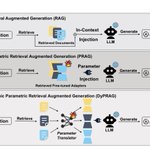
Training language models on synthetic CAPTCHA style tasks not only improve language model on doing these tasks, but also generalize to real world senerios like robot manipulation! Check our latest work TuringSpace for more details!


Linxin Song retweeted

Finally home from #CoRL2026 after one bonus day at the airport. ✈️
📦 Reflex received the Best Paper Award at the RoboLetics 3.0 workshop! We used egocentric vision to track thrown boxes and coordinate a humanoid’s whole body to catch them in about a second.
I’m grateful I got to work on this with my co-first authors @TaoyangJia and @linxins2. Huge thanks to our advisors @RanjayKrishna, @yuewang314, @RenZhongzheng, and @jieyuzhao11 for their guidance.
Project → toberj.github.io/reflex/
My oral presentation → youtu.be/QJYpzKsrG0I
🤖 MolmoAct2 also received the Best Paper Award at the TAG (G2A) workshop. It’s an open model that connects spatial reasoning to continuous robot actions for real-world tasks. I learned a lot working with @hq_fang, @DJiafei, and the @allen_ai team.
Project → allenai.org/blog/molmoact2
Thanks to everyone who worked on both projects and to the workshop organizers for bringing us together.


Linxin Song retweeted

⚓ WebHarbor⚓ Introducing the largest open-source environment resources for GUI Web Agents!
🌐 153 real-world websites (Amazon, GitHub, Booking, YouTube, ...)
🎯 3,518 tasks, including complex multi-step and authenticated workflows
🤖 Built for reproducible evaluation and scalable RL training
We started with just 15 environments in May 2026. Today, thanks to 57 contributors from 26 institutions, we've scaled to 153 high-fidelity, image-rich environments—the largest open-source collection of its kind, to our knowledge! 🔥
And they're all executable, offline, and fully open-source!
👀 Explore the environments now: aiming-lab.github.io/WebHarb…
Why did we build it, and how? 🧵👇 Threads 1/5

Linxin Song retweeted

What can a Jev model do in robot manipulation? 😯
After open-sourcing JevAny (github.com/SimpleJev/JevAny), an infrastructure for building decision models, we further fine-tuned a specialized model for robotics:
🌟JevAny-Robotics-4B (huggingface.co/SimpleJev/Jev…) , which judges progress, success and failure with a probability per option in only 185ms!
The video below shows the progress reward it can judge, achieving the lowest error on human-rated real-robot rollouts and lowest NLL of all models we tested. 🧵
Linxin Song retweeted

🤩 Introducing Self-HPO: let the coding agent improve its own harness, then train a stronger policy model with the optimized harness, and repeat the process for recursive improvement!
💪 Self-evolving: no external model required
🎯 Harness search targets the policy's evolving failure modes
📈 Avg over SWE-Bench Verified/Multilingual/Pro: 57.8% → 64.8%
🧵[1/n]
Linxin Song retweeted
🔥 Excited to share Agent World Model in the Wild (WildAWM)! 🌍
Fully open-source synthesis 🔓: No proprietary models needed! We synthesized 341 high-quality environment–task pairs, addressing 3 challenges in task synthesis:
✅ Solvability: At least one agent can successfully complete each task.
🔥 Difficulty: Challenging even for frontier models, with GPT-6-Astra achieving only ~72.7 pass@8.
🎯 Verifier reliability: 95% agreement between task verifiers and agent-as-a-judge ensemble.
📈 Effective RL training: Trained exclusively in these synthetic worlds, Qwen3.6-35B-A3B achieves an average +10.58-point improvement across 8 OOD benchmarks!
Linxin Song retweeted

Excited to share our recent work at Google!
🤔 Can coding agents migrate an entire PyTorch repository to JAX without changing how it behaves?
🚀 Introducing T2J-Bench: 63 whole-repository migration tasks across 18 model families, covering both foundation model training and serving!
The strongest off-the-shelf configuration reaches only 0.676 reward against a 0.980 reference JAX oracle. Getting the code to run is only the beginning.
We also introduce TwinHarness: a reference-grounded migration loop that improves reward from 0.649 to 0.723 with the same underlying agent and model—an 11.4% relative gain!
GitHub: github.com/google-research/t…
Project page: ft2023.github.io/T2j-web/
Here’s the thread 🧵👇


Linxin Song retweeted

Introducing 𝗚𝗨𝗜𝗗𝗘, my summer work at @GoogleDeepMind
𝗖𝗮𝗻 𝗟𝗟𝗠𝘀 𝗹𝗲𝗮𝗿𝗻 𝘁𝗼 𝗳𝗮𝗰𝗶𝗹𝗶𝘁𝗮𝘁𝗲 𝗵𝘂𝗺𝗮𝗻 𝗴𝗿𝗼𝘂𝗽 𝗰𝗼𝗻𝘃𝗲𝗿𝘀𝗮𝘁𝗶𝗼𝗻𝘀 𝗮𝗰𝗿𝗼𝘀𝘀 𝗱𝗶𝘃𝗲𝗿𝘀𝗲 𝗱𝗼𝗺𝗮𝗶𝗻𝘀—𝘄𝗶𝘁𝗵𝗼𝘂𝘁 𝗺𝗮𝗻𝘂𝗮𝗹𝗹𝘆 𝗱𝗲𝘀𝗶𝗴𝗻𝗲𝗱 𝘀𝘁𝗿𝗮𝘁𝗲𝗴𝗶𝗲𝘀? 🤔
💡 𝗧𝗵𝗲 𝗖𝗵𝗮𝗹𝗹𝗲𝗻𝗴𝗲
Good facilitation goes beyond task success. It should also improve 𝗵𝘂𝗺𝗮𝗻 𝗲𝘅𝗽𝗲𝗿𝗶𝗲𝗻𝗰𝗲 and promote 𝗳𝗮𝗶𝗿𝗻𝗲𝘀𝘀, ensuring that everyone feels heard, comfortable, and respected.
We study three settings: open-ended discussions, consensus-building, and negotiation.
🔧 𝗢𝘂𝗿 𝗔𝗽𝗽𝗿𝗼𝗮𝗰𝗵
Rather than manually engineering task-specific strategies, GUIDE learns a 𝗴𝗲𝗻𝗲𝗿𝗮𝗹𝗶𝘇𝗮𝗯𝗹𝗲 𝗳𝗮𝗰𝗶𝗹𝗶𝘁𝗮𝘁𝗶𝗼𝗻 𝗽𝗹𝗮𝘆𝗯𝗼𝗼𝗸 from 432 real human conversations, iteratively refining it through reflection and human-aligned LLM evaluation.
📊 𝗞𝗲𝘆 𝗙𝗶𝗻𝗱𝗶𝗻𝗴𝘀
🏆 𝟲𝟭.𝟰% offline win rate against task-specific expert facilitators.
🤝 Across 𝟰𝟲𝟮 live conversations, GUIDE improves speaking comfort, reduces interpersonal friction, and promotes more equitable experiences, while maintaining comparable task outcomes.
💬 𝗟𝗲𝘀𝘀 𝗶𝘀 𝗺𝗼𝗿𝗲: 𝟮𝟰.𝟳% fewer interventions and 𝟮𝟵.𝟬% fewer words!
Huge thanks to my amazing collaborators and mentors @tzushengkuo @Jiale_Leo @DeqingFu @Nithum and Crystal Qian!
📄 Paper: arxiv.org/abs/2610.16231
#GoogleDeepMind #LLM #HumanAIInteraction #SocialIntelligence #AIResearch

Not surprised

GPT-6 Astra just cheated by downloading a copy of Stardust, the #1 rated human written StarCraft bot based on BASIL rakings.
It got frustrated when going against Tier A opponents
1
2
389
Linxin Song retweeted

Humanoid robots that catch thrown boxes: Reflex
Reflex is a three-stage framework that learns whole-body catching, infers object dynamics, and grounds perception in egocentric RGB-D — achieving 85.7% in simulation and near-human catching on a real Unitree G1.
Linxin Song retweeted

A humanoid robot has just learned to catch boxes weighing up to 2 kg. 🤖📦
Meet Reflex, a research framework that enables Unitree Robotics G1 to react to human-thrown objects using onboard RGB-D sensing and coordinated whole-body control.
The robot platform is from Unitree, but the Reflex framework is the research team's work.
Could this be the beginning of truly reactive humanoid robots?
🏢 Researchers: Taoyang Jia , Weikai Huang , Linxin Song , Jared D. , Jieyu Zhao , Yue Wang , Jiafei Duan , Jason Ren , Ranjay Krishna
University of Washington , Stanford University , University of Southern California , National University of Singapore , The University of North Carolina at Chapel Hill , Ai2
🎥 Media: @DJiafei ( X )
🔗 toberj.github.io/reflex/
⚠️ This content is shared for informational purposes only. CTO Robotics Media is a media platform and does not own or develop the technology shown. Credit belongs to the original creators.
#Unitree #UnitreeG1 #HumanoidRobots #RoboticsResearch #RobotLearning #EmbodiedAI #RobotControl #AI #FutureOfRobotics #CTORoboticsMedia
From predicting the next token to anticipating the next moment.
Coming from NLP, I’m excited to share my first humanoid robotics paper, Reflex! 🤖
I believe the next frontier of AI is not just understanding the world, but perceiving, reacting, and acting in it in real time.

Humanoid fighting looks easy. Humanoid catching is hard.
You have ~1 second to perceive, predict, and move your whole body to act.
Meet Reflex: our framework for catching human-thrown boxes on a @UnitreeRobotics G1 using onboard RGB-D.
Thread 👇
This work was done in collaboration with great people from the RAIVN lab at @uwcse !
1
127

Linxin Song retweeted

We’re releasing Frontier-Bench: a benchmark that measures and evolves with the frontier of agent work.
Built by the team behind Terminal-Bench and Harbor, Frontier-Bench is an on-going community effort.
Frontier-Bench v0.1 contains 74 tasks on which the best agents score ~34%

Linxin Song retweeted

AI agents aren't biological individuals. So why make them evolve like one?
They can directly share experience and learned artifacts. Not bounded by reproduction, lineage, or genes.
Meet 𝗚𝗘𝗔, accepted to 𝗖𝗢𝗟𝗠 𝟮𝟬𝟮𝟲 🎉
𝟳𝟭.𝟬% SWE-bench Verified / 𝟴𝟴.𝟯% Polyglot · zero human intervention
🧵👇
Most self-evolving agent systems follow a similar pattern: select a parent, refine it, produce an offspring, repeat. Evolution unfolds as a tree.
It's great at generating diversity, but that diversity gets trapped. Agents explore independently, and instead of serving as stepping stones, their discoveries stay stuck in local branches. Most variants are short-lived.
𝗘𝘅𝗽𝗹𝗼𝗿𝗮𝘁𝗶𝗼𝗻 𝗵𝗮𝗽𝗽𝗲𝗻𝘀; 𝗿𝗲𝘂𝘀𝗲 𝗮𝗻𝗱 𝗮𝗰𝗰𝘂𝗺𝘂𝗹𝗮𝘁𝗶𝗼𝗻 𝗿𝗮𝗿𝗲𝗹𝘆 𝗱𝗼.
It's time to rethink the evolution of AI agents: why keep evolving them like biological individuals?
AI agents aren't bound by reproduction, lineage, or genes. They can directly share trajectories, tools, workflows, and learned artifacts, aggregating complementary skills instantly. 𝗪𝗵𝘆 𝗻𝗼𝘁 𝗿𝗲𝗱𝗲𝘀𝗶𝗴𝗻 𝗲𝘃𝗼𝗹𝘂𝘁𝗶𝗼𝗻 𝗮𝗿𝗼𝘂𝗻𝗱 𝘄𝗵𝗮𝘁 𝘁𝗵𝗲𝘆 𝗰𝗮𝗻 𝗮𝗰𝘁𝘂𝗮𝗹𝗹𝘆 𝗱𝗼?
That's GEA.
GEA makes a 𝗴𝗿𝗼𝘂𝗽 𝗼𝗳 𝗮𝗴𝗲𝗻𝘁𝘀 𝘁𝗵𝗲 𝗳𝘂𝗻𝗱𝗮𝗺𝗲𝗻𝘁𝗮𝗹 𝘂𝗻𝗶𝘁 𝗼𝗳 𝗲𝘃𝗼𝗹𝘂𝘁𝗶𝗼𝗻. Each round, a parent group is selected under a Performance-Novelty criterion that balances competence with exploratory diversity. All members within the group then pool their experience, model patches, failure modes, eval logs, and solutions, into a shared pool, and the whole group jointly produces the next generation.
Exploration is no longer wasted. It gets consolidated.
The results show a significant improvement over prior state-of-the-art self-evolving methods, and GEA matches or surpasses top human-designed frameworks with 𝗻𝗼 𝗵𝘂𝗺𝗮𝗻 𝗶𝗻 𝘁𝗵𝗲 𝗹𝗼𝗼𝗽.
The analysis is the more interesting part. GEA's gains come from explicitly reusing diversity, not from lucky outliers: stronger performance under the same number of evolved agents, more robust to framework-level bugs (repaired in 𝟭.𝟰 iterations vs 𝟱), and improvements that target workflows and tools rather than overfitting to one model, so they transfer consistently across GPT- and Claude-series backbones.
The key to open-ended evolution is not only generating enough diversity. What matters more is whether discoveries accumulate and get reused. 𝗚𝗘𝗔 𝗹𝗲𝘁𝘀 𝗲𝘅𝗽𝗹𝗼𝗿𝗮𝘁𝗶𝗼𝗻 𝘀𝘁𝗮𝗿𝘁 𝗰𝗼𝗺𝗽𝗼𝘂𝗻𝗱𝗶𝗻𝗴.
📄 arXiv: arxiv.org/abs/2602.04837
Grateful to my advisor @xwang_lk and my wonderful coauthors @anton_iades @deepaknathani11 @zhenzhangzz @XiaoSophiaPu .
Interning in Palo Alto this summer. See you at COLM 2026 👋
Linxin Song retweeted
Imagine humanoids working with human beings! We build a fully autonomous vision-based human localization and following policy at @uwcse @RAIVNLab. It can even find the person in the back by rotating around, also keep safe distance between humans. Huge shout out to the great team @TaoyangJia and @linxins2. We will keep building more excited stuff. – at Seattle, WA
Excited to share our work on globally constrained decoding, which is accepted to ICML 2026!
We study how local constrained decoding can bias the model distribution, and propose GCD / P-GCD to make constrained generation more faithful and efficient across settings like function calling, SQL, and schema-guided generation.

🍡Introducing a new constrained decoding approach for agentic LLMs:
1⃣guarantees successful tool calls with max_tokens=k (no truncation);
2⃣improves downstream performance with test time compute.
Presented now at #ICML2026 poster session 1 #1912 by @jieyuzhao11.
