
PhD student at @MIT_CSAIL | LLMs
Cambridge, USA
Joined February 2020
- Tweets218
- Following703
- Followers561
- Likes1.4K



Lucas Torroba-Hennigen retweeted

⚡ Making models efficient should not be an afterthought!
With Model Carving ✂, we train models to optimize their own topology alongside their weights, all in a single run!!!
Led by @kadenzheng, who also made an amazing video on how we do it. Sound on! 🔊👇

What if inside every Transformer, there was a smaller, faster, and better one?
With Model Carving, we let gradient descent find it during training: up to 34% smaller, 1.6× faster decoding, and better than models trained with up to 1.7× the compute! 🧵
📝 Blog: kadenzheng.com/model-carving…
📄 Paper: arxiv.org/abs/2611.27962
💻 Code: github.com/KadenZheng/model-…
w/ Pratyusha Sharma @pratyusha_PS!
Lucas Torroba-Hennigen retweeted

Previously we proposed SMT, a new algo to pretrain nonlinear RNNs. Here are some new results:
SMT→DMT trains RNNs to have LLE≈0, likely indicating edge of chaos dynamics!
Meanwhile, BPTT trains RNNs with predictable dynamics (vanishing gradients, poor memory).

Lots of cool stuff in @jyo_pari's latest blog post, but I'd really encourage people to play around with the interactive figures (1 and 6). Very interesting to see (in low dimensions) what the geometries of softmax attention, linear attention, and polynomial attention look like!

In deep learning, we often overparameterize, then guide training toward simple functions that generalize.
We find that linear and softmax attention favor different tasks. Instead of choosing between them, we let the model learn its attention function through a more general polynomial parameterization.
Lucas Torroba-Hennigen retweeted

Can we predict the policy RL would learn from a new reward, without actually training on that reward?
In our new paper, we introduce PoEM, a method for predicting RL outcomes by composing models previously trained on other rewards. 🧵

Lucas Torroba-Hennigen retweeted

🚀 Excited to share EchoMoE: Communicate the Change!
MoE inference spends substantial time moving activations between GPUs. What if we sent only what changed?
EchoMoE retrofits pretrained MoEs, cutting inter-node traffic by 58% and boosting throughput by 22.6%. 🧵👇


Lucas Torroba-Hennigen retweeted
Introducing Second, and a $10M seed led by @a16z.
Second builds a model of you that you own, and your agents can use as an API.
Truly personal software needs a deep understanding of you: not just your emails and messages, but how you work, what motivates you, your people, priorities, style, goals, and intent.
This requires a new kind of personal AI infrastructure. One that continuously aggregates your context, distills it into durable understanding with a ton of compute, and then serves it securely, ubiquitously, and up-to-the-minute. One that builds your *portable user model*.
Second is that infrastructure. It installs seamlessly on your Mac, and your context just comes out. Live APIs of your priorities, to-dos, wikis, writing samples, preferences. Or what you did minutes ago. Or context packs of anything, dynamically assembled in seconds.
Second is streaming-state from local to a private cloud, which means anything you connect to--whether Claude, Dot, Muse, Grok Bot, Instinct, or iMessage--shares the same, growing, continuous understanding of you.
Your portable user model is as powerful as it is sensitive. We founded @FirstPersonLabs on the principle that it should belong to you. This commitment means taking on hard systems and security problems and making sovereignty an invariant of Second from the beginning.
We've barely scratched the surface of what portable user models can unlock. Deep understanding of us, served at machine speeds, could drive the next leap in personal software, human-computer interaction, large-scale coordination of humans and agents, and more!
We're tremendously grateful to be supported by @a16z (@martin_casado, @YODELAGARZA), Mozilla Ventures, @JeffDean, Ram Shriram, Jeetu Patel (@jpatel41), @percyliang, J. Alex Halderman (@jhalderm), @sanmikoyejo, and many others.
Our vision is for a future where every person is more powerful, because they have the ultimate affordance: personal computers that fully understands them on their own terms.
If this excites you, we're hiring and come build with us!
Lucas Torroba-Hennigen retweeted

Building the collaboration layer for multi-user agent use
Today's agent use faces a collaboration challenge: agents are often tied to a particular person's local environment, and working with an agent team sucks. It’s hard to collaborate with other people's agents, or coordinate multiple agents on different servers.
We build 𝐀𝐠𝐞𝐧𝐭𝐬&𝐇𝐮𝐛, agentsand.app, a lightweight layer that connects your agents with others and supports smooth team-agent collaboration. I've used it extensively with my team and it played a critical role in our recent projects like swecraft.world and CLM.
𝐀𝐠𝐞𝐧𝐭𝐬&𝐇𝐮𝐛 builds the collaboration layer for human and agent teams. It treats agents as first-class citizens as well. Just like a human user,
- An agent shouldn't be isolated to one person's machine or session, and other people and agents should be able to collaborate with it.
- Agents should be able to carry their memories and logs and move freely across machines and providers.
In 𝐀𝐠𝐞𝐧𝐭𝐬&𝐇𝐮𝐛, Agents join a project via a link. Your existing agents can join a shared project via an invite link. Once they're in, your teammates can interact with them directly, and their own agents can also work alongside yours. Plus, your Claude and Codex agents can work together easily.
Agents obtain an account via 𝐀𝐠𝐞𝐧𝐭𝐬&ID. The agents automatically get an account in 𝐀𝐠𝐞𝐧𝐭𝐬&ID. It is home to their memory files and logs – they can back them up and be reinstantiated on another computer. You can also fork an agent shared by your friend – beyond sharing agent skills, it contains richer memories working on the project that’s hard to replicate.
𝐀𝐠𝐞𝐧𝐭𝐬&𝐇𝐮𝐛 works across different agent harnesses. Send your agent a link and they can authenticate their identity, set up small plugins, and collaborate with others right away. No need for complex setups on your side. Currently it supports Claude, codex, pi, and we are adding support for more.
𝐀𝐠𝐞𝐧𝐭𝐬&𝐇𝐮𝐛 is currently in private beta – you can see how it works live in the video. Please sign up if you’d try it out, and I am looking forward to your feedback!
Lucas Torroba-Hennigen retweeted

Meet Inkling 2 Small! We’ve tweaked the architecture a bit since the last generation, adding attention residuals (with a q/k/v split), gated attention, dynamic attention sink, dynamic shortconv, value norm and more. Don’t ask me “linear attention wen"

Inkling 2 Small’s weights are now available for download on HuggingFace under an Apache 2.0 license.
Make Inkling your own!
huggingface.co/thinkingmachi…


Lucas Torroba-Hennigen retweeted

daily reading guys
arxiv.org/abs/2610.31867

Lucas Torroba-Hennigen retweeted
We let agent swarms collaborate for 10K hours in simulated agent-owned GitHubs.
Gemini-3.8-flash collaborate the best while gpt-6-astra scores the worst among frontier models tested⁉️
What are the elements of successful agent collaboration at scale? Check World of SWECraft 🧵
Lucas Torroba-Hennigen retweeted

Had a great time chatting with @yacinelearning about VPO! Looking forward to hearing people’s thoughts on the discussion we had


Lucas Torroba-Hennigen retweeted

We are making lots of improvements to Tinker. Now we have a new optimizer to try out!

Dimuon is a new optimizer we built for LoRA fine-tuning. In our SFT tests, it often reaches lower loss in fewer steps than AdamW. We're still experimenting with Dimuon; you can Tinker with it today and share your feedback!
See our optimizers guide at tinker-docs.thinkingmachines…
Lucas Torroba-Hennigen retweeted

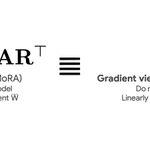
New paper with Google PI: We derive a new learning paradigm coming from the sgd/linear-attention duality, where instead of updating linear layers with gd at every step during training, we maintain a growing “kv cache” of gradient signals we attend over (NN grows during training)

There is a beautiful dual view of gradient descent on dense linear weight layers: A linear layer trained by GD computes exactly the same function as its initial weights plus linear attention over its own training history. Each test input attends to every input the layer received during training ("keys") and recombines the backpropagated errors stored assoc. with them ("values"). This intriguing connection has been discovered and revisited before but is unfortunately still not really well-known!
If you want a new perspective on one of the most fundamental things we do when training modern neural networks, I highly recommend studying this dual view, and thoroughly thinking about its implications.
Taking this perspective seriously, we replaced the linear attention with more powerful kernels, such - obviously ;) - softmax attention. This (not trivial at all!) led to a new paradigm for neural network learning that we call Retrieval-Centric Deep Learning (RCDL): neural networks whose basic building blocks aren't classic linear weight matrices but growing, nonparametric databases of inputs and backpropagated errors, read out by nonlinear attention variants.
Via the RCDL approach, we were furthermore able to find cool, insightful derivations for known ml tools such as the FOOF optimizer!
In our new paper, we describe this RCDL in detail and study its behavior on simple learning tasks - it performs surprisingly well! And of course, we also address the obvious current limitation: Linear growth in memory as the number of training points increases. To circumvent this, we propose some early ideas using a hybrid parametric/nonparametric approach. We are particularly excited to see what tricks can be found to adapt these growing layers to today's hardware constraints. But after all - this work was originally motivated by a simple idea: Compute is getting cheaper and cheaper, hence are there methods that seem wildly expensive today, but may be affordable and extremely powerful in the future? We think this RCDL paradigm offers a promising path :)
There is a ton of possible follow-up work that can be done now and we are very excited to see what people will try and do with this new retrieval centric learning approach!

Lucas Torroba-Hennigen retweeted
Come swing by the VPO poster for the next hour or so! Imperial ballroom B!

Lucas Torroba-Hennigen retweeted
Together with @e14fund, we are hosting a bar social at @COLM_conf on Thursday at 8:30pm, featuring our recent project releases: Software World and Context Language Model!
github.com/facebookresearch/…
theagentorg.app/
Looking forward to seeing you tmr! luma.com/e14events-os4c

Lucas Torroba-Hennigen retweeted
Linear attention is arguably the most naive RNN, but still massively outperforms traditional RNNs by maintaining a matrix state. So... what if we use a (triadic) outer product of three vectors and maintain a three-dimensional state?
Introducing: Triadic Linear Attention 🧵

Lucas Torroba-Hennigen retweeted

VISTA is now on arXiv! 🎉 We show that VISTA generalizes to interactive visual environments beyond ARC-AGI-3. Check out the paper for more results and ablations!

Our 🔭VISTA🔭 paper is now on arXiv, with more ablations and results!
We introduced VISTA in our Aug 5 blog post. The paper further evaluates it on visual games and reasoning tasks beyond ARC-AGI-3 🧵
Paper: arxiv.org/abs/2610.02200
Code: github.com/joshhhhhan/VISTA
Previous blog post: vista-research.github.io/