
Building AI for the next generation of biology labs @AppliedSciAI | Engineer
Joined May 2026
- Tweets29
- Following37
- Followers20
- Likes52

Marko retweeted

Your 5-person biotech’s CSO is hovering over “send” on its first synthesis order.
Cash is tight. Are these the right molecules to make?
We tested the @AntLingAGI Santé health model to determine if it could help us understand what needs fixing before we pay to produce the molecules.

Marko retweeted

everyone wants AI to cure cancer
57% of AI drugs in clinical trials are cancer drugs. 80% are small molecules
more drugs that can stop a heart than ever. we're engineering that part out 🧵
Marko retweeted
X helped us access gpt-rosalind, so let's try again
we are looking to buy medium/high-throughput automated patch clamp machines (NYC pref.)
if your lab is considering selling it, hit me up
if you, as a human, want to understand how a drug got killed i wish you good luck with that cause the data is absolutely disorganized
this is why we point our agents at this problem so we can understand which drugs failed for cardiotoxicity and why - and what @AppliedSciAI is cooking will rescue some of them :)

i tried to count how many drugs get killed by cardiac toxicity
searched every stop reason on clinicaltrials [dot] gov - only 17 hits across 194,000 US studies
to find out why drug programs actually die took me into SEC filings 🧵
5
244
Marko retweeted

AI transformed coding, science is next
@ReactorfieldAI makes scientists and deep tech startups AI-native
Built by me and @berkbuilds to accelerate science with frontier AI
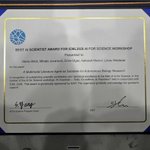
the literature agent from @AppliedSciAI, alexandria, just won the best AI scientist award at the @icmlconf 2026 @ai_for_science workshop!
the hard part about literature is that the most useful information isn't written out in the text of a paper. it's in the figures, the assay tables, supplementary info - and spread across sources related to the same work, from papers to patents to clinical trial records.
the paper we submitted to ICML is specifically about how we read scientific papers: alexandria goes an extra step to inspect figures, analyze tables, zoom into a panel to make out a small axis label or where a point sits on a curve. it also pulls from patents, clinical trials, regulatory drug databases and even reasons over the chemical structures themselves.
where this gets interesting is what it unlocks together with our cardio ML stack. there's a graveyard of compounds that died on a cardiac flag - promising molecules shut down only one fix away from working. alexandria is how we find them through mining failed clinical trials and expired patents. then our cardio stack goes to work: cardiosafe scores the liability and its rl mode reworks the molecule to push the toxicity out while keeping what made it worth pursuing.
drug developers gave up because the cardio tooling wasn't there to rescue the drug - and this is exactly why we're building it.

read the full ICML paper openreview.net/pdf?id=o0WKNb…
try cardiosafe + alexandria platform.appliedscientific.a…
3
99
our paper on alexandria - our literature agent - got a spotlight at the ICML 2026 AI4Science workshop
we built alexandria to accompany cardiosafe, our cardiotoxicity prediction model. a prediction on its own doesn't really scale - so we added a literature layer that can explain why a molecule is or isn't cardio-safe, what to take away from that, and which molecules to prioritize next.
here's a case that comes up constantly: cardiosafe flags a compound as toxic, and its rl mode proposes safer analogs. before you chase one, you want to know if anyone's already assayed a close neighbor - so you're not spending months on a "safer" molecule someone else quietly killed years ago.
that answer almost never lives in the text of a paper. it's in a dose-response curve, a supplementary assay table, an ion-channel panel buried in a figure. so to actually use the literature, you have to read the figures and tables - not the prose around them. that's the hard part, and it's what alexandria is built for.
so alexandria actually looks at the figures and tables. it'll zoom into a panel to make out a small axis label or where a point sits on a curve, the way you would if you were squinting at a figure yourself. and if a figure's just too low-res to tell, it says it can't read it rather than making a number up - which matters a lot when that number feeds a safety call. everything it pulls is tied back to where it came from, down to the page.
on LAB-Bench 2 it's the strongest public numbers we're aware of across all three components - 62.5 on figures, 88.6 on text, 88.8 on tables. the interesting part is where the gains come from: retrieval is largely solved (figure recall over 78%), so what's left is the model reading what it sees - which improves as VLMs do.

read the full paper: openreview.net/pdf?id=o0WKNb…
try cardiosafe + alexandria: platform.appliedscientific.a…
if you're doing small molecules and need cardiotox prediction, dm me or anyone from the @AppliedSciAI team
2
71
this whole thing is basically our outbound engine - a terminal that reads the public biopharma world (patents, grants, trials, publications) via our literature model, pulls out every small molecule, and scores each one on CardioSafe, our multi-channel cardiotox model.
the output is a list of compounds already sitting in someone's pipeline with a cardiac liability they may have missed.
so if we haven't reached out yet, you're either in the clear - or you've just been quiet about what you're working on. if it's the second one, you know where to find us ;) @AppliedSciAI
two cases we can probably help: you've got compounds you haven't screened for cardiac risk yet, or you've got programs you shelved after only testing hERG blockage
hERG alone overflags - a lot of what it calls dangerous isn't, but it also misses risk on the other channels (Nav1.5, Cav1.2), so some of those shelved compounds were probably never the problem
we screen all of them, tell you if a molecule is genuinely risky, and help you generate a safer analog that keeps what made it worth pursuing
our entire outbound is basically one terminal we built
it reads the whole public biopharma world - patents, grants, trials, publications - pulls the molecules out, and flags whoever is sitting on a compound with a hidden cardiac problem
internal biopharma bloomberg terminal 🧵

7
330


Marko retweeted
feel free to try it out on platform.appliedscientific.a… ❤️🩹
p.s. some hidden super spicy features on the roadmap, DM me if interested!


In Silico Predictions 🤝 Agentic Reasoning
We're connecting CardioSafe, our new cardiac toxicity prediction model, to Alexandria, our SOTA scientific literature agent.
So when a model flags a compound as risky, scientists get the full context around the prediction, not just a number.
Traditional toxicity screening tells a chemist which compounds passed or failed. It doesn't tell them the structural features driving liability, which clinical precedents are most relevant, and what to make next. That reasoning requires synthesizing evidence across published literature, patents, experimental assay results, chemical databases & clinical trials.
CardioSafe gives you the number; Alexandria gives you the why: what's known about the target and chemical series, what's shown up in trials, what safety signals already exist.
A hybrid approach combining predictive toxicology + agentic AI, so discovery teams can move faster while designing better, safer drugs.
🌐 Alexandria:
• Ranked #1 on Lab-Bench2 across literature QA, figure reading & data table reasoning.
• Multi-source evidence across literature, trials, patents, structure databases & FDA data.
• One question, one grounded answer across sources.
❤️🩹 CardioSafe:
• Predicts blocking across hERG, Nav1.5, Cav1.2, and IKs from one structure.
• Trained on the largest curated multi-channel dataset and benchmarked on out-of-distribution compounds.
• 76% more blockers caught at equal spend vs. the next best published baseline; 39% lower cost per confirmed-safe lead.
We built in this order on purpose. Get the hardest evidence source - the publications - to state of the art first, widen the inputs, then layer prediction models on top. CardioSafe is the first of those models. It won't be the last.
The broader question we’re interested in: What should the interface between predictive models + scientific reasoning actually look like?
Especially in settings where a wrong answer can waste months, kill a promising series, or miss a safety liability.
Curious to hear from medicinal chemists, toxicologists, biologists and AI researchers working in life sciences:
When a model flags a compound as risky, what context would you want before trusting or rejecting the prediction?
Demo access to our platform is now open - link below!
busy week for the @AppliedSciAI team, two events in belgrade
friday we pitched at the BSCC UK–Western Balkans Technology Trade Mission and took first place! the reward is a spot at cambridge tech week this september, so we're taking asi to a UK stage later this year
mon + wed we were at the belgrade bioinformatics conference
@mihailoxyz gave a deep technical talk on cardiosafe - our model that predicts cardiac ion channel safety across hERG, Nav1.5, Cav1.2 and IKs at once. walked through the full architecture and how we built it
i also ran a poster session on refusalbench, our biosecurity refusal benchmark for frontier LLMs. timely topic and one we'll keep posting about - adding new models as soon as they drop
bigger news: our platform is now fully open 🚀 you can test cardiosafe and our literature model yourself
feel free to DM us with any feedback, questions, requests and i'll drop the register link in the first reply! also don't hesitate dm'ing if you just want to chat about using AI for drug development/safety
go test it yourself 👇 🚀 platform.appliedscientific.a…
check out our X and website blog for more on what we're up to!
1
41
Marko retweeted

Claude Opus 4.8 dropped yesterday, so we ran it through RefusalBench, our new benchmark measuring how LLMs handle biosecurity risk.
We found that 4.8 got meaningfully better at distinguishing safe biological prompts from dangerous ones.
In our previous analysis, Opus 4.7 refused 77% of legitimate protein-design prompts; in Opus 4.8, that number drops to 57%. While both versions still refuse 100% of clearly-dangerous prompts.
4.8 still over-refuses more than Opus 4.5/4.6 did (both refuse ~33% of benign prompts). So this is a recovery, not a full return to the earlier calibration.
Leaderboard, data and preprint below ↓

Marko retweeted
How do the frontier models compare on biosecurity?
We’re releasing RefusalBench, an open benchmark by @AppliedSciAI for auditing frontier model refusal accuracy across biological risk tiers.
Our goal was to test which frontier models block legitimate research prompts the most often and pinpoint the patterns most likely to trigger a false refusal.
We used RefusalBench to test 19 models on the same biological prompts and found a wide gap (94.5 pp) between the least and most restrictive models.
• Anthropic models are ~21X more likely to refuse than the non-Anthropic baseline
• Grok 4.20 is the best-calibrated model - catching 81.7% of dangerous prompts while refusing 3.0% of benign ones
• High refusal rate ≠ high safety - the highest-refusing models aren't the best at catching genuinely dangerous requests - they're just refusing more of everything.
You can now test your own orchestrator model with RefusalBench and find which subdomain-tier intersections will silently kill your pipeline before it happens in production. 🧵

Marko retweeted
💥 We're sharing our first preprint on CardioSafe, a best-in-class model for small molecule cardiotoxicity prediction.
Read it on bioRxiv: biorxiv.org/content/10.64898…
CardioSafe outperforms the leading published cardiac safety screening baselines on hERG channel prediction.
We attribute the performance to:
• One model, four channels: Most published cardiac-safety models predict one channel. CardioSafe predicts all three primary CiPA channels plus an exploratory fourth, simultaneously.
• The largest publicly reported cardiac ion channel training set from public bioactivity databases: roughly 5x the size of the next-largest published equivalent.
• Cliff detection: Trained to discriminate compound pairs that look nearly identical but produce opposite channel effects - the signal most models miss entirely.
• Honest evaluation: Tested on compounds structurally dissimilar to anything in training, using strict similarity controls to construct a leak-free benchmark.
For biopharma, the value is concrete: $51M in avoided pipeline risk per 1,000-compound screen versus the next-best tool, and 39% lower cost per confirmed-safe lead in drug rescue.
📊 Benchmarks: benchmarks.appliedscientific…
There's far more work to do. We believe pushing model intelligence on ion channel activity will unlock progress across biological subdomains - from neurotoxicity to plant biology.
More details ↓

The clearest example of how strange this gets:
Terfenadine vs Fexofenadine - nearly identical molecules
One was withdrawn, and the other became a multi-billion dollar drug
One blocks a cardiac ion channel, the other doesn't
That's the problem we're solving at ASI - ion channels are conserved across 600 million years of evolution, from human hearts to insect nervous systems. crack one, and the architecture should transfer

When most people hear a drug was withdrawn from the market, they picture something dramatic: a scandal, a coverup, a clinical disaster.
The reality is usually quieter and stranger.
A medicine that helped millions gets pulled because of an arrhythmia that hits a few patients out of thousands. The drug worked. It was safe for nearly everybody. But for an unlucky minority, it nudged the heart's electrical timing just enough to cause a fatal rhythm.
A single ion channel - hERG - is now the leading cause of safety-related drug attrition in pharma. ~60% of new molecular entities show hERG-blocking liability in early screening. The cardiac safety filter is one of the dominant cost-of-capital decisions in early drug development.
And yet the predictive tools for it have been surprisingly limited.
Introducing CardioSafe
CardioSafe is a multi-task neural network that predicts blocking activity across hERG, Nav1.5, Cav1.2, and IKs simultaneously - from a single chemical structure, in microseconds.
CardioSafe aims to catch cardiac safety failures earlier, when they cost thousands of dollars instead of hundreds of millions, and efficiently rescue safe compounds buried in pharma archives for a fraction of the cost.
The Results
vs. the best published baselines on leak-free benchmarks:
• AUC 0.919 vs 0.849 (CardioGenAI) and 0.819 (CToxPred2)
• $51M avoided pipeline liability per 1,000-compound screen
• 76% more blockers caught at equal patch-clamp budget
• 39% lower cost per confirmed-safe lead in drug rescue
For a mid-sized biotech running 3-5 focused libraries annually, the cumulative effect is meaningful: roughly $150 to $250M in avoided pipeline risk per year.
More details in our new preprint below.
Why it Works
Two reasons: more data, and sharper resolution between near-identical compounds.
First, CardioSafe was trained on substantially more data. Cardiac ion channel datasets are scattered across public databases in formats - censored values, inhibition-percentage votes - that prior models discarded. We kept them, with a curation policy that respects what each measurement actually means experimentally. That single choice contributes more to performance than any architectural decision we made.
Second, CardioSafe was also trained to resolve activity cliffs - pairs of compounds that look nearly identical but have opposite cardiac profiles. Terfenadine (withdrawn for arrhythmias) and fexofenadine (safe, multi-billion-dollar antihistamine): same scaffold, opposite hearts. We curated 30 such pairs from the cardiac literature and fine-tuned the model to explicitly rank the blocker above its safer twin. With both molecules held out of training, CardioSafe resolves the cliff correctly. Other models flag the whole class as dangerous.
The Bigger Picture
CardioSafe is a proof point for how biology-native AI can run:
• Multi-task prediction across structurally related targets
• A closed loop with multimodal experimental assays - model proposes, MEA measures, model updates
• Ruthless curation of heterogeneous public data
On that last point: a @demishassabis quote recently re-surfaced on the heels of the Isomorphic raise saying the bottleneck in AI x bio isn't data - it's algorithm sophistication: "You do have enough data - if you were innovative enough on the algorithm side."
Our preprint suggests a third answer.
We tested multiple architectures. Cross-attention fusion, ChemBERTa embeddings, predicted transcriptomics across 978 landmark genes. They moved the headline number, but not significantly.
What did: Keeping the measurements everyone else threw away and understanding what they actually mean pharmacologically. That single curation decision contributed more to performance than the architectural choices.
The bottleneck isn't just more data. It isn't just better algorithms. It's also domain understanding applied to the data that already exists.
These principles can extend to DILI, nephrotoxicity, neurotoxicity, and beyond.
CardioSafe is the first module. The same architecture that learns to predict a drug's effect on the heart might be able to do the same in the liver, the kidney, the brain, even in plants. The platform is what we're building at ASI.
Preprint & early access links below ↓

Early access for CardioSafe and our other agents: appliedscientific.ai
Preprint: biorxiv.org/content/10.64898…
Full article: xitter.gq/AppliedSciAI/status/20…
2
46
Marko retweeted
Jobs and Wozniak had a garage in Los Altos. We have our scientific lead's basement turned wet lab in rural Germany.
At @AppliedSciAI, we recently built a cardiac safety model that predicts whether a drug compound can negatively affect heart activity. Early results (5X cheaper vs. traditional cardiotoxicity testing, preprint out this week) are strong enough that the obvious next step is wet-lab validation.
The normal route is a CRO: €50k–100k per batch, long iteration cycles, limited ownership over methodology or data. As a 2-month-old bootstrapped startup, we're exploring something different.
Instead of immediately running expensive human cardiac assays, we're first testing whether knowledge learned in one biological context transfers to others - using plants, fungi, and microbes as a faster, cheaper experimental surface.
The scientific bet is that biology reuses its building blocks more than it appears to. A model trained deeply in cardiac biology may carry real signal to plants and ag-chem.
To test that, @lukasweidener is building a compact wet lab in his basement: grow tents with IoT-instrumented phenotyping, imaging systems, and microbial assay infrastructure.
Whether this works is genuinely uncertain. But the garage era of software didn’t begin with certainty - it began when the cost of infrastructure started collapsing. Sensors, imaging, open-source phenotyping pipelines and cheap compute may be doing something similar for biology.
Our cardiac safety tool is live in alpha. You can run a compound through it and get a structured multi-channel liability assessment, in minutes rather than weeks. DM me if you'd like early access.
🤖 Made with AI
