Marleen Potgieter (@marleenring) header
Marleen Potgieter (@marleenring) profile picture

I help new managers develop their people management skills, craft their leadership style, manage conflict and lead their teams with confidence

Cape Town
Joined February 2013
Photo by Marleen Potgieter (@marleenring)Photo by Marleen Potgieter (@marleenring)Photo by Marleen Potgieter (@marleenring)Photo by Marleen Potgieter (@marleenring)Photo by Marleen Potgieter (@marleenring)Photo by Marleen Potgieter (@marleenring)Photo by Marleen Potgieter (@marleenring)Photo by Marleen Potgieter (@marleenring)Photo by Marleen Potgieter (@marleenring)Photo by Marleen Potgieter (@marleenring)
A CEO back from sabbatical asked me how his people had led without him. His Ops Manager had run the business decisively, without once seeking approval. Why could this young man do what his more experienced managers couldn't? "Because he knows exactly who he is." I've watched him make mistakes. He owns them and moves on. Only people secure in their own value system can do that. The rest agonise. They rewrite the message three times (just to be safe), searching for a version that upsets nobody — and often make no decision at all. That's not conscientiousness. It's the search for approval, dressed up as diligence. Every manager eventually faces the choice: hold the standard and be thought difficult, or soften it and keep everyone onside. Both are defensible. But only one path requires you to know who you are. The other just requires you to want to be liked. Work out who you are before you're appointed to lead a team. Not something you'll get around to.
13
5 things every newly appointed manager asks themselves: Why does everyone keep asking me what to do? How do I hold someone accountable without becoming an unpleasant boss? Why can't my team see what needs doing? How do I deal with someone who isn't performing? How can I stop taking work back because it's easier to do it myself? Some of these can cause you sleepless nights, put pressure on you, and also frustrate every HR manager out there, who think you should know this and not outsource it to them at the first wobbly moment. Some of you don't have an HR to turn to, which makes it even harder. Setting expectations, communicating them properly, delegating well and being able to give good, constructive feedback sooner rather than later, will solve 99% of the above frustrations. Telling people what you expect, how it must be done, what 'done' looks like, and when to ask for help, is an excellent start.
15
5 reasons people do not report harassment. #1. They fear retaliation. #2: They don’t want the attention. #3: They are scared they will lose their jobs. #4: They think it won’t make any difference. #5: They do not want the perpetrator to get into trouble. Surprisingly, reason #5 is the main reason why people to not want to report. They want the behaviour to stop, not get the perpetrator in trouble.
12
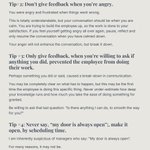
4 Tips for giving feedback that lands
7
7
3 mistakes newly appointed managers make in their first month: Mistake #1: They hit the ground running and start making changes immediately. Mistake #2: They don’t pivot from what they were (good at their job) to what they are now: a manager of people. Mistake #3: They try to do everything all at once and be all things to all people. All three lead to one thing only, and that is quick burnout. You would be better off pausing on all three and changing your whole approach in the first month.
1
22
Why Fixing your Weaknesses is a Waste of Time.
1
17
For this reason, it makes far more sense to give it to someone, who can complete the task. In half the time it takes me to think about what to do.
1
1
1
I would rather focus on spending my time on something I am good at. And leave the other tasks to the experts.
1
1
11
5
“But everyone does it.” The MD used company money for personal benefits. His new Financial Director refused to approve the expenses. The MD was outraged. He had built the business from scratch, worked for years without a salary, and used his own money to keep it afloat. The Board knew about the arrangements. Nobody had objected. And he had seen similar practices in other start-ups. Surely he had earned a few privileges? Both men considered themselves honest. Both believed they were acting with integrity. But they had very different ideas of what integrity meant in practice. The real test of an organisation’s values isn't what its leaders say they believe. It’s what they knowingly allow.
13
12
3 mistakes people make when facing a difficult conversation: #1: They procrastinate, thinking if they put it off, it will all go away. #2: Not seeing it as a necessary, instead of a difficult conversation. #3: Thinking it will automatically spiral into a conflict situation. Instead of tackling it head on, and getting it out of the way, rather than just hoping it will.
14