

Astronomer at STScI. Exoplanets, mirrors, systems, software. Specialist in synthetic starlight. Deputy Telescope Scientist for JWST; tweets my own. (He/him)
Joined January 2010
- Tweets1.2K
- Following84
- Followers2.1K
- Likes884
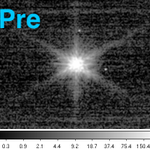
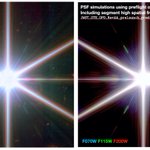



I love this blinking comparison of gorgeous Hubble and JWST data for several reasons, but one is that it helps illustrate beautifully something about JWST’s six-sided snowflake PSFs which I’ve mentioned before. Take a close look at the stars in this image, and I’ll explain…

The sharp edges of those hexagonal mirrors push nearly all the diffracted light into those spikes, leaving the wedges in between darker with next to no diffracted light.
Fun day: Gorgeous #JWST images of the Pillars of Creation shared with the world, and meanwhile the first of my team’s cycle 1 exoplanet imaging observations are ongoing right now! Let’s go.
I’ll close with this wonderful animation by @semaphore_P, showing 51 Eri moving in its orbit.
Of course the JW data should show it quite a bit further along in its orbit by now, along with 3x longer wavelength out into the IR.
youtu.be/yodAmnlFT7U

I am now observing 51-ERI using NIRCam Coronagraphic Imaging for 57 minutes. Keywords: Exoplanets. Proposal: stsci.edu/jwst/phase2-public… 1:1