
AI Explorer - Sharing insights on Ai, Tech, Free tools, resources.
Joined February 2016
- Tweets169
- Following194
- Followers70
- Likes208







matthew roach retweeted

Breaking: Creating reports just got a lot easier.
Claude can now generate downloadable Excel, PowerPoint, and Word files with editable charts from a single prompt.
Here’s how to do it 👇

matthew roach retweeted

here's how we did it and the open sourced @HyperFrames_ code in thread 🧵
i did a quick screen recording as a quick explainer
our open source framework & motion graphics skills: github.com/heygen-com/hyperf…

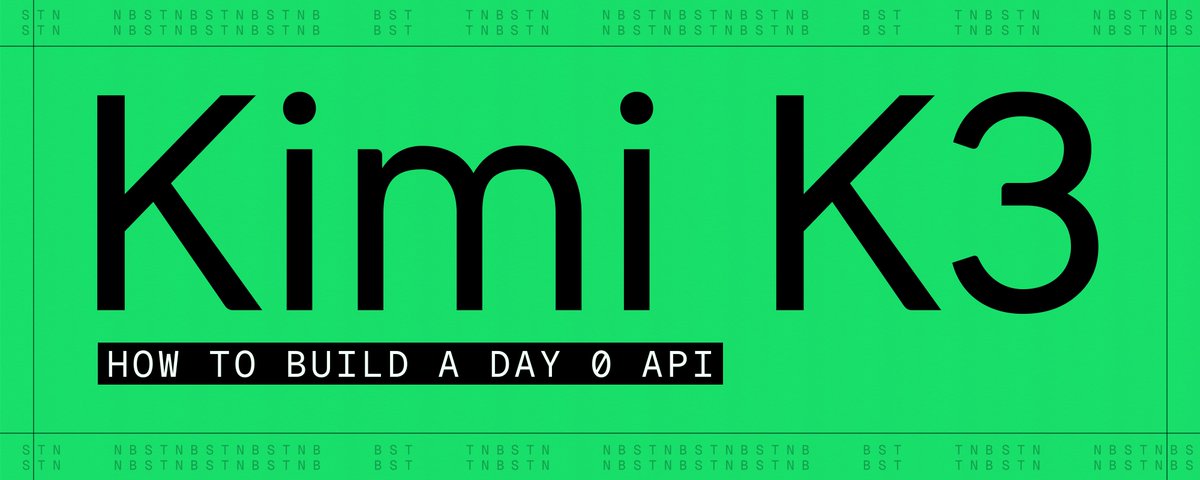
we've eval-ing K3 and we were legit shocked
K3 is incredibly good at @HyperFrames_ , winning over GPT-5.6 and Fable 5 at a few of our benchmarks
it recreated motion graphics from @leomeethewoo with minimal prompting
(i didn't further tune the animations to show raw output)


matthew roach retweeted

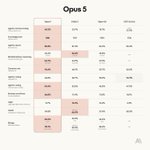
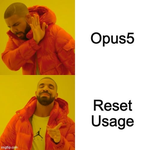
Today’s the day.
Opus 5 and a super-fast version of ChatGPT 5.6 are dropping imminently
In fact, if you use Opus 4.8 right now, there’s a decent chance your prompts are getting routed to Opus 5
Days like this don’t happen often. It’s absolutely critical you lock in:
1. Test these models the moment they drop
2. If you don’t have your own personal benchmark tests based on your every day workflows and tasks, build them now (will open source mine soon)
3. Put these new models on your latest projects. See how they hold up against what you were doing before
4. Plug them into your Hermes/OpenClaw. Measure cost per task vs speed
5. Have these newer models review your code built by older models. Find security gaps/optimization opportunities the less intelligent models couldn’t find before
99.99% of the world won’t even know what’s happening today. You’re going to be the .01% that jumps on this and attacks
Lock in.
matthew roach retweeted

Introducing FLUX 3.
One multi-modal model for Image, Video, Audio and Action-Prediction. Creations are truer to life in every kind of style.
FLUX 3 Video is now available in early access (link below).
Jointly trained in one unified architecture, our model can be extended to predict actions for robotics. See our work with mimic and Audi in the thread.


matthew roach retweeted

Kimi K3 has received far more love than we expected, and our GPUs are feeling it.
Over the past 48 hours, demand has pushed close to the limits of our current capacity. To protect the experience of existing subscribers, we're temporarily pausing new subscriptions and prioritizing compute for current members. Existing subscribed users are not affected.
We're adding capacity as fast as we can and will reopen new subscription spots in batches.
Going forward, we'll also split membership into two more focused plans: Kimi Membership for Kimi Web, App, and Work; and Kimi Code Membership for coding workflows. This will help us match compute more precisely and keep the experience stable.
Thank you for your patience and understanding!
matthew roach retweeted

RLHF vs. DPO vs. GRPO, explained visually:
(a popular LLM interview question)
These methods are often grouped together as variations of the same algorithm.
But they take completely different approaches to teaching a model to behave the way you want, and those differences show up in the training setup, the data you need, and what it costs you at scale.
The visual below summarizes how they work:
Let’s understand this in detail today!
RLHF (Reinforcement Learning from Human Feedback) is the simplest formulation, which also went into building ChatGPT.
You sample prompts, run them through the policy, and score the outputs with a reward model. Then you compute advantages, apply a KL penalty to keep the policy close to the reference, and update via PPO.
This requires four live models running simultaneously:
- The policy you’re training
- A frozen reference copy
- A reward model
- And a critic.
This means running four sets of forward passes per training step.
At production scale, this is expensive to run and hard to stabilize. And the reward model needs its own human-preference training before any of this can even begin.
DPO (Direct Preference Optimization) takes a more direct route.
Instead of training a separate reward model, DPO derives the reward signal implicitly from the policy itself.
It works from preference pairs, a winner and a loser response to the same prompt. It computes log-probability ratios between the current policy and a frozen reference, and uses that ratio as the implicit reward.
This removes the explicit reward model and the critic entirely, bringing the pipeline down to just policy and frozen reference.
The tradeoff is that you need labeled preference pairs upfront. And since there’s no online exploration, DPO can be brittle if the preference data doesn’t cover the failure modes you care about.
GRPO (Group Relative Policy Optimization), introduced by DeepSeek in 2024, takes a different path.
It keeps the RL framing but eliminates the critic by replacing the value baseline with group statistics.
For each prompt, the model generates a group of outputs, and a verifier scores each one.
Advantages are then computed from the mean and standard deviation of those scores within the group.
The critic is a key bottleneck in RLHF since it’s slow to converge, adds instability, and requires a regression head on top of the policy.
GRPO removes all of that by using the group itself as the baseline, keeping the RL loop intact but at lower overhead than PPO.
Here’s a useful way to understand all three at once.
- RLHF uses external scores and an internal critic to measure advantage.
- DPO encodes preference implicitly and skips both.
- GRPO generates its own baseline from a group and keeps the RL loop without the critic.
All three produce aligned models, but they differ on how much machinery the alignment requires.
But the progression doesn't stop at GRPO.
GRPO with verifiable rewards works great when you can check an answer programmatically, like math or code.
If you move to open-ended agentic tasks that give you nothing to verify against, the whole setup breaks down.
I wrote about how top AI labs are solving this in 2026 with RULER, an LLM-as-judge reward function that extends RL training to non-verifiable tasks without writing custom reward functions.
Read it below.


matthew roach retweeted

If you have Claude Code installed you're running software that uses the new (unreleased) version of Bun that's been rewritten in Rust - here are two commands you can run to see that for yourself

ALT strings ~/.local/bin/claude | grep -m1 'Bun v1' For me this outputs Bun v1.4.0 (macOS arm64). The most recent release of Bun on GitHub is currently v1.3.14 from May 12th, so that v1.4.0 version number in Claude supports them shipping a preview of a not-yet-released Bun version. strings ~/.local/bin/claude | grep -Eo 'src/[[:alnum:]_./-]+\.rs' This outputs a list of 563 filenames, starting with these: src/runtime/bake/dev_server/mod.rs src/runtime/bake/production.rs src/bundler/bundle_v2.rs
matthew roach retweeted
“if she doesn’t support you during your localhost:3000, she don’t deserve you at your .vercel.app”
Cooking with Kimi K3 rn - Kamius Fableton
matthew roach retweeted

AGI won't kill all jobs you guys. The moment we have AGI is the moment we will create more jobs. Imagine everyone has AGI that can do all their ideas, all their dreams. It's silly and limiting to imagine the world based on today's jobs and conclude that because today's jobs will be replaced by AGIs, there will be no jobs. It's like saying because farming is automated, everyone will have nothing to do.