

Former Stellantis C-Level Automotive Executive | AI Transformation Executive | Expert in Industrial AI and Governance | Board Member
Ann Arbor, MI
Joined May 2009
- Tweets1.1K
- Following439
- Followers635
- Likes1.8K





Pinned Tweet
🚨 As an Auto Executive Here is My Perspective on Ferrari's New EV
Bottom line....
They built an extraordinary EV. The market’s reaction suggests that may not be enough.
Ferrari unveiled the Luce yesterday:
• 1,050 horsepower
• Jony Ive co-designed interior
• nearly $650,000 starting price
• Ferrari’s first fully electric vehicle
Today, Ferrari stock fell roughly 7%.
As someone who has spent 25+ years inside automotive leadership, I think this reaction says something important:
This is not about whether Ferrari built a technically impressive car.
They did.
This is about whether Ferrari fully understands what its customer is actually buying.
Ferrari customers are not primarily purchasing transportation.
They are purchasing:
identity,
emotion,
heritage,
scarcity,
mechanical theater,
and cultural symbolism.
That is what makes luxury automotive branding so fragile during technological disruption.
The challenge with EVs; especially at the ultra-luxury level is not performance.
Electric drivetrains already deliver extraordinary performance.
The challenge is preserving mythology.
And that is much harder.
Ferrari appears to understand this intellectually:
the engineered sound,
the tactile controls,
the dramatic specs,
the emotional design language.
But the market reaction suggests investors are still questioning whether the EV transition aligns with the emotional expectations of Ferrari’s core customer base.
That distinction matters.
Because in luxury markets, brand identity often carries more pricing power than engineering itself.
What do you think?

Mamatha Chamarthi retweeted

🕷️ Tom Holland Bet On Himself AND Played The LONG Game: $250,000 Became $100+ MILLION.
Tom Holland reportedly made just $250,000 for his first MCU appearance in Captain America: Civil War.
Ten years later, Spider-Man: Brand New Day has crossed $2 BILLION and Holland reportedly has one of Hollywood’s great star deals:
$20M guaranteed + an UNCAPPED box-office bonus.
His final payday could exceed $100 MILLION.
Holland took the smaller check when he needed the opportunity. Became indispensable to a multibillion-dollar franchise. Then negotiated when he had the leverage.
And instead of only demanding more guaranteed money, he bet on the upside.
Sometimes playing the long game means knowing when NOT to maximize your paycheck; so you can maximize your value.
$250K → $100M+.
That’s a good life lesson, clever way to brand, and one hell of a return on betting on yourself.

Mamatha Chamarthi retweeted

Nvidia is in talks to provide a roughly $250 billion backstop for OpenAI as part of a massive data center project, one of the most ambitious financial transactions yet in America’s artificial-intelligence boom. on.wsj.com/4yWVhE6

Mamatha Chamarthi retweeted
🚨 When I was A C-Level Exec At @Stellantis I saw This Coming. Jensen Huang Is Right. The Next AI Boom Won’t Just Think. It’ll Move.
It’s still early for AI. The most exciting frontier is physical AI.
Vehicles, factories, and machines that learn and evolve after deployment.
We saw the beginning of this with software defined vehicles Stellantis .
Now every physical product becomes a platform.
We are early on this S curve, and it is steep.

Mamatha Chamarthi retweeted
🚨 @nvidia CEO Jensen Huang Says The AI Boom Is Still Just Beginning. Here’s Why He’s Probably Right.
1) Most companies are still experimenting with AI; not fully deploying it.
At my company we’ve seen profits increase significantly better leveraging it in 2026. Companies are just scratching the surface.
2) AI is moving beyond chatbots into factories, healthcare, robotics, finance, and national infrastructure. Check out @PalladyneAI. They’re mastering physical AI.
3) Every major platform shift from the internet to smartphones created decade-long investment cycles, not two-year ones.
The wildest part…. The biggest AI winners of the next decade may not even exist yet.

🚨 When I was A C-Level Exec At @Stellantis I saw This Coming. Jensen Huang Is Right. The Next AI Boom Won’t Just Think. It’ll Move.
It’s still early for AI. The most exciting frontier is physical AI.
Vehicles, factories, and machines that learn and evolve after deployment.
We saw the beginning of this with software defined vehicles Stellantis .
Now every physical product becomes a platform.
We are early on this S curve, and it is steep.
Mamatha Chamarthi retweeted
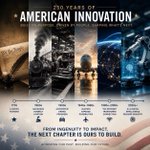
🇺🇸 America’s Promise Has Endured and Its Dream Gets Bigger
Somewhere tonight, fireworks will light the sky over factory towns and shipyards, over startups and small towns, over the same soil that once held nothing but a promise.
250 years is a long time to keep a promise. And yet here we are, still building, still dreaming bigger.
Innovation isn’t just something America does. It’s something America is. It’s in our DNA, this restless, open minded, free spirit that refuses to accept the world as it is and insists on building the world as it could be.
We were first to democratize mobility. Railroads that stitched a continent together, aviation that shrank the distance between strangers into hours. First to democratize knowledge and collaboration, building a connected world where a good idea in one corner of the globe could reach every other corner within seconds. We didn’t just invent technologies. We flattened the world with them, and in doing so, we lifted it.
That’s the real American inheritance. Not just the freedom to build, but the boldness to build first, and the generosity to build for everyone, not just ourselves. That boldness is what draws the best minds on Earth to our shores. It’s what turns invention into movements, and movements into progress that outlives any one of us.
I’ve spent my career inside that story, across automotive, manufacturing, energy, and mobility, watching new technologies arrive like weather, sudden and disruptive. Railroads. Assembly lines. Airplanes. The internet. Now artificial intelligence, knocking louder than anything before it. And every time, the nations and organizations that led weren’t just the ones with the boldest technology. They were the ones with the boldest people behind it, willing to rethink how they work, invest in their teams, and build with humanity at the center.
As we stand at the edge of America’s next 250 years, our opportunity isn’t just to keep inventing. It’s to keep leading with that same open spirit. To build the industrial backbone, the resilient supply chains, and the responsible AI foundations sturdy enough to carry generations we’ll never meet, and strong enough to lift the rest of the world right alongside us.
That’s the work of the home of the free.
That’s the work of the land of the brave.
Tonight, wherever you are, under fireworks, under stars, under the sky this country has fought hard to keep open, I hope you feel it too. That quiet, stubborn hope that boldness still builds a better world for all of us.
Happy Fourth of July.

Mamatha Chamarthi retweeted
🎇 Honoring America 250 Goes Beyond Remembering What America Built…..
It’s believing we can still build what’s next.
Beautifully said @mchamarthi 👇

🇺🇸 America’s Promise Has Endured and Its Dream Gets Bigger
Somewhere tonight, fireworks will light the sky over factory towns and shipyards, over startups and small towns, over the same soil that once held nothing but a promise.
250 years is a long time to keep a promise. And yet here we are, still building, still dreaming bigger.
Innovation isn’t just something America does. It’s something America is. It’s in our DNA, this restless, open minded, free spirit that refuses to accept the world as it is and insists on building the world as it could be.
We were first to democratize mobility. Railroads that stitched a continent together, aviation that shrank the distance between strangers into hours. First to democratize knowledge and collaboration, building a connected world where a good idea in one corner of the globe could reach every other corner within seconds. We didn’t just invent technologies. We flattened the world with them, and in doing so, we lifted it.
That’s the real American inheritance. Not just the freedom to build, but the boldness to build first, and the generosity to build for everyone, not just ourselves. That boldness is what draws the best minds on Earth to our shores. It’s what turns invention into movements, and movements into progress that outlives any one of us.
I’ve spent my career inside that story, across automotive, manufacturing, energy, and mobility, watching new technologies arrive like weather, sudden and disruptive. Railroads. Assembly lines. Airplanes. The internet. Now artificial intelligence, knocking louder than anything before it. And every time, the nations and organizations that led weren’t just the ones with the boldest technology. They were the ones with the boldest people behind it, willing to rethink how they work, invest in their teams, and build with humanity at the center.
As we stand at the edge of America’s next 250 years, our opportunity isn’t just to keep inventing. It’s to keep leading with that same open spirit. To build the industrial backbone, the resilient supply chains, and the responsible AI foundations sturdy enough to carry generations we’ll never meet, and strong enough to lift the rest of the world right alongside us.
That’s the work of the home of the free.
That’s the work of the land of the brave.
Tonight, wherever you are, under fireworks, under stars, under the sky this country has fought hard to keep open, I hope you feel it too. That quiet, stubborn hope that boldness still builds a better world for all of us.
Happy Fourth of July.
Mamatha Chamarthi retweeted
Ferrari’s first EV isn’t just a car; it’s a test of brand identity.
“Luxury automotive brands are not selling transportation. They are selling meaning, emotion, and cultural status.”
Did Ferrari get it wrong?
See the full article: finance.yahoo.com/technology…

Mamatha Chamarthi retweeted
Excited to contribute to this @latimes article on Ferrari's challenge isn't technology. It's identity.
Luxury brands are built on emotion, ritual, and belonging. Customers don't buy a @Ferrari for transportation, they buy what the brand says about them and how it makes them feel.
Innovation matters. But the strongest brands understand that transformation works best when it expands the experience customers love, not when it replaces it.
See my full commentary ⬇️
latimes.com/business/story/2…

Ferrari’s first EV isn’t just a car; it’s a test of brand identity.
“Luxury automotive brands are not selling transportation. They are selling meaning, emotion, and cultural status.”
Did Ferrari get it wrong?
See the full article: finance.yahoo.com/technology…
Excited to contribute to this @latimes article on Ferrari's challenge isn't technology. It's identity.
Luxury brands are built on emotion, ritual, and belonging. Customers don't buy a @Ferrari for transportation, they buy what the brand says about them and how it makes them feel.
Innovation matters. But the strongest brands understand that transformation works best when it expands the experience customers love, not when it replaces it.
See my full commentary ⬇️
latimes.com/business/story/2…
Mamatha Chamarthi retweeted
🚨 What Auto Executives Are Quietly Realizing About EV Demand Is Starting To Show Up Everywhere
One thing I am watching very closely as a longtime auto operator:
The peer set is increasingly voting with its capital and the signal is becoming difficult to ignore.
@Lamborghini retired the Lanzador EV program after leadership acknowledged demand inside its luxury performance customer base was “close to zero.”
Bentley pushed its all-electric transition goal from 2030 to 2035.
Porsche scaled back parts of its electrification strategy and abandoned its in-house EV battery effort.
Stellantis absorbed a massive EV-related write-down.
@Ford took a nearly $20 billion charge tied to the F-150 Lightning pivot and broader EV recalibration.
What is fascinating is how emotional the @Ferrari reaction has become internally and externally.
For instance, in a direct conversation I had with another senior auto executive yesterday after the Luce reveal, the reaction was:
“I’m still processing it. Can't believe the decision. It’s ultra brave. But the internet is on fire. Get your popcorn and sit and watch.”
Ferrari conversation matters beyond Ferrari.
The issue is no longer:
“Can the industry build compelling EVs?”
The issue is increasingly:
“Does customer demand especially in emotional/luxury/performance segments actually align with the speed of the eelctric transition?”
Sometimes the "gee whiz" technology/innovation folks get ahead of consumer demand.
That is a very different strategic question than the industry was asking even 24 months ago. 👀
What do you think? Did the industry get ahead of itself?

Mamatha Chamarthi retweeted
🚨 Ferrari Brought In The Pope. X Still Thinks It Looks Like A Kia. 😂
At this point the Ferrari Luce rollout may genuinely be seeking divine intervention.
The reaction says something much bigger about branding than cars.
People are not FOR THE MOST PART debating the specs.
They are debating whether it FEELS like a Ferrari.
That distinction is exactly why so many luxury and auto executives are quietly watching this launch so closely right now.
@mchamarthi describes a convo with one senior auto executive told me after the reveal:
“It’s ultra brave. The internet is on fire. Get your popcorn and sit and watch.”
That perfectly captures what is happening here.
The Ferrari conversation has become a real-time case study in what happens when innovation collides with emotional brand identity.
This explains this dynamic extremely well below 👇
Will Ferrarri bounce back or take this one off the production schedule? Or use the latter as their bounce back strategy?
Photo courtesy @Polymarket


🚨 What Auto Executives Are Quietly Realizing About EV Demand Is Starting To Show Up Everywhere
One thing I am watching very closely as a longtime auto operator:
The peer set is increasingly voting with its capital and the signal is becoming difficult to ignore.
@Lamborghini retired the Lanzador EV program after leadership acknowledged demand inside its luxury performance customer base was “close to zero.”
Bentley pushed its all-electric transition goal from 2030 to 2035.
Porsche scaled back parts of its electrification strategy and abandoned its in-house EV battery effort.
Stellantis absorbed a massive EV-related write-down.
@Ford took a nearly $20 billion charge tied to the F-150 Lightning pivot and broader EV recalibration.
What is fascinating is how emotional the @Ferrari reaction has become internally and externally.
For instance, in a direct conversation I had with another senior auto executive yesterday after the Luce reveal, the reaction was:
“I’m still processing it. Can't believe the decision. It’s ultra brave. But the internet is on fire. Get your popcorn and sit and watch.”
Ferrari conversation matters beyond Ferrari.
The issue is no longer:
“Can the industry build compelling EVs?”
The issue is increasingly:
“Does customer demand especially in emotional/luxury/performance segments actually align with the speed of the eelctric transition?”
Sometimes the "gee whiz" technology/innovation folks get ahead of consumer demand.
That is a very different strategic question than the industry was asking even 24 months ago. 👀
What do you think? Did the industry get ahead of itself?
Mamatha Chamarthi retweeted
🚨@Ferrari Execs Be Aware. Critics are attacking the IDENTITY of the car, not the engineering.
As a former C-level exec for Stellantis I can confirm The Luce’s specs are extraordinary.
Yet most of the backlash is not about horsepower, charging speed, or engineering.
It is about identity recognition.
People are asking:
“Does this still FEEL like a Ferrari?”
That is an incredibly difficult branding problem during technological disruption; especially when mythology is part of the product itself.
Do you believe Ferrari is about to see how far can an iconic luxury brand evolve (or devolve) before customers emotionally stop recognizing it?

🚨 As an Auto Executive Here is My Perspective on Ferrari's New EV
Bottom line....
They built an extraordinary EV. The market’s reaction suggests that may not be enough.
Ferrari unveiled the Luce yesterday:
• 1,050 horsepower
• Jony Ive co-designed interior
• nearly $650,000 starting price
• Ferrari’s first fully electric vehicle
Today, Ferrari stock fell roughly 7%.
As someone who has spent 25+ years inside automotive leadership, I think this reaction says something important:
This is not about whether Ferrari built a technically impressive car.
They did.
This is about whether Ferrari fully understands what its customer is actually buying.
Ferrari customers are not primarily purchasing transportation.
They are purchasing:
identity,
emotion,
heritage,
scarcity,
mechanical theater,
and cultural symbolism.
That is what makes luxury automotive branding so fragile during technological disruption.
The challenge with EVs; especially at the ultra-luxury level is not performance.
Electric drivetrains already deliver extraordinary performance.
The challenge is preserving mythology.
And that is much harder.
Ferrari appears to understand this intellectually:
the engineered sound,
the tactile controls,
the dramatic specs,
the emotional design language.
But the market reaction suggests investors are still questioning whether the EV transition aligns with the emotional expectations of Ferrari’s core customer base.
That distinction matters.
Because in luxury markets, brand identity often carries more pricing power than engineering itself.
What do you think?
Mamatha Chamarthi retweeted
🚨Ferrari May Be Repeating Ford’s Biggest Branding Mistake With The Mach-E
The Mach-E backlash was never really about whether the car was good.
It was about identity.
People looked at it and said:
“That’s not a real Mustang.”
Now Ferrari is facing a very similar branding challenge.
Most people are not criticizing the Luce’s engineering.
The specs are incredible.
What they are questioning is whether it still FEELS like a Ferrari.
That distinction matters enormously in luxury branding.
Because iconic brands are not just selling products.
They are selling mythology, emotional recognition, identity, and cultural symbolism.
And once customers emotionally disconnect from those identity cues…
the technology almost stops mattering.
That is why comments like:
“It looks like a Kia” are so dangerous for Ferrari.
The risk is not building an EV.
The risk is accidentally creating a:
“That’s not a real Ferrari”
moment. 👀
Is that where we are?

🚨@Ferrari Execs Be Aware. Critics are attacking the IDENTITY of the car, not the engineering.
As a former C-level exec for Stellantis I can confirm The Luce’s specs are extraordinary.
Yet most of the backlash is not about horsepower, charging speed, or engineering.
It is about identity recognition.
People are asking:
“Does this still FEEL like a Ferrari?”
That is an incredibly difficult branding problem during technological disruption; especially when mythology is part of the product itself.
Do you believe Ferrari is about to see how far can an iconic luxury brand evolve (or devolve) before customers emotionally stop recognizing it?
🚨 As an Auto Executive Here is My Perspective on Ferrari's New EV
Bottom line....
They built an extraordinary EV. The market’s reaction suggests that may not be enough.
Ferrari unveiled the Luce yesterday:
• 1,050 horsepower
• Jony Ive co-designed interior
• nearly $650,000 starting price
• Ferrari’s first fully electric vehicle
Today, Ferrari stock fell roughly 7%.
As someone who has spent 25+ years inside automotive leadership, I think this reaction says something important:
This is not about whether Ferrari built a technically impressive car.
They did.
This is about whether Ferrari fully understands what its customer is actually buying.
Ferrari customers are not primarily purchasing transportation.
They are purchasing:
identity,
emotion,
heritage,
scarcity,
mechanical theater,
and cultural symbolism.
That is what makes luxury automotive branding so fragile during technological disruption.
The challenge with EVs; especially at the ultra-luxury level is not performance.
Electric drivetrains already deliver extraordinary performance.
The challenge is preserving mythology.
And that is much harder.
Ferrari appears to understand this intellectually:
the engineered sound,
the tactile controls,
the dramatic specs,
the emotional design language.
But the market reaction suggests investors are still questioning whether the EV transition aligns with the emotional expectations of Ferrari’s core customer base.
That distinction matters.
Because in luxury markets, brand identity often carries more pricing power than engineering itself.
What do you think?
Mamatha Chamarthi retweeted
🚨Build The Well Before You’re Thirsty. Master The Art of Being Relational and Stop Being Transactional
“Build The Well Before You’re Thirsty.”
That line seemed to hit something deep during a panel I joined last night with IT leaders navigating career transition.
For years, I treated networking as optional. Show up late. Leave early. Focus on the work.
Then while building my new business (announcement coming next week), I realized something uncomfortable:
Relationships are often the real infrastructure behind opportunity.
The investors.
The advisors.
The first customers.
The introductions that change everything.
Most came from relationships nurtured long before I needed anything.
What surprised me most?
Even experienced executives still struggle with the same thing:
Walking up to strangers.
Following up.
Asking for help.
Overcoming the instinct to quietly leave the room.
I wrote a reflection on:
• why curiosity matters more than pitching
• the hidden loneliness of leadership
• how community changes careers
• and the networking lesson my mother unknowingly taught me decades ago in India
Full piece on Medium below. ⬇️
medium.com/@chamarthimamatha…
