
MD PhD, Computational Biologist @weizmannscience. Exploring head and neck cancer one cell at a time when not shredding pow.
Joined November 2022
- Tweets19
- Following36
- Followers26
- Likes1


Experimentalist, computational biologist or jack-of-all trades looking for a great postdoc opportunity in Sweden? I can really recommend @SchlisioSusanne at @karolinskainst , where you can study intra-tumour heterogeneity in neuroblastoma
ki.varbi.com/se/what:job/job…

Michael Mints retweeted

We’re excited to share our preprint on spatial organization in glioblastoma: doi.org/10.1101/2023.07.06.5…. We combine spatial transcriptomics (Visium) and proteomics (CODEX) to reveal a five-layer organization of cellular states and highlight a role of hypoxia as tissue organizer. 1/

Michael Mints retweeted
1. Excited to share our new paper in @Nature! With over 1000 tumors analyzed by scRNA-seq, we provide a systematic pan-cancer characterization of transcriptional intra-tumor heterogeneity (ITH)
nature.com/articles/s41586-0…

Kolla upp tidskriften först! Stor risk för att tidskrifter med så låg IF, som ber relativt oerfarna forskare att vara reviewers, är sk en.wikipedia.org/wiki/Predat… och släpper igenom vad som helst trots dina kommentarer

Thanks! No, the patient numbers are too small to do proper group (rather than intra-tumour) comparisons, but we are working on a larger bulk cohort where this is a very relevant question!
The work was done in @TiroshLab at @WeizmannScience in collaboration with @SidPuram. Thanks to all involved!
This leads to a model where, although the cancer is initiated through HPV infection, some cells can epigenetically repress HPV, allowing them to survive treatment and become persister cells through limiting proliferation. 8/8

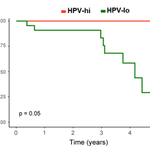
Finally, to see if this has a clinical impact, we deconvoluted bulk TCGA data and showed that higher levels of HPV mRNA expression are linked to better prognosis! 7/8

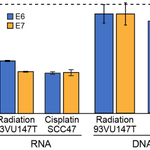
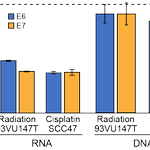
Cell line studies showed that HPVon cells are preferentially killed by chemo/radiation, while HPVoff cells are resistant due to their non-proliferative state. We also showed that HPV DNA copy numbers are not affected, suggesting epigenetic regulation. 6/8

We mapped transcriptional heterogeneity through defining cellular states and found that this novel HPVoff subset was highly enriched in a state characterised by senescence-related genes as opposed to HPV-expressing cells (HPVon) that were largely proliferating. 5/8

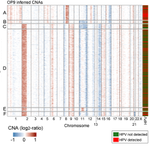
Focusing on the malignant cells, we found a high degree of genetic diversity, allowing us to detect distinct subclones. We also noticed that in some cells, called HPVoff, no HPV mRNA could be detected, and that HPV expression was linked to subclonality. 4/8

To do this, we sequenced >70,000 cells from 16 patients and studied HPV gene expression, genetic subclones and cellular signalling states at the single-cell level. 3/8

While HPV-positive oropharyngeal cancer has a much better prognosis than HPV-negative, a subset of HPV-positive tumours are aggressive and respond poorly to treatment. In order to improve patient stratification, we wanted to achieve better understanding of HPV+ tumours. 2/8
Happy to share our latest work (nature.com/articles/s41588-0…), published in @NatureGenet, where we show that HPV is repressed in a subset of cancer cells in HPV-driven oropharyngeal cancer, making them more resistant to chemo/radiation treatment! 1/8