

PhD | electrophys | cognitive neuro 🧠👩🏻💻 "time is not a local variable"
Joined March 2010
- Tweets11.8K
- Following1.2K
- Followers1.2K
- Likes56.6K







Pinned Tweet
I'm excited to share our new paper, where I had the privilege of serving as first author 🎉
nature.com/articles/s41598-0…
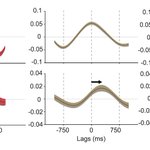
We asked whether the primate hippocampus internally simulates rhythmic events after they disappear.
Here's a short thread on the main idea. 🧵

Mildred Salgado-Menez retweeted

My friend Laura has 56 days to find a job or leave the US.
Last Friday her company NextSense furloughed the whole team. Laura is on an H1-B, which requires her to be paid while employed so her role was terminated and the 60 day clock started.
She's a biomedical engineer with a PhD in neuroscience. She builds ML for sleep and time-series signals like EEG/EMG and she has built wearable AI models in production.
She's looking for research scientist roles in the Bay Area.
If you're hiring in health tech or wearables, DM me and I'll intro you. @ycombinator founders: if you need a founding ML or research hire, she's it. Her H-1B transfers so no lottery needed.
And if you're not hiring, a repost might reach the person who is 🙏
linkedin.com/in/laurarose95/

Mildred Salgado-Menez retweeted

Eva is one of the kindest and most brilliant people I've worked with during my PhD. It is shocking and deeply infuriating that this is happening. Please share! Call your representatives. Forward this to reporters.

Mildred Salgado-Menez retweeted

这么优秀的一个孩子,也被 ICE 拘留了,实在难以理解。
Eva Yi Xie,14 岁从中国来到美国时,连英语都还说不好。四年后,她入围美国高中生顶尖科学竞赛 Regeneron STS 全国 40 强,并进入 MIT。2024 年以数学、计算机双专业毕业后,又到普林斯顿攻读神经科学博士。
这次,她刚在华盛顿参加完神经科学年会、展示了自己的研究,就在返程途中被 ICE 拘留。原本该回实验室继续做研究的人,如今却被关进了拘留中心。普林斯顿已为她安排律师, 全力营救。


Mildred Salgado-Menez retweeted

Eva is a student at @PrincetonNeuro working with me, @brody_lab and Ben Eysenbach. She was abducted by ICE while trying to board a flight from SFN. Some thoughts below how we can help her.
Mildred Salgado-Menez retweeted

Our colleague Eva Yi Xie, a Princeton neuroscience PhD student, was detained by ICE at Reagan National Airport on her way home from SfN, where she’d just presented her poster. She’s being held in Chantilly, VA. Please help us bring her home. 📷


I'm so lucky to have been able to attend #sfn2026 at Washington DC. All thanks to my future employer at Emory 😄🫰🏻


8
354
Mildred Salgado-Menez retweeted

Transcranial ultrasound stimulation of the hippocampus causally alters relational structure learning and inference. This technique enables direct causal tests of deep-brain structures in healthy humans, bridging the gap between high-level cognition and its neural basis.
nature.com/articles/s41562-0…

Mildred Salgado-Menez retweeted

Mental navigation as a default computational mode in human cognition
sciencedirect.com/science/ar…

Mildred Salgado-Menez retweeted

I am not only a first generation phd to immediate family but also to my extended. So talking to them over the years about my journey, has been very interesting.
Their favorite question over the years has been if I'm still in school, can't wait for them to ask me again.

Mildred Salgado-Menez retweeted

Put the same PhD student in a small lab and in a powerhouse lab at Stanford, MIT or the Broad Institute, and you are basically running two different careers.
In a top lab, money is rarely the first constraint.
You have better equipment, better datasets, stronger collaborators, experienced postdocs, grant support, and people around you who already know exactly what a Nature, Science, Cell, NeurIPS or CVPR paper is supposed to look like.
Look at the Broad Institute. It has entire genomics, proteomics, imaging and genetic-perturbation platforms built to support projects that a normal university lab could never run alone.
Feng Zhang isn’t just “a very smart professor” — he sits at the intersection of MIT, Broad, McGovern and HHMI. That ecosystem matters.
Same in AI. Fei-Fei Li didn’t build ImageNet in isolation in somebody’s basement.
She was operating inside the Stanford AI ecosystem, surrounded by elite students, collaborators and an institution built to turn ambitious ideas into major projects.
MIT CSAIL is another absurd example: around 1,800 researchers and a research budget of roughly $65 million a year.
A PhD student entering that environment is not starting from the same line as someone in a five-person lab fighting for GPU hours and begging for travel money.
Of course talent still matters. Hard work still matters.
But academia loves pretending everyone is competing on the same track.
They’re not.
Some students spend three years figuring out how the game works.
Others enter a lab where the game manual, the coaches, the equipment and half the winning team are already sitting in the room.
If you seriously want an academic career, choosing the lab may be one of the highest-leverage decisions you ever make.
Mildred Salgado-Menez retweeted

Before he made his Nobel Prize-winning discoveries about the visual cortex visual, David Hubel made a simple tool: a tungsten microelectrode. He described its fabrication is described in a 1957 Science paper. I had Claude make a little video of it.
Mildred Salgado-Menez retweeted

Do brain connections just carry information between regions, or do they transform it?
Lab's latest out in Nature Neuroscience, led by Lakshman Chakravarthula: "Network geometry shapes the transformation of task representations across the human cortex"
colelab.org/pubs/Chakravarth… 1/n

Mildred Salgado-Menez retweeted

New preprint from the lab! While your brain 🧠accumulates evidence toward a decision, something is watching the decision process in real time. Is that “something” a separate process with its own circuit? Our new bioRxiv paper tackles exactly that. 1/6 biorxiv.org/content/10.64898…

Mildred Salgado-Menez retweeted

Yeh… and the numbers are wild.
Three people with drug-resistant epilepsy. Gene therapy puts a synthetic dimmer switch (a DREADD) into the tiny patch of brain firing the seizures. An oral drug turns that patch down.
Seizures fell by more than 90%. No serious side effects in this pilot.
DREADDs = Designer Receptors Exclusively Activated by Designer Drugs. Lab tool for years. Now it’s in humans… and it’s working.
Not a finished cure yet (tiny study, and the companion drug still needs work). But this is what “engineering the brain” was supposed to look like.
References
- Nature: nature.com/articles/d41586-0…
- C&EN: cen.acs.org/pharmaceuticals/…
- NEJM letter: Dai et al., 2026


Dreadds work in humans nejm.org/doi/full/10.1056/NE…

Mildred Salgado-Menez retweeted

Dreadds work in humans nejm.org/doi/full/10.1056/NE…
Mildred Salgado-Menez retweeted

So excited to share my postdoctoral work!!
How do hormones that fluctuate over hours to days reshape neural computations that guide social decisions? In this study, we investigated how estrogen alters cortical dynamics during social choice in female mice: doi.org/10.64898/2026.10.25.…


Mildred Salgado-Menez retweeted

Never a dull moment chatting with Steve Strogatz

Thank you to Grant Sanderson @3blue1brown for having me on his podcast – and I hope you enjoy our open-hearted, tentative, exploratory conversation about math in the age of AI. We tried out a lot of ideas on each other. youtu.be/xUSznTR2cwc

Mildred Salgado-Menez retweeted

Your brain simplifies information.
Your brain simplifies information.
Your brain simplifies information.
Your brain simplifies information.
Because flexible thinking may depend on knowing what to simplify and what to expand.
A 2026 Nature Neuroscience study found that different brain regions appear to organize information in different ways.

Mildred Salgado-Menez retweeted

Last night an AI agent performed brain surgery on a mouse.
We gave it 19 gene therapy vectors in a spreadsheet, a mouse model of epilepsy, access to a motorize surgery rig with cameras and one goal: reduce seizures.
It picked the drug. It picked the brain region. It derived the coordinates from three papers. Then it drove the stereotaxic arms into the brain and injected 250 nanolitres while watching the entry site through the rig camera for bleeding.
A licensed vet gated every irreversible step and held a physical kill switch to stop the AI agent.
Thread on what it decided, what it saw, and the moment it refused to let me override it.
[Writing this on the spot out of excitement, but I've been 18hrs in front of my laptop coding and coordinating this, so keeping it brief and descriptive, more cohesive thoughts on this soon...]
