

founder @breezedotcom
San Francisco, CA
Joined January 2018
- Tweets121
- Following639
- Followers1.3K
- Likes1.7K





Everyone says SaaS is dead.
I thought the same and expected things like Notion wouldn't survive.
But then I recently checked my Notion usage and actually ended up upgrading my plan.
My opinion has changed.
What's dying isn't the software, it's the pricing model.
What’s kept me on Notion is the MCP.
We write a lot of docs at @breezedotcom, mostly PRDs and scoping. I draft in Claude and push everything to Notion where the diagrams render properly. So I can drop in mockups Claude has built and my lawyer can comment on all of them.
I upgraded so I could search a database properly. Without it my AI chief of staff kept handing me back todos I'd already marked done, because it couldn't filter on status.
Google Docs should win and yet it doesn't. The MCP exists, but the reliability and the connectivity are terrible and you can't build a diagram the way you can in Notion.
My Notion usage has gone up a lot and they still charge me for one seat. They're capturing almost none of the extra usage.
The obvious answer is usage-based pricing. But I'm not using Notion AI, so if they started charging me for that I'd probably churn.
If great SaaS companies get this right, I think they'll thrive.
Curious to see what @ivanhzhao, @simonlast, @akothari and the team are cooking up.
I think Muse will beat ChatGPT and Claude for mainstream users.
It all comes down to IG data.
Muse fulfills a need that Claude / OpenAI can’t match.
For regular users, both are a Google Search replacement.
But Muse is IG search on steroids and soon people are going to realize how insanely useful this is.
Google ranks based on popularity.
IG data is billions of creators posting stuff they're experts in, in their very niche fields.
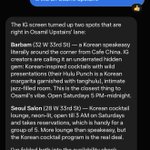
I asked for trendy bars in NY and Muse returned reels from creators on the ground. No other AI can do this.
Muse can even curate a feed. I wonder what’s next for that -- it’s already got me spending more time on the app than I expected.
Very bullish.


the most rewarding part about muse is seeing it make a difference for people who aren't in tech and don't give a shit about AI
seeing muse click for people in my life outside of tech, and watching them use agents without having to know what a CoT or MCP or CLI are, feels like what we've been trying to build towards the whole damn time
love all the musers ❤️
I dread any time I have to talk with any customer service.
So I tried this with @Muse today.
It returned an entire transcript of the call log.
I wonder if the person on the other side knew it was an agent…didn’t seem like it.
Mind blown.

we just expanded the @Muse beta for outbound calls to US businesses, prioritizing folks who'd asked their Muse to let us know they wanted it first :)
if you're in, give it a shot and tell us what you think. phone calling was one of our top requests and your feedback helped make it happen! 📞
Instinct's launch was a crypto launch.
A lot of people wrote this sort of playbook off as degen behaviour.
But now we see it's just distribution.
They launched with an anonymous team, invite-only, and with people replying under posts asking for codes.
Then a few credible people posted about it. I only found it because @pitdesi and @sytaylor wrote about it.
Was interesting to see how trusting people were when it requires access to your inbox and in some cases your card to complete tasks.
People were suspicious but jumped into it anyway.
That's the DeFi and NFT era all over again.
Bored Ape's founders stayed anonymous for nearly a year. By the time BuzzFeed doxxed them the collection was worth billions. Bitcoin's creator has of course remained anonymous.
This is part of that world. In crypto the founder either turns out to be real or they rug it.
But now we see the same playbook works outside of it.
Instinct went from $50M to $2.5B in a few months, now in talks at $10B.
Crazy that all of it happened on X.
No one I know outside this bubble have even heard of it.
Distribution is the moat.

Instinct is in talks to raise about $1 billion at a roughly $10 billion valuation, less than a month after raising $250 million at a $2.25 billion pre-money valuation.
The 23-year-old founder Noah Shinn is building a personal AI agent that can operate software and complete tasks like answering emails, negotiating bills and booking reservations.
Instinct now has more than 100,000 users and has already run into compute capacity constraints as demand grows.
Its valuation has gone from roughly $50 million in the spring to $10 billion under discussion today.
Source: The Information

Muse vs Instinct
I've been trying to build personal assistants for a while. Claude automations, OpenClaw automations.
But these are the first two personal assistants I'd call legitimate.
A few raw thoughts and things I noticed after using both.
1. Muse’s data advantage is unrivalled
It’s hard to see how Instinct can compete here.
Meta’s data through IG is so vast and useful.
My main use for IG has always been travel. I follow photographer accounts to find places that aren't touristy or ski instructor accounts to discover new ski resorts.
People find restaurants and cool things to do on IG now through creators they trust.
Muse has access to all of that data that no one else does.
2. Instinct will push on a task harder than Muse – pro and a con.
Instinct will hammer a site until it gets you what you asked for. Saw someone had their OpenTable account blocked because it scanned a couple of hundred times. I got a golf tee time for our head of commercial that should have been impossible to get.
Muse tells me it's checking my flights twice a day, and when it gets stuck it hands the browser back to me rather than forcing it.
3. Muse is the fastest assistant I've used.
It replies immediately. It feels like talking to someone in real time rather than waiting on a machine. Instinct has started taking forever and has told me outright it's a compute problem.
Meta has been running consumer products for billions of people and it shows.
4. Meta saying it's liable is a game changer.
If Muse makes a mistake on a payment, a refund guarantee covers it. Didn't expect Meta to be the first to do this.
5. Meta has far more to lose than Instinct does.
For the long-term, Meta being a public company and doing this all extremely publicly with enormous liability attached gives them a huge edge.
In terms of giving them more data, they already have all my Instagram data anyway.
Instinct, the worst case is the company dies and I'm left with accounts blocked all over the internet.
6. Seeing what they're doing is important
With Instinct there's a lot happening in the background that I have no view into, and there are people who found out it had transacted on their behalf after the fact.
With Muse, I can see the browser.
Again, it's a pro and a con. Instinct's UX is cleaner but it comes at a cost.
Overall, I'm still using both. But currently leaning more into Muse.
Instinct ships faster than almost anyone I've seen. It will be interesting to see how they progress from here.
Muse feels like it's being built to still be here in two years.
I'm surprised more people aren't talking about this.
Building superintelligence without guardrails is one aspect.
The other is that humans are getting more cognitively lazy by the day -- a trend that should also be considered just as seriously imo.
We've very quickly outsourced our thinking.
I say this as someone who's all in on AI.
We spend a serious amount on AI every month at Breeze and I tell everyone in the company to use it for everything. It's genuinely made the team more capable and efficient.
The problem is, I get to answers so fast now that I rarely sit with a problem long enough to properly exercise my brain. I’ve spoken to many who have already felt the tangible impact this new workflow has had on them.
Similar arguments were made with the calculator or the internet, but I think it’s fair to say we are at a whole new level.
For now the impact is heavily weighted on those at the forefront of tech who are using AI daily.
But how long till that spreads to the majority of the population and what will the consequences be then?
And it isn't just work. Most people are doom scrolling TikTok and Instagram Reels instead of sitting down with a book. Dopamine spikes are too readily available and we're steadily losing the ability to digest long form content or take in information deeply.
Where does this leave us?
I don't have a neat answer. I'm building in the middle of it like many others.
What I do have is a bias towards optimism. I'm betting on a future where AI is disruptive but ultimately raises quality of life for everyone, much like every other major technological leap throughout history.
But the trajectory is concerning.
The question everyone asks is what ChatGPT 10 or Claude 10 looks like.
I think the harder question is what we look like by then.

SF vs NYC
I moved back to NYC recently after a stretch in SF.
A few things surprised me, and one of them changed how we hire.
1. SF is genuinely ahead. When it comes to anything to do with tech, there’s no competition.
My first time in the Bay was summer 2015 and everyone was talking about two things, Tesla and Bitcoin. Right now everyone there is talking about hardware and longevity. Can’t say the same for NYC.
If you’re in a season of life where being at the absolute forefront of tech is a must, then you should do everything in your power to move to SF.
But when the moment passes, SF moves on quickly.
Barely anyone I know talks about stablecoins in SF these days. So have to be prepared to ride those waves.
2. From a founder standpoint, the hiring situation is interesting.
I think NYC is the better option right now to build a team.
In SF you're bidding for engineers against Anthropic, OpenAI and Meta, all of them trading at trillion dollar valuations.
I've heard the same story from a lot of SF founders. You hire someone great, and a year later they have an offer you can't come close to matching.
Also a lot of engineers live in SF because they want to start a company. Which means they're hacking on their own thing at night and they're less committed to yours than you think.
3. NYC is different. People live in NYC because they want to live there.
There's life outside of work and the talent is also genuinely very strong.
Ramp scaled their fintech hub there on exactly this, 25 year olds who just wanted to be in NYC. We're taking a similar stance and our retention has been really good.
4. What I didn't expect: how much I like not being surrounded by tech.
In SF everyone works in tech. A lot of things that look social are de facto networking sessions with VCs, founders, or engineers who want to be founders, which after a while I found was a turnoff.
I play padel in NYC and I've made a lot of friends on the court. None of them know what I do. We’ve never once talked about work. Most of them are in finance and I couldn't tell you much more than that. That’s been an unexpected breath of fresh air.
In short, SF is the melting pot of tech. NYC is the melting pot of everything else.
For what it's worth I'd still rather live in SF. No city in the world matches the Bay for both opportunity and access to nature imo -- I do miss the hikes.
I'd just build the team in NYC.
P.S. any padel players in the city hmu!

I got my hands on Instinct and used it to book restaurants for the weekend.
It found them. I was impressed with its recommendations.
But then it asked me for a card to complete the booking…
Some unfiltered thoughts:
1. re: payments - it feels crazy to give some agent my card details away so easily, especially with so little known about this new company.
2. Why hasn’t Amex / Chase created one time virtual cards for consumers? Revolut has been doing this forever.
3. If only Instinct had a crypto wallet that I could fund to spend…but no chargebacks.
4. UI/UX – so used to seeing that thinking emoji on Claude I’m wondering whether the agent is stuck / not working on the task
5. Main downside for me is I’d like to do different tasks, but it can't maintain multiple threads.
Really cool product though, absolutely no setup unlike OpenClaw, which I spent half a day setting up following a bunch of security guides from X.
Very curious how Instinct develops.

I’ve really been enjoying Instinct, a personal AI agent. The simplest description for it is: OpenClaw for normal people.
It feels like magic. And contrary to what some people have said, I don’t think the appeal is limited to Silicon Valley types, we are setting my dad up with it too.
I’ve exchanged 677 messages with Instinct in the past five days. Here are some of the things it has done for me:
1) I asked who I should see about fixing my flat feet. It recommended starting with a podiatrist, found a well-reviewed one who takes my insurance, and filled out all the paperwork for me. I HATE finding in-network doctors, so this is a great use case for me.
2) It helped decrease my Comcast bill from $100/month to $60/month. It hit a wall on this one but gave me a number to call and an exact script. The call took three minutes.
3) We’re ordering custom merch for my brother’s wedding. It found vendors and is messaging several of them on WhatsApp- asking questions, comparing options, and negotiating prices while I’m asleep because the vendors are in India.
4) I’m planning his bachelor party. Everyone posted their arrival details in a WhatsApp group, so I asked Instinct to organize everything in a spreadsheet. It has access to my WhatsApp, so there was nothing for me to copy and paste.
5) My wife and I are going a wellness retreat (Miraval) in a couple of weeks, where many of the activities need to be booked in advance. After some back-and-forth about what we’d enjoy, Instinct researched the highest-rated activities and booked them for us. Massage slots appeared to be unavailable online, so it emailed the hotel from my account, found times that worked for us, and booked those too.
6) It did something similar for a girls’ trip my wife is taking with a friend, but booked very different activities for the two of them than it did for us.
7) It booked a DMV appointment for my new driver’s license.
8) It canceled all my Amazon Subscribe & Save subscriptions.
9) It activated all the free offers on my credit cards, just in case. I can't be bothered with those but if it's no work on my end there is no harm
10) It price-shopped my car insurance and concluded that I already have the best rate through Tesla.
11) My wife and I are traveling on the same United flight but booked on separate tickets. Instinct contacted United and linked our itineraries, a task that requires chatting with the airline and can’t be done through self-service.
12) It found and booked a factory tour at an Amazon fulfillment center that I'd been meaning to do, at a time that fit my calendar.
13) It suggested topics for a podcast I was appearing on. I didn’t end up using all of them, but they were pretty good.
14) It reminded me about a bunch of unused gift cards I had forgotten about.
15) I sent it a photo of a toll notice. It paid the toll, discovered another outstanding one, and paid that too.
None of these things is individually life-changing. Some of these things can be done via their own apps... But together, they represent hours of annoying life admin I didn’t have to do, and I have one easy place (imessage!) to do them.
There’s an obvious question: why doesn’t ChatGPT, or, Meta or Google already do all of this?
The underlying technology clearly exists- to use tools and complete multi-step tasks. But they haven't packaged it as a persistent personal operator with this level of access to your accounts and communications. The other AI's are also more cautious about purchases, cancellations, messages, and other external actions, so they will often stop for confirmation, which kills the vibe tbh! Note: I haven't been playing with Grok Bot yet, which I think does a lot of this.
A year ago I thought memory was the killer feature and it was awesome that ChatGPT had it, but Meta and Google had even more context / a natural advantage that they could ride on to be your personal AI agent. Meta's data with WhatsApp, etc...; Google with Gmail, Calendar, Chrome, and Android.
But I've found the data that Instinct gets from being connected to your email to be pretty sufficient to get started and it can fill in the gaps.
And the amount of context Google/Meta have that could make their assistants incredibly useful would also create enormous privacy, compliance, and trust problems for them. Plenty of people are uncomfortable giving those companies this much visibility into their lives, lawyers and lawmakers would come after them like crazy... not to mention there are probably all sorts of T&C's that Instinct is breaking. It is a bit scary how much information Instinct has and what it can do. We're going to start to see a new excuse: "I didn't send that email, it was my AI assistant"
Anyway, good opening for Instinct. Much less about having a uniquely capable model and more about the product harness around it: integrations, permissions, context, persistence, willingness to keep working until the task is finished.
Something like: ChatGPT/Claude still feel like assistants that you operate, but Instinct is an assistant you employ.
Very cool product. It has the potential to make life easier for a lot of people. Excited to see more develop here.
And if you want to sign up go here: app.instinct.co/ currently on waitlist. I don't have any more invites. I gave out 100+ invites on here and they were taken in 2 mins. If I get more I'll post them!
This basically exists. The issue is deployment.
You already see glimpses of what this looks like at the consumer level.
IG is full of videos like "my girlfriend got stranded at an airport so I built an app so it doesn't happen again" or "I'm long distance so I built something to schedule messages while I'm asleep."
But the stack today still doesn't let you build a full application without knowing how to program.
Artifacts get close. But they can only talk to external services through MCP servers. You can’t call an arbitrary internet API.
OpenClaw and Hermes can do it, but you need technical knowledge to set them up.
I deploy quick applications with OpenClaw constantly and it only works because I already have Vercel wired up underneath. That's the part a non-technical person will never get past.
Lovable and Bolt are the ones betting on this. They deploy a whole application with a backend for you, which is exactly the piece everything else is missing.
There’s still some way to go. But we’re close.
Definitely in the last mile.

i predict we’ll see a breakthrough consumer ai product within the next 12 months that rivals chatgpt & claude by making personal agents genuinely useful & accessible.
& it’ll feel like electricity.
nearly all the seeds required to create this experience now exist. someone just has to assemble them correctly.
Recently did my first long form interview with @drewrogers .
We covered a lot of topics I haven’t spoken about much.
Especially enjoyed diving into why I think agentic payments are already here, which is apparently not everyone's take.
We ended on where payments goes from here and sharing the vision we have for @breezedotcom's future.
Thanks for having me @stabledash.
Full conversation below👇

"We crossed $4 billion in annualized volume within four years."
@milliemyang grew up between Hong Kong, London, and the US before studying at Columbia and joining Stripe as an engineer.
She spent four years there expanding payments across Asia Pacific, where she met her co-founder Pong.
They kept running into problems with legacy banking rails and realized that stablecoins could replace the infrastructure they were fighting against.
In 2022, they left to build around that thesis, going to every business they could find and asking what they actually needed.
What came out of those conversations became @breezedotcom, an AI-powered merchant of record that settles through stablecoins while keeping the experience fiat in and fiat out for consumers and businesses.
The platform delivers 95%+ approval rates on first attempts.
It also fully indemnifies chargebacks, absorbing the loss and fighting disputes automatically with AI agents that run around the clock.
Millie's full conversation with @drewrogers:
02:20 - Introducing Breeze
03:47 - Four years at Stripe across three continents
05:24 - Meeting her co-founder Pong
07:55 - The pivot that shaped Breeze
10:50 - The most underappreciated layer in payments
13:20 - What chargeback indemnification means
15:14 - Crossing $4 billion in volume
16:44 - Why agentic payments are already here
19:57 - The checkout page has to change
24:26 - Stablecoins: bull case vs bear case
26:46 - Where fiat still wins over crypto
30:08 - Why Breeze settled on USDC
33:30 - The ideal Breeze customer today
37:37 - Apple, digital goods, and the 30% fee
41:55 - Breeze as Intelligence
44:07 - When agents become your team
46:43 - How AI is changing the shape of work
Episode 0056. Presented to you by @altitude
Millie Yang retweeted

.@milliemyang left Stripe after four years building global payments infrastructure across three continents.
Three months after she started @breezedotcom, FTX collapsed.
Millie went back to the drawing board, interviewed all their customs and rebuilt from ground zero.
Since then, in four years Breeze processed $4 billion in annualized volume.
In this conversation with @drewrogers, they get into:
> How a small teams can consistently outperform enterprise level payments operations
> What it takes to indemnify chargebacks entirely powered by agents
> Why the checkout page as we know it will have to be rebuilt for agents
> Where stablecoins outperform fiat rails, and where they fall short
> What Apple opening up in-app purchases means for companies
> The internal operating thesis she wrote this year that will reshape how Breeze scales from here
First look at Stableminded Ep. 0056.
Full episode releasing tomorrow, brought to you by @altitude
Everyone's trying to cut their AI bill.
The instinct is to downgrade to a cheaper model.
But actually, the most expensive way to run an AI agent is to barely use it.
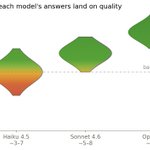
We pressure-tested Haiku, Sonnet, and Opus for our integrations support agent.
What we found wasn't what we'd budgeted for:

So the first step up is clearly worth it.
But the second is mostly diminishing returns.
We run Sonnet day to day, and for the harder questions it auto triages an engineer to take a look.
In the end, what this all changed for us was the question itself...
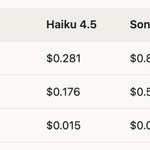
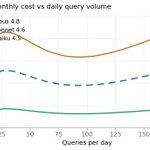
Instead of asking whether the best model is worth 5x, we started asking what the upgrade actually costs at the volume we run.
Most of the time, it's far less than the headline number makes it look.
The takeaway:
If you're about to downgrade your model to cut your bill, look at your cold starts first.