

Maternal Immunisation Readiness Network in Africa & Asia Advancing research across eight countries to strengthen maternal immunisation for healthier babies.
Joined October 2026
- Tweets47
- Following3
- Followers18
- Likes1
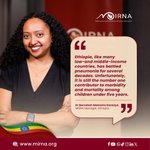


Pneumonia continues to pose a major threat to children under five, particularly in low- and middle-income countries.
In Ethiopia, decades of progress have not eliminated the burden. Dr Bersabeh Mekasha Kassaye, MIRNA Manager in Ethiopia, highlights the continued impact of pneumonia on childhood morbidity and mortality.
Through its work across Africa and Asia, MIRNA is contributing to the evidence needed to strengthen readiness for maternal immunisation, including research into respiratory infections such as respiratory syncytial virus (RSV), which can cause severe illness in infants.
Understanding the burden of these infections is an important step towards better prevention and protection for mothers and babies.
#MIRNA #MaternalImmunisation #Pneumonia #RSV #ChildHealth #Ethiopia

1
23
Modern contraceptive use across eight countries rose from 42M women in 2012 to 68.8M in 2025. But progress was uneven: Burkina Faso and Uganda gained 12.2 percentage points each, while Nigeria gained 2.4.
Explore 13 years of data: mirna.org/data-centre/matern…
#FamilyPlanning #MIRNA
9
Bangladesh has made significant gains in maternal and child health. But with progress slowing, what must change?
Dr Shams El Arifeen says the next chapter requires stronger links between community and facility-based care, better referral systems and incentives for quality healthcare.
Read more: mirna.org/news/the-traffic-t…
#MIRNA #MaternalHealth #ChildHealth

1
19
Not every life-saving health intervention makes headlines. Some of the most important work happens quietly through prevention.
From routine immunisation and malaria prevention to maternal health interventions, preventive care plays an essential role in protecting mothers and babies.
Dr Hellen Barsosio, MIRNA's Principal Investigator in Kenya, emphasises the need to make prevention a bigger part of conversations with mothers, families and communities.
@drbarsosio notes that for maternal immunisation to achieve its intended impact, communities need accessible information that helps them understand the benefits of vaccination during pregnancy and make informed decisions.
#MIRNA #MaternalImmunisation #VaccineConfidence #MaternalHealth

Behind every protected pregnancy is a story of trust, science and people working to safeguard the next generation.
How do we build trust in maternal vaccination? And what does it take to protect babies from serious infections before they are born?
Through the voices of mothers, researchers and health workers, our upcoming documentary explores the people, evidence and conversations shaping the future of maternal immunisation.
A story about trust, protection and the power of prevention.
Watch out for the full documentary coming soon.
6
Prevention, early detection and informed care are essential to improving maternal and newborn health outcomes.
Dr Hellen Barsosio, MIRNA's principal investigator in Kenya, joined health experts and researchers at the Kenya Editors Guild Forum on Maternal, Newborn and Child Health, where she contributed to discussions on “Before the emergency: Healthier pregnancies and earlier detection".
The discussion explored the importance of strengthening preventive interventions and identifying health risks early to improve outcomes for mothers and babies.
Through its research and evidence-generation work, MIRNA continues to support conversations on advancing maternal immunisation and strengthening maternal and newborn health across Africa and Asia.
#MIRNA #MaternalImmunisation #MaternalHealth #NewbornHealth #HealthResearch


14
Protecting babies from serious infections should begin before birth, through maternal immunisation.
Dr Hellen Barsosio, the Assistant Principal Clinical Research Scientist at KEMRI, discussed the potential of maternal vaccines to strengthen protection for babies during their most vulnerable early months at the @KenyaEditors Guild Forum on Maternal, Newborn and Child Health.
She noted that maternal immunisation can help transfer protective antibodies from mother to baby during pregnancy, offering an important opportunity to prevent infections in newborns and young infants.
Dr Barsosio also emphasised the need to optimise maternal vaccines as part of broader prevention efforts, particularly against serious infections such as pneumonia, which continue to threaten the health of young children.
#MIRNA #MaternalImmunisation #MaternalHealth #NewbornHealth

MIRNA’s Principal Investigator in Kenya, Dr Hellen Barsosio, is currently participating in a panel discussion at the Kenya Editors Guild’s Editors Forum on Maternal, Newborn and Child Health.
Follow the discussion live: youtube.com/live/cxBdE-NbK5c
#MIRNA #MaternalImmunisation #MaternalHealth #KenyaEditorsGuild

1
35
Bringing antenatal care and routine immunisation under one department can create opportunities to integrate maternal immunisation, but is that enough to ensure readiness?
In Burkina Faso, the same health workers deliver both services. Dr Bérenger Kaboré, MIRNA’s Co-Principal Investigator leading the Situational Analysis Work Package in the country, explains why institutional structures alone do not determine a country's readiness to introduce maternal vaccines.
#MIRNA #MaternalImmunisation #VaccineReadiness #BurkinaFaso #HealthSystems
20
Can vaccination during pregnancy help protect babies from serious infections in their first months of life?
Dr Eve Nakabembe explains Uganda’s efforts to advance maternal vaccination against RSV and GBS through research, community engagement and the MIRNA Consortium.
#MIRNA #MaternalImmunisation #RSV #GBS #NewbornHealth #Uganda
10
Prof Hadiza Galadanci, MIRNA lead in Nigeria, highlights the importance of assessing disease burden and health-system readiness, among other considerations, before introducing a maternal vaccine.
Understanding the country's specific needs and preparedness is essential to informing vaccine introduction decisions and building effective maternal immunisation programmes.
#MIRNA #MaternalImmunisation #VaccineIntroduction #HealthSystems #MaternalHealth
26
RSV and pneumonia remain significant threats to child survival in Bangladesh.
Pneumonia accounts for 24% of deaths among children under five, while local evidence shows that RSV is responsible for a considerable proportion of respiratory infections requiring hospitalisation.
Evidence from Bangladesh highlights the importance of strengthening infant protection against severe RSV disease. Two prevention approaches offer opportunities to reduce the burden: maternal RSV vaccination during pregnancy, which allows protective antibodies to pass to the baby before birth, and long-acting monoclonal antibodies administered to infants.
As Bangladesh continues to strengthen its child health and immunisation efforts, understanding the local disease burden and expanding access to effective prevention strategies will be essential to protecting young lives.
Read: mirna.org/knowledge-hub/bang…
#MIRNA #MaternalImmunisation #RSV #Pneumonia #ChildHealth #NewbornHealth #Bangladesh

Funding remains a major barrier to sustaining research in Africa.
Prof Annette Nakimuli, a maternal health researcher from Uganda, highlights how maternal health research often competes with other pressing priorities for limited funding.
According to her, sustained investment is essential to generating evidence, informing policy and advancing better maternal health outcomes.
#MIRNA #MaternalHealth #HealthResearch #ResearchFunding #MaternalImmunisation

11
15 years of progress against childhood pneumonia!
Join health experts this World Pneumonia Day as they reflect on Kenya's journey with the pneumococcal conjugate vaccine (PCV), its impact and the work ahead to protect more children.
Register for the webinar NOW: us06web.zoom.us/meeting/regi…
#WorldPneumoniaDay #PCV #ChildHealth #Immunisation #KenyaHealth #MIRNA
@VaccinesKenya
23
Maternal RSV vaccination: Protecting newborns begins during pregnancy.
Vaccinating mothers against RSV during late pregnancy could help protect infants from severe illness and prevent RSV-related deaths.
Prof Dr Md Abid Hossain Mollah, former Professor of Paediatrics and Neonatologist at Dhaka Medical College in Bangladesh, notes that maternal RSV vaccination can reduce child mortality and advance progress towards the Sustainable Development Goals (SDGs) by 2030.
#MIRNA #MaternalImmunisation #RSV #NewbornHealth #ChildHealth #Bangladesh

8
Bangladesh has made significant progress in childhood immunisation over the past five decades, yet pneumonia remains the leading cause of death among children under five.
Could maternal RSV vaccination help close this gap?
Prof Dr Md Abid Hossain Mollah, Professor and Head of the Department of Neonatology and Paediatrics at BIRDEM General Hospital and Ibrahim Medical College in Dhaka, explains why he advocates for RSV vaccination during pregnancy to help protect newborns against severe respiratory illness.
His perspective highlights the importance of maternal immunisation in strengthening newborn protection and reducing preventable child deaths.
#MIRNA #MaternalImmunisation #RSV #NewbornHealth #ChildHealth #Bangladesh
21
MIRNA retweeted

15 years of the pneumococcal vaccine has meant a generation of Kenyan children better protected from pneumonia. Join our experts to hear how PCV has protected a generation, and how we can build on that progress.
Register TODAY us06web.zoom.us/meeting/regi…
#VaccinateToProtect
#VaccinesSaveLives
#WorldPneumoniaDay
@mirnanetwork
@PATHtweets
@KEMRI_Wellcome

What will it take for Burkina Faso to introduce new maternal vaccines against RSV and Group B Streptococcus (GBS)?
Dr Serge Ouoba of the Clinical Research Unit of Nanoro (CRUN) shares insights from a nationwide readiness assessment, examining health-system capacity, financing, policy, disease burden and community perceptions.
Discover what the research reveals about preparing for maternal vaccine introduction.
#MIRNA #MaternalImmunisation #RSV
1
49
Vaccination during pregnancy is an important way to protect both mothers and their babies against serious infectious diseases.
Maternal vaccination helps protect pregnant women from infections that can cause severe illness and complications. It can also protect newborns during their first months of life, when their immune systems are still developing and they may be too young to receive certain vaccines.
Through the transfer of protective antibodies across the placenta, a vaccinated mother can pass immunity to her baby before birth, providing an important layer of protection during this vulnerable period.
Vaccines against tetanus, influenza, COVID-19, pertussis and respiratory syncytial virus (RSV) demonstrate the role maternal immunisation can play in improving maternal and newborn health.
Investing in maternal immunisation means giving mothers and their babies a better chance at a healthier start.
At MIRNA, we work with partners across Africa and Asia to strengthen the evidence, policy and health-system readiness needed to advance maternal immunisation.
#MIRNA #MaternalImmunisation #MaternalHealth

Respiratory Syncytial Virus (RSV) is one of the common causes of respiratory infections in young children. While many infections are mild, RSV can lead to severe illness, particularly in infants whose immune systems are still developing.
Knowing how RSV spreads, recognising its symptoms and understanding why babies are vulnerable are important steps towards protecting them.
As we mark RSV Awareness Week, swipe through to learn what parents and caregivers should know about RSV and the role maternal immunisation can play in protecting newborns.
#RSVAwarenessWeek #MIRNA #MaternalImmunisation #RSV #InfantHealth


1
1
31


