

MLPC Group @UCSanDiego led by Prof. Zhuowen Tu (https://xitter.gq/t.co/2wv2tlpsi7)
San Diego, CA
Joined October 2024
- Tweets25
- Following30
- Followers43
- Likes6




MLPC Group retweeted

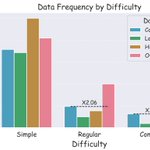
We put FLUX 3's native layout control to the test on OverLayBench, our benchmark for layout-to-image generation with dense overlaps. The results blew us away. 🔥 On our hardest split, @bfl_ai's FLUX 3 Image Klein hits 54.94 O-mIoU vs. 37.82 for the previous best (+17.12).


MLPC Group retweeted

Excited to share that our paper: OverLay++: Dense-Overlap Layout-to-Image Generation Dataset has been accepted to #NeurIPS2026 in the Evaluations & Datasets Track!
Generating images with multiple objects is challenging, especially when scenes involve dense layouts, overlapping objects, and complex spatial relationships. Even when an image looks visually appealing, getting every object, attribute, and position right remains a difficult problem. With OverLay++, we address this limitation by introducing a large-scale dataset designed to provide richer supervision for layout-to-image generation.
What makes OverLay++ different?
- Scale and complexity: Nearly 500K images, averaging 6.6 objects per image, covering diverse scene configurations.
- Richer annotations: 1.67× higher annotation density than existing datasets, complemented by detailed object-level captions.
- Improved generation quality: Training on OverLay++ improves object fidelity, attribute alignment, and spatial alignment, particularly in dense and overlapping scenes.
- Faster convergence: Models trained on OverLay++ converge faster across different levels of scene complexity.
📄 Paper: lnkd.in/gPfgpNxy
🌐 Project website: lnkd.in/g4p9ehZE
🤗 Dataset: lnkd.in/gqJFUABd
💻 Code: lnkd.in/gnFncnbu
📍 Meet us at NeurIPS 2026 in Sydney! We’ll be presenting our work during Poster Session 6 at PM AEDT in Hall 1–4. If you’re attending, please stop by. We’d love to discuss the work and hear your thoughts!
A huge thank you to my collaborators @shroglc, @dsrivastavv, @HaiyangXu3110, Bingnan Li, @zx1239856, @EthanArmand2, @chuanli11, @jianwen_xie, @zhuowent for their contributions, collaboration, and support throughout this project.
#NeurIPS2026 #ComputerVision #ImageGeneration #GenerativeAI #MachineLearning
MLPC Group retweeted

🚀 Excited to share our #WACV2026 paper for 3D spatial reasoning:
CVP: Central-Peripheral Vision-Inspired Multimodal Model for Spatial Reasoning
Inspired by human vision, we introduce CVP, which combines:
👁️Target-affinity tokens (central vision) to focus on relevant objects
🌍Allocentric grids (peripheral vision) to capture global scene context
This simple idea significantly improves 3D spatial reasoning, achieving SOTA performance across multiple benchmarks.
📄Paper: arxiv.org/pdf/2512.08135
🌐Page: zeyuan-chen.com/cvp/
#spatialReasoning #MultimodalModel #VLM @LambdaAPI @UCSD @mlpcucsd @wacv_official

MLPC Group retweeted

📄 Excited to present our ICCV paper "YOLO-Count: Differentiable Object Counting for Text-to-Image Generation!"
🎯 We show a new regression objective that boosts both counting accuracy and controllability in T2I models.
📍 Poster #1545, Wed 2:45PM, Exhibit Hall I
#ICCV2025
