

Head of AI Engineering / CTO · 14+ Years in Tech · Agentic engineering: multi-agent systems, voice AI & MCP · Building Atrix AI · Dubai
Dubai, UAE
Joined March 2016
- Tweets320
- Following642
- Followers117
- Likes312


Pinned Tweet
Most AI demos die in production.
Here is what it looks like when they don’t. Everything in this video is something I built and run.
Less prompting. More engineering.
1
1
91
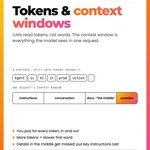
Tech in 60 seconds · 03 · tokens and context windows
LLMs don't read words. They read tokens: chunks of text, often a word or part of one.
The context window is how many tokens the model can look at in one request: your instructions, the conversation so far, any documents and the question, all together.
Three things most people miss:
→ You pay per token, in and out. A huge prompt costs money on every single call.
→ More tokens means more latency. Long prompts take longer to process before the first word comes back.
→ A big window is not perfect attention. Models can miss details buried in the middle of a long context.
The practical rule: send the model what it needs for this turn, not everything you have. Put the most important instruction near the end.
What's the biggest prompt you've shipped to production?

8
98% of tests passed. Only about 1 in 4 real inputs matched.
That was the Rust version of Anthropic's Messages API in April, as reported by The Next Web. Public traffic moved over in September.
That doesn't settle what language AGI will be built in. An API isn't a model, right?
The interesting part is how they did it. Anthropic used the existing Python service as a reference and had Claude agents find and fix differences in the Rust version, with engineers reviewing the fixes.
There's a lesson in that: the old service wasn't just something to replace. It was how they checked whether the replacement worked as expected.
AI makes it cheaper to find and fix those differences. But deciding which quirks are bugs and which ones customers actually depend on? That takes engineering judgement, not just an urge to close tickets.
What would you rewrite today that you wouldn't have touched two years ago?

12
Tech in 60 seconds · 02 · MCP
MCP (Model Context Protocol) is a USB-C port for AI.
Before MCP, every AI app needed its own custom integration for every tool: one for GitHub, one for your CRM, one for your database.
With MCP there are two sides:
→ The client: the AI app, like Claude, ChatGPT or an IDE.
→ The server: a small service in front of a system, which exposes what the AI can use.
A server can offer three kinds of things:
→ Tools: actions the model can take (create a ticket, send an invoice).
→ Resources: data it can read (files, records, docs).
→ Prompts: ready-made templates for common tasks.
Build one server, and any MCP-compatible assistant can use your product.
The part people skip: permissions. An agent should never be able to do more than the person using it.
Which tool would you connect to your AI first?

1
24
Humans click. Agents loop.
If an AI agent can call your API, plan for the day it gets stuck retrying.
→ Limit per token, not only per IP
→ Give reads and writes separate limits
→ Send Retry-After
→ Test the limit with parallel calls, not one at a time
What stops a stuck agent from hammering your API?
12
AI looks most brilliant on the topics you know least.
Ask about a field you've never worked in and the answer can sound like an expert wrote it. Ask about your own craft and the gaps are easier to spot: a missing edge case, a confident shortcut, advice that wouldn't survive production.
Sounding right and being right are different things. Outside your field, it's hard to tell them apart.
That doesn't make AI useless. It makes your expertise the test:
→ Judge a tool on work you know deeply
→ Write down what you catch
→ Turn those catches into checks and evals
→ Outside your field, ask someone who knows before you ship
Less prompting. More engineering.
Where did AI impress you less the more you knew?

8
Before you write your first MCP server, treat every tool description as a prompt. The model reads it to decide what to call.
→ One job per tool
→ Names that say what they do
→ One line on when NOT to use it
→ Fewer, sharper tools over a copy of your whole API
If the model keeps picking the wrong tool, read your descriptions before you blame the model.
8
In September my role as Head of Engineering (AI) at Etera AI ended.
Here's what I've done since, and what I'm looking for next.
At Etera (G42-backed) I built a multi-agent AI travel platform from zero: 21+ microservices, Kafka, Kubernetes, federated MCP, hybrid RAG.
Alongside that, as a founder-engineer, I built Atrix (an AI workspace with its own MCP server), a voice AI dialer on FreeSWITCH, and a Rust analytics engine on ClickHouse.
Before that: 13 years of building. Digital banking at Mashreq (Mashreq Neo). A 32-person team across Europe, MENA and India for the DIFC AllStars exchange. 50+ founders mentored at MISK.
What I want next: lead agentic engineering for a team that's serious about AI. Head of AI Engineering or CTO. Gulf-based or remote.
If you're building that, or you know someone who is, an intro would mean a lot. My DMs are open.

1
79
One missing database column can break far more than the feature that needs it.
With Prisma, a query that selects all scalar fields asks for every column in your schema. If one of them isn't in the database yet, that query fails, even if your code never uses the new field.
So the order matters:
→ apply the migration first
→ then push the code that depends on it
9
I ran 16 identical test cases against our voice agent's model options.
One model passed 7 of 16. Median reply 1.9 s, with 2 timeouts.
DeepSeek V4.1 Flash, through a router, passed 12 of 16. Median 2.1 s, no timeouts.
On median speed alone, the first one wins. On the cases that matter, it isn't close.
It's a small test set, not a benchmark. But it asks about your job, which a leaderboard doesn't.
How many of your own cases do you run before you switch models?
17


A caller told our AI agent: "My girlfriend just broke up with me."
The agent replied with its next sales question.
This happened in testing, and it was the most important bug we fixed all month.
Why it happened: to keep latency low, the first reply was generated before the part that reads the caller's mood had finished. The only guard was a list of keywords. Real people never use your keywords.
What we changed:
→ Any reply that asks a question now waits for the mood reading when the caller says something long and unexpected.
→ Hard news gets kindness first. Never a pitch, never the next question.
→ For every phrasing we fix, we write 15+ variations as tests and fix every one that fails. Fixing the one sentence you saw is how the same bug comes back next week.
Speed matters in voice AI. Sounding like you're listening matters more.
Have you seen an AI agent say something painfully tone-deaf?

18
Vibe coding gets you a demo by lunch. It won't keep a system alive on Monday. The six layers that separate a vibe coder from an agentic engineer, and how to cross the gap.

Vibe coding gets you a demo by lunch. It won't keep a system alive on Monday. The six layers that separate a vibe coder from an agentic engineer, and how to cross the gap..

26
Vibe coding gets you a demo by lunch. It won't keep a system alive on Monday. The six layers that separate a vibe coder from an agentic engineer, and how to cross the gap..
Vibe coding gets you a demo by lunch. It won’t keep a system alive on Monday.
Same agents, same models, different job. The six layers that separate a vibe coder from an agentic engineer: spec, harness, evals, guardrails, review, and owning production.
5 minutes ↓
YouTube: youtu.be/NVMhApm-8uM
57
Stop telling your LLM what to do. Show it.
Our voice agent talked too much. Median reply: 25 words. Real sales reps, across 16,349 recorded turns: 13.
So I wrote rules. "Keep it short." "One question at a time." "No speeches."
Nothing moved. Not one word.
What actually worked:
→ On every turn, pull the 6 most similar real exchanges from a bank of 4,122 caller/rep pairs and put them in front of the model.
→ Cut the instructions in half, from 9,900 words to 4,855.
→ Enforce hard limits in code after the model, not in the prompt.
Median reply went from 25 words to 16. Short replies went from 5% to 24%. Invented facts went to zero.
Models copy examples far better than they follow instructions. Every page of rules you add is a page the model has to ignore.
What's the longest system prompt you've seen in production?

2
26
Moeid Saleem Khan retweeted

Phonic-1.1 takes #4 of 19 on our Speech Performance benchmark: 1114 ELO and #1 on Turn Bench. The team is moving fast and improved 2 spots in just 3 weeks.
• Up from Phonic-1 (1089)
• 1.68s median latency down from 1.99s, 3rd fastest of 19
• #1 at our turn bench : it talks through backchannels 86% of the time, where the median model manages 6%!
Congrats @phonic_co on the launch.
benchmarks.cekura.ai/speech-…

I don’t write better prompts anymore. I maintain a harness.
220 memories, 10 specialist agents, 15 hooks. Here’s the whole setup in 5 minutes, the incidents behind each rule, and how to build your own in a week.
Less prompting. More engineering.
YouTube: youtu.be/1Z9XmXNjnkk
1
44
Your AI voice agent is losing the call in the first 2 seconds.
I measured 1,000 recorded calls from a human sales floor. The median gap between a caller finishing a sentence and the rep starting to speak: 840 milliseconds.
Our first bot took 2.1 seconds. On a phone line, that pause feels like a dropped call.
Here's what got us inside the human range:
→ Dropped the LLM router and called the model provider directly. 2.1 s became 900 ms median, 1.6 s at p90.
→ Split the budget: about 580 ms for the brain, 350 ms for the voice. Then optimised each one separately.
→ Stopped trusting our own dashboard. It said "reply p50: 40 ms". It was timing the wrong thing. The stereo recording told the truth.
Set your latency target from real humans, not from a vendor benchmark. And measure it from the recording, not from your logs.
What reply time are you seeing on your voice stack?

1
1
43