

Co Founder @ Cur8 Capital & @IFguru | Bringing top 1% investments for the 99% | $200m+ AUM and growing 🚀
Joined April 2022
- Tweets209
- Following85
- Followers440
- Likes107
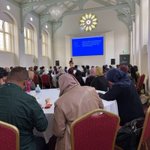






If you keep telling yourself you really need to sort your finances out, this is the event for you.
You will need to commit a weekend and some money, but take it from me - it is mostly better to just do this and force yourself than keep telling yourself you're going to sit down and sort it out yourself.
On Saturday 28 and Sunday 29 November, we and 4 other investment companies are at East London Mosque for the Halal Money Weekend.
There are real gaps in our communities when it comes to savings, investing and financial awareness, for couples and families especially.
So we built two days around closing them. You'll go home with a budget and goals you've agreed together, and a plan for investing the halal way.
Bring your questions. Experts from Cur8 Capital, Wahed, Nester, Saturna Capital and Nisba will be in the room to answer them.
Tickets are £68 each. Couples get 20% off, and Cur8 members get money off too.
This is not a profit-making event. We're covering our costs, and whatever is left over goes to charity.
The team approves each registration, so request your places this week. Previous events have been oversubscribed.
luma.com/ps8s1ezq

You will only ever get what God has intended for you.
I've worked with the smartest minds.
I've seen spreadsheets forecast things that I didn't even know could be forecast.
But any deal you do, any investment you make, any career plan you have, you will only get what God has intended for you.
Whatever's hurting right now because it's not going your way, know that it's part of the plan.
You just can't see the plan yet.

1
213
The handful of people who actually read my posts will know that I love sport - and love finding increasingly tenuous ways to turn it into a LinkedIn post even more. Or it could be that I’m (un)spectacular at everything I play.
Seriously though, it's because sport can be a quality way to bring people together. Life is too short not to be adventurous and occasionally try things that sound a little bizarre.
So, this October, we’re taking 30 people to Southern Spain for the first Cur8 Capital International Padel Retreat.
Three nights in Málaga. Plenty of padel. A five-star hotel. Investment workshops. Time for salah, reminders and Qur’an. And a deliberately small group of Muslim entrepreneurs, professionals, investors, imam and huffadh.
They say you don’t properly know people until you’ve travelled with them.
And when you’re thinking about placing serious capital (or already have); it matters that you properly know the people behind it. Not just through webinars, emails and investment documents, but through real conversations and time spent together.
The same goes for community. We live increasingly digital, fast-paced lives, and there is enormous value in simply bringing good people together.
And, frankly, there are worse places to pray, reflect and reset than the southern coast of Spain.
📍 Higuerón Hotel Málaga
📅 5–8 October 2026
💷 £590 sharing | £890 private room
🎟️ 30 places only
I won’t go into all the details here, but you can find everything below. We also have a full itinerary document for those who are particularly interested.
Apply here: luma.com/zdngm007
Insha’Allah, we’ll see you in Málaga 🇪🇸

1
1
128
"I just want to do my own thing.”
I hear this all the time from younger guys and girls working in corporate.
And I get it.
The 9-5 grind, endless meetings about meetings, chasing KPIs you don’t believe in...
It’s easy to feel like you’re wasting your potential.
But let me offer a slightly different perspective.
There’s a season for everything.
Not everyone is meant to drop everything at 25 and launch the next billion-dollar startup. Sometimes, what you need is a structured environment where you can:
Build skills
Make mistakes on someone else’s dime
Learn how actual businesses operate
And save to eventually buy your freedom
Here’s a simple reframe that helped me massively:
👉 Your job isn’t your prison. It’s your training ground.
👉 Your salary isn’t a ceiling. It’s your startup capital.
Yes, be intentional. Don’t coast. Make a plan. Don’t spend the next 10 years writing reports that vanish into the abyss. But don’t knock the value of employment either - especially early on.
Just remember this: it’s only tragic if you’re building someone else’s dream forever.
But if you’re playing the long game, doing your time, and using that experience to one day build something you own (that’s impactful) - then you’re exactly where you need to be.
We talk a lot about rizq and tawakkul - but part of that is knowing when to sprint, and when to plant.
You’re not behind.
You’re just in a different season.
There is nothing worse than getting a phone call out of the blue. No context, no warning, no "are you free?" text first. Just a call. Out of nowhere.
It interrupts whatever you're doing. You don't know what it's about. You don't know how long it's going to take. And now you're scrambling to check WhatsApp to see if they've sent something explaining what this is even regarding.
Mad to think that when I was a kid, relatives would rock up from miles away without even checking you were in. Just turn up, have some tea, sit around for a bit.
That seems genuinely insane to me now. And I kind of miss it.
I manage people in their 20s and people in their 40s and the difference in how they communicate is fascinating to me.
My more senior hires and clients will just ring. No warning, no context. Just a phone call. Like it's 2003 and they've just seen something on Ceefax they want to discuss.
My younger team members would rather get things across in writing. Slack message, quick doc, async update. They'd rather not have their flow interrupted when they're deep in something. And honestly I completely get that.
But as I've worked with more experienced people, I've noticed something. Those unstructured conversations genuinely do uncover things at the edges of the problem that don't make it into the doc or the Slack message.
But it can be easier to read than it is to listen. And it's quicker.
I'm not saying we should go back to the doorbell days. But it is funny how much we've optimised so much for efficiency that we've accidentally made it weird to just... talk to each other.

4
162
I put "no agenda, no meeting" into our company handbook about two years ago.
The usual reasons. People were booking meetings for the sake of meetings. Half-day calendars turning into full-day calendars. No clear purpose, no outcome, just time disappearing.
So I wrote it up properly. Minimum attendees, agenda circulated beforehand, a few minutes to digest before you show up, action points afterwards. The whole thing.
And it worked. For a while.
But after a few months we'd lost something. The tangential stuff. The half-formed ideas that come up when you give a conversation room to breathe. We'd optimised those out completely.
When you give people room to go off-script, they start pulling at threads you'd never put on an agenda. The things that aren't the focus, but when you talk them through you suddenly realise there's this whole piece you haven't given enough thought to.
Some of the best ideas we've had at Cur8 have come from conversations that had no agenda at all. Someone says something half-formed, someone else builds on it, and suddenly you're looking at a problem completely differently.
I haven't ripped the policy out of the handbook. But I've added something to it: you also need to create space for the unstructured stuff. Deliberately.
The real issue was never "no agenda." It was no intent. If you're clear about why you're in the room, even if "why" is just "let's talk openly about X and see what comes up," that's enough.
I think the productivity crowd has made "no agenda, no meeting" into gospel. And I get it, bad meetings are genuinely painful. But I've seen what happens when you go too far the other way. You end up optimising away the messiness that actually produces the breakthroughs.

7
1,006
If you're buying business class and your net worth is less than £10m, you're an idiot.
Every time I see someone on here posting a photo from their flat bed seat, I think the same thing. It's not worth it.
Business class is one of the first things people upgrade when they start earning serious money. To me it makes very little financial sense especially when tickets are often 4-5x the price of an economy seat.
An exit row seat gets you 80% of the way there for a fraction of the cost.
Business class should only be if (a) someone else is paying for it, or (b) you got bumped up without working too hard for it (no, pointsmaxxing does not count - put that much effort into building something of value instead).
The only exception for me is a long (say 15+ hours flight) where I need to be sharp the moment I land. That's a legit business cost and the travel needs to be worth it.
And if you do fly business, it's not the flex you think it is so spare us all the photo!

1
149
I didn't go into business with Ibrahim as a co-founder because of his skills.
We went into business because of a conversation we had 12 years ago.
It was an ISOC barbecue in 2011. I'd just come back from my year abroad and it was my final year at Oxford. Ibrahim was in his second year and I'd kind of seen him on Facebook (where all the action used to happen) making a splash.
We got talking at that barbecue and basically didn't stop.
I ended up going back to his place and we carried on until God knows what time. I should have been head down in my books that year but I ended up spending a lot of my time with him instead.
I genuinely couldn't tell you what we talked about that first night. Maybe it was the humour, maybe it was our styles, something obviously clicked.
What I do know is that I think it would have been REALLY difficult to start IFG - and certainly to keep it going through all the ups and downs - without that kind of foundation. We'd been through stuff together before we ever started a company. We knew each other's character. We'd seen each other handle things.
I'm a bit wary of giving advice on finding a co-founder because honestly I think I just got really lucky. Me even being at Oxford was a bit of whirlwind (see previous post) and I've often thought whether that was just God's way of putting us together.
But if my son asked me whether to start a business with someone, I'd tell him the character matters more than the competence. The raw skills are important but you can judge that objectively based on someone's track record independent of you going into business with them.
Can you have hard but fair conversations with this person? Will they do the right thing by customers even when it hurts? Do you trust them when things get messy? Do you trust them in your personal life?
You can only really know that if you've been through lived experiences together.
Which I suppose is an argument for building friendships before building companies.

1
1
114
Here's an interesting question now the World Cup's starting: is a sold-out stadium actually a good thing?
An economist would tell you no. A fully sold-out stadium just means you got the pricing wrong. You left money on the table. You could have charged more and still filled the seats.
FIFA are clearly taking that logic to heart because ticket prices for this tournament are genuinely bonkers. Hundreds and thousands of dollars for group stage games. And they're using dynamic pricing, so in theory the price adjusts to what the market will bear.
The interesting bit is what happens closer to kick-off.
If the dynamic pricing is working properly, tickets could drop to like $50 on match day for locals who fancy going last minute. And from FIFA's perspective that isn't a failure at all. They've already maxed out on revenue from the people who needed certainty and bought early at high prices. Now they're just filling remaining seats at whatever the market will pay.
I was thinking about this from an Islamic perspective as well.
There's a really well-known narration where the Prophet ﷺ was asked to fix prices during a shortage. He declined, saying he did not want to meet God having wronged anyone in their blood or property. Scholars have generally taken this as the main textual basis for the idea that prices should be left to the market and that even the state should not fix them. Charging more when demand is high, or less when it's low, is in itself allowed.
So even from an Islamic economics standpoint, you probably wouldn't interfere with the pricing. You'd let it settle. That doesn't mean the prices are fair or good for the sport. But artificially capping them isn't necessarily the answer either.
Dynamic pricing is probably the future of live sport whether we like it or not. The real question is whether FIFA are using it to genuinely find the right price, or just to extract the absolute maximum from fans who've already booked flights and hotels and have no choice but to pay up.

108
I run a fund, but one of the most useful operational ideas I've picked up comes from a car factory in Japan.
Toyota has this concept called the Andon cord. Any employee on the assembly line can pull it and halt the entire production line. The whole thing just stops.
The reason you'd pull it is that you've spotted some kind of fault or blemish on a car coming through. But a fault on one car means something has gone wrong upstream. Something in the process has broken. So you halt everything, figure out why it happened, and fix the root cause before you carry on.
It sounds like it would be super disruptive and expensive, right? But Toyota worked out that the cost of stopping to fix the root cause is way less than the cost of letting faulty cars keep rolling through and dealing with the mess later.
I think about this loads in how we run Cur8. We don't call it an Andon cord (we don't have a fancy name for it at all to be honest), but the principle is the same. When something goes wrong, the question isn't just "how do we fix this thing?" It's "why did this happen and what do we need to change so it doesn't happen again?"
It's one of those concepts that sounds really obvious when you say it out loud, but most companies don't actually do it. They fix the immediate problem and move on. The upstream issue stays there, quietly producing more problems.

1
54
This is the first World Cup with 48 teams. It used to be 32. That's 16 extra nations who've made it to the biggest stage in football.
Some of those games are going to be very one-sided.
That sounds harsh but it's just true. The gap between the top teams and the teams filling out those extra slots is massive.
But I keep going back and forth on this.
Do you platform those teams because they need the experience and the exposure in order to grow? Or do you reserve the World Cup for truly the best and keep the standard high?
Because some of the early results have been genuinely remarkable. Cape Verde held Spain to a 0-0 draw in their first ever World Cup game. A nation of half a million people shutting out the European champions. That has probably inspired a whole new generation of footballers in that country.
And even though Curaçao got battered 7-1 by Germany, when Livano Comenencia equalised in the 21st minute, the celebrations felt like something out of a movie. That probably does more for the sport in that country than any development programme ever could.
You can see the same tension playing out in sports broadcasting right now.
Commentary panels and punditry teams are way more diverse than they used to be. There'll always be a pretty equal panel these days.
And there's a genuine argument that people need the opportunity in order to elevate to that level.
But it does spark the same debate: are you expanding access so the standard catches up, or are you diluting what was already working?
It comes up loads outside of sport too.
I've been in conversations in South Africa about BEE (Black Economic Empowerment) where disenfranchised groups were given preferential access to economic opportunities. The argument being that you have to overcorrect in order to reach some kind of equilibrium.
And I've had similar conversations in the UK where people feel the pendulum has swung too far the other way.
I don't think there's a clean answer. I genuinely see both sides.
You need to give people an opportunity in order to elevate, and you can't elevate if you're never on the pitch. But there's also something lost when you dilute the standard of the thing that made people want to be on that pitch in the first place.
I suspect the World Cup expansion will be good in the long run. Those extra 16 teams will get better precisely because they're playing at this level. The next few tournaments might be a bit rough while it all levels out, but if Cape Verde can hold Spain to a draw in their first ever World Cup game, maybe the standard is already closer than we think.

1
118
Everyone in their 20s should:
- get married
- have kids
- build something meaningful
I became a father at 25.
I was told I should have focused on my business instead:
That I was "too young" and would miss out on building my career.
They were wrong about everything.
Having kids early didn't slow me down. It accelerated my growth in ways I never expected.
When you're forced to mature overnight, something profound happens. You stop making excuses. You stop procrastinating.
Those sleepless nights in Bolton taught me discipline, and the responsibility taught me to think beyond myself.
So my point is that parenthood doesn't pause your ambition. It clarifies it.
The skills you develop as a young parent (prioritising, multitasking, staying calm under pressure), become your superpowers in business.
My kids weren't a distraction from building a business. They were the reason I had to build something meaningful.

1
70
My second son is the one who costs me the most money.
Ibrahim is the kid who asks questions, gets excited about new things, wants to try everything. Which sounds great until you're the one paying for it.
It started with karate. He got a couple of belts, enjoyed going, so I paid a good few hundred quid for a three-month block of lessons after the first block. Then he just stopped wanting to go. I forced him to attend a few more times but I was fighting a lost battle.
Money gone.
Now it's cricket. He got into it about a year ago and is showing promise. Now he's joined a club who require that I drop £££ on lot. Bat, pads, gloves, helmet, the lot.
I'm bracing myself for the day he tells me he doesn't want to go to training.
But I think I keep backing them. The curiosity is worth more than the cricket bat. Even if the cricket bat ends up gathering dust next to the karate gi. I can always use it for our next office cricket session.
Consistency is one of the most underrated skills you can gain. Powering through even when you don't want to do something is something that we adults also struggle with. But if you can master it, you can achieve huge things.

1
103
Growing up in Bolton, I watched my parents' generation choose between their faith and a mortgage.
This year, that changed. By about half a billion pounds.
In the last six months, four startups in our EIS portfolio have collectively moved over £450M in Shariah-compliant financial products. I'll be honest, even I didn't think it would happen this fast.
We backed these founders because the thesis was simple. 1.8 billion Muslims have needed proper financial infrastructure forever. The supply has been SO poor for SO long that anyone building genuine quality in this space would find massive demand already waiting for them.
That's exactly what's playing out.
StrideUp closed a £308M Shariah-compliant RMBS, the UK's first by a non-bank lender. It won IFN Deal of the Year. Twice.
GoCab raised $45M to bring Shariah-compliant vehicle ownership to three African markets. They hit $17M ARR within 18 months. I remember the IFG community telling us for years that halal car finance was the thing they wanted most. Turns out they were right, and not just in the UK.
Ayan closed a £25M facility for halal car finance here in Britain and they're targeting £100M by end of 2026.
And erad secured a $125M facility led by Jefferies to power SME financing across the Middle East. When Jefferies is backing your facility, something has shifted.
I grew up thinking Shariah-compliant finance was this small, awkward thing that never quite worked properly. Something your uncle complained about at Eid. I genuinely believe we're watching that change in real time, and these founders are the ones building the infrastructure for it.
I'm curious to see what we all think. Are we actually at a tipping point? The numbers are starting to speak for themselves but I don't know if the institutional world is fully paying attention yet.
The Cur8 EIS Fund closes on 14 April. If you're a £100k+ investor who wants to back founders like these early, link's below to book a call.
Capital at risk. The EIS Fund is managed by Cur8 Capital (IFG.VC Limited), authorised and regulated by the FCA (No. 943736). This is not financial advice.

I used to treat everyone like an A-player. It was a mistake.
What I mean is this. Your best people will figure it out regardless. Give them a vague objective and they'll work out how to get there. They don't need a detailed process or a checklist or someone looking over their shoulder. They just get on with it.
But most people aren't like that. And I don't mean that as a criticism. Most people do better work when they know exactly what's expected of them. Clear processes. Defined outcomes. Regular check-ins. That's not because they're less capable. It's because that's how they operate best.
I hate being micromanaged so I never micromanaged anyone. I gave people freedom and expected them to thrive.
Some did. A lot didn't.
What I've learned is that building systems and processes isn't about controlling people. It's about setting up your B-players to perform like A-players. The structure does the heavy lifting.
You're always going to have more B-players than A-players. That's just maths. So if your company only works when everyone's an A-player, your company doesn't work.
The job is to build something where normal people can do exceptional work.
I know there's this Silicon-Valley mentality that everyone needs to be an A-player but most businesses don't work that way. We probably need to rethink these terms as well.

1
77
I didn't go into business with Ibrahim as a co-founder because of his skills.
We went into business because of a conversation we had 12 years ago.
It was an ISOC barbecue in 2011. I'd just come back from my year abroad and it was my final year at Oxford. Ibrahim was in his second year and I'd kind of seen him on Facebook (where all the action used to happen) making a splash.
We got talking at that barbecue and basically didn't stop.
I ended up going back to his place and we carried on until God knows what time. I should have been head down in my books that year but I ended up spending a lot of my time with him instead.
I genuinely couldn't tell you what we talked about that first night. Maybe it was the humour, maybe it was our styles, something obviously clicked.
What I do know is that I think it would have been REALLY difficult to start IFG - and certainly to keep it going through all the ups and downs - without that kind of foundation. We'd been through stuff together before we ever started a company. We knew each other's character. We'd seen each other handle things.
I'm a bit wary of giving advice on finding a co-founder because honestly I think I just got really lucky. Me even being at Oxford was a bit of whirlwind (see previous post) and I've often thought whether that was just God's way of putting us together.
But if my son asked me whether to start a business with someone, I'd tell him the character matters more than the competence. The raw skills are important but you can judge that objectively based on someone's track record independent of you going into business with them.
Can you have hard but fair conversations with this person? Will they do the right thing by customers even when it hurts? Do you trust them when things get messy? Do you trust them in your personal life?
You can only really know that if you've been through lived experiences together.
Which I suppose is an argument for building friendships before building companies.

2
217
Missiles hit Dubai this week. I told my team I expected them in the office by 9am.
Next morning I drove in. Sat down at my desk. Opened my laptop.
And looked around at my entire Dubai team.
Which is just me. There is no Dubai team. I'm the only one here. Very heroic stuff, holding the fort for a team of one.
But genuinely, the night before the house was shaking and I was telling my kids to get away from the windows. That bit wasn't funny. And then I drove to the office the next morning.
Not out of bravery. Mostly because I was getting eerie COVID vibes with 4 kids at home and had to get out.
And also I just looked at the actual facts. Missiles intercepted. Strategic targets, not civilians. One death from shrapnel. At that point you're statistically more likely to get stabbed in London than be hurt by anything here. And I'd happily go to London without thinking twice.
Things could change quickly and I could look like a mug for not finding a way to get out. But at the moment, it's a time for calm caution. We have a pre-planned eid trip back to the UK so I do hope that can go ahead.
Whenever there's a lot of noise and attention it's easy to get frightened. But I'd urge all those who are in a similar situation to think rationally.
P.S. thanks to all those who've reached out with well wishes.

3
356
We let someone go recently. I wasn't in the room. And honestly, that bothers me more than it probably should.
I've always felt that if you're ending someone's role, the least you can do is look them in the eye. That's how I was raised and it's what felt right. Every time we've had to do it before, it's been me or Ibrahim personally.
I'm the kind of person who needs to be close to the detail. Deals, investor comms, what's going out, what conversations are being had. When you're small, that's just being a good founder. The problem is when the company grows, the engine room doesn't get smaller. It gets bigger. And if you're wired to be in there, you don't naturally pull back. You lean in harder.
About 18 months ago I tried stepping away from the day-to-day and it went badly. Things drifted. I jumped back in. But then I was like, okay, this clearly isn't sustainable either. I can't be in every room forever.
So when this came up this week, I had to fight the instinct. My team had made the call. They'd thought it through. They had the conversation. The extent of my involvement was approving it.
And it felt cold. There's something jarring about not being in the room for something that serious. Part of me wanted to take over.
But I think that's the bit you have to sit with. The discomfort of trusting people with the things that actually matter. Not the small calls. The ones that keep you up. I don't think you ever fully get comfortable with it but it's necessary for growth.

156
Not having money didn't make my dad more pious. It just made everything harder.
He ran a newsagent in Bolton. Worked every day for decades to keep things running. We weren't poor but we definitely had to make choices and sacrifices. And I can tell you from watching that up close - it puts pressure on your family, it limits what you can do for the people around you, and it doesn't bring you closer to God. It just narrows your options.
Someone said to me recently that they don't want to be wealthy because they're worried it'll change them. I hear this a lot in our community. This idea that money is inherently a fitna. That the safest path is to just not have much of it.
But I've also seen what money does to people who weren't ready for it. I've seen people get wealth and completely lose themselves. So I get where the fear comes from.
My view is that money is more like a magnifying glass on your character. It doesn't change who you are. It just makes it harder to hide. If you're generous when you're skint, you'll be more generous when you're wealthy. If you're selfish when you've got nothing, you'll be even more so with money.
So if you are well-off, how do you make sure your kids develop the right character to deal with money?
There's a saying - "clogs to clogs in three generations." First generation grafts to build it. Second generation maintains it or even builds on it. Third generation loses it. Something like 90% of wealthy families go through this cycle.
Through Cur8 Capital I see how family offices actively try to prevent this. One family I know makes every member work outside the business until they're at least 25. Others tie access to capital to milestones or make charitable giving a structured family responsibility rather than optional.
You can't force hardship. But you can force experience. And the families that survive the third generation are almost always the ones that were deliberate about this.
Many of our generation grew up with difficulty that made us who we are. And that difficulty has led to some prosperity thanks to our parents' generation and the sacrifices they made.
But then our kids are growing up with more than we had. We don't want to create artificial difficulty for them. But we also don't want them thinking money just appears. I don't have a clean answer for where that line is if I'm honest.
I think the honest version of "I don't want to be rich" is often "I don't trust myself with money." And that's actually quite a useful thing to know about yourself. But the answer isn't to avoid it. It's to work on the person holding it.
Done well, being wealthy can be a great contributor to society.

1
131
My team thinks I'm annoying. I'll sit there going line by line through legal documents asking the same question over and over.
"But what happens if this entity fails? Where does the investor's claim actually sit?"
That's the lawyer in me. I trained at a City firm and spent years looking at how deals are put together. Not the exciting stuff - the boring structural stuff. Who actually owns what. Where the money sits. What legal recourse investors have when things go wrong.
And I've seen enough situations where people assumed they were protected and they weren't.
The thing most people don't think about when they invest is securitisation. Basically, how protected is your money if everything falls apart tomorrow? If the company managing your fund went bust, what actually happens to your capital? Not what the brochure says. What structurally, legally happens.
Is your money sitting with a regulated custodian completely separate from the fund manager's own accounts? Or is it all in one pot where you're basically an unsecured creditor hoping for the best?
That one distinction alone would have saved a lot of people a lot of pain over the last decade.
Then there's the asset backing question. If someone tells you they're investing in property, do you as an investor have a legal charge over that property? Or do you own shares in a company that owns a company that owns another company that might have some connection to a building somewhere? The more layers between you and the actual asset, the more nervous you should be.
This is exactly why we built our GBP Income Fund the way we did. It invests in a diversified portfolio of secured, asset-backed opportunities - real estate, structured finance, home purchase plans - where there's a clear line between investor capital and tangible assets. Regulated custodian. Proper governance. The boring stuff that actually matters.
Could we have structured it differently and juice the returns? Probably. But not without taking risk that does not fit what we wanted to do with the fund.
So if you're evaluating any investment, just ask the question most people don't: "What happens to my money if you go bust?"
If the answer is clear and specific, that's a good sign. If it's vague or they get uncomfortable, that tells you everything.
All investment carries risk and you need to know exactly what those risks are.
Nobody ever lost money by asking too many questions.
Capital at risk. The GBP Income Fund is managed by Cur8 Capital (IFG.VC Limited), authorised and regulated by the FCA (No. 943736). This is not financial advice.

2
133