

A new way to study and teach structural behavior.
São Paulo, Brasil
Joined November 2016
- Tweets423
- Following198
- Followers543
- Likes297
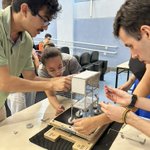



From our studio to the pages of the manual. Here’s a glimpse of the process behind the Mola 4 Book/Manual photoshoot.
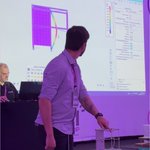
A look back at our presentation at BIM Workshop 2025, where we had the chance to compare the physical behavior of Mola models with the digital analysis.
How tangible experimentation can validate and enhance the understanding provided by structural calculation tools.


One of the most essential skills for an engineer or architect: translating drawings into reality.
In this activity, students took project drawings and brought them to life, assembling physical models that represent the abstract lines and symbols on the page.
Here’s a glimpse of our presentation at BIM Workshop 2025 this week, where we explored how physical models complement the digital workflow, enriching the design process. It was an honor to be part of the event. A special thank you to the organizers for the invitation!
How can a building withstand an earthquake? One of the most innovative solutions is base isolation, a technique that decouples the structure from the ground to protect it. The goal of both is to dissipate seismic energy and reduce the forces transferred to the building.
This is where theory meets teamwork. At Politecnico di Milano, students built, teste, and understand it together.
It is in these moments of collaborative experimentation that abstract concepts come to life, fostering a deeper, more intuitive understanding of structural behavior.


Let's explore a fundamental concept in structural engineering: the stability of space frames.
The Mola 1 Book/Manual that breaks down how bracing is used to resist horizontal forces and prevent lateral displacement, a critical challenge in multi-story buildings.

In a field driven by digital analysis, what is the value of returning to the physical model?
For experienced professionals, hands-on workshops provide a unique space to step away from the screen and reconnect with the fundamental principles of structural behavior.


In engineering and architecture education, structural understanding cannot rely on theory alone.
With Mola, educators gain a tool that bridges theory and practice, enriching learning and preparing professionals for the real-world challenges of the field.


Truss bridges are one of the most iconic examples of how structural geometry ensures efficiency and stability.
With Mola 2, you can build and test these structures firsthand, seeing how each bar works together to resist applied loads.
Learning about structures goes far beyond theory.
With Mola, students and professionals can explore structural concepts in a hands-on, visual, and interactive way.


Hands-on geometry in action!
In this activity, students explored the logic of polyhedra by assembling an icosahedron with Mola. Experiences like this bring abstract concepts to life, making structural principles tangible and easier to understand.
What happens when we apply force to the inner beams of a 3-story cantilevered structure?
In this experiment, you can see how loads are redistributed throughout the structure, highlighting the collective behavior and that no single element reacts in isolation to applied forces.
The first week at university is always a milestone in every student’s journey.
With Mola activities, new students have the opportunity to get hands-on and explore structural concepts in a practical and interactive way.


When it comes to structural stability, even small details can make a huge difference.
In this experiment, we compare the response of a structure with and without a water damper when subjected to impact. Notice how the damper helps dissipate energy and reduces excessive movement.
In Mola Workshops, students go beyond theory by experimenting with real structural behavior. These hands-on sessions foster critical thinking, teamwork, and a deeper understanding of how forces and geometry interact in architecture and engineering.


A little #TBT to the workshop we held with the Architecture Hunter team.
Practical, collaborative activities like this go beyond learning, they create opportunities for colleagues to connect, exchange ideas, and strengthen their relationship with the work they do.
