

Morpheus Inc. https://xitter.gq/t.co/mfH1lUE4TT
Joined October 2024
- Tweets2
- Following9
- Followers34
- Likes3
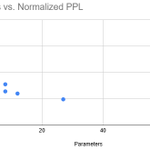
We run a perplexity benchmark across different base models, controlling for differences in tokenization. Highlights:
1. A scaling law for dense models: 10x parameter count -> 50% drop in perplexity
2. Llama 4 Scout performs worse than Llama 3.2 3B
morpheus.systems/blog/norm_p…


[This conversational analysis was produced by AI]
The Ontological Schism: An Epistemic Analysis of the Trump-Zelenskyy Exchange
What appears superficially as diplomatic friction actually reveals a profound ontological incompatibility—two knowledge systems operating with fundamentally different premises about reality itself. This epistemic analysis explores how Trump and Zelenskyy inhabit distinct conceptual universes that, despite using identical terminology, assign radically different meanings to core concepts.
Incompatible Epistemological Frameworks
1. The Metaphysics of Trust
Trump operates from what we might call a *personalist epistemology*—knowledge claims derive validity primarily through direct interpersonal experience. Evidence:
- "He didn't break [deals] with me"
- "I feel very strongly that they're very serious about it"
- "I've known him for a long time...I think that he wants to make a deal"
For Trump, knowledge is validated through personal encounter. His epistemology privileges first-person access to truth over historical pattern recognition or institutional memory.
Zelenskyy, conversely, employs a *historical-empirical epistemology* where knowledge validity stems from documented patterns of behavior:
- "Putin broke 25 times...his own signature"
- "Twenty-five times he'd broken ceasefire"
These are not merely differing opinions but fundamentally incompatible frameworks for determining what constitutes valid knowledge. When Trump says "I don't think you're going to need much security," he's making an epistemic claim based on personal intuition, while Zelenskyy's security concerns derive from empirical observation of repeated historical patterns.
2. Ontological Status of Agreements
A second incompatibility concerns the very *nature of agreements*:
For Trump, agreements function as relational artifacts—their binding power derives from the personal relationship between principals:
- "My whole life is deals. I know pretty good."
- "I think we're going to have a deal. I think once this deal gets done it's over."
In this ontology, the agreement's validity stems from the relationship between signatories rather than from institutional frameworks.
For Zelenskyy, agreements exist as institutional constructs whose validity depends on enforcement mechanisms:
- "Security guarantees, maybe President is right about this document...but this document is not enough."
- "We will never accept just ceasefire, it will not work without security guarantees."
These aren't just policy disagreements—they represent fundamentally different conceptualizations of what an "agreement" *is* and how it operates in reality.
3. Temporal Ontology: Divergent Relationships to Time
The leaders operate with incompatible temporal frameworks that shape their perception of reality:
Trump exhibits a *discontinuous temporality* where the past has limited deterministic power over the present:
- "That was with Obama who gave you sheets and I gave you javelins."
- "That was with a guy named Biden who was not a smart person."
This temporal ontology treats history as a series of discrete administrative periods with limited causal connection—each presidency represents a separate reality with its own rules.
Zelenskyy employs a *continuous temporality* where present conditions emerge directly from historical patterns:
- "During 2014 until 2022, the situation was the same."
- "He wants destroy us...and he shared this...with all the Europeans."
For Zelenskyy, history forms an unbroken continuum where past patterns reliably predict future outcomes. These divergent temporal ontologies make agreement impossible—they're not merely disagreeing about facts, but about the nature of historical causality itself.
4. Epistemic Authority and Legitimation
The exchange reveals incompatible frameworks for validating knowledge claims:
Trump's epistemology privileges *positional knowledge*—truth claims derive validity from the speaker's status:
- "We've had very very good talks"
- "I don't worry about security. I'm worried about getting the deal done."
His assertions require no external validation because they derive authority from his position.
Zelenskyy's epistemology privileges *experiential knowledge*—truth claims derive validity from direct lived experience:
- "You see before and after just you to understand"
- "We want to bring them back. And really, it's a big, big dream task and goal for me"
This fundamental disconnect in what constitutes legitimate knowledge means they cannot even agree on what would count as evidence for their respective claims.
5. The Metaphysics of Dependency
Perhaps most tellingly, the conversation reveals incompatible ontologies of international relations:
Trump conceptualizes a *transactional ontology* where nations exist in explicit hierarchical relationships determined by material power:
- "You're not acting at all thankful"
- "You don't have the cards. With us, you have the cards."
For Trump, gratitude is not merely courtesy but ontologically required—it constitutes recognition of the metaphysical reality of power asymmetry.
Zelenskyy employs a *sovereignty ontology* where nations maintain autonomous moral standing regardless of material circumstance:
- "We really defend Europe for today"
- "We count that America will not stop support"
These represent fundamentally different conceptualizations of what nations *are* and how they relate to one another—not merely political disagreements but incompatible frameworks for understanding international existence itself.
Conclusion: The Impossibility of Translation
What this analysis reveals is that the breakdown wasn't merely communicative but *ontological*. The participants weren't just disagreeing on facts or preferences, but operating with fundamentally incompatible understandings of reality itself. Their divergent epistemological frameworks, temporal ontologies, and conflicting conceptions of what constitutes legitimate knowledge made genuine understanding structurally impossible.
The transcript thus illustrates not simply a diplomatic failure, but the profound challenge of communication across incompatible ontological frameworks—a philosophical problem as much as a political one.