

PhD Candidate in Computational Neuroscience + ML at @mitbrainandcog, prev @yaleneuro, @yaledatascience, @meta. NSF GRFP Fellow
Joined September 2022
- Tweets242
- Following587
- Followers1.6K
- Likes1.6K



Pinned Tweet
Very excited to announce our most recent paper! TL;DR we made our prior work on comparing dynamics (DSA) much faster and generalizable to diverse data domains and problem settings biorxiv.org/content/10.64898…

‼️New theoretical results in AI interpretability 🧠💻
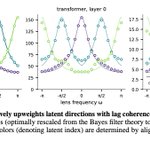
The J-lens from @wesg52 , @Jack_W_Lindsey, @AnthropicAI found evidence for a ‘global workspace’ in LLMs. But how?
Our results clarify that the J-lens captures slow, coherent features: arxiv.org/abs/2610.31955


Super excited about this new work from @AnnHuang42! We developed a method for identifying different solutions to a task in neural networks of all types by walking along the flat directions of the loss landscape. Doing so revealed a ton of hidden solutions nearby in weight space!


We presented DSA at NeurIPS in 2023 (more extensions to come, stay tuned!)
xitter.gq/neurostrow/status/1671…

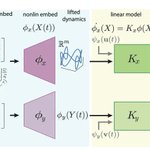
The basic idea of DSA: approximate your dynamics so that comparison is tractable. This is backed by Koopman Operator Theory and relates to work done by @wredman4 , @IgorMezic
InputDSA naturally extends DSA—we can compare intrinsic dynamics, effect of input, or both jointly! 3/

Really proud of this project with @adamjeisen - Jacobian estimation is a challenging and generic problem in dynamics, and I’m excited for all the future use cases of our method! See you at NeurIPS 🧠💻

How do brain areas control each other? 🧠🎛️
✨In our NeurIPS 2025 Spotlight paper, we introduce a data-driven framework to answer this question using deep learning, nonlinear control, and differential geometry.🧵⬇️
@neurostrow @SarthakChandra @Leokoz8 @MillerLabMIT @FieteGroup

Our next paper on comparing dynamical systems (with special interest to artificial and biological neural networks) is out!! Joint work with @AnnHuang42 , as well as @tweetsatpreet , @Leokoz8 , @FieteGroup , and @KanakaRajanPhD : arxiv.org/pdf/2510.25943

Wow, this blew up! I'll try to get to everyone's requests but please be patient.
Applying to grad school is hard. The expectations for essays are murky, and not everybody comes from a wealthy institution with resources needed to optimize an application.
If you're applying to grad school now, please reach out and I'll be happy to help you edit your essays.
Really excited about these results led by @catherineliangq !!

How do diffusion models factorize and generalize? Extending our previous work (arXiv:2402.03305), @ZimingLiu11 @neurostrow @FieteGroup and I further peaked into the model’s internal representation in relation to its ability to compose and generalize arxiv.org/abs/2408.13256.

Had a lot of fun writing about @courellis 's and @UeliRutishauser 's amazing research!

It's accompanied by an excellent @NatureNV by @neurostrow and Ila Fiete nature.com/articles/d41586-0…

How can we understand the way sequence models choose to combine info in their context to make good predictions?
In our new @icmlconf workshop paper, @adamjeisen , @FieteGroup and I provide a new theoretical lens from dynamical systems: delay embeddings
arxiv.org/abs/2406.11993

TLDR: State-Space Sequence Models @_albertgu @orvieto_antonio are better at inferring hidden variables from time series data than Transformers, but are somewhat less robust to observational noise (2/n)
1
4
604
I just signed a @theactionnet petition: Stop the delay of separated bike lanes on Cambridge St and Broadway to 2027. Sign here: actionnetwork.org/petitions/…
2
374
I'll be presenting this work today (Tuesday) in the 5:15-7:15pm poster session, #416!
Come through if you want to chat about Koopman operators, neural manifolds / dynamics, or just to say hi!
Accepted to @NeurIPSConf!! Looking forward to presenting in New Orleans this December 🧠💻
I'll be presenting this work @CogCompNeuro as a poster (P-3B:107) and as a contributed talk (CT-2). Come say hi!
I’m excited to share the first paper of my PhD! arxiv.org/abs/2306.10168 1/

RNNs are often used as brain models, but how can we verify that they use similar mechanisms?
With @FieteGroup , @Leokoz8 , @adamjeisen , we introduce Dynamical Similarity Analysis (DSA), a method to compare two dynamical systems on their dynamics rather than geometry. 2/