

Developer Relations Engineer
Joined October 2021
- Tweets579
- Following914
- Followers278
- Likes809









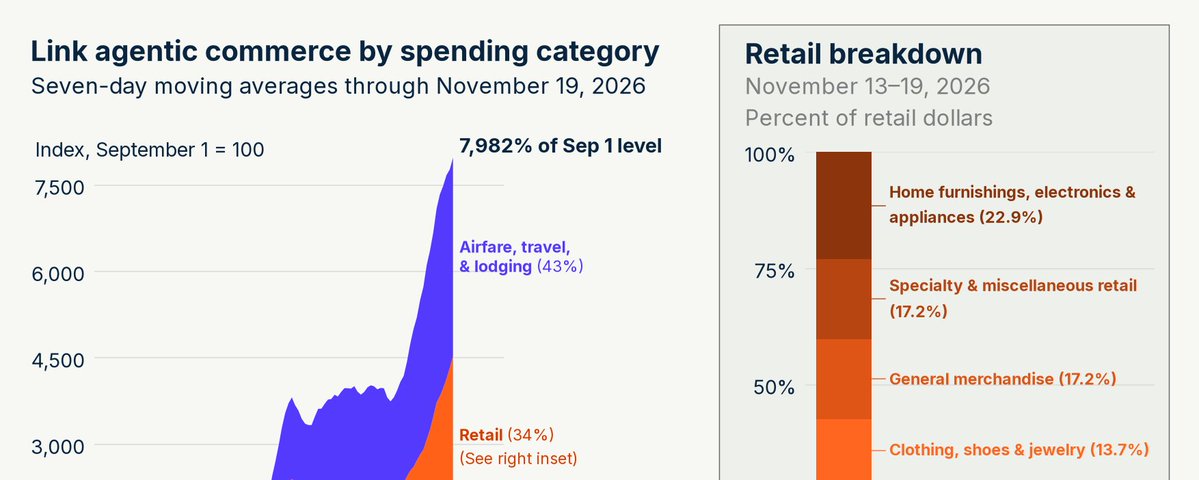
Stripe's 84x is worth a look inside. It's an index from a small September base, and a week ago 40% of it was flights and hotels. Going into Black Friday retail roughly doubled in two weeks while airfare grew a third. The mix is moving to everyday shopping.
1
2
easy marketing
xitter.gq/noahrshinn/status/2093…
if instinct’s founder numbers on users who actually use their personal agent to buy spend on average $1,300+ a month paying $25 to get someone over a $100 first purchase is cheap
the first big purchase creats trust (probably why the >100 price tag) and convience granted the UX is good
++ i assume user retention on normal people >40years once they have tried it will be extremely high

1
62
Nicolas Arnedo retweeted

We're releasing new @Stripe agentic commerce data today, telling the story so far as we look ahead to the kickoff of the holiday season next week.
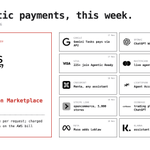
Agentic payments, this week.
The biggest agent payments news didn't come from a crypto company. @awscloud put x402 on its Marketplace, billed in dollars on the normal AWS invoice.

4
4
128
x402 is spreading inside existing billing, not as a reason for companies to hold stablecoins. For an enterprise team that's the easier sell. Procurement doesn't change, only the API does.
1
9
Last week @OpenAI launched ChatGPT Wallet, getting its foot into agentic payments through dots, its personal agents, with one major flaw.

1
74
Claude, Grok, Devin or ChatGPT finds the item, and Crossmint's browser agent checks out on your own card, under a limit you approve outside the chat.
91% success across 3,000 merchants. Big leap for what was out there.
1
13
Nicolas Arnedo retweeted

ChatGPT launched their wallet with the best long term architecture.
In this blog I explain in detail how it works, and how to build it in your agent in under a day

OpenAI launched ChatGPT Wallet and joined the personal agent payment race. Four personal agents can now pay for things on your behalf: dots, Muse, Grok Bot and Instinct.

The direction is logical. More of how we use digital systems runs through AI, and those agents already browse the shops we buy from. Paying is the next step, and the payment companies are positioned for it.
1
6